21-Day Habit Challenge Tracker: Free Printable Template
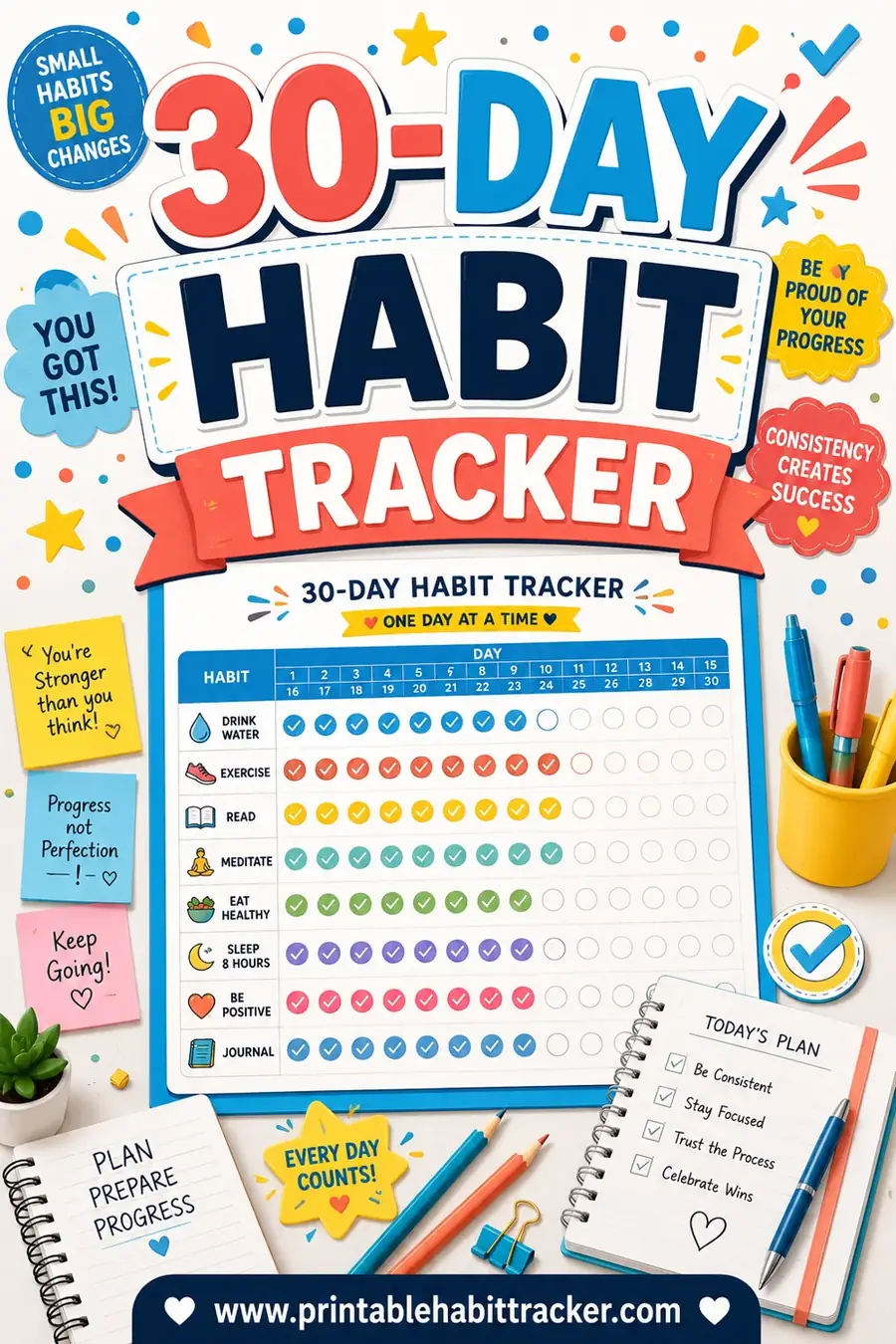
A 21-day habit challenge tracker is a one-page sheet with your chosen habit and 21 boxes, one for each day of a three-week challenge. You check off a box every day you follow through, and the goal is to fill all 21. It's a short, focused sprint that's just long enough to feel like a real commitment and short enough that the finish line stays in view. The quickest way to make one is with a free printable habit tracker you can customize and print in seconds.
Ready to dive in? Open the free tracker, type in the habit you want to build, choose a 21-day layout, and print it. There's no app to download and no account to create. Stick the sheet somewhere obvious and start your challenge today.

What Is a 21-Day Habit Challenge?
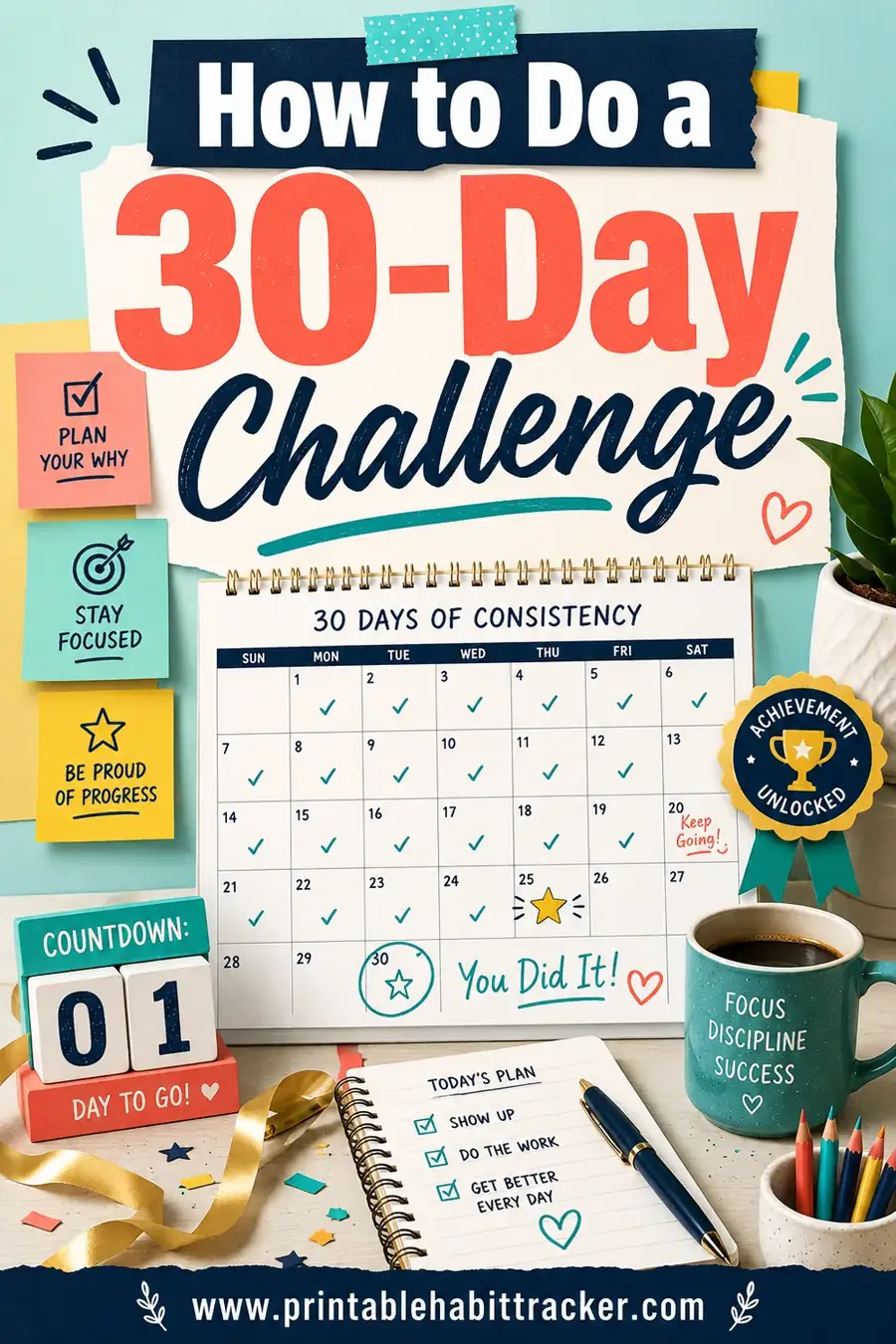
A 21-day challenge is a simple promise: do one habit, every day, for three straight weeks. The tracker is how you keep that promise honest. Each day you show up, you mark the box. Each blank box reminds you exactly where you stand.
Three weeks is a popular challenge length because it feels doable from day one. Thirty days can feel like a slog before you've even started. Twenty-one days feels like something you can knock out. That confidence matters, because the hardest part of any new habit is just believing you'll finish.
The tracker turns an abstract goal into something you can see and touch. Instead of vaguely "trying to drink more water," you have a row of 21 boxes and a clear target: fill them all.
Where the 21-Day Idea Comes From
You've probably heard that it takes 21 days to form a habit. The number traces back to a 1960s plastic surgeon named Maxwell Maltz, who noticed his patients took about 21 days to adjust to a new face or a missing limb. His book sold millions, and somewhere along the way "about 21 days" hardened into "exactly 21 days for any habit."
Here's the honest truth: 21 days won't always cement a habit for life. A University College London study found habit formation ranges from 18 to 254 days, averaging around 66. So why bother with a 21-day challenge?
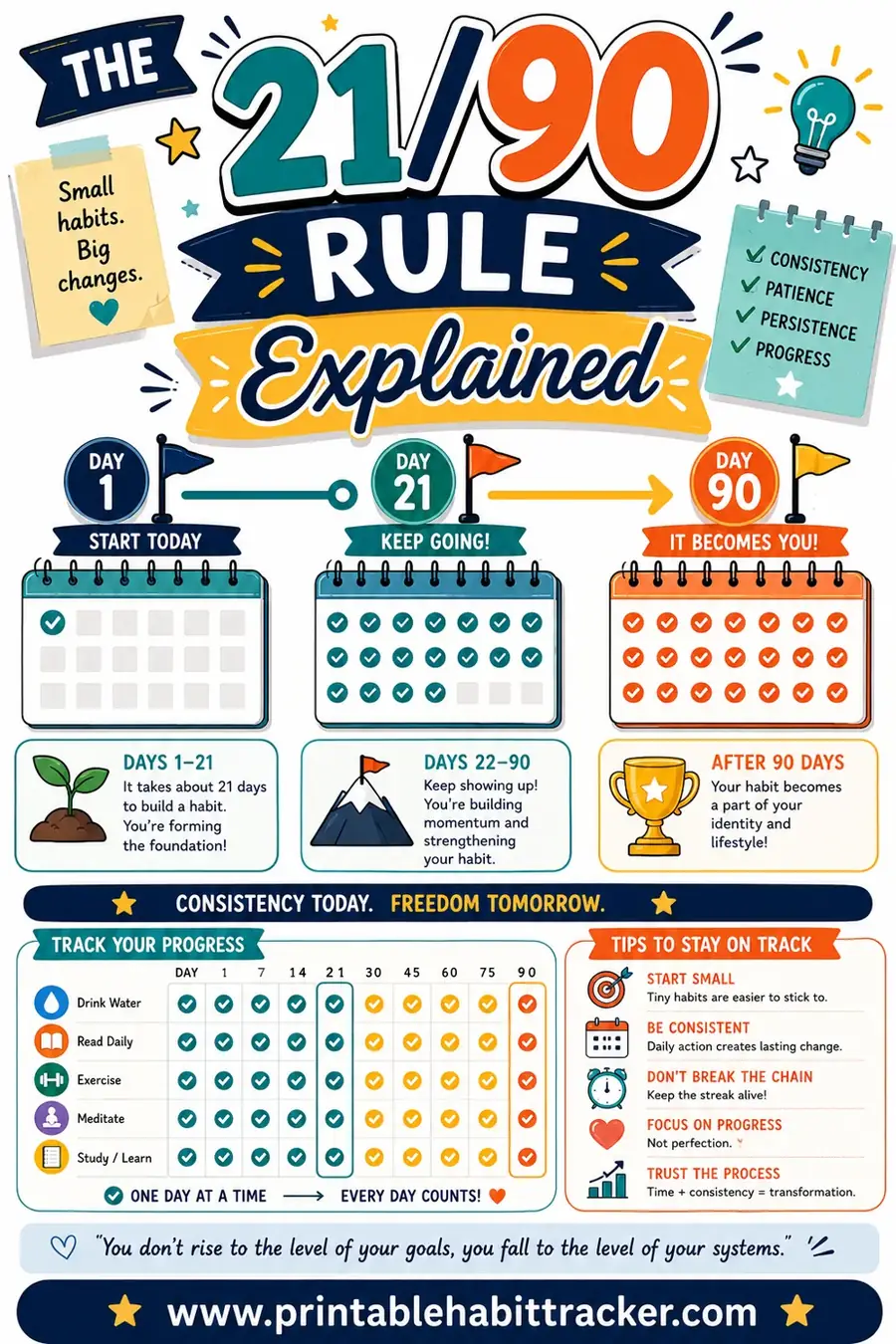
Because a sprint is easier to start than a marathon. Twenty-one days gives you a real, achievable win. It builds the momentum and proof you need to keep going. Think of it as the launch, not the whole flight. If you want the full story, our breakdown of the 21/90 rule explains how short challenges fit into long-term habit building.
How to Run Your 21-Day Challenge
Keep it simple. Here's the whole process in four steps.
- Choose one habit. Pick something small and specific you can do daily. "Meditate 5 minutes" beats "be more mindful."
- Print your tracker. Open the generator, enter your habit, select the 21-day layout, and print. Put it where you'll see it the moment you wake up.
- Check off every day you do it. A checkmark, an X, a sticker, your call. The satisfaction of marking the box is part of the fuel.
- Aim for all 21. Glance at your progress daily. The closer you get to 21, the harder it is to quit.
The sheet does the heavy lifting. Your only job is to show up and mark the box.
12 Habits Perfect for a 21-Day Challenge
Not sure what to commit to? Here's a table of strong challenge habits, why each one is worth three weeks, and a clear way to measure it so there's no guessing whether you earned the check.
| Habit | Why it helps | How to track |
|---|---|---|
| Drink water first thing | Wakes up your body and brain | Check off after morning glass |
| 10-minute morning stretch | Eases stiffness, boosts mood | Check off once stretched |
| No social media before noon | Reclaims your morning focus | Check off if you held the line |
| Read 15 minutes | Builds a daily reading rhythm | Check off when the timer ends |
| 20-minute walk | Easy cardio, big mood lift | Check off after the walk |
| Make your bed | A small, satisfying daily win | Check off each morning |
| No sugar after dinner | Better sleep, fewer cravings | Check off if you resisted |
| Write 3 gratitudes | Trains a more positive mindset | Check off once written |
| Lights out by 11 pm | Protects your sleep | Check off if you made it |
| 5-minute tidy-up | Keeps your space calm | Check off after the timer |
| Take the stairs | Sneaks movement into your day | Check off when you chose stairs |
| Cook one meal at home | Saves money, eats healthier | Check off per home-cooked meal |
Pick the one that's been nagging at you. The right challenge is the one you genuinely want to win, not the one that looks the most impressive on paper.
Break it into three weeks
A nice mental trick: think of your challenge as three one-week mini-challenges instead of one big 21-day block. Week one is about starting. Week two is about not quitting. Week three is about finishing strong. Reward yourself at the end of each week, and the challenge feels lighter every step of the way.
What each week tends to feel like
Knowing the rough shape of a 21-day challenge helps you push through the rough patches instead of being surprised by them.
- Days 1 to 7 — the excitement phase. Motivation is high and the habit feels fresh. This week is easy on willpower, so use it to lock in your routine and figure out the best time of day to do your habit.
- Days 8 to 14 — the grind. The novelty wears off and the habit can start to feel like a chore. This is where most people quit. Lean hard on your tracker and your "never miss twice" rule here.
- Days 15 to 21 — the home stretch. The finish line is close and the habit is starting to feel normal. Momentum carries you. Push through and savor the satisfaction of filling that last box.
The dip in week two is completely normal. It's not a sign you're failing; it's a sign you're right on schedule. Expect it, plan for it, and it loses most of its power.
21 Days vs. 30 Days: Which Should You Pick?
Both are great. The right choice depends on your goal and your appetite for a longer commitment.
| Challenge length | Best for | Trade-off |
|---|---|---|
| 21 days | A confident, doable first sprint | May not fully cement the habit |
| 30 days | Building stronger momentum | A slightly bigger commitment |
| 66 days | Closer to true automatic habit | Long; needs real staying power |
| 90 days | Locking in a lifestyle change | Easy to lose steam without milestones |
If 21 days feels like the right starting point, go for it. If you finish and want to push further, our 30-day habit tracker is the natural next step. Many people chain a 21-day challenge into a 30, then keep rolling from there.
How to Finish All 21 Days
Starting is easy. Finishing is where people stumble. Here's how to make it across the line.
- Never miss two in a row. One blank box is a slip you can recover from. Two in a row is how challenges quietly die. If you skip a day, your only mission is to show up the next.
- Keep the tracker visible. Out of sight, out of mind. Fridge, mirror, desk, anywhere you can't ignore it.
- Make the habit tiny. If you're struggling, shrink it. Five push-ups instead of twenty. Two pages instead of fifteen. A tiny win beats a skipped day every time.
- Tell someone. Saying "I'm doing a 21-day water challenge" out loud adds a little healthy pressure to follow through.
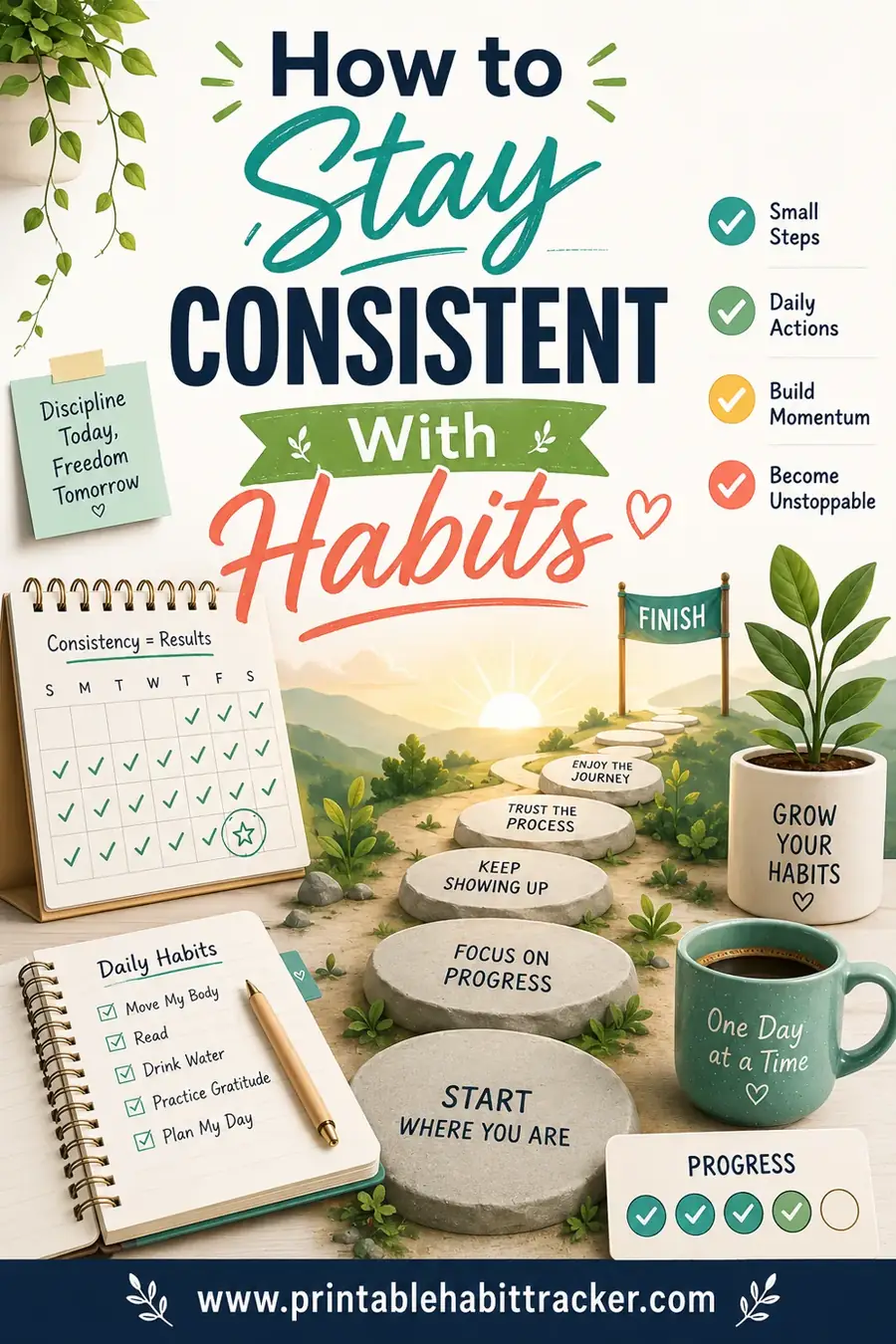
- Don't restart over one miss. A missed day doesn't reset the challenge. Leave the box blank, keep your day count, and carry on. For more, see how to stay consistent with habits.
What Comes After Day 21
You filled all 21 boxes. Congratulations, you proved you can stick with something. Now keep the momentum.
- Extend it. Print a fresh sheet and aim for 30, then 66, then 90.
- Add a habit. Once the first feels automatic, layer in a second. Just don't pile on three at once.
- Make it permanent. Switch to a monthly or yearly tracker so the habit keeps going without restarting every three weeks.
- Level up the habit. Reading 15 minutes? Try 25. Walking 20? Make it 30. Small bumps keep it fresh.
The 21-day challenge is a starting gun, not a finish line. Use the confidence it gave you to build something that lasts.
Frequently Asked Questions
Is the 21-day habit challenge tracker free?
Yes, completely. You make and print it yourself with no sign-up, no watermark, and no subscription. Open the free tracker, enter your habit, and print as many copies as you need.
Does it really take 21 days to form a habit?
Not always. The 21-day idea came from a 1960s observation, not strict habit science. Real habit formation ranges from 18 to 254 days, averaging about 66. A 21-day challenge is a great launch, but it's the start of building a habit, not the guaranteed end.
How many habits should I track in a 21-day challenge?
Just one. A single habit keeps your focus sharp and your odds of finishing high. Once you nail one challenge, you can start another or stack a second habit on top.
What happens if I miss a day during my challenge?
Don't restart and don't quit. Just make sure you don't miss two days back to back. Leave the box blank, keep your day count where it is, and pick the habit up again tomorrow.
Can I do a 21-day challenge with a friend?
Definitely, and it helps. Print two trackers, pick the same habit or different ones, and check in daily. A little friendly accountability makes finishing far more likely.
What should I do after my 21 days are up?
Keep going. Run it back for 30 days, add a new habit, or move to a long-term tracker. The challenge built your momentum; now use it. Our 30-day habit tracker is a popular next step.
Ready to Start Your 21-Day Challenge?
Choose the one habit you've been meaning to build, open the free habit tracker, pick the 21-day layout, and print it. Put it somewhere you'll see it every morning, check off day one today, and aim to fill all 21 boxes. It's free, takes seconds to set up, and three weeks from now you'll have proof you can commit. Your challenge starts the moment you decide it does.