30-Day Habit Tracker: Free Printable to Build One Habit
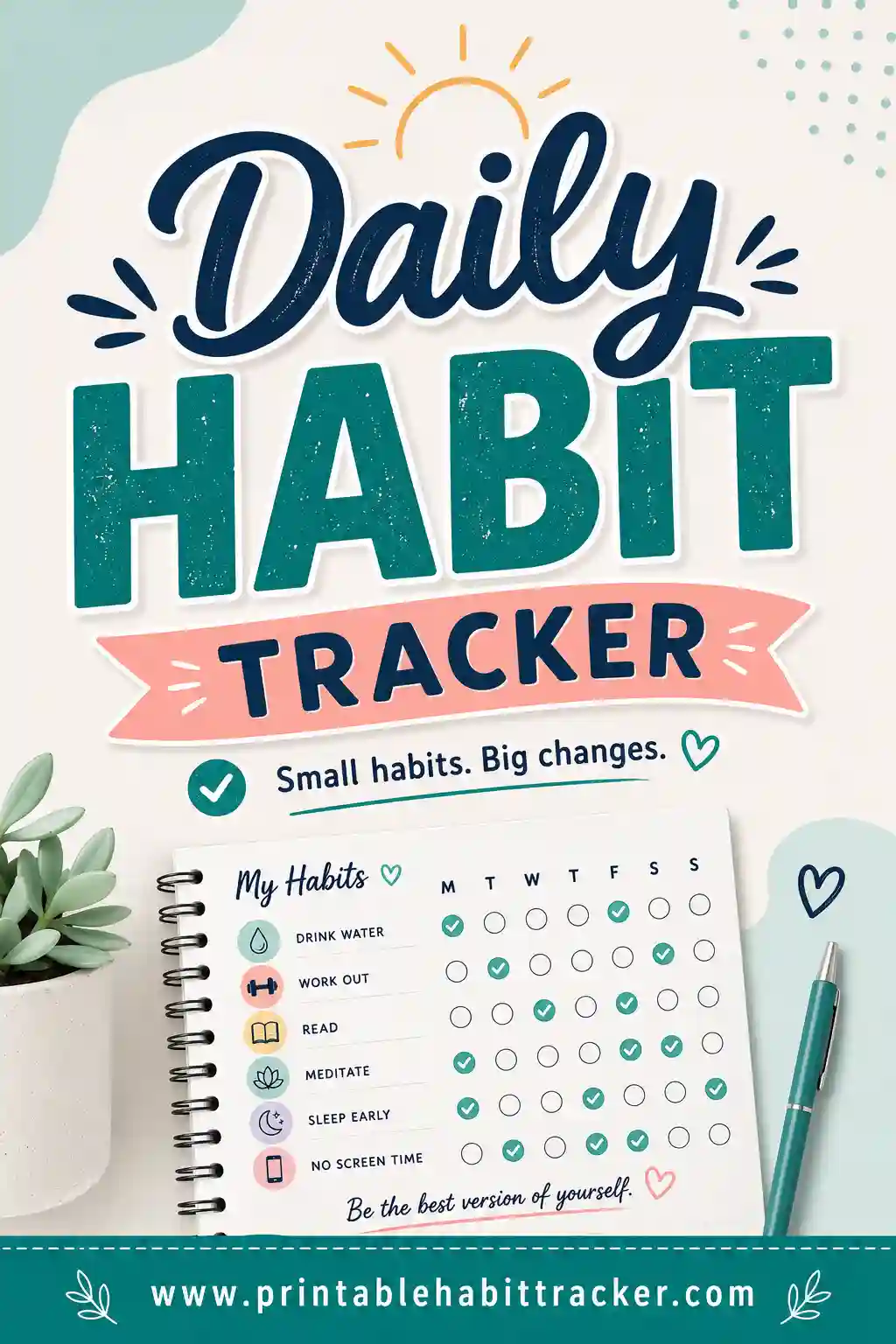
A 30-day habit tracker is a single sheet with one habit and 30 little boxes, one for each day of the month. You check off a box every day you do the habit, and the row of filled-in squares becomes a streak you don't want to break. It's the simplest way to turn "I should really start doing this" into something you actually do, and the fastest way to make one is with a free printable habit tracker you can fill in and print in under a minute.
Want to skip ahead and build yours now? Open the free tracker, type in the habit you're chasing, pick a 30-day layout, and print it. No app, no sign-up, no subscription. Tape it to your fridge or your bathroom mirror and start checking boxes tonight.
What Is a 30-Day Habit Tracker?
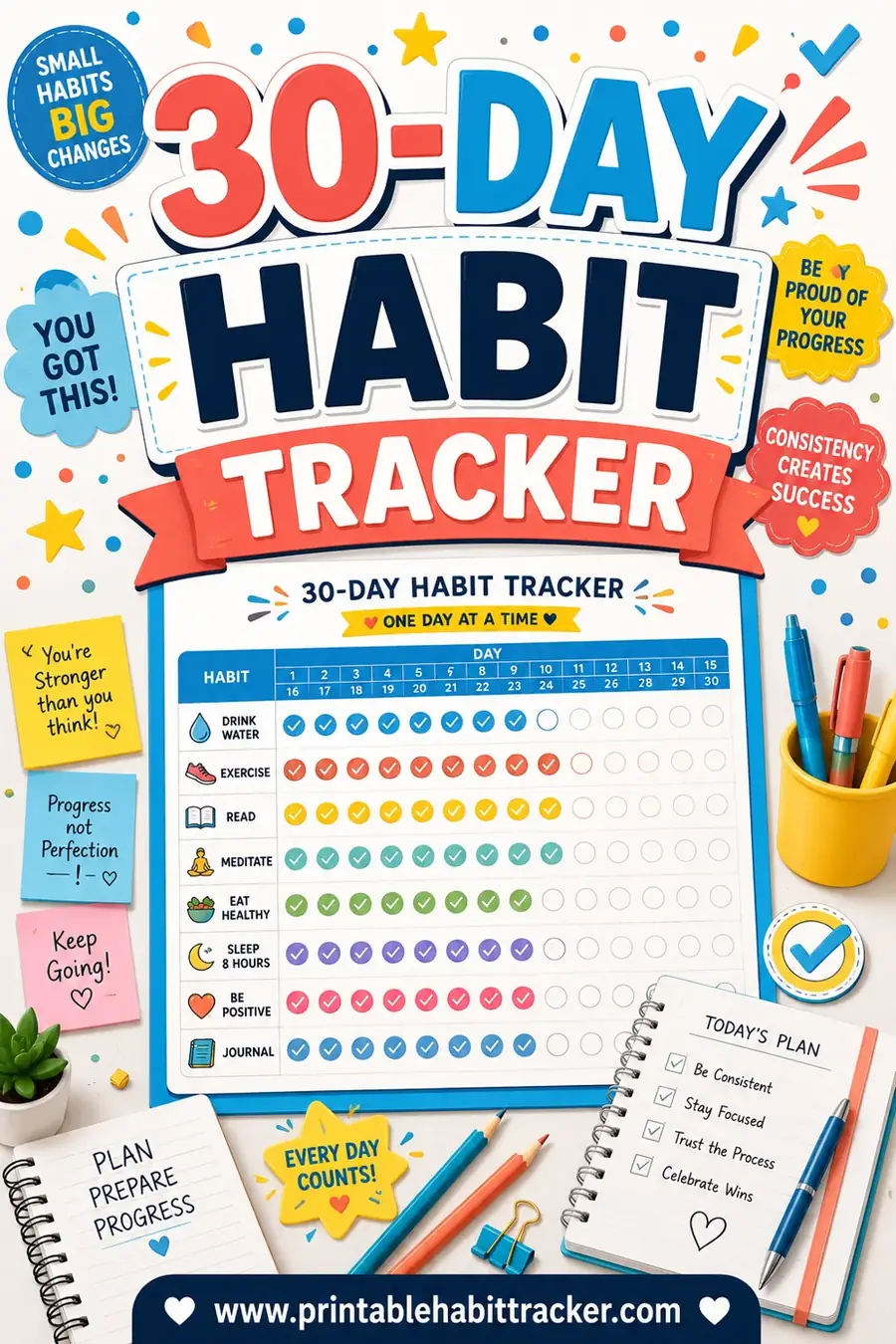
It's a focused, one-month view of a single habit. Picture a row labeled with your habit, like "drink water" or "walk 20 minutes," followed by 30 small boxes numbered 1 through 30. Each day you do the habit, you color in or check that day's box. By the end of the month, you can see at a glance how many days you showed up.
The magic is in seeing the whole month on one page. A daily reminder fades the second you snooze it. A printed row of checkmarks sits there in plain sight, quietly daring you not to break the chain.
You can track one habit on its own sheet, or stack a few habits as separate rows on the same page. For your first 30-day run, one habit is plenty. It keeps the focus tight and makes success obvious.
Why 30 Days Is the Sweet Spot
A month is long enough to feel real progress, but short enough that the finish line never feels far away. That balance is exactly why so many people reach for a 30-day window.
- It's a complete cycle. A month has a clear start and a clear end. You commit, you grind, you finish. Then you decide whether to keep going.
- It builds real momentum. By day 20, the habit starts to feel less like a chore and more like part of your day.
- It's forgiving. Miss a day? You've still got plenty of month left to recover and keep your streak going.
You may have heard it takes exactly 21 days to form a habit. That's a myth. Research from University College London found it takes anywhere from 18 to 254 days, with an average closer to 66, depending on the habit and the person. A 30-day tracker isn't a guarantee your habit is locked in forever. It's a strong, motivating first lap that gets you most of the way there. If you want to dig into the science, our guide on how long it takes to build a habit breaks it down.
How to Use Your 30-Day Habit Tracker
You don't need a system or a course. Here's the whole thing in four steps.
- Pick one habit. Just one. Make it specific and small enough that you can do it on your worst day. "Exercise" is vague. "Do 10 push-ups" is something you can actually check off.
- Print your tracker. Open the generator, enter your habit, choose the 30-day layout, and print. Stick it somewhere you'll see it every single day.
- Check off each day you show up. Color the box, draw an X, add a sticker, whatever feels good. The little hit of satisfaction is the point.
- Glance at it daily. The visible streak is your reminder and your reward. Don't let it leave your sight.
That's it. The whole system fits on one sheet of paper and runs itself.
30 Habits Worth Tracking for a Month
Stuck on what to track? Here's a table of solid, beginner-friendly habits, why each one earns its spot, and an easy way to measure it so checking the box is never fuzzy.
| Habit | Why it helps | How to track |
|---|---|---|
| Drink 8 glasses of water | More energy, fewer headaches | Check off once you hit 8 |
| Walk 20 minutes | Clears your head, boosts your mood | Check off after the walk |
| Read 10 pages | Builds a reading habit painlessly | Check off when the 10 are done |
| No phone in bed | Better, faster sleep | Check off if you stayed off |
| Make your bed | Easy early win that sets the tone | Check off each morning |
| Stretch 5 minutes | Loosens up stiff muscles | Check off after stretching |
| Write 3 lines in a journal | Slows your mind down | Check off once written |
| Eat one piece of fruit | A tiny, doable health upgrade | Check off when eaten |
| 10 minutes of tidying | Keeps clutter from piling up | Check off after the timer |
| No snoozing the alarm | Starts the day on your terms | Check off if you got up |
Pick the one that nags at you most. The best habit to track is the one you actually care about, not the one that sounds impressive.
Pair it with a tiny reward
Habits stick faster when there's something nice waiting on the other side. Promise yourself a small treat at day 7, day 14, and day 30. A favorite coffee, an episode of your show, an hour with zero guilt. The streak motivates you day to day, and the rewards carry you across the milestones.
How to pick the right habit to track
The habit you choose matters more than the tracker itself. Pick the wrong one and you'll be staring at empty boxes by day five. A few rules that keep your odds high:
- Make it small. Shrink the habit until it feels almost too easy. "Read 10 pages" beats "read for an hour." You can always do more, but a tiny target is one you'll hit even on a bad day.
- Make it specific. "Exercise" is a wish. "Walk 20 minutes after lunch" is a plan. The more concrete it is, the easier it is to know whether you earned the check.
- Tie it to an existing habit. Attach your new habit to something you already do. "After I brush my teeth, I'll do 10 push-ups." This anchoring trick is one of the most reliable ways to make a habit stick.
- Pick one you actually want. If you don't care about the habit, no tracker on earth will save it. Choose the one that genuinely nags at you.
Get the habit right, and the 30 boxes practically fill themselves.
How a 30-Day Tracker Compares to Other Layouts
A 30-day sheet isn't the only option. Here's how it stacks up against the other common formats, so you can pick the right tool for the job.
| Layout | Best for | Trade-off |
|---|---|---|
| Daily tracker | Several habits in one day | Resets every day, no monthly view |
| 30-day tracker | Building one habit over a month | Limited to roughly a month |
| Weekly tracker | A quick, repeating routine | Less satisfying long streak |
| Monthly grid | Many habits across many days | Can feel busy and crowded |
| Yearly tracker | Big-picture, long-haul goals | Each day's box is tiny |
If you're juggling a few habits at once, a daily habit tracker might fit better. But if your goal is to plant one new habit and watch it grow, the 30-day layout is hard to beat.
What to Do When You Miss a Day
You will miss a day. Everyone does. The trick is what happens next, and it's the single biggest difference between people who build habits and people who quit.
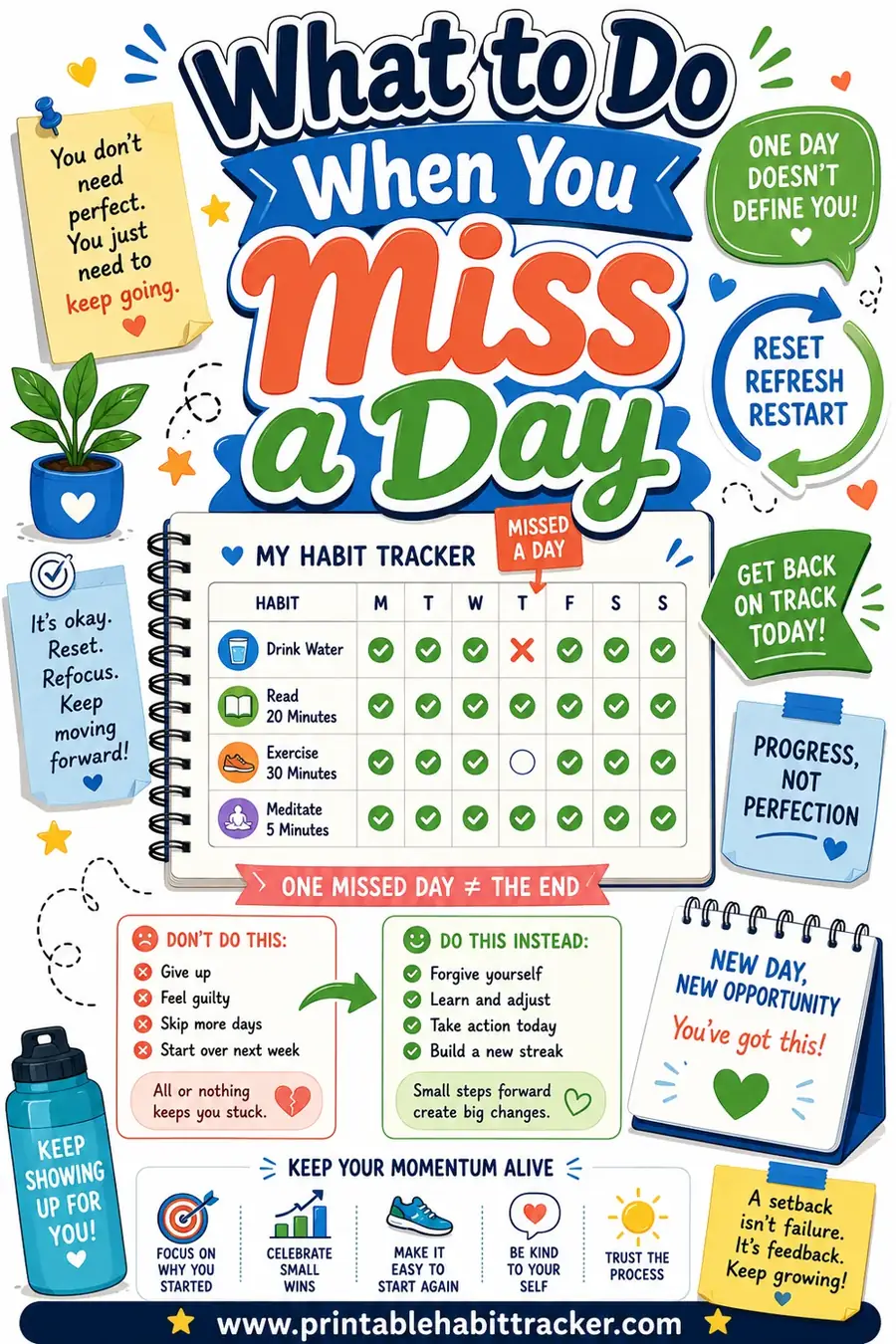
Here's the rule that works: never miss twice. One missed day is a slip. Two in a row is the start of a new, worse habit. So if you skip Tuesday, your only job is to show up Wednesday. The streak isn't ruined by one blank box. It's only ruined when one blank box becomes three.
Don't restart the whole month from zero, either. That punishes you for being human and usually kills your motivation. Just leave the box empty, keep your numbering, and carry on. A 30-day tracker with two missed days and 28 wins is a fantastic month. For more on bouncing back, see our guide on what to do when you miss a day.
Make Your 30 Days Stick After the Month Ends
So you finished. The page is full of checkmarks and you feel great. Now what?
- Run it back. Print a fresh 30-day sheet and go again. Two months beats one.
- Add a second habit. Once the first one feels automatic, stack a new one on top. Just don't add three at once.
- Switch to a longer view. Move to a monthly or yearly tracker to keep the habit going without restarting every 30 days.
- Raise the bar slightly. Reading 10 pages? Try 15. Walking 20 minutes? Make it 25. Small steps up keep things interesting.
The 30-day tracker is a launchpad, not a cage. Once the habit feels like part of who you are, you won't need the boxes as much, though plenty of people keep checking them anyway because it just feels good.
Frequently Asked Questions
Is a 30-day habit tracker free to print?
Yes. You build it and print it yourself at no cost. There's no sign-up, no watermark, and no subscription. Open the free tracker, enter your habit, and print as many copies as you want.
Does it really take 30 days to form a habit?
Not exactly. Studies show habit formation ranges from about 18 to 254 days, averaging around 66. Thirty days won't lock a habit in forever, but it's a strong, motivating first stretch that builds real momentum.
Should I track one habit or several on a 30-day tracker?
For your first run, stick to one. A single habit keeps your focus tight and makes success obvious. Once that one feels automatic, you can add a second row or print a separate sheet.
What if I miss a day?
Don't panic and don't restart. Just make sure you don't miss two days in a row. One blank box is a slip; two is a trend. Leave the box empty and pick the habit back up tomorrow.
Where should I put my printed tracker?
Somewhere you can't miss it: the fridge, the bathroom mirror, your desk, or the inside of your front door. A tracker you never see is a tracker you'll forget. Visibility is half the battle.
Can I use a 30-day tracker for a challenge?
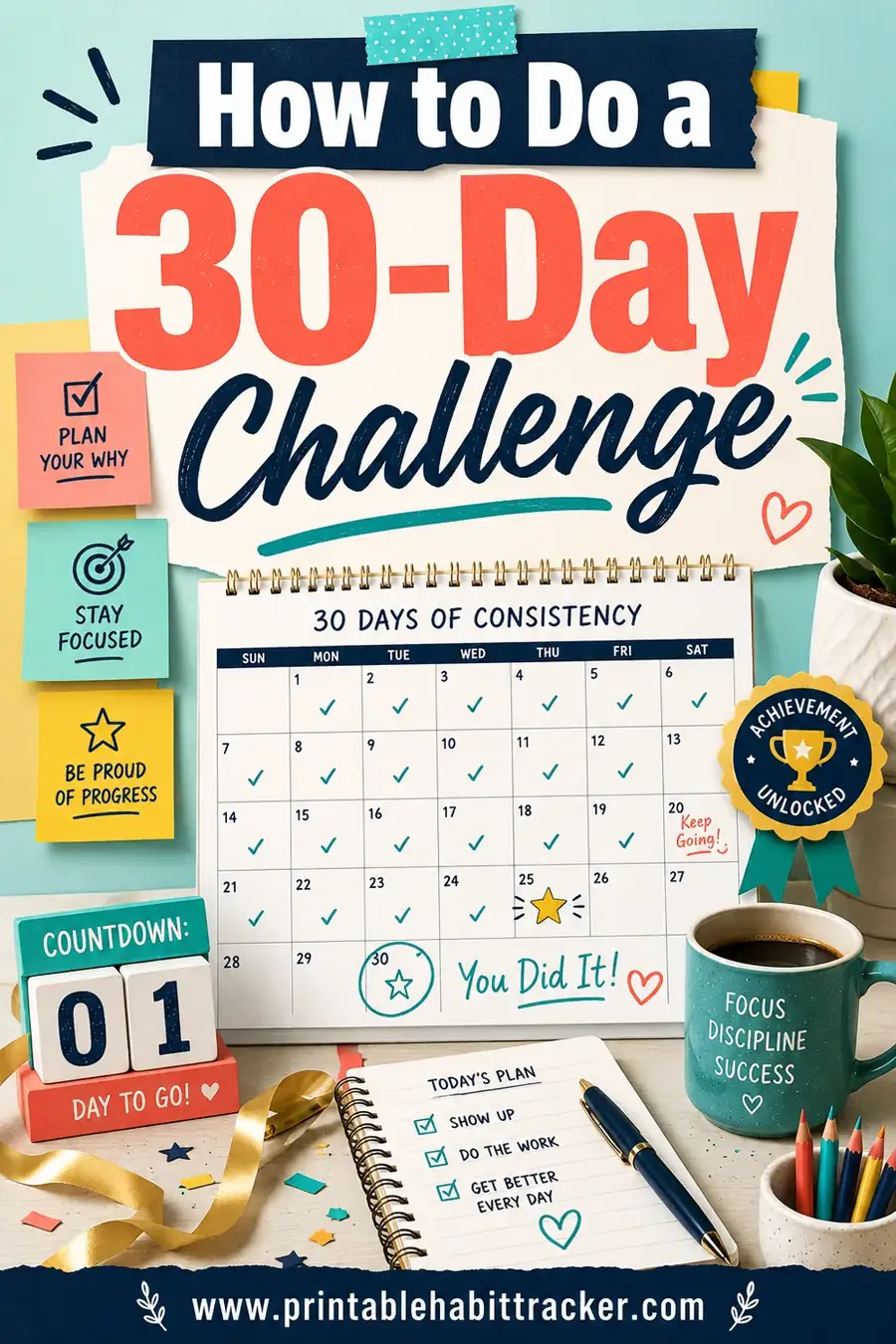
Absolutely. A 30-day sheet is perfect for any monthly challenge, from "no sugar" to "walk every day." If you're planning one, our guide on how to do a 30-day challenge walks you through it.
Ready to Start Your 30 Days?
Pick the one habit you've been meaning to build, open the free habit tracker, choose the 30-day layout, and print it. Tape it somewhere you'll see it, check off day one tonight, and watch the streak grow. It's free, there's no sign-up, and in a month you'll have proof you can stick with something. Day 1 starts whenever you decide it does, so why not today?