Chores for 5 Year Olds: Easy, Age-Appropriate Jobs and a Printable Chart
Good chores for 5 year olds are short, simple jobs they can finish in a few minutes: putting toys away, pulling up the bed covers, putting dirty clothes in the hamper, setting napkins and spoons on the table, helping feed a pet and watering plants. Two to four little jobs a day is plenty at this age. The goal isn't a spotless house; it's a kid who feels proud to help.
Here's a kindergarten chore chart with six easy jobs. Your child can color a box for each job, and you can swap in your own chores before you print it free:
✅ Try this tracker for one week
Tap a box each day you do the habit. Your ticks stay on this device.
30 age-appropriate chores for 5-year-olds
In their room
- Put toys back in bins (one bin per type helps)
- Pull up the covers and put the pillow on top
- Put dirty clothes in the hamper
- Put clean socks and pajamas in a drawer
- Line up shoes by the door or closet
- Put books back on the shelf
In the kitchen
- Set napkins, spoons and plastic cups on the table
- Carry their own plate to the counter after meals
- Wipe the table with a damp cloth
- Unload spoons and forks from the dishwasher basket (no knives)
- Put away unbreakable groceries, like cereal boxes and fruit
- Wash plastic veggies or fruit in a bowl of water
- Stir pancake batter or tear lettuce with you
Around the house
- Match socks from the clean laundry
- Sort laundry into lights and darks
- Dust low shelves with a sock on their hand
- Wipe up small spills with a towel
- Bring the mail in with you
- Put shoes and coats away after coming inside
- Use a small hand vacuum for crumbs
- Throw away trash and put recycling in the bin
Pets and plants
- Scoop pet food into the bowl with you watching
- Fill the pet's water bowl (half full is fine)
- Water plants with a small watering can
- Help brush a calm pet
Outside
- Pick up sticks in the yard
- Put outdoor toys back in the bin
- Help carry light bags from the car
- Pull a few weeds with you
- Sweep the porch with a kid-size broom
Sample chore chart for a 5-year-old
| Job | When | About how long |
|---|---|---|
| Pull up my covers | Every morning | 1 minute |
| Clothes in the hamper | Every night | 1 minute |
| Put toys away | Before dinner | 5 minutes |
| Set napkins and spoons | Dinner | 2 minutes |
| Help feed the pet | Morning | 2 minutes |
| Water the plants | Saturday | 5 minutes |
That's about 10 minutes a day. Kids this age do best with a short list they can actually finish.
How to teach a chore to a 5-year-old
- You do it, they watch. Talk through each step: "First the blocks go in the blue bin."
- Do it together. They do part, you do part.
- They do it, you watch. Cheer them on and help only if they ask.
- They do it alone. Now it goes on the chart.
This can take a week or two per job. That's normal. And let "good enough" be good enough. Lumpy covers still count as a made bed.
Making chores fun at this age
- Beat the timer. "Can you put the toys away before the song ends?"
- Use pictures. Five-year-olds who can't read yet can follow emojis or drawings on the chart.
- Color it in. Coloring a box is more fun than a check mark.
- Give a title. "Head Plant Waterer" sounds way better than "chores."
- Celebrate the week. A family game night or a trip to the park for a full chart works better than a toy for each job.
Safety: chores to skip at 5
- Anything with knives or glass
- Cleaning sprays and chemicals (a damp cloth or water only)
- The stove, oven or hot water
- Carrying heavy or breakable things
- Taking trash cans to the curb near traffic
Chores during winter break
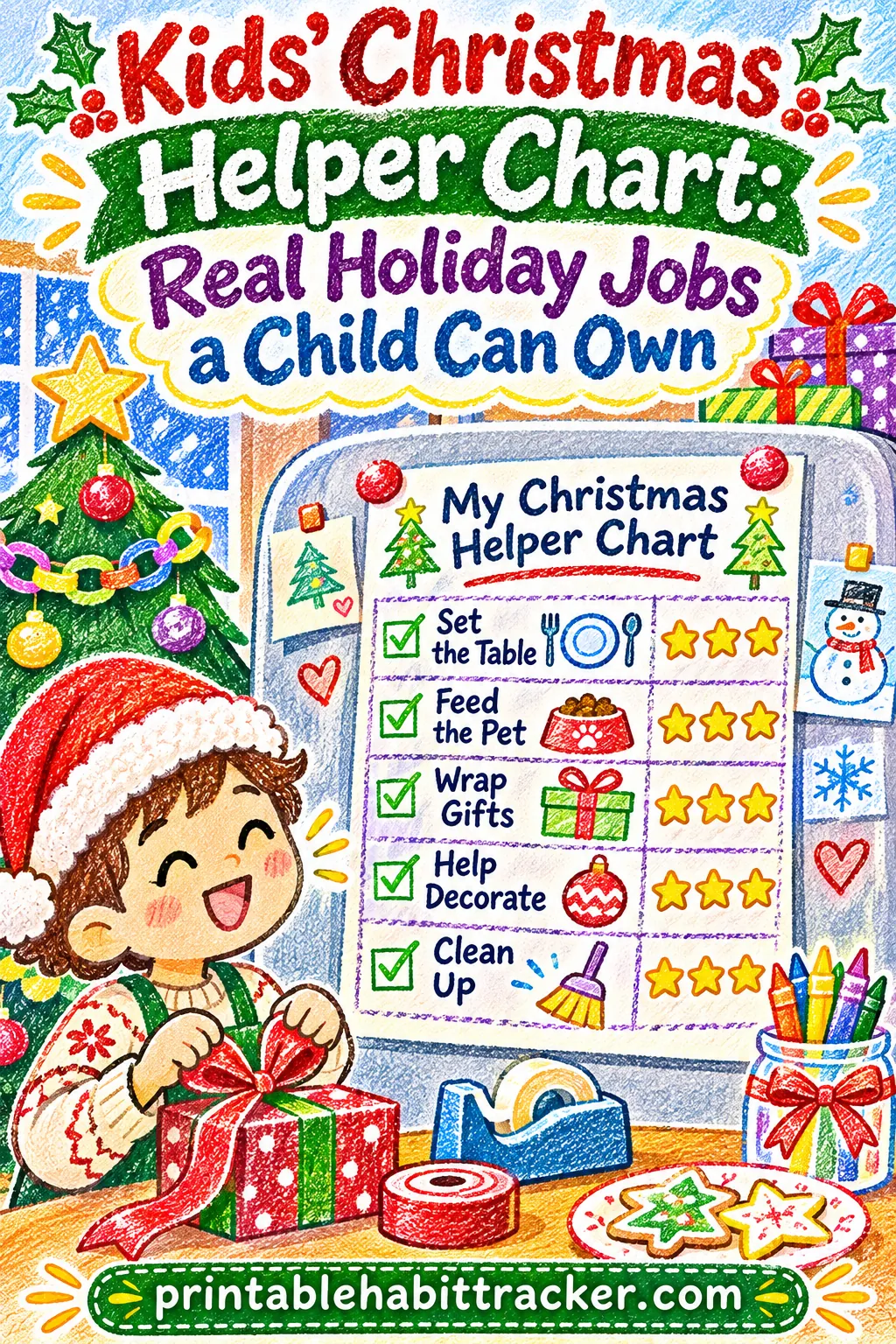
School breaks are a great time to start a chore chart, because mornings are slower and you can teach a new job without rushing. Pick one new job for the break, like setting the table, and add it to the chart. For more structure on days off, our kids chore chart has ideas for all ages.
What if your child won't do chores?
That's very common at five. Try these:
- Shrink the job. "Put the cars in the bin" instead of "clean your room."
- Pair it with something they love: chores, then the playground.
- Do it at the same time each day so it becomes routine.
- Praise the effort: "You remembered your hamper all by yourself!"
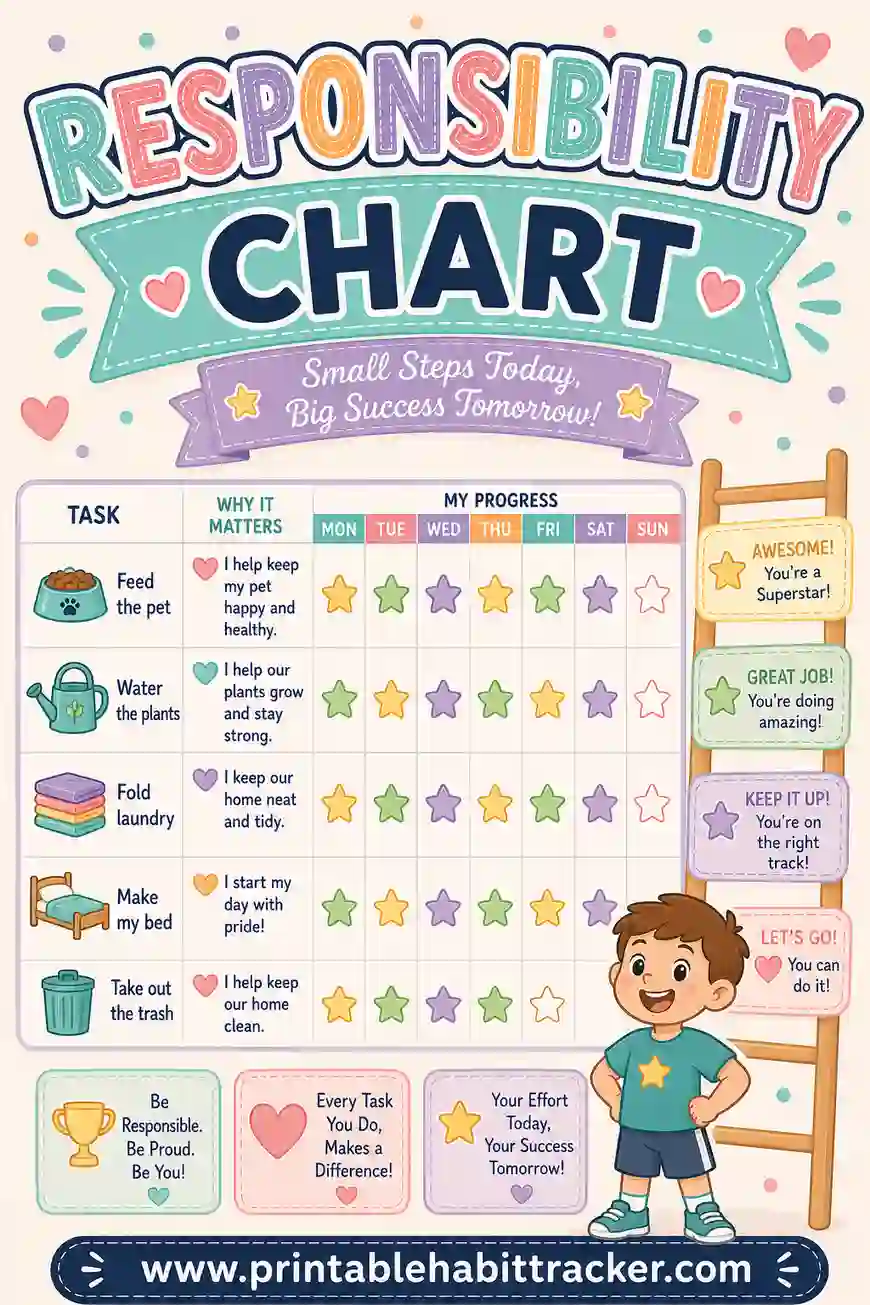
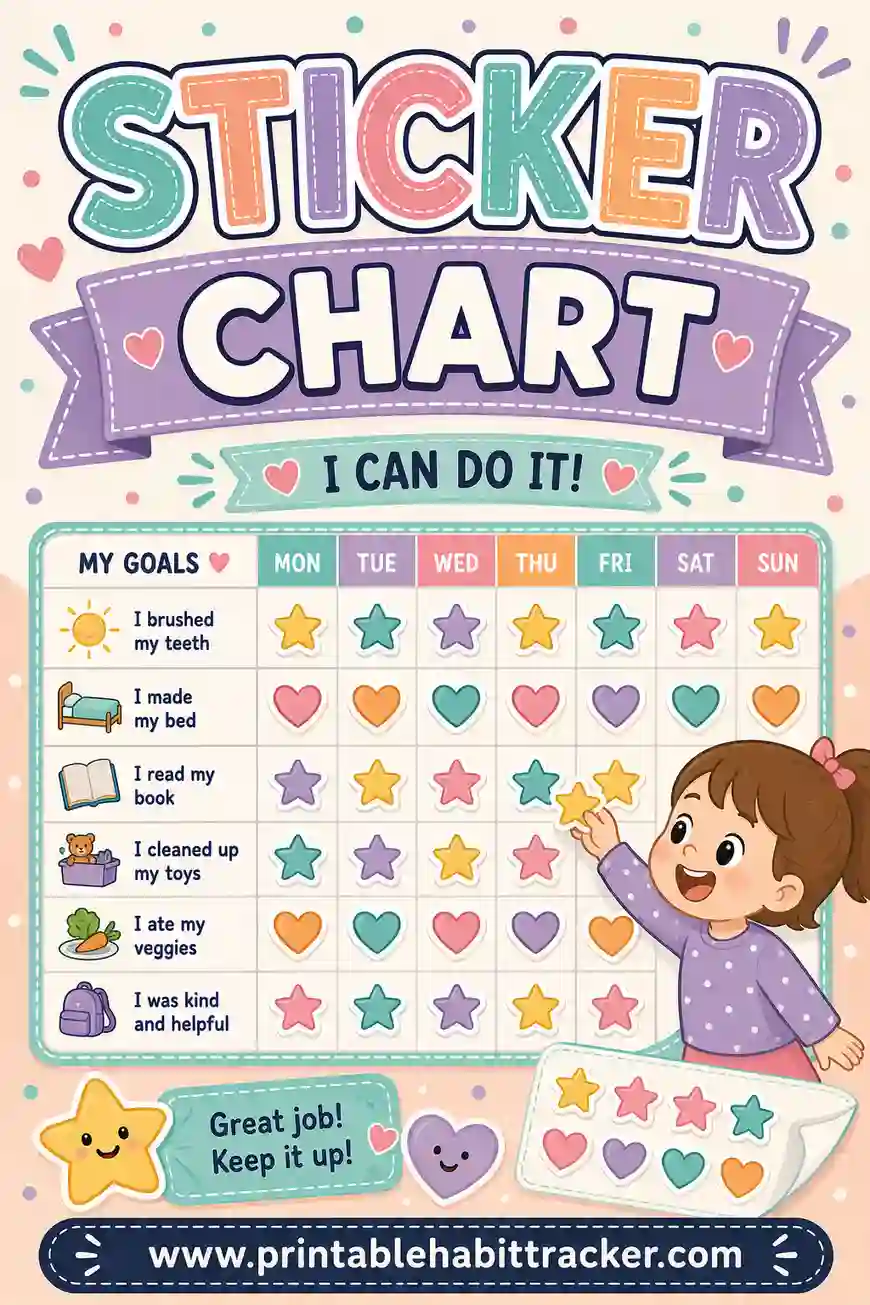
If you'd like a reward system, our sticker chart and responsibility chart pages show simple ways to set one up.
Chores as your child grows
By seven, most kids can take on more, like making the whole bed, sweeping and putting away laundry. See our list of chores for 7 year olds when your child is ready for the next step.
How to print your chore chart
- Open the free habit tracker maker with the button above. It opens in the weekly layout with the color-in style.
- Change the title to your child's name, like "Lily's Helper Chart."
- Pick up to six jobs from the list above, with an emoji for each.
- Print it, tape it at kid height, and keep crayons nearby.
Print a fresh one each Sunday. When you're ready, open the free maker and make your chart.
Frequently Asked Questions
What chores can a 5-year-old do?
Five-year-olds can put toys away, make their bed (pull up the covers), put dirty clothes in the hamper, set napkins and spoons on the table, feed a pet with help, water plants, match socks and wipe up small spills.
How many chores should a 5-year-old have?
Two to four short jobs a day is plenty, most taking five minutes or less. Daily jobs like putting toys away build the habit; a weekly job like watering plants adds variety.
Do chore charts work for kindergarteners?
Yes, when they're simple. Use pictures or emojis for each job, keep it to a handful of rows, let your child color in a box when it's done, and celebrate the effort more than the result.
Should a 5-year-old get paid for chores?
It's up to your family. Many parents keep everyday jobs like tidying and setting the table unpaid, because everyone helps at home, and pay a little for extra jobs. Pick one approach and stick with it.
How do I get my 5-year-old to do chores without a fight?
Do the job together at first, make it the same time every day, keep it short, and give specific praise like 'You put every block in the bin.' Turning it into a race or a song helps too.