Debt Tracker Printable: Free Payoff Chart You Can Color In
A debt tracker printable is a printed chart that turns paying off debt into something you can see: every payment fills in a box, and the filling page becomes a picture of you getting free. Debt payoff is a long game with almost no daily feedback — the balance barely moves, the finish line is years out — and that's exactly why a visual tracker helps. You can build one shaped around your actual debts with the free printable habit tracker builder: each debt gets a row, each payment gets a box, and the momentum gets a page on your fridge.
Want one now? Open the free builder, list your debts one per line (with balance and minimum in the name, like "Visa — $3,200, min $90"), pick a layout, and print. No sign-up, no watermark, free to reprint every month of the journey.
What Is a Debt Tracker?
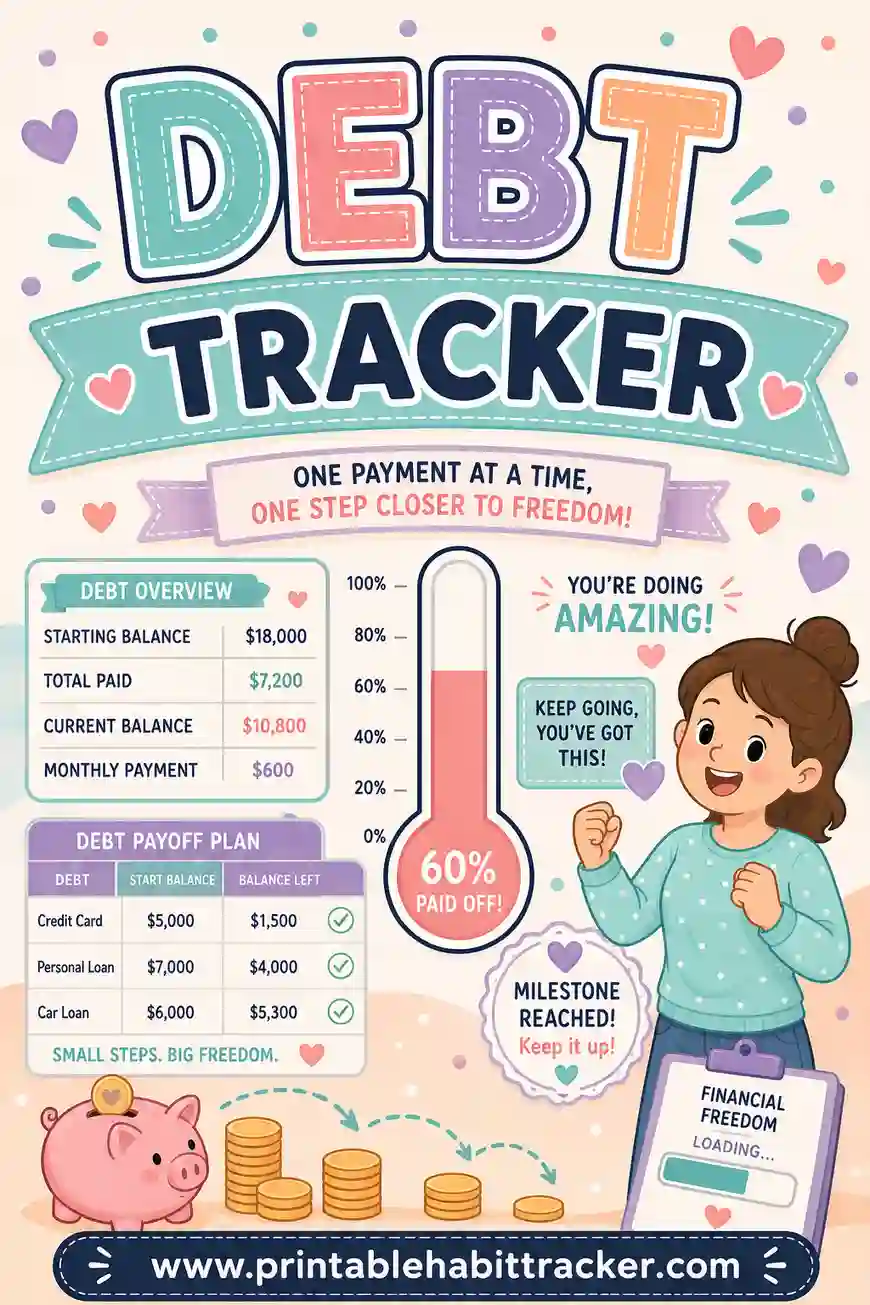
A debt tracker is a scoreboard for your payoff journey. The classic Pinterest version is a coloring thermometer — a drawing you shade in as the balance drops. The version you'll build here is a row-and-column grid, and it tracks something subtly different and arguably more powerful: not just where the balance stands, but whether you're doing the behavior that moves it.
Here's the layout: each debt is a row ("Visa — $3,200," "Car loan — $8,900"). The columns are months — or days, if you're tracking daily money habits. Every time you make a payment, you check or color the box. Twelve colored boxes in the Visa row means twelve straight months of hitting it. The grid is honest about what it is: it won't calculate your balance (write that in — more below), but it makes your consistency visible, and consistency is the entire ballgame in debt payoff.
Because the free builder is custom, the tracker matches your real debts — two rows or ten, snowball order or avalanche order, your call.
Why Seeing Your Progress Changes the Game
Debt fatigue is real. Months of sacrifice, and the number barely budges — so people quit, not because the plan failed, but because it felt like it was failing. A printable debt tracker attacks that feeling directly.
- It rewards the action, not just the outcome. The balance moves slowly, but the box gets colored today. That's a win you can have every single payment.
- Streaks protect the plan. Eight months of filled boxes in a row is something you won't want to break by skipping month nine. The chain does the willpower's job.
- It keeps every debt in view. Debts you're ignoring have a way of growing quietly. A row on the fridge can't be ignored.
- It gets your household on the same page. Partners fight less about money they can both see. The tracker turns "we should really deal with this" into a chart you fill in together.
- Paper has no login. Your banking app shows the balance surrounded by ads for more credit. The tracker shows one thing: progress.
What to Put on Your Debt Tracker
Open your statements and list every debt. This first inventory stings a little — and it's the single most useful money hour most people ever spend.
| Row | What to write | Why |
|---|---|---|
| Each credit card | "Visa — $3,200, min $90" | Balance and minimum in view |
| Car loan | "Car — $8,900, $310/mo" | Fixed payments, easy streaks |
| Student loans | One row per loan or servicer | They move at different speeds |
| Medical debt | "Hospital — $1,400 plan" | Payment plans need tracking too |
| Family loans | "Mom — $500" | Informal doesn't mean forgettable |
| The extra payment | "Extra $100 → smallest debt" | The row that actually wins the war |
That last row is the secret. Minimums keep you afloat; the extra payment is what gets you out. Giving it its own row makes it a habit you track — not a leftover you pay "if there's anything left," because there never is.
Add money habits alongside the debts
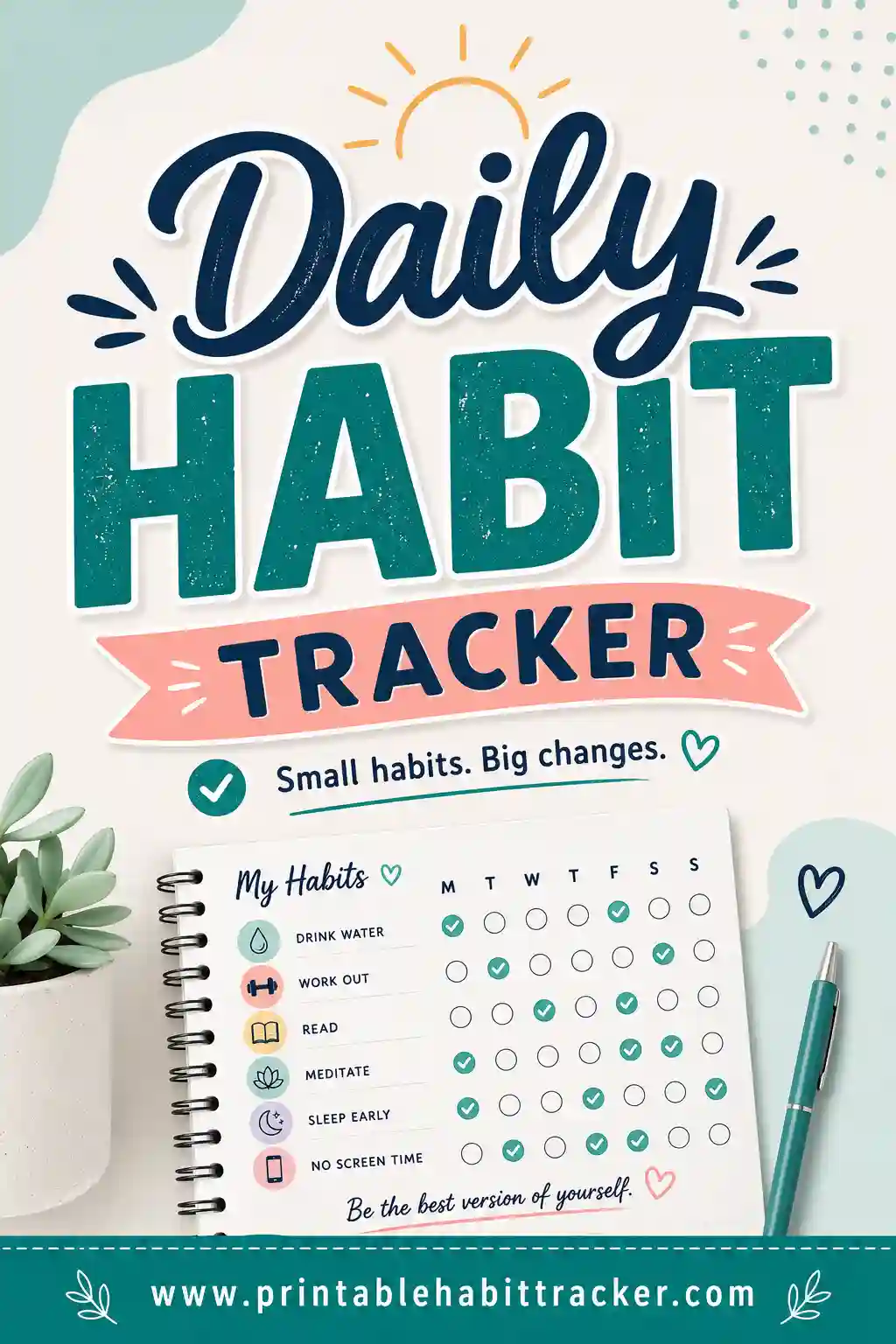
Rows like "no-spend day," "checked balances," "packed lunch," or "moved impulse buy to 24-hour wait list" turn the tracker into the daily behavior engine behind the payoff. Debt shrinks in the boring daily choices, and boring daily choices are precisely what a habit tracker is built to reinforce.
How to Make a Debt Tracker in 4 Steps
- List your debts, one per line. In the free builder, include balance and payment in each name. Order them smallest-first (snowball) or highest-interest-first (avalanche) — more on choosing below.
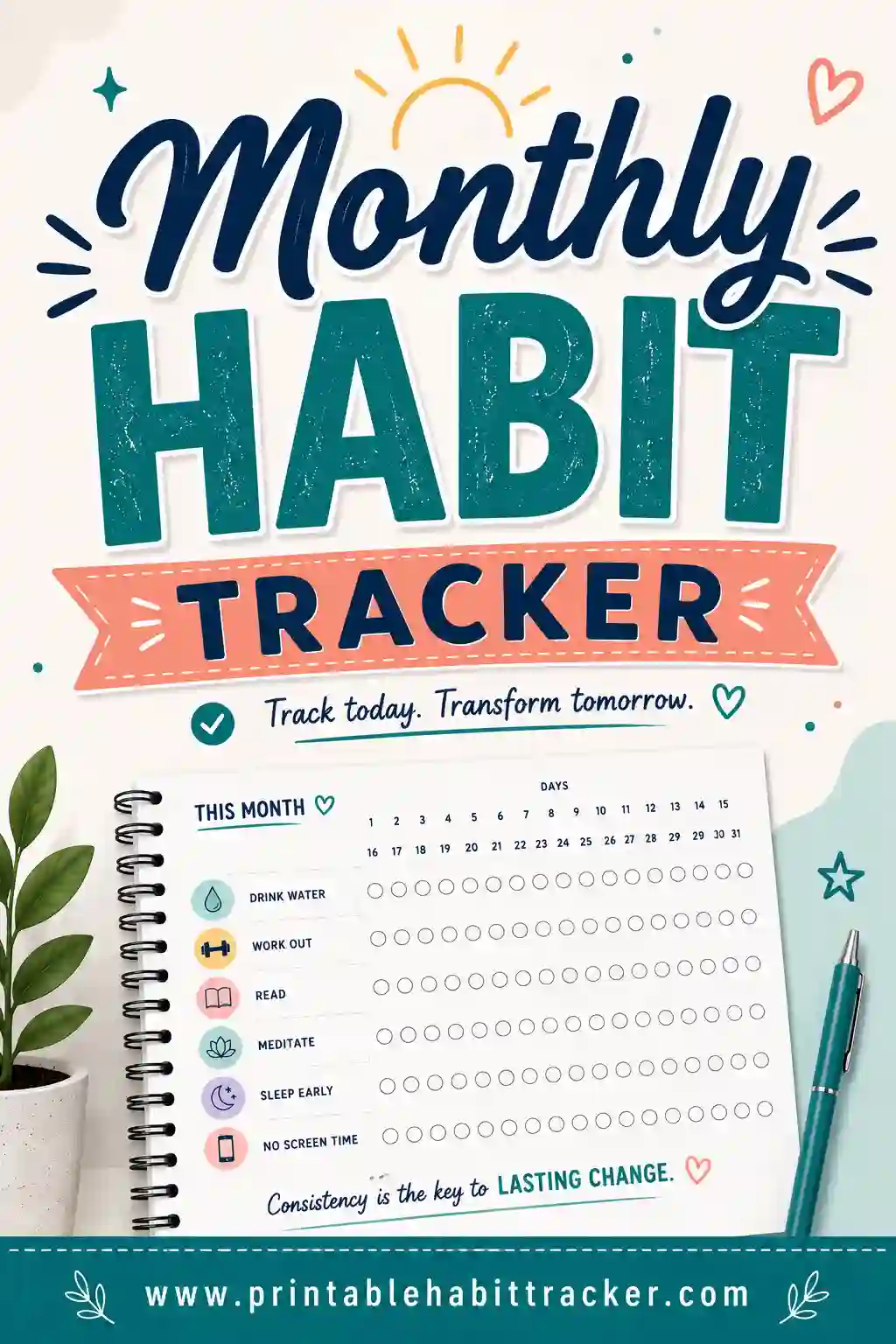
- Pick your layout. The yearly layout is the payoff classic: debts in rows, 12 month-columns across, one box colored per on-time month. For weekly money habits, use the weekly or monthly layout instead.
- Choose the color-in style. Coloring a box beats checking it here — this is the printable answer to the payoff coloring chart, and filling a whole row is genuinely satisfying. Add the reward box ("Visa gone = nice dinner out") and the notes box for balances.
- Print and post it. Fridge, home office, or inside the pantry door if you'd rather keep it private but still see it daily. Fill it in the moment each payment goes through.
Update the notes box monthly with new balances — watching "Visa: $3,200 → $2,850 → $2,480" march down the page in your own handwriting is half the motivation.
Debt Tracker Layouts to Try
The year-at-a-glance grid
Debts down the side, twelve months across. One page shows your entire year of payments — and at December's end, a fully colored grid is a certificate of a year well fought.
The single-debt chain
Attacking one card with everything you've got? The chain layout gives you a full-year color-in grid for that single mission — one square per day you held the line (no new charges, or a daily transfer). "Don't break the chain" was built for exactly this fight.
The snowball board
Order rows smallest debt to largest. When a row's debt hits zero, color the entire row and write PAID across it in marker. Then reprint with one less row — the shrinking chart is the snowball's psychology on paper.
The habits-plus-payments combo
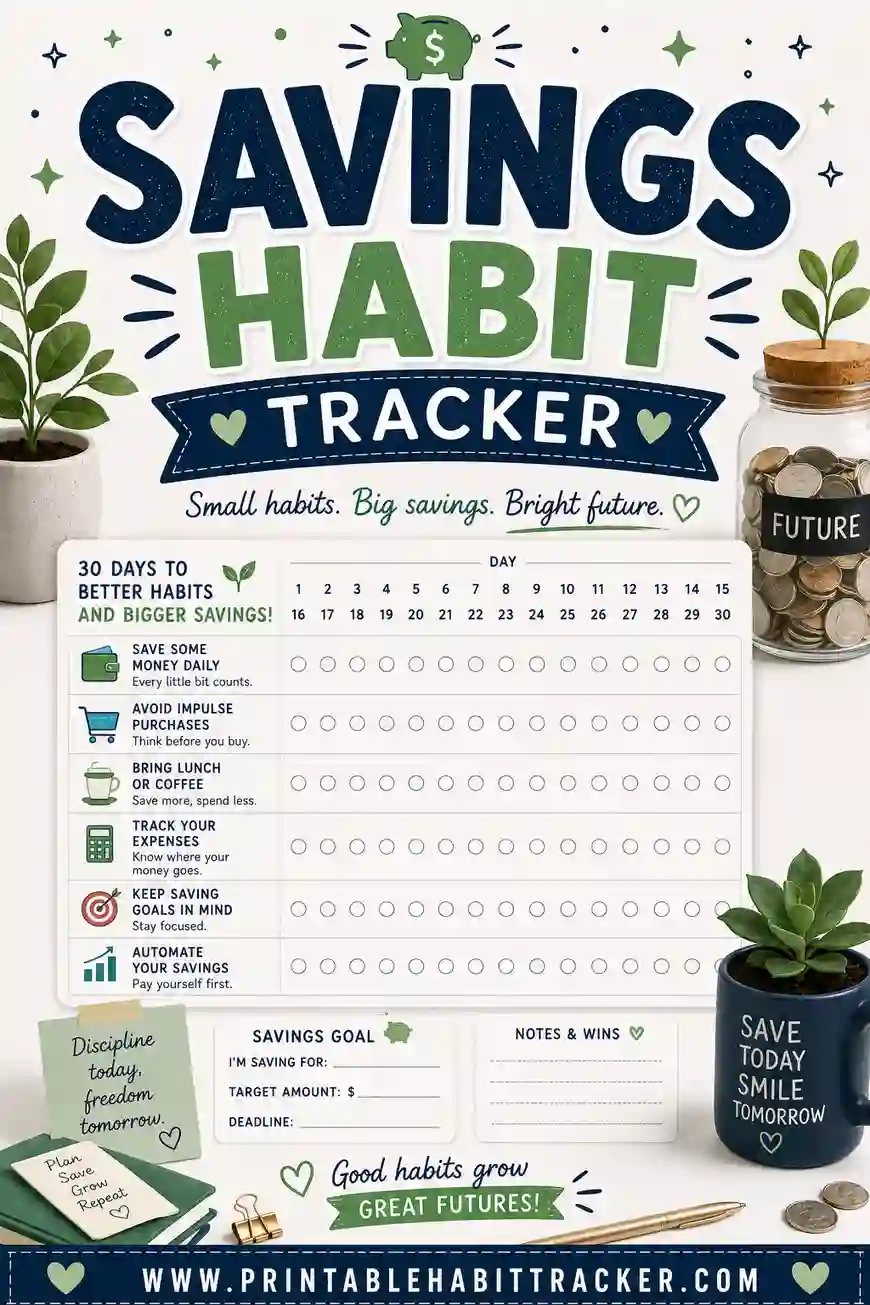
Weekly layout: a few debt actions ("no eating out," "log spending") tracked daily, payment rows checked as they happen. This pairs naturally with a savings habit tracker once the debts start falling — the same boxes that got you out of the hole start filling the emergency fund.
Snowball or Avalanche? (And Why the Tracker Helps Either Way)
Quick, honest primer: the avalanche method pays extra toward the highest-interest debt first and saves the most money mathematically. The snowball method pays extra toward the smallest balance first and wins psychologically — you kill a whole debt fast and feel the momentum. Research on real households keeps finding the same thing: the method you'll stick with beats the method that's optimal on paper, and for most people that's the snowball.
The tracker amplifies whichever you choose. Avalanche folks get streak boxes to stay patient through the long grind of a big high-interest balance. Snowball folks get the joy of coloring out entire rows. Either way, put the debts in payoff order from top to bottom so the chart is the plan.
Printing Tips
- Color-in style, always — the whole point is the shading ritual. Keep one nice marker clipped to the chart.
- Classic black-and-white theme gives your marker colors the spotlight and saves ink; Bold looks striking if you want the chart to feel like a poster.
- Landscape fits long rows like "Student loan (Navient) — $12,400, $180/mo."
- Laminate if you're a wipe-and-reuse person, but most payoff veterans keep the paper copies — a stack of finished, scribbled-on trackers is a trophy shelf.
- Save the PDF so reprinting after each paid-off debt (one glorious row shorter) takes seconds.
Common Debt Tracker Mistakes
- Tracking balances but not behavior. A chart you only update when the balance changes gives you feedback twelve times a year. Track payments and daily money habits too — that's feedback every day.
- Leaving debts off because they're embarrassing. The off-chart debt is the one that grows. Every debt gets a row; the chart doesn't judge.
- No reward milestones. Years of pure austerity fail. Write small planned rewards into the reward box — a paid-off card should be celebrated (cheaply).
- Quitting after one blown month. A missed box is a data point, not a verdict. Color the next one. In a five-year payoff, everyone misses boxes.
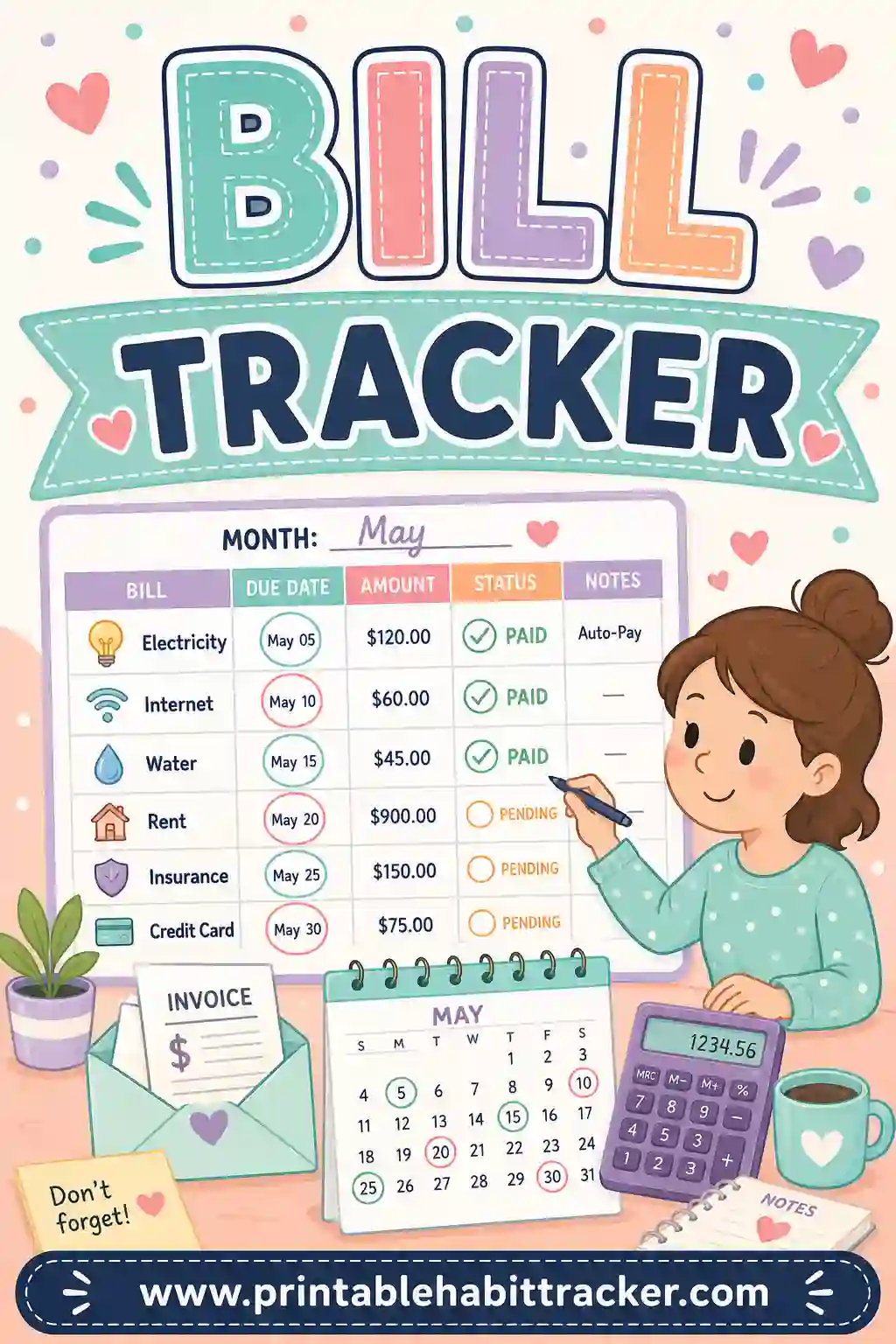
- Ignoring the other half of the system. A debt tracker handles the payoff; a bill tracker makes sure nothing goes late and feeds new fees into the pile. Run both — they're two pages that work as a team.
Frequently Asked Questions
Is the debt tracker printable free?
Yes — completely free, no sign-up, no watermark. Build it in the free tool, print it or save it as a debt tracker printable PDF, and reprint as often as your plan changes.
Does it calculate my balances or interest?
No — it's a printable behavior chart, not a calculator. You write balances in the notes box and update them monthly by hand. That sounds low-tech, but writing the shrinking number yourself is honestly part of what keeps people going. Use any payoff calculator for the math; use the chart for the follow-through.
How is this different from a debt payoff coloring page?
Same spirit, different shape. A coloring thermometer shades in as the balance drops; this grid fills in as payments happen. The grid works better for multiple debts and rewards you every month even when the balance moves slowly — early on, when motivation is most fragile, that matters a lot.
Should I track minimum payments or just extra payments?
Both, as separate rows. Minimums prove the streak ("never missed"), and the extra-payment row is the habit that actually shortens the journey. If space is tight, at least track the extras — that's the behavior you're trying to build.
What layout is best for a debt tracker?
Yearly for the big picture (debts in rows, 12 months across), chain for a single-debt daily war, weekly if you're building daily money habits alongside payments. Plenty of people print two: the yearly on the fridge, the weekly in the planner.
Should the debt tracker hang somewhere visitors can see it?
Only if you want it to. Money is private, and a tracker you hide out of embarrassment is a tracker that stops working. Good private-but-daily spots: inside the pantry door, the bedroom closet door, the inside cover of your planner, or above your desk. The rule is simply that your eyes cross it every day — nobody else's have to.
Ready to Print Your Debt Tracker?
List every debt, pick your order, and open the free debt tracker builder. Color-in boxes, a reward box with your first milestone, balances penciled in the notes — printed and on the wall in ten minutes. It's free, there's no sign-up, and the day you color out your first entire row, you'll understand exactly why paper beats an app for this fight.