Savings Habit Tracker: Free Printable to Hit Your Goal
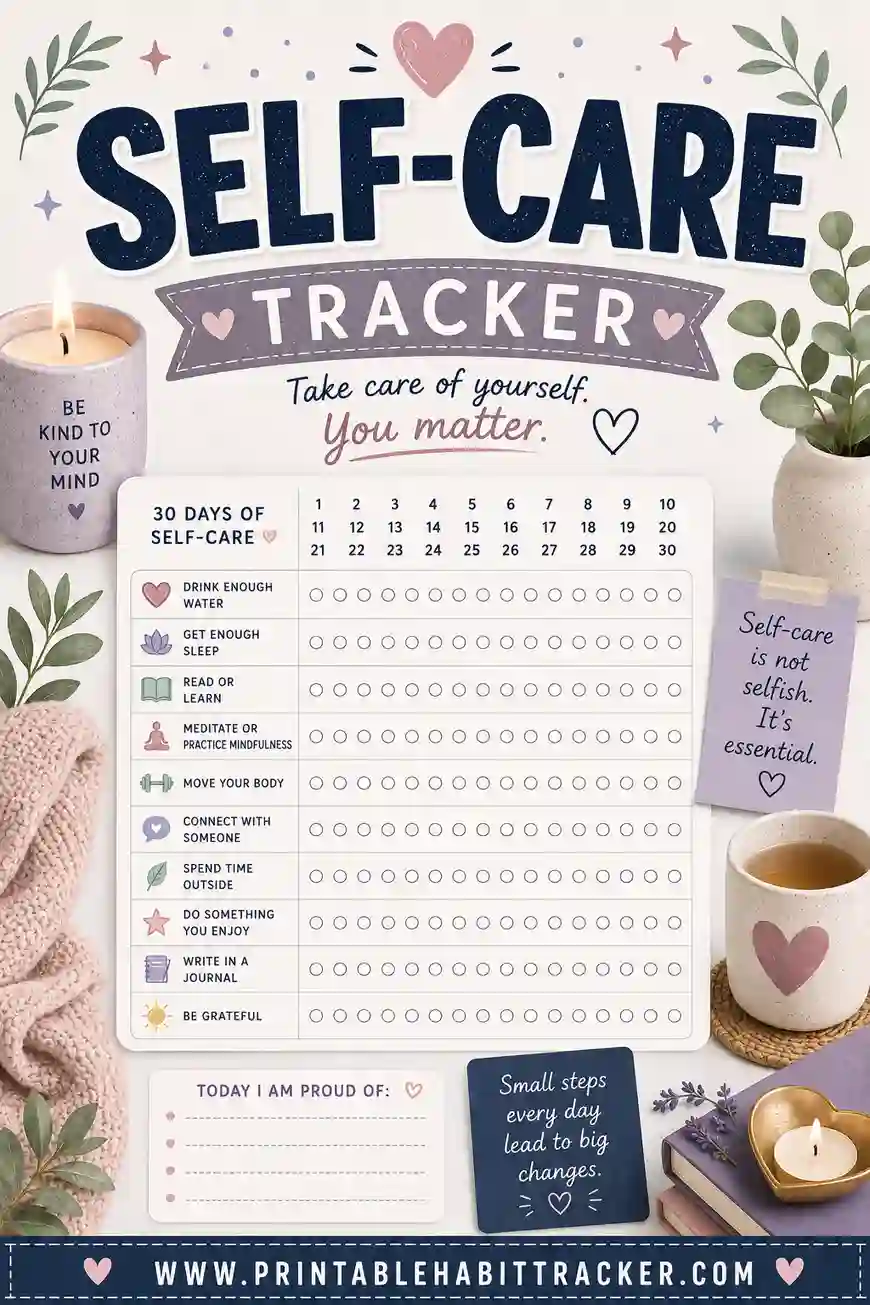
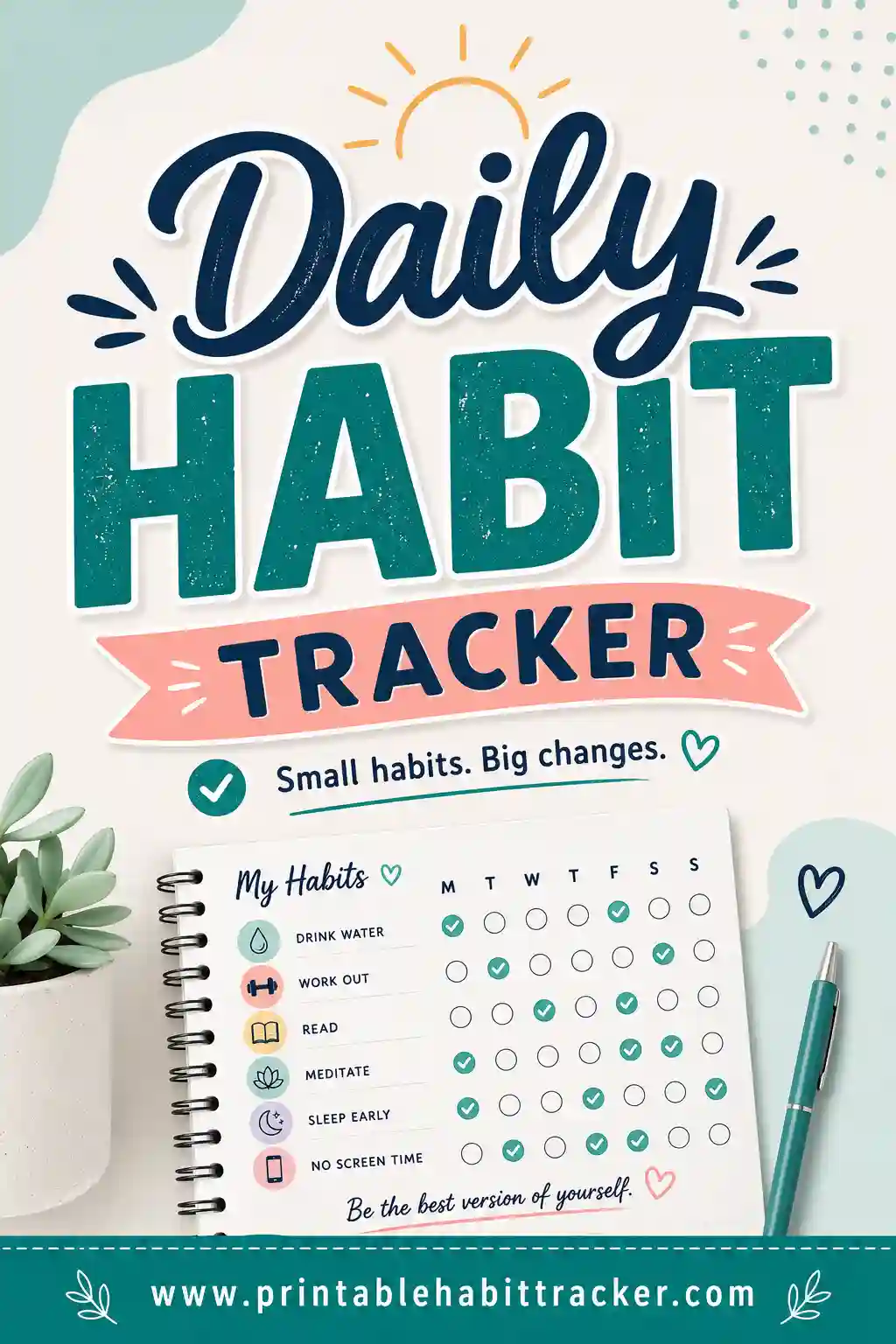
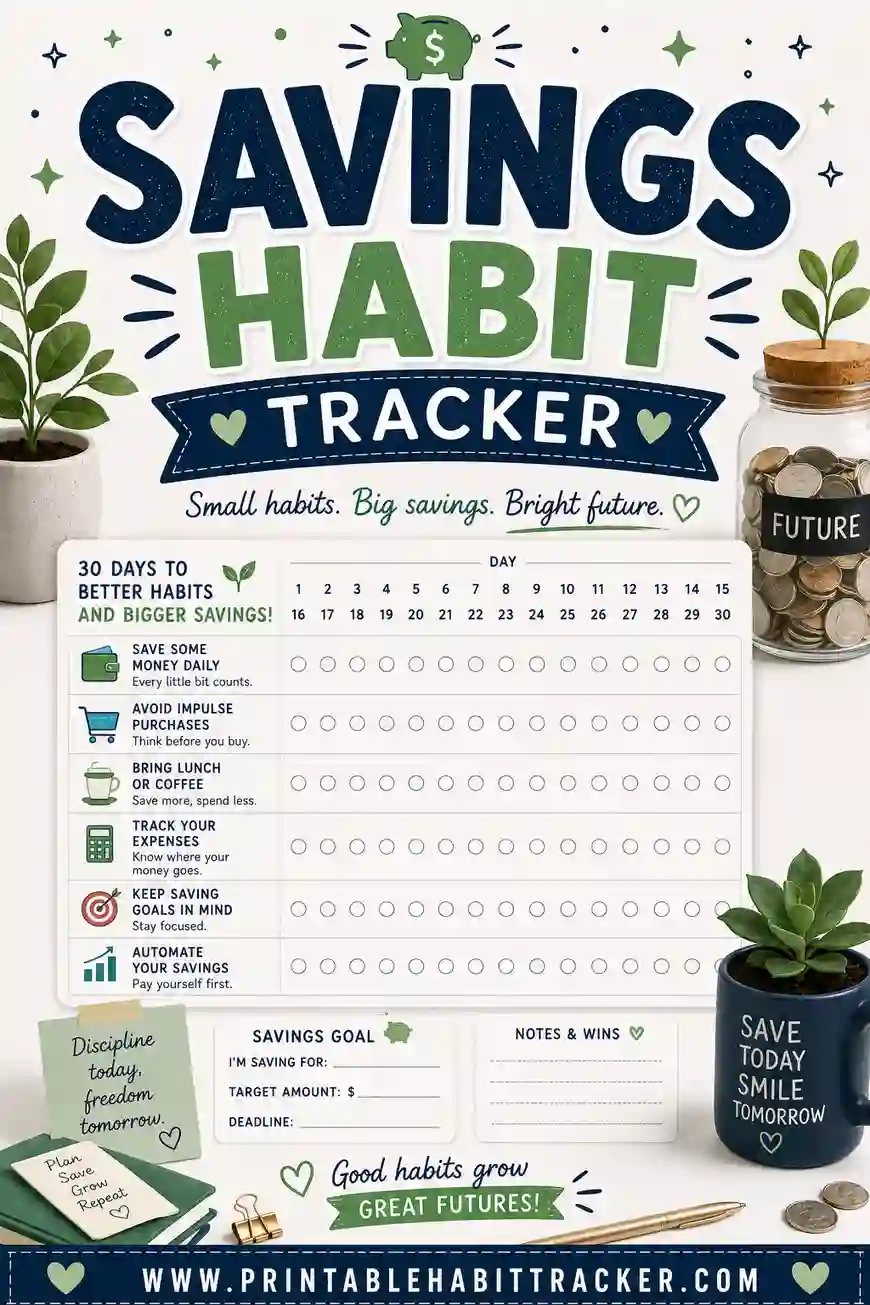
A savings habit tracker is a printable sheet you use to log money habits and watch your progress toward a goal, like checking off "no-spend day," "moved money to savings," or coloring in a bar as your balance grows. Seeing your progress on paper makes saving feel real and keeps you going. The quickest way to make one is with a free printable habit tracker that lets you add your own money habits, pick a layout, and print it at home.
Want to jump in? Open the free tracker maker, add the saving habits you want to build (there's a ready-made list below), choose daily, weekly, or monthly, and print. No sign-up, no app, no fee.
What Is a Savings Habit Tracker?
It's a simple chart that turns saving money from a vague hope into a daily action you can check off. Instead of just glancing at your bank balance and hoping it grows, you track the small habits that actually grow it, and you watch them add up.
There are two common styles, and many people use both:
- A habit grid. Rows of money habits with boxes to check, like "packed lunch" or "skipped the coffee shop." Great for building the daily behaviors that lead to savings.
- A savings chart. A goal broken into chunks you fill in as you save, like a thermometer or a grid of squares worth $5 or $10 each. Great for staying motivated toward a target.
The habit grid builds the behavior. The chart shows the payoff. Together they keep you moving.
Why a Savings Tracker Works
Saving money is mostly about repeating small choices, and small choices are easy to forget or skip. A tracker fixes that.
- It makes saving visible. A balance hidden in an app is easy to ignore. A colored-in chart on your wall is not.
- It builds momentum. Each filled square or checked box is a little win. Wins make you want more wins.
- It catches the leaks. Tracking your no-spend days and skipped impulse buys shows you where your money was quietly going.
The goal isn't to feel guilty about every dollar. It's to make the good habits automatic and the progress impossible to miss.
Money Habits Worth Tracking
Here's a ready-made list. Pick the handful that match your goal. Trying to overhaul your whole financial life at once usually backfires, so start small.
| Habit | Why it helps | How to track |
|---|---|---|
| No-spend day | Breaks the impulse-buy habit | Check the box on days you spent nothing extra |
| Move money to savings | Pays your savings first | One check each time you transfer |
| Pack lunch / make coffee | Small daily savings add up fast | Daily check |
| Skip an impulse buy | Builds the "pause before buying" muscle | Check each time you walk away |
| Round-up to savings | Tiny amounts you won't miss | Log spare change moved over |
| Check your balance | Awareness keeps you honest | A quick daily or weekly check |
| Cancel an unused subscription | One-time win, monthly savings | Mark it off when done |
| Cook at home | Beats the cost of eating out | One check per home-cooked meal |
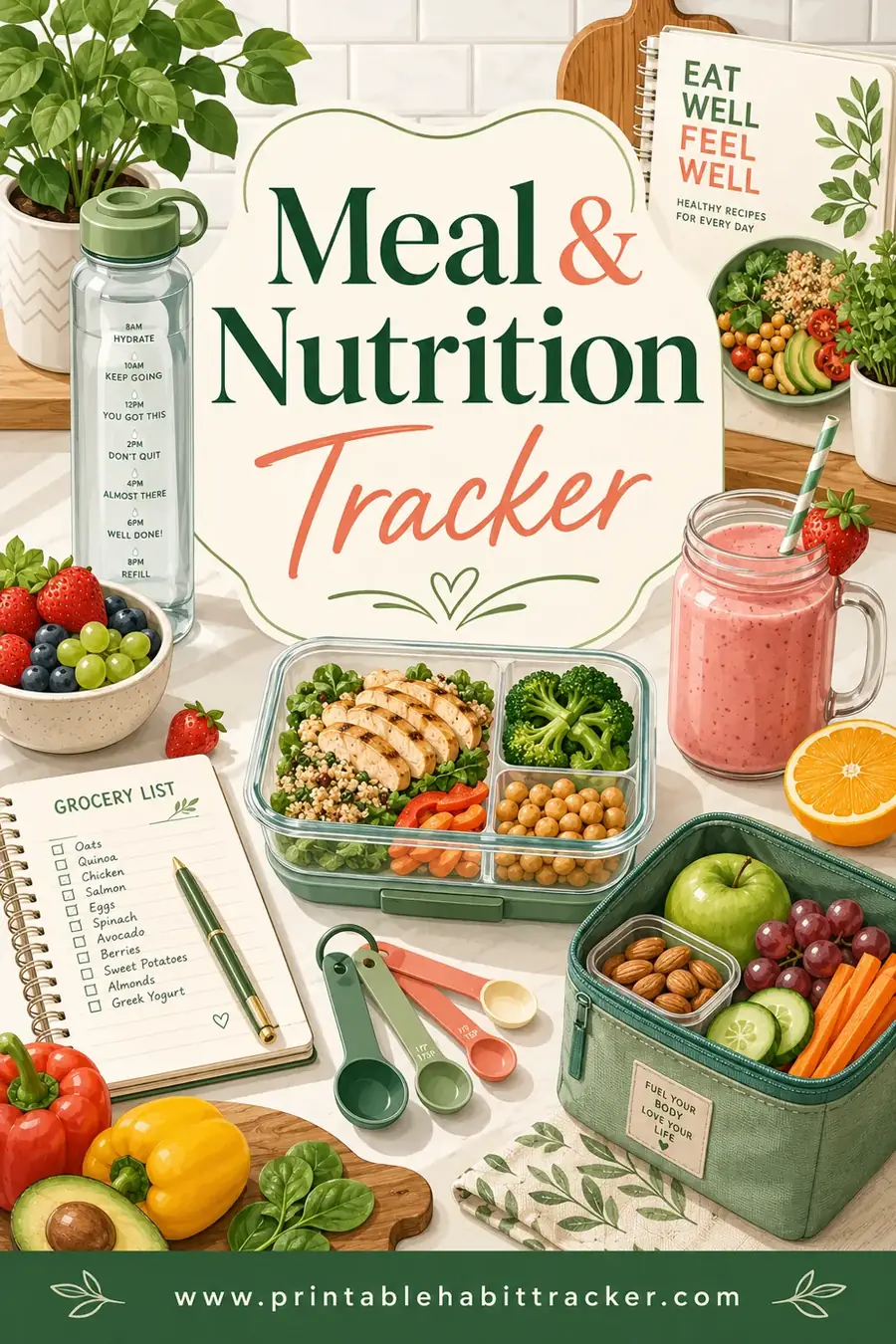
Pick five or six to start. You can always add more once these feel natural. If you're cutting food costs, a meal and nutrition tracker pairs nicely with this one.
Match habits to your goal
Saving for a vacation? Lean on no-spend days and round-ups. Building an emergency fund? Focus on regular transfers. Trimming monthly costs? Track cooking at home and canceled subscriptions. The right habits depend on where your money's going.
How to Make a Savings Habit Tracker in 4 Steps
You don't need a spreadsheet or any money know-how. Here's the whole process.
- Set a clear goal. Pick a number and a deadline, like "$500 by spring." A goal gives the habits a point.
- Choose your habits. Pull five or six from the list above that move you toward that goal.
- Pick a layout. Daily for everyday money habits, weekly for a grid, monthly for the big picture. The tracker maker has all three.
- Print and post it. Put it somewhere you'll see it, your wallet, your fridge, your desk, and check boxes as you go.
That's it. The hardest part is starting, and a printed sheet makes starting easy.
Turn Your Goal Into a Savings Chart
Habit grids build behavior, but a visual goal chart is what keeps the fire lit. Break your target into bite-sized chunks and color one in every time you save.
Here's how a simple $500 chart might be chunked:
| Each square = | Squares to fill | Reach this and you've saved |
|---|---|---|
| $10 | 50 squares | $500 |
| $25 | 20 squares | $500 |
| $50 | 10 squares | $500 |
Smaller squares mean more frequent wins, which feels great early on. Bigger squares fill faster and suit larger goals. Pick whatever keeps you motivated. Coloring in that final square is genuinely satisfying, and it's a reward you can see.
The classic envelope and challenge methods
Two old-school tricks pair perfectly with a tracker:
- The no-spend challenge. Pick a week or month and track every no-spend day. Aim to beat your last streak.
- The round-up jar. Every time you buy something, round up and stash the difference. Log it on your tracker. Small change adds up shockingly fast.
Where to Keep Your Tracker
A savings tracker only works if it nags you, gently, every day. Put it where your spending decisions happen.
In your wallet
Slip a small habit card behind your cards. Right before you tap to pay, you see your goal. That pause alone stops a lot of impulse buys.
On the fridge
A big, colorful savings chart on the fridge turns saving into a family thing. Everyone can cheer as the squares fill in.
On your desk or by your computer
Most impulse shopping happens online. A tracker next to your screen is a quiet reminder before you hit "buy now."
Keeping the Habit Going
A printable tracker is the tool. A few small routines make it stick.
- Check it daily. Same time each day, like every evening, turns it into a quick ritual.
- Celebrate small wins. Hit a savings milestone? Mark it big. Momentum matters more than the amount.
- Don't quit over a slip. Spent more than planned one week? Fine. Start the next week clean. One bad week isn't failure.
- Review monthly. Look back and ask which habits are actually moving the needle, then double down on those.
- Make saving automatic. The best habit is the one you don't have to think about. Set up an auto-transfer and just check the box.
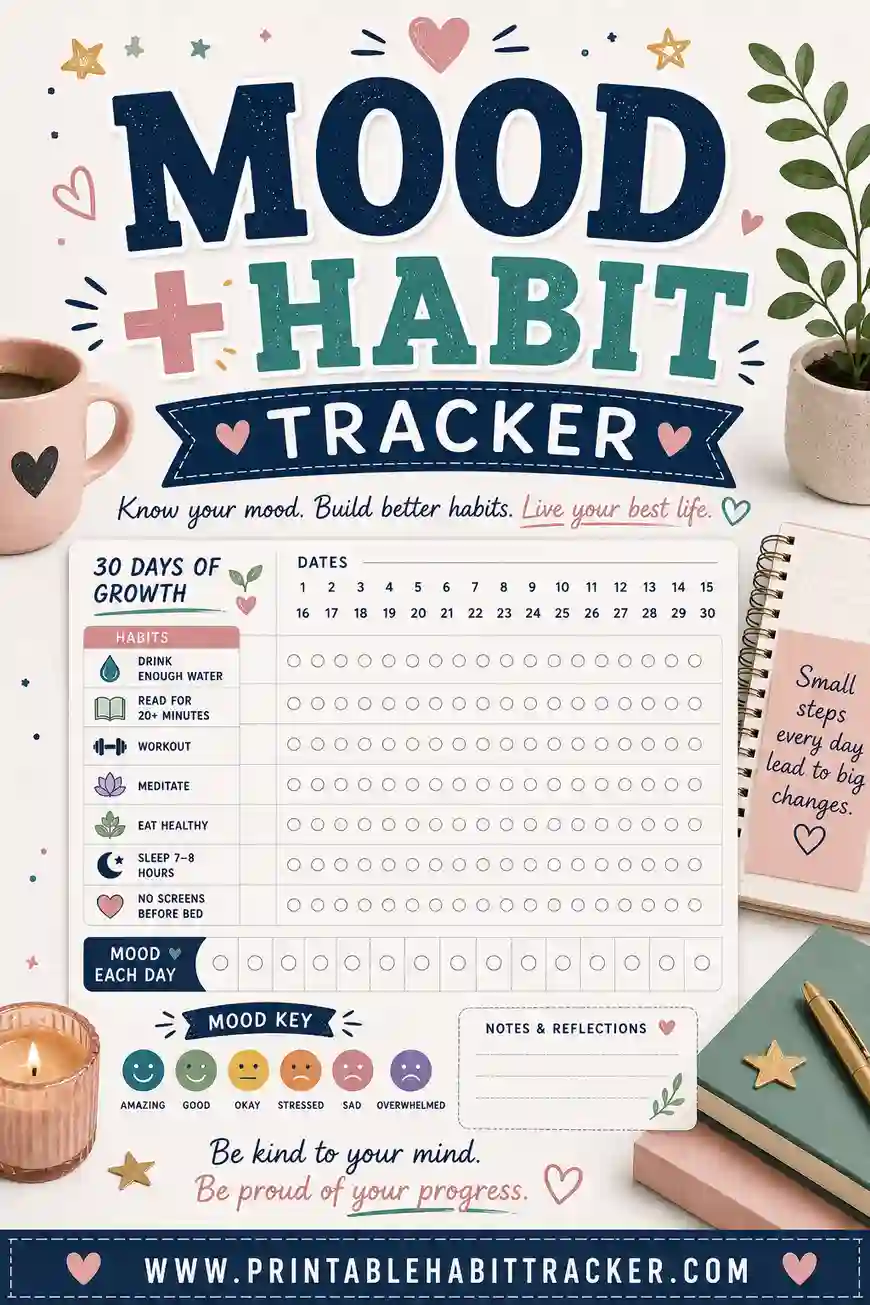
Tracking your money and tracking your mood can go hand in hand, too. Money stress is real, and a mood and habit tracker can help you see when financial pressure is weighing on you.
Who a Savings Habit Tracker Is Great For
Saving looks different depending on your situation, and a printable tracker bends to fit. A few people who get the most from one:
First-time savers
If you've never managed to save before, a tracker makes the habit visible and the wins frequent. Starting with tiny goals, like five no-spend days, builds the confidence to tackle bigger ones. Small, early wins are everything when you're new to this.
People paying down debt
The same chart that fills up as you save also works as you pay down a balance. Color in a square for every chunk you knock off, and watching the debt shrink becomes oddly satisfying instead of stressful.
Families saving for a shared goal
A big chart on the fridge turns a vacation or a new couch into a team effort. Kids love coloring squares, and everyone feels the progress. Shared goals are easier to hit when the whole household can see them.
Anyone with a "leaky" budget
If your money seems to vanish and you're not sure where, tracking no-spend days and skipped impulse buys shines a light on the leaks. You can't plug a leak you can't see, and a tracker makes the small, sneaky spending obvious.
Frequently Asked Questions
What habits should go on a savings tracker?
Start with the basics: no-spend days, regular transfers to savings, packing lunch, and skipping impulse buys. Pick five or six that match your specific goal, whether that's an emergency fund, a vacation, or cutting monthly costs.
How do I track progress toward a savings goal?
Break your goal into small chunks, like squares worth $10 or $25 each, and color one in every time you save that amount. Watching the chart fill up is motivating and makes your progress impossible to ignore.
Is this savings habit tracker free to print?
Yes. You build and print it yourself at no cost, with no sign-up and no watermark. One free sheet can carry you through a whole month of saving.
Daily or monthly, which layout is better for saving?
Use a daily layout for everyday money habits like no-spend days, and a monthly layout for the big-picture goal chart. Many people run both: a daily grid for behavior and a monthly chart for the payoff.
What if I have a week where I overspend?
It happens to everyone. Don't quit over one rough week. Just start the next week with a clean sheet. A tracker is about long-term momentum, not a perfect record.
Can a savings tracker work for the whole family?
Definitely. A big savings chart on the fridge turns a shared goal, like a family trip, into something everyone can root for. Kids especially love coloring in the squares as the total grows.
Ready to Build Your Savings Habit Tracker?
Set a goal, pick a few money habits, open the free tracker maker, and print. In a couple of minutes you'll have a custom savings habit tracker ready to fill in, no app and no cost. Stick it where you'll see it, check those boxes, and watch your savings grow one small win at a time. You've got this.