Habit Stacking Explained: A Simple Way to Build Habits That Stick
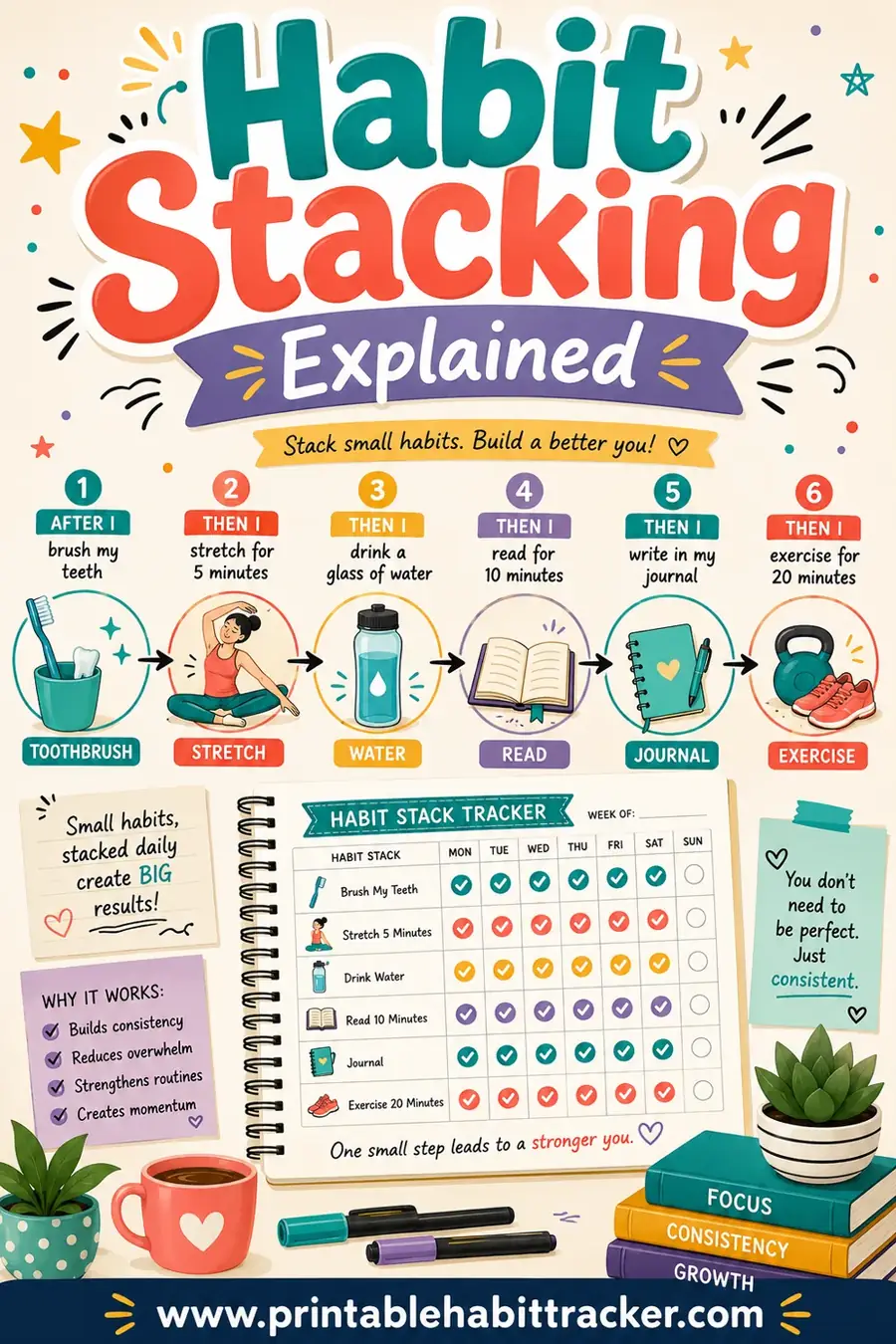
Habit stacking means attaching a new habit you want to build onto a habit you already do every day, using a simple formula: "After I [current habit], I will [new habit]." Instead of relying on willpower or a reminder you'll ignore, you let an existing routine pull the new behavior along with it. It's one of the easiest ways to make a habit stick, and it gets even stronger when you mark each one off on a tracker.
Want to put it into action today? Open the free printable habit tracker, list your stacked habits, and print a grid you can check off each morning. No app, no sign-up, no fee. The habit you build is the one you can actually see yourself doing.
What Is Habit Stacking?
Habit stacking is a trick for building new habits by anchoring them to ones you already have. The idea comes from a simple truth: you already do dozens of things on autopilot every day. You brush your teeth. You pour your coffee. You sit down at your desk. Those automatic actions are perfect launch pads for something new.
The formula is short and easy to remember:
After I [current habit], I will [new habit].
So instead of a vague goal like "I want to read more," you get a specific cue: "After I pour my morning coffee, I will read one page." The current habit becomes the reminder. You don't have to remember to start the new one, because the old one does it for you.
The phrase was popularized by James Clear in Atomic Habits, but the underlying idea is older. Psychologists call it "implementation intention," which is a fancy way of saying you've decided in advance exactly when and where a behavior will happen. That decision is half the battle.
Why Habit Stacking Works So Well
Most habits fail for the same reason: there's no clear trigger. You mean to floss, meditate, or stretch, but the moment never arrives because nothing reminds you. Habit stacking fixes that by borrowing a trigger you already have.
Here's why it's so effective:
- It removes the "when" question. You're not waiting for the right moment. The moment is baked into your day.
- It uses momentum. Finishing one habit gives you a small win, and you ride that energy straight into the next one.
- It's specific. "Exercise more" is a wish. "After I take off my work shoes, I will do ten squats" is a plan.
- It's low effort to start. You're not building a routine from scratch. You're adding one link to a chain that already exists.
The catch is that your brain still needs proof it's working. That's where tracking comes in. When you check off a stacked habit on a printable tracker, you get a visible streak, and that streak becomes its own little reward that keeps you going.
The Habit Stacking Formula (With Real Examples)
The whole method fits on one line, but it helps to see it filled in. Here are stacks for common goals. Notice how each new habit hangs off something that already happens reliably.
| Current habit (the anchor) | New habit (the stack) |
|---|---|
| After I pour my morning coffee | I will write down three things I'm grateful for |
| After I sit down at my desk | I will drink a full glass of water |
| After I brush my teeth at night | I will lay out tomorrow's clothes |
| After I close my laptop for the day | I will take a five-minute walk |
| After I get into bed | I will read one page of a book |
| After I finish lunch | I will take ten deep breaths |
| After I start the dishwasher | I will do two minutes of tidying |
The pattern is always the same. Find something you already do without thinking, then bolt the new habit onto the end of it. Start tiny. "One page" beats "read for an hour" because tiny habits actually get done, and done is what builds the streak.
How to Build Your First Habit Stack in 5 Steps
You don't need an app or a system. You need one anchor and one small new habit. Here's the whole process.
- List your reliable daily habits. Things you do every single day without fail: making coffee, showering, commuting, eating dinner. These are your anchors.
- Pick one new habit you want. Keep it small enough that it feels almost too easy. Two minutes is a great ceiling at the start.
- Write the stack sentence. "After I [anchor], I will [new habit]." Say it out loud. It should sound obvious.
- Put it where you'll see it. Stick a note by the anchor, or better, write it on your habit tracker so you check it off in the same spot every day.
- Track every rep. Mark the box each time you do it. The chain of checkmarks is the proof your brain needs to make it automatic.
That fifth step is the one people skip, and it's the one that matters most. A stack you can see is a stack you keep. Print a tracker, hang it where the anchor habit lives, and let the checkmarks pile up.
How to Stack More Than One Habit
Once a single stack feels automatic, usually after a couple of weeks, you can chain more habits together into a routine. This is how morning and evening routines get built without it feeling like a chore.
A morning stack might look like this:
- After I turn off my alarm, I will drink a glass of water.
- After I drink water, I will do two minutes of stretching.
- After I stretch, I will write down my top task for the day.
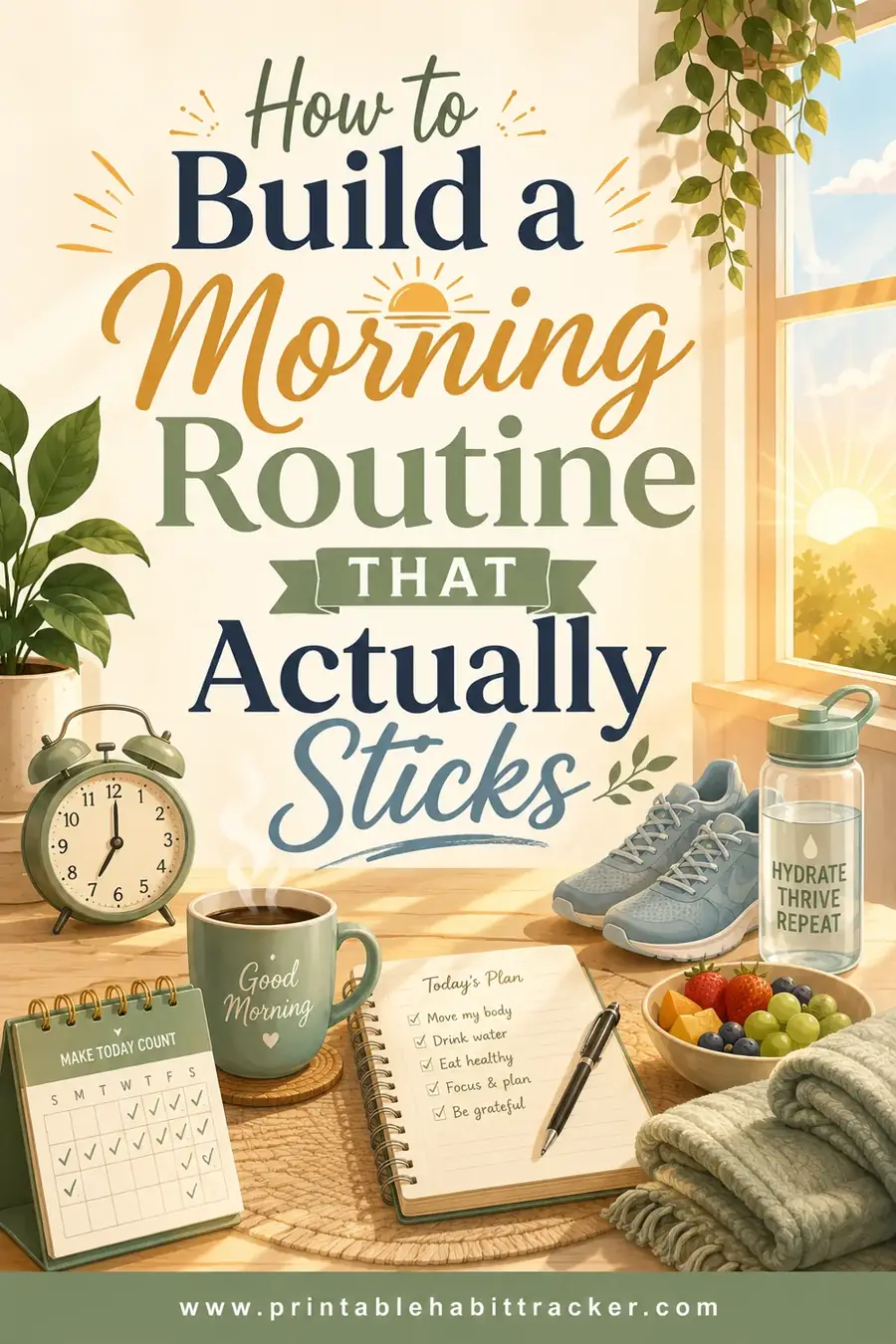
Each habit is the trigger for the next. The whole sequence flows because every link is short and the order never changes. If you want help designing one of these from scratch, our guide on how to build a morning routine walks through it step by step.
Don't stack too fast
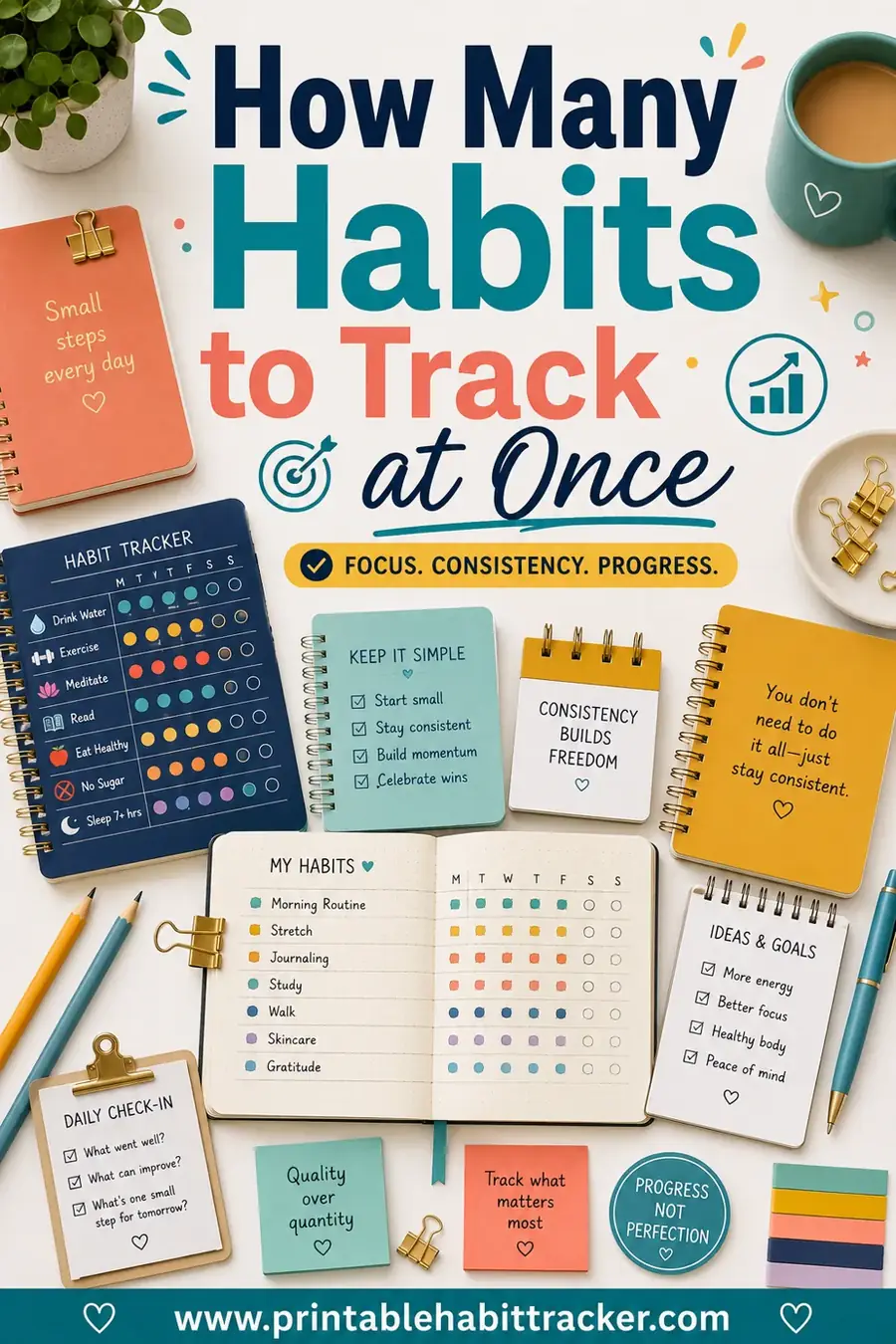
The most common mistake is bolting on five new habits at once. Your anchor can only carry so much before the whole chain collapses. Add one link, let it settle, then add the next. A tracker makes this easy to manage because you can literally see which links are solid and which are slipping. If you're not sure how much is too much, how many habits to track at once lays out a sensible cap.
Common Habit Stacking Mistakes to Avoid
Habit stacking is simple, but a few missteps can quietly sink it. Watch for these.
- A shaky anchor. If your anchor habit isn't truly automatic, the stack has nothing to hold onto. Pick something you've done daily for years.
- A new habit that's too big. "After dinner, I will work out for an hour" is doomed. Shrink it. "After dinner, I will put on my workout shoes" is a start.
- A vague trigger. "In the morning" isn't a trigger. "After I pour my coffee" is. Tie it to a specific, physical moment.
- No tracking. Without a record, you can't tell a two-day slip from a two-week one. The checkmark is your early-warning system.
- Stacking in the wrong place. Your new habit should fit the energy and location of the anchor. Don't stack "go for a run" onto "get into bed."
Here's a quick before-and-after to show the difference a small fix makes.
| Weak stack | Strong stack |
|---|---|
| I'll exercise more in the mornings | After I brush my teeth, I will do five push-ups |
| I want to drink more water | After I sit at my desk, I will fill my water bottle |
| I should read more | After I get in bed, I will read one page |
| I'll meditate sometime | After I finish breakfast, I will breathe slowly for one minute |
Tracking Your Habit Stacks on Paper
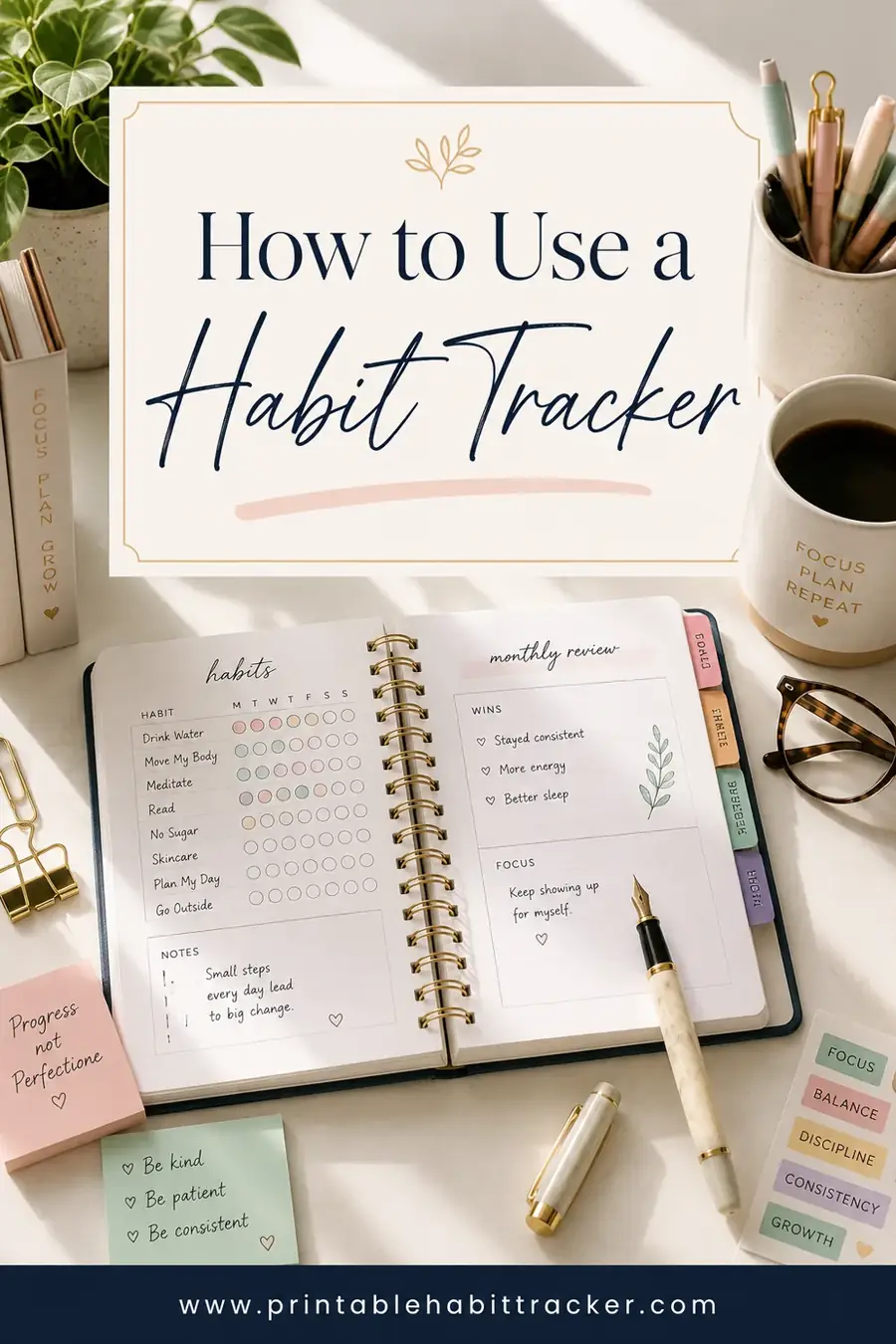
You can track stacks in your head, but paper wins for a reason: it's right in front of you, it can't be ignored with a swipe, and crossing off a box feels good. A printable tracker turns an invisible intention into a visible streak.
Set yours up like this:
- One row per stacked habit. Write the full stack sentence, or just the new habit, in the label.
- A column for each day. A week per page keeps it simple. A month per page shows bigger trends.
- Group your stacks. Put your morning stack rows together and your evening rows together so the page mirrors your real day.
- Hang it at the anchor. Tape the morning sheet to the fridge or coffee maker. Put the evening sheet on the nightstand.
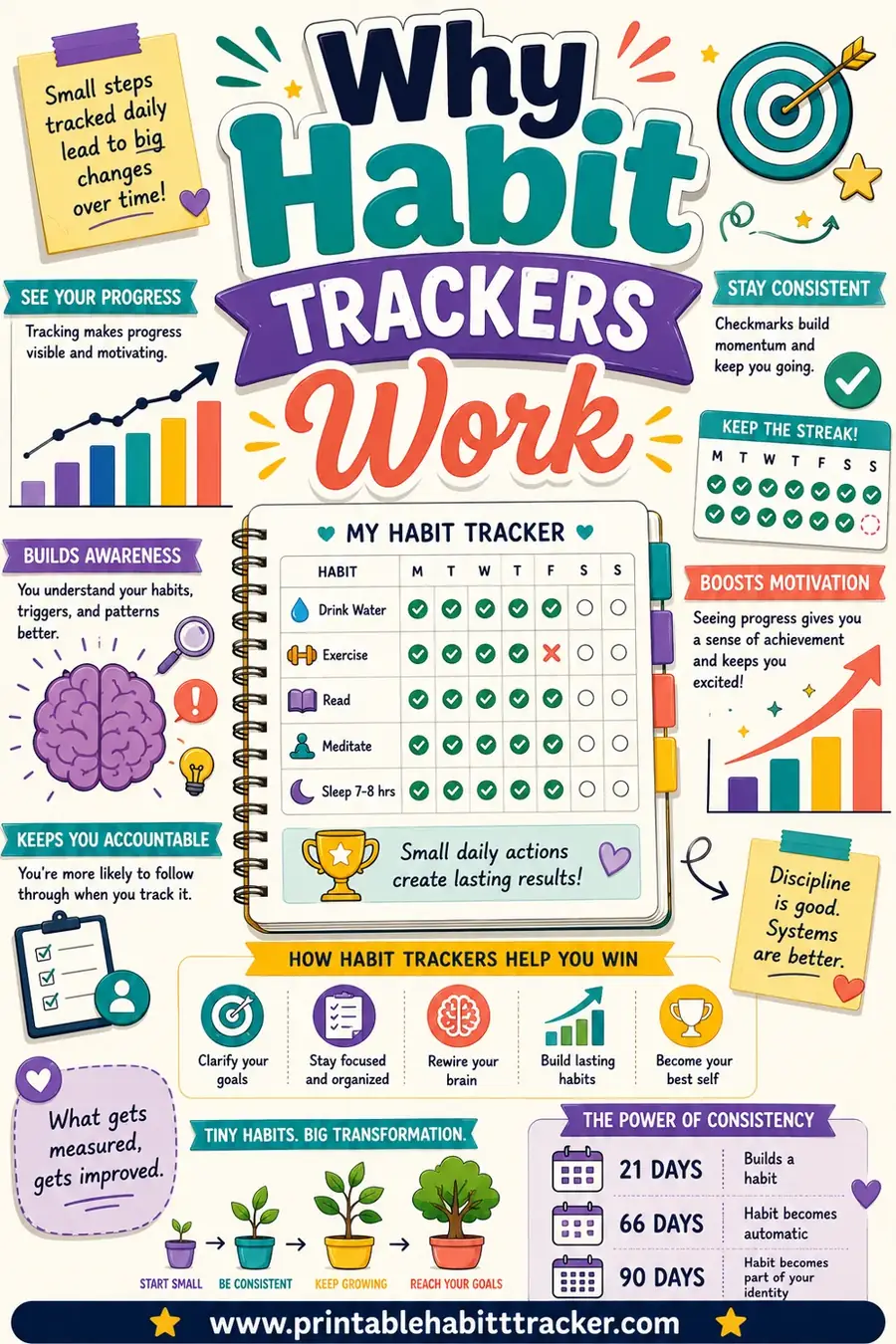
When you can see seven checkmarks in a row, you don't want to break the chain. That simple pull is what carries a habit from "I'm trying" to "this is just what I do." For more on why this works, see why habit trackers work.
Frequently Asked Questions
What is habit stacking in simple terms?
Habit stacking is attaching a new habit to one you already do, using the formula "After I [current habit], I will [new habit]." The existing habit acts as a built-in reminder, so you don't have to rely on memory or motivation to start the new one.
Does habit stacking actually work?
Yes, for most people, because it solves the hardest part of habit building: remembering to start. By tying a new behavior to an automatic one, you remove the guesswork about when to act. Tracking each rep on a checklist makes it stick even faster.
How many habits can I stack at once?
Start with one. Once it feels automatic, usually after two to three weeks, add a second. Chaining more than two or three new habits at once tends to overload your anchor and the whole stack falls apart. A tracker helps you see when a new link is solid enough to add another.
What makes a good anchor habit?
A good anchor is something you already do every single day without thinking, like making coffee, brushing your teeth, or sitting down at your desk. The more automatic and specific the anchor, the more reliably it will trigger your new habit.
How long until a stacked habit becomes automatic?
It varies by person and habit, but most simple stacks start feeling automatic in two to four weeks of daily reps. Bigger or more disruptive habits take longer. A visible streak on a printable tracker keeps you going through the early stretch when it still takes effort.
Do I need an app to do habit stacking?
No. A pen and a printed tracker work just as well, and many people find paper easier to stick with because it's always visible and there's no app to forget about. You can print a free habit tracker and start today.
Start Your First Habit Stack Today
Habit stacking takes the hard part out of building habits: you stop relying on willpower and let a routine you already have do the heavy lifting. Pick one solid anchor, add one tiny habit, write the stack sentence, and track every rep. Open the free printable habit tracker, list your stacks, and print a grid you can check off each day. Build the chain one checkmark at a time, and watch a small habit turn into something you do without even thinking.