How Many Habits to Track at Once (Without Burning Out)
For most people, the sweet spot is three to five habits at once. That's enough to make real progress without overwhelming yourself, and it keeps your tracker something you'll actually keep up with. If you're brand new to habit tracking, starting with just one or two is even smarter. The goal isn't to fix your whole life by Friday. It's to build a few habits so solid they run on their own, then add more from a stable base.
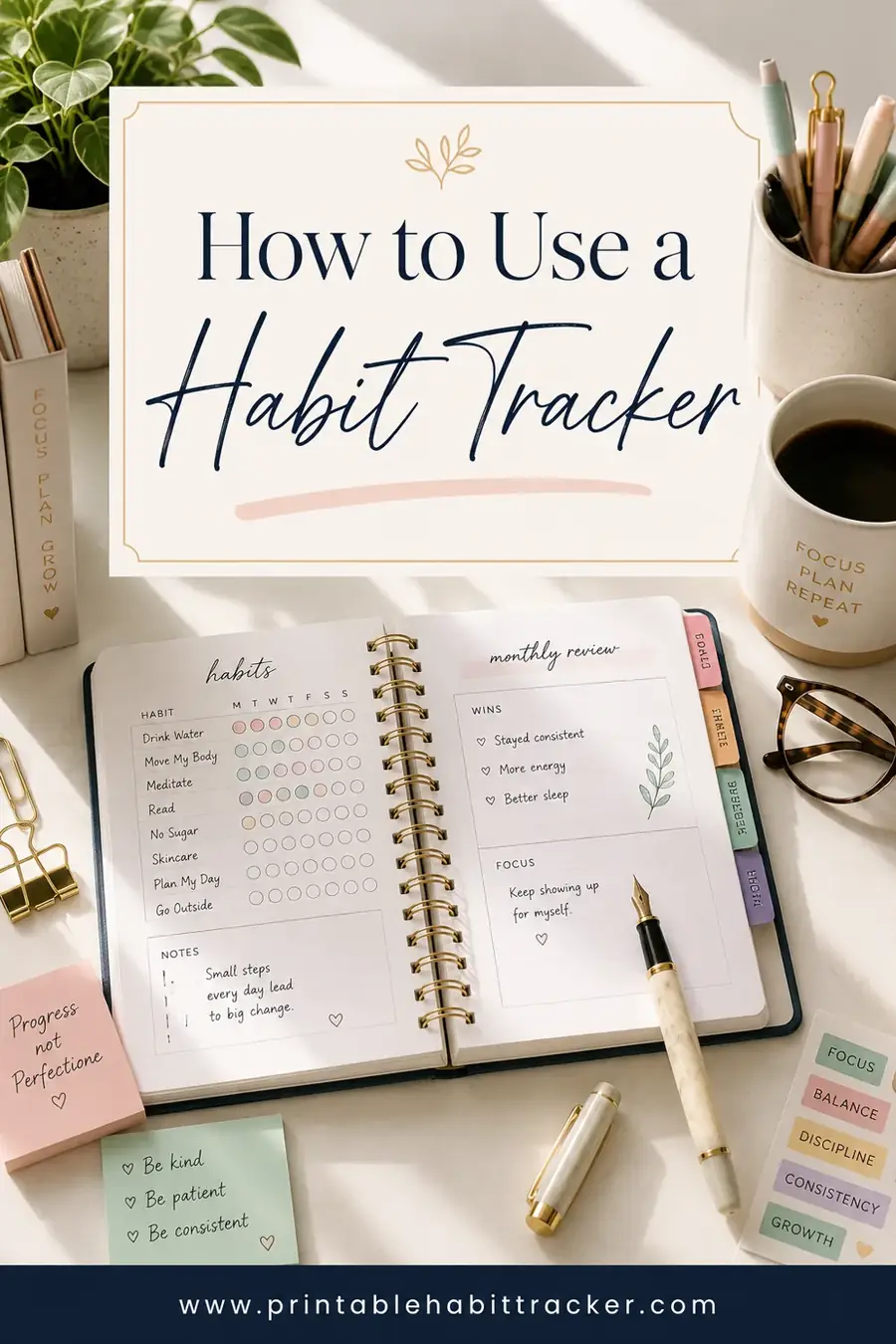
Ready to pick your handful and get going? Open the free printable habit tracker, add your top few habits, and print a grid you can check off daily. No app, no sign-up, no fee. A short, focused tracker beats a long, abandoned one every time.
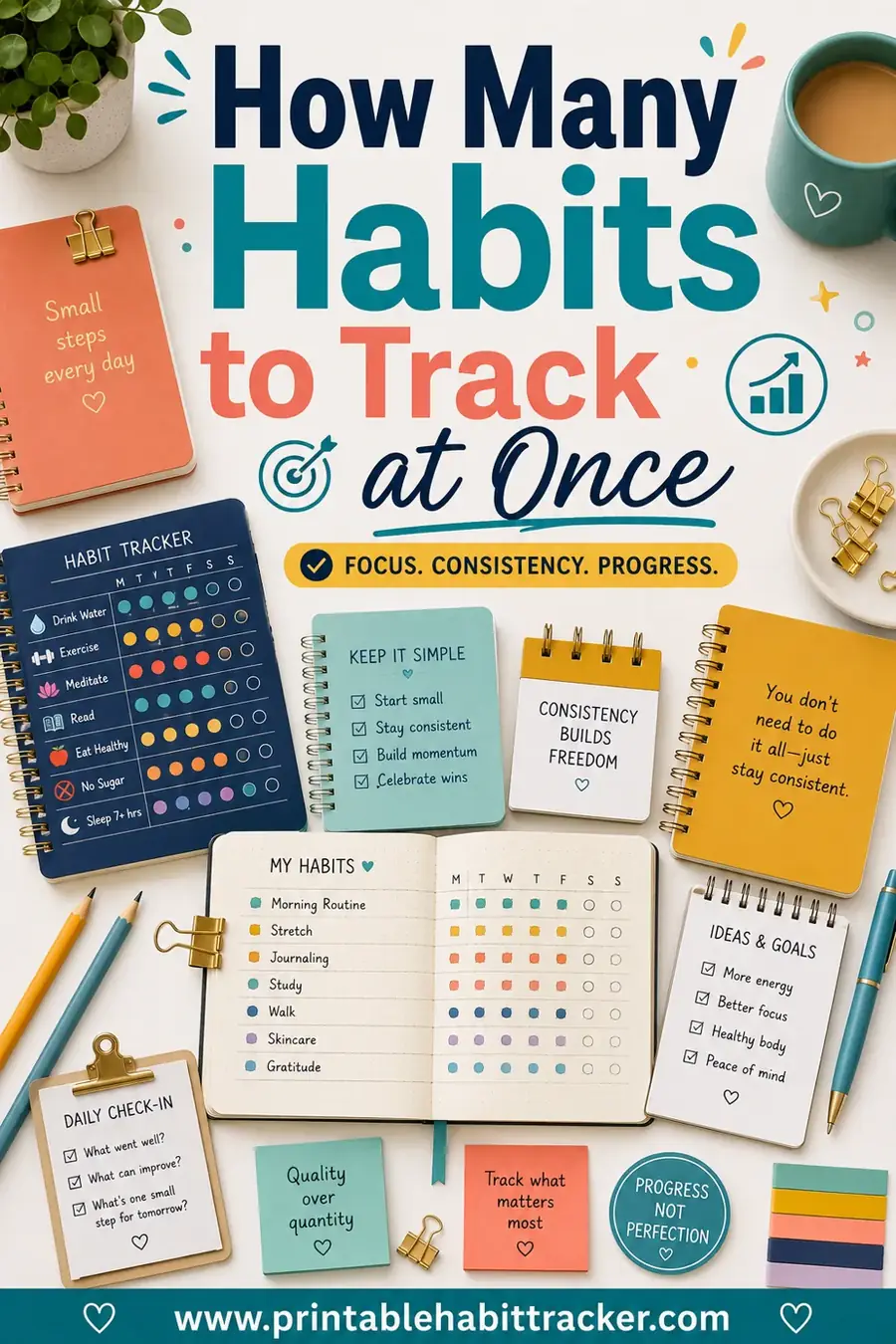
The Short Answer: Three to Five Habits
If you want one number to go with, make it three to five. That range hits the balance between meaningful progress and being able to keep up. Track three to five habits and you can give each one real attention, check them all off most days, and feel the satisfying pull of a full row of checkmarks.
Here's a quick guide based on where you're starting:
| Your situation | Habits to track |
|---|---|
| Brand new to habit tracking | 1–2 |
| Comfortable and consistent | 3–5 |
| Experienced, habits feel automatic | 5–7 (carefully) |
| Tempted to track everything | Pull back, you'll burn out |
Notice the top of that range maxes out around seven, and even that comes with a warning. Once you're juggling too many, the tracker stops feeling like a win and starts feeling like a to-do list you keep failing. That's the opposite of what you want.
Why Fewer Habits Stick Better
It feels backwards. If three habits are good, shouldn't ten be three times better? In practice, no. Trying to build a pile of habits at once almost always works worse than focusing on a few. Here's why.
- Willpower is limited. Every new habit draws on the same well of self-discipline. Spread it across ten habits and each one gets a trickle. Focus it on three and each gets a real push.
- Attention is limited. You can only consciously work on so many things before they all blur together and none get done well.
- Misses snowball. With ten habits, you'll miss some every day just from the sheer number. A tracker full of blank boxes feels discouraging, and discouragement kills momentum.
- Habits need repetition to automate. A habit becomes automatic through consistent reps. Split your energy too thin and none of them get the consistency they need to stick.
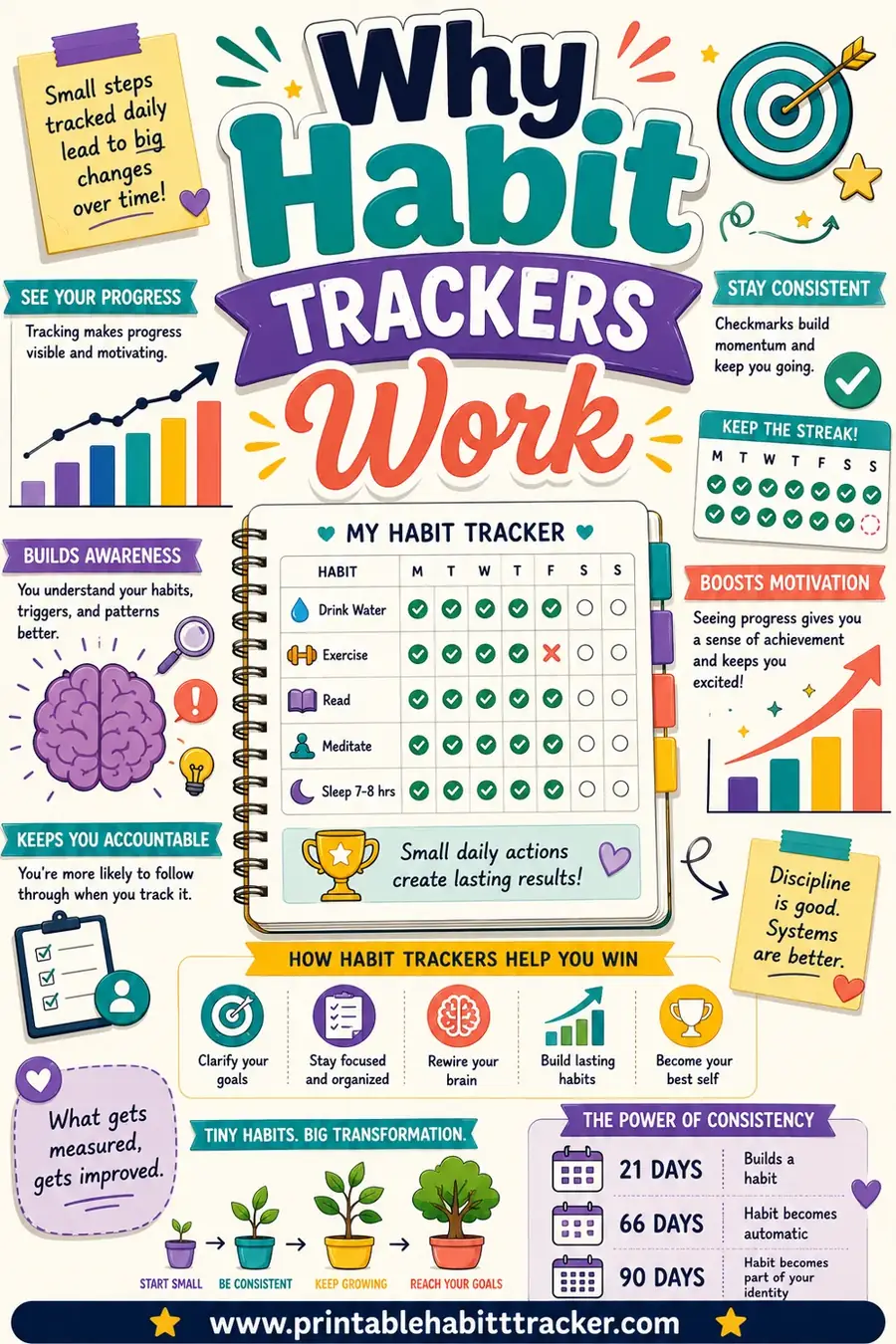
The math is simple: a few habits done every day beat many habits done sometimes. Three habits at a 90% completion rate will transform your life. Ten habits at a 30% rate will just make you feel like a failure. For more on why consistency matters so much, see why habit trackers work.
The Danger of Tracking Too Many Habits
Overloading your tracker is the single most common reason people quit habit tracking altogether. It usually goes like this: you get excited, list every good habit you can think of, and feel great for two days. Then real life hits, you miss half of them, the page looks like a wall of failure, and you stop opening it.
Watch for these warning signs that you're tracking too many:
- You can't remember all your habits without checking the list.
- You regularly leave most boxes blank.
- The tracker makes you feel guilty instead of motivated.
- You're "doing" habits just to check the box, not because they matter.
- You dread looking at the page.
If any of these sound familiar, the fix is to cut back, not to try harder. Drop the tracker down to your three most important habits and let the rest go for now. A tracker should feel like a scoreboard you're winning, not a report card you're flunking.
How to Choose Which Habits to Track
Once you've accepted that you only get a few slots, choosing well matters. Not all habits are worth equal space. Here's how to pick the ones that earn a spot on your tracker.
Start with keystone habits
Some habits pull other good habits along with them. These are called keystone habits, and they punch above their weight. Exercise often nudges people toward better eating and sleep. A morning routine sets up the whole day. Planning your top tasks improves everything else you do. Put one or two keystone habits at the top of your list and you get extra mileage from each slot.
Mix easy and hard
Don't load your tracker with only ambitious habits. Pair a stretch goal with an easy win or two. The easy ones, like drinking water or making your bed, keep your streak alive and your motivation up even on rough days, which gives you the staying power to chip away at the hard one.
Pick habits you actually care about
A habit you track out of guilt rarely lasts. Choose habits tied to something you genuinely want, whether that's more energy, less stress, or finishing a book. The "why" behind a habit is the fuel that gets you through the days when it'd be easier to skip.
When and How to Add More Habits
Three to five isn't a hard ceiling forever. It's where you start. Once your current habits feel automatic, meaning you barely have to think about them, you've freed up the willpower and attention to take on more. That's your green light to add one.
A simple rule for growing your tracker:
- Wait until a habit feels automatic. Usually two to four weeks of near-perfect consistency.
- Add just one at a time. Resist the urge to bolt on three. One new habit, then settle.
- Watch your completion rate. If your boxes start going blank after you add a habit, you've hit your limit. Pull back.
- Retire habits that have stuck. Once a habit is truly automatic, you can stop tracking it and free up the slot for something new.
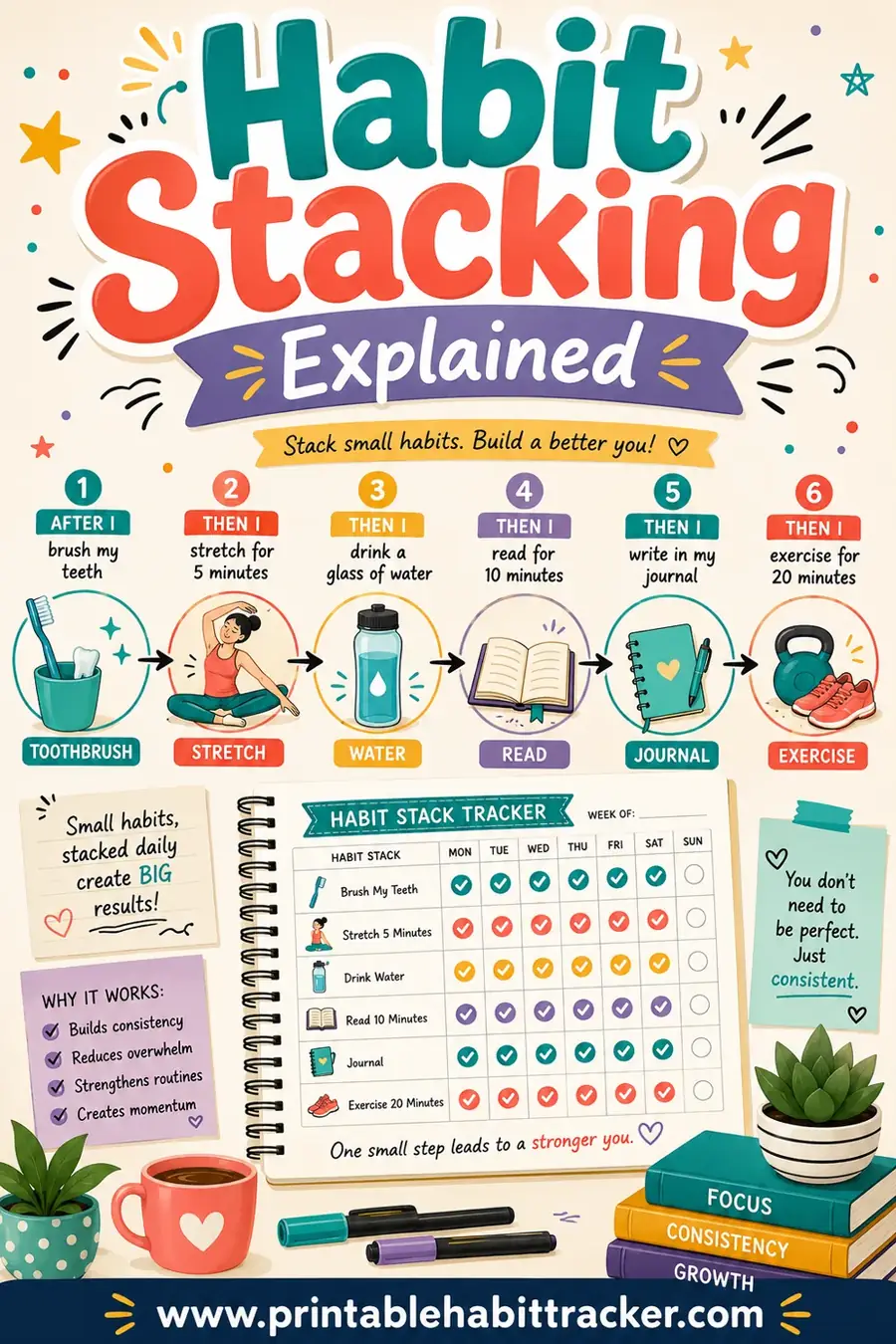
That last point is the secret to long-term growth. You don't have to track a habit forever. Once brushing-your-teeth-level automatic, it doesn't need a box. Graduating old habits keeps your tracker lean while your total number of good habits quietly grows. A great way to add habits efficiently is habit stacking, which ties a new habit to one that's already automatic.
A Sample Starter Tracker
Not sure what a balanced few-habit tracker looks like? Here's a solid five-habit starter that mixes keystone habits, easy wins, and one stretch goal. Steal it and swap in your own.
| Habit | Type | Why it earns a slot |
|---|---|---|
| Drink a glass of water on waking | Easy win | Keeps the streak alive, healthy default |
| 20-minute walk | Keystone | Boosts energy, nudges other good habits |
| Plan top 3 tasks | Keystone | Improves your whole day in 5 minutes |
| Read 10 minutes | Stretch goal | Meaningful progress, easy to skip without a box |
| No phone in bed | Hard but high-value | Better sleep, which lifts everything else |
Five habits, a healthy mix, and a page you can realistically fill in most days. This kind of list builds momentum instead of guilt. If a morning routine is your focus, our guide on how to build a morning routine shows how to sequence a few of these together.
Frequently Asked Questions
How many habits should I track at once?
For most people, three to five habits is the sweet spot. It's enough to make real progress without overwhelming you, and it keeps your tracker something you can actually complete most days. If you're new to tracking, start with just one or two and build from there.
Is it bad to track too many habits?
Yes. Tracking too many habits spreads your willpower and attention too thin, so you miss most of them and end up with a discouraging page full of blank boxes. That's the top reason people quit tracking. A short, completable list keeps you motivated and consistent.
How many habits can I realistically build at once?
You can realistically build two or three new habits at a time. Beyond that, the limited willpower you have gets split too thin for any of them to become automatic. Focus on a few, let them stick, then add more from a stable base.
When should I add a new habit to my tracker?
Add a new habit only after your current ones feel automatic, usually two to four weeks of consistent reps. Add just one at a time and watch your completion rate. If your boxes start going blank, you've hit your limit and should pull back.
Can I stop tracking a habit once it sticks?
Absolutely, and you should. Once a habit is truly automatic, like brushing your teeth, it no longer needs a box. Retiring stuck habits frees up a slot for a new one, which keeps your tracker lean while your total number of good habits grows over time.
What habits should I prioritize tracking?
Prioritize keystone habits, the ones that pull other good habits along, like exercise, a morning routine, or daily planning. Mix in an easy win or two to keep your streak alive, and make sure each habit ties to something you genuinely care about so the motivation lasts.
Pick Your Few and Start Today
The answer to how many habits to track at once is simple: a few, done consistently, beats many done halfway. Start with three to five, or even one or two if you're new, choose keystone habits with an easy win mixed in, and only add more once the basics feel automatic. Keep the list short and you'll keep the streak alive, and the streak is what changes your life. Open the free printable habit tracker, pick your handful, and print a grid you'll actually fill in. Start small, stay consistent, and grow from there.