How to Build a Morning Routine That Actually Sticks
To build a morning routine, pick a fixed wake-up time, choose three to five small habits you want to do every morning, line them up in a sensible order, and track them daily so they become automatic. Start tiny and keep the routine short. A morning routine isn't about cramming in an hour of self-improvement before dawn. It's about a handful of habits you can repeat every single day without burning out.
Ready to design yours? Open the free printable habit tracker, list your morning habits in order, and print a checklist you can hang by the coffee maker. No app, no sign-up, no fee. The routine you can see is the routine you'll actually keep.

Why a Morning Routine Is Worth the Effort
The first hour of your day sets the tone for the rest of it. When you start on autopilot with a few good habits already handled, you feel in control before the world starts making demands. When you start by reaching for your phone and reacting to whatever's on the screen, you're playing catch-up all day.
A solid morning routine does a few quiet but powerful things:
- It removes decisions. You don't waste mental energy figuring out what to do first. The routine decides for you.
- It front-loads your wins. Drink water, move your body, plan your day, and you've already won before 8 a.m.
- It protects your priorities. The stuff that matters but never feels urgent, like exercise or planning, finally gets a guaranteed slot.
- It builds momentum. A calm, productive start makes the next hard thing feel a little easier.
None of this requires waking at 5 a.m. or following someone else's hour-long ritual. A good routine fits your life, not a guru's. The trick is making it small enough to repeat and visible enough to remember.
Step 1: Anchor Your Routine to a Fixed Wake-Up Time
A routine needs a starting line. If your wake-up time bounces around by two hours, your whole morning slides with it. Pick a wake-up time you can hit on most days, including weekends, and treat it as the anchor everything else hangs off.
You don't have to wake up early. You just have to wake up at a consistent time. A steady 7:15 beats a heroic 5:30 you only manage twice a week. Consistency is what turns a routine into a habit.
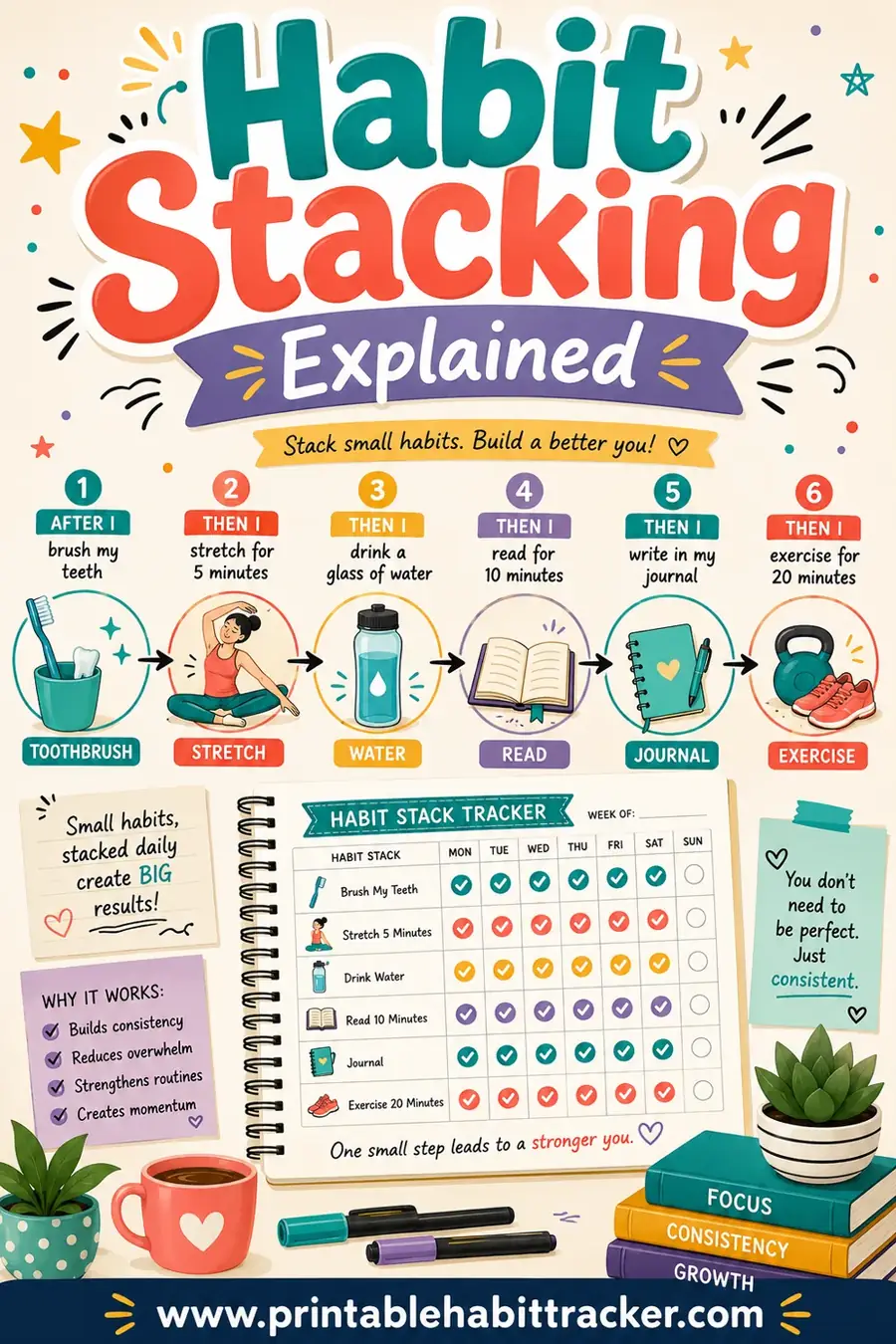
Once your wake-up time is set, every habit that follows becomes a link in a chain. This is the core of habit stacking: each habit triggers the next, so you flow through the routine instead of deciding your way through it.
Step 2: Start With Two or Three Tiny Habits
The biggest mistake is designing a perfect ten-step morning and trying to do it all on day one. By Thursday you're exhausted and the whole thing collapses. Start small enough that it feels almost too easy.
Pick two or three of these to begin:
- Drink a full glass of water
- Stretch for two minutes
- Make your bed
- Write your top task for the day
- Step outside for daylight
- Take ten slow breaths
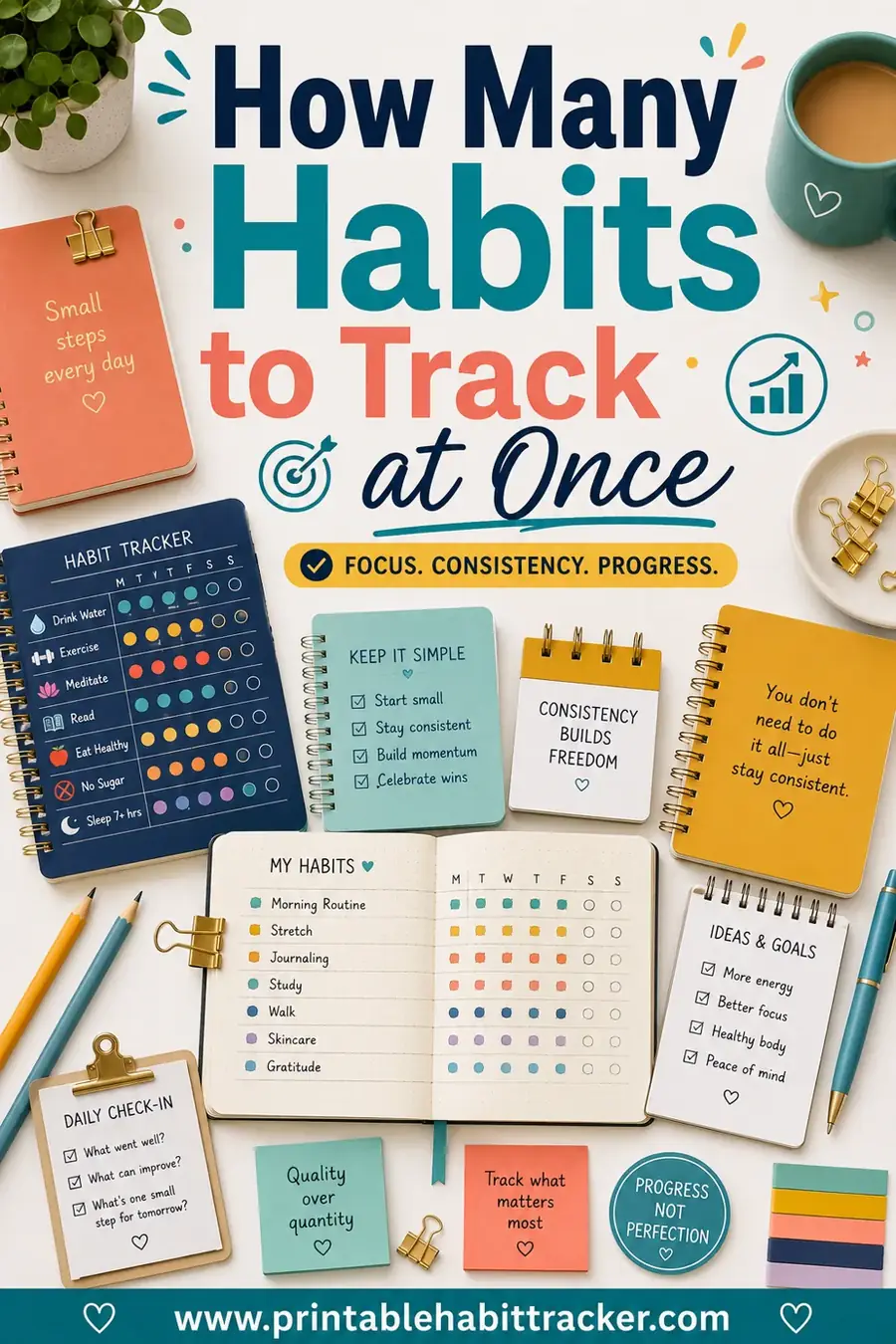
That's it. A three-habit morning you do every day beats a ten-habit morning you abandon in a week. You can always add more once the basics feel automatic. Speaking of which, our guide on how many habits to track at once explains why a short list wins.
Step 3: Put Your Habits in a Smart Order
Order matters more than people expect. The right sequence makes the routine flow; the wrong one makes it stall. A simple rule: move from gentle to active to focused.
Here's a sample order that works for most people.
| Time | Habit | Why it's here |
|---|---|---|
| Right away | Drink a glass of water | Rehydrates you after sleep; an easy first win |
| Next | Two minutes of stretching | Wakes up your body before anything demanding |
| Then | Step outside or open the blinds | Daylight helps you feel alert |
| Then | Plan your top task | Your mind is fresh and uncluttered |
| Last | A few quiet breaths or coffee | A calm bridge into the day |
You don't have to copy this exactly. The point is to put the easy, body-based habits first and the thinking-heavy habits once you're actually awake. Then track the sequence so the order locks in.
Step 4: Build a Sample Morning Routine You Can Steal
Not sure where to start? Here are three ready-made routines for different lifestyles. Pick the one closest to yours, then trim it down to fit.
The 15-minute starter routine
- Drink a glass of water (1 min)
- Make your bed (2 min)
- Stretch (2 min)
- Write your top three tasks (5 min)
- Quiet coffee, no phone (5 min)
The 30-minute balanced routine
- Water + a few breaths (3 min)
- Light movement or a short walk (10 min)
- Shower and get dressed (10 min)
- Plan the day and review your tracker (5 min)
- Two minutes of reading or journaling (2 min)
The busy-parent routine
- Water before anything else (1 min)
- Five squats or a quick stretch while the kettle boils (2 min)
- Glance at your top task for the day (2 min)
- One calm breath before the house wakes up (1 min)
Notice that even the "long" routine is only half an hour. A morning routine should make your day easier, not eat it.
Step 5: Track It So It Sticks
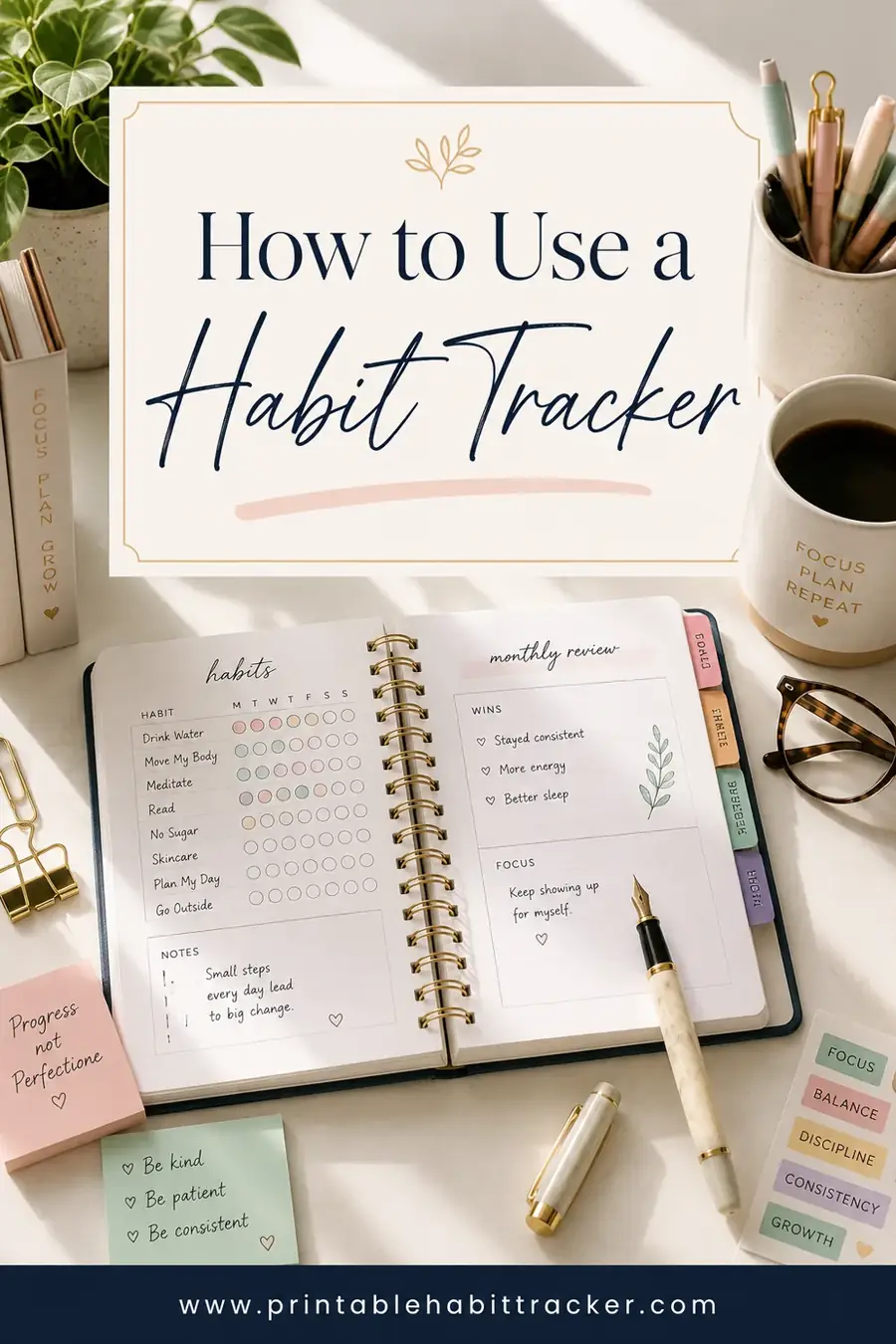
This is the step that turns a nice idea into a real habit. Writing your routine on a printable tracker does three things at once: it reminds you of the habits, it shows you a growing streak, and it tells you fast when something's slipping.
Set yours up like this:
- One row per habit. Drink water, stretch, plan the day, and so on.
- One column per day. A week per page is plenty to start.
- Hang it where the routine happens. Tape it to the fridge, the bathroom mirror, or the coffee maker, wherever your morning actually starts.
- Check off each habit as you do it. That little tick is a hit of "done" that makes you want to keep the streak alive.
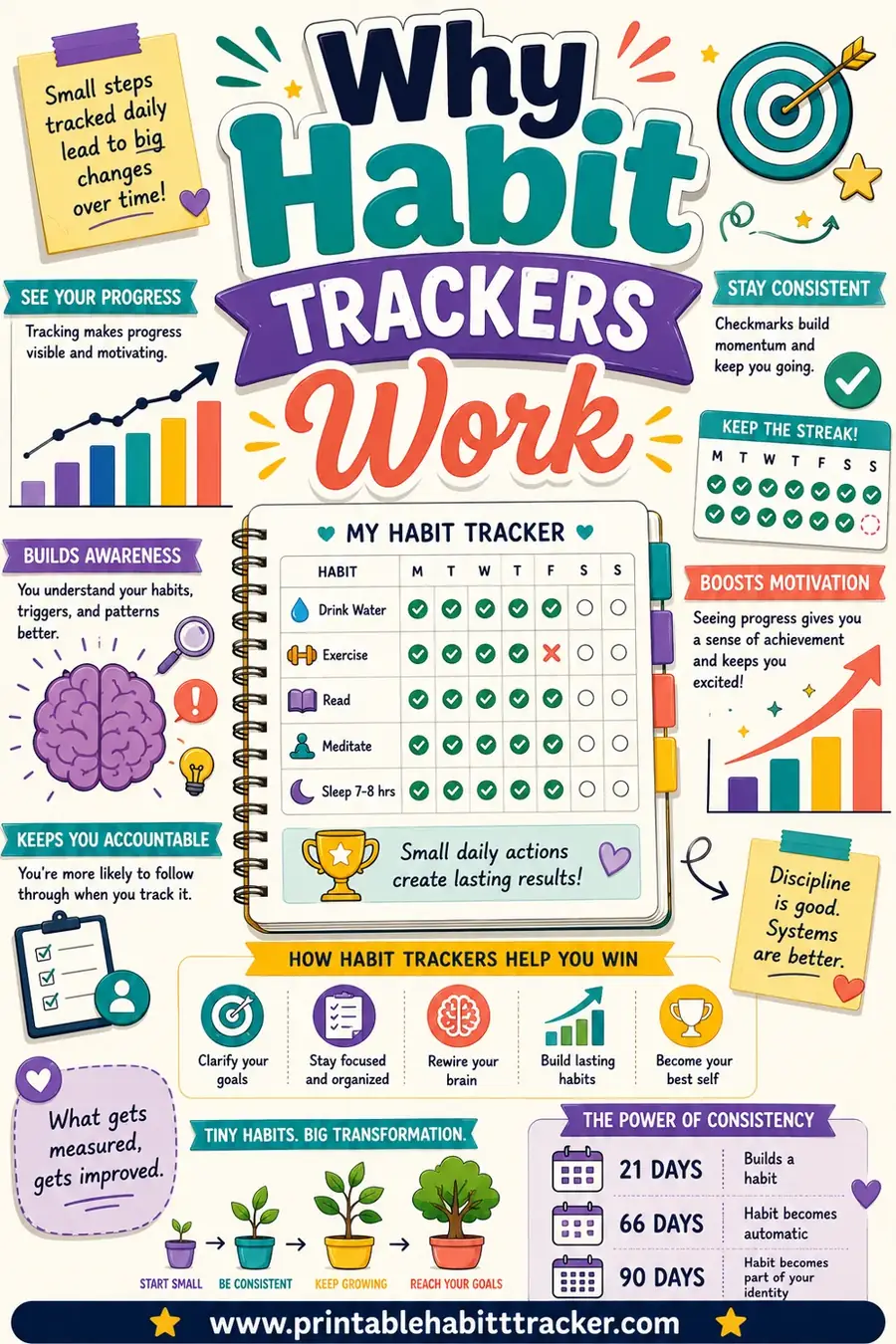
Seeing six green checkmarks in a row creates a quiet pressure not to break the chain on day seven. That pull is exactly what carries a routine through the rough early weeks. If you're curious why this is so effective, why habit trackers work digs into the psychology.
How Long Until a Morning Routine Feels Automatic?
Most people start to feel a simple morning routine click into place within two to four weeks of daily repetition. Bigger changes, like a workout or a long meditation, take longer. The early days are the hardest because nothing's automatic yet and you're running on intention alone.
A few things to keep in mind during the build:
- Expect to miss days. A missed morning isn't failure. Just check the box tomorrow. Never miss twice.
- Don't add habits too soon. Let your starter routine settle for a couple of weeks before stacking on more.
- Adjust the order if it feels clunky. If a habit keeps getting skipped, it might be in the wrong slot.
- Keep it short on hard days. A two-habit "minimum routine" on a chaotic morning still keeps the streak alive.
The goal isn't a flawless record. It's a routine that survives real life, including the messy mornings.
Common Morning Routine Mistakes
A few habits-about-habits can quietly wreck an otherwise good routine. Watch for these.
- Starting too big. Ten habits on day one is a recipe for quitting. Start with two or three.
- Checking your phone first. It hijacks your attention before you've done a single intentional thing. Push it later in the routine.
- No fixed wake-up time. Without an anchor, the routine has nothing to attach to.
- No tracking. If you don't record it, you can't see your progress or catch a slide early.
- Copying someone else's routine exactly. A 5 a.m. ice-bath ritual works for that person, not necessarily for you. Build yours around your real life.
Frequently Asked Questions
What should a morning routine include?
A good morning routine includes a fixed wake-up time and three to five small habits, usually some water, light movement, a moment to plan the day, and something calming. Keep it short and repeatable rather than long and ambitious, and track it so it becomes automatic.
How do I start a morning routine if I'm not a morning person?
Start by picking a consistent wake-up time, even if it's not early, and add just one or two tiny habits like drinking water and stretching. You don't need to wake up at dawn. Consistency matters far more than the hour. Track each day so the routine builds momentum.
How long should a morning routine be?
As long as it needs to be and no longer. A 15-minute routine that you do every day beats an hour-long one you skip half the time. Many people get great results from three to five small habits that take 15 to 30 minutes total.
Should I track my morning routine?
Yes. Tracking each habit on a printable checklist reminds you what to do, shows your streak, and flags slips early. The visible record is one of the biggest reasons routines stick, especially in the first few weeks when nothing's automatic yet.
What's the first thing I should do in the morning?
Drink a glass of water. It's an easy first win, it rehydrates you after a night's sleep, and it gets the routine rolling before any demanding habit. From there, move into light stretching and a quick plan for the day.
How many habits should a morning routine have?
Start with two or three and build from there. Most sustainable morning routines top out around five habits. Trying to do more usually leads to burnout. See how many habits to track at once for a fuller answer.
Build Your Morning Routine Today
A morning routine that sticks isn't about willpower or waking before sunrise. It's about a short list of small habits, a consistent start time, and a checklist that keeps you honest. Pick your anchor, choose two or three tiny habits, put them in a sensible order, and track them every day. Open the free printable habit tracker, write out your routine, and print a checklist for the fridge. Start small, keep the streak alive, and within a few weeks you'll have mornings that run themselves.