How to Break a Bad Habit: A Practical Step-by-Step Guide
To break a bad habit, find the trigger that sets it off, replace the bad routine with a better one that meets the same need, make the bad habit harder to do, and track your streak of good days so you can see your progress. You rarely erase a habit by sheer willpower. You break it by understanding its loop and swapping out the part that hurts you while keeping the reward you were really after.
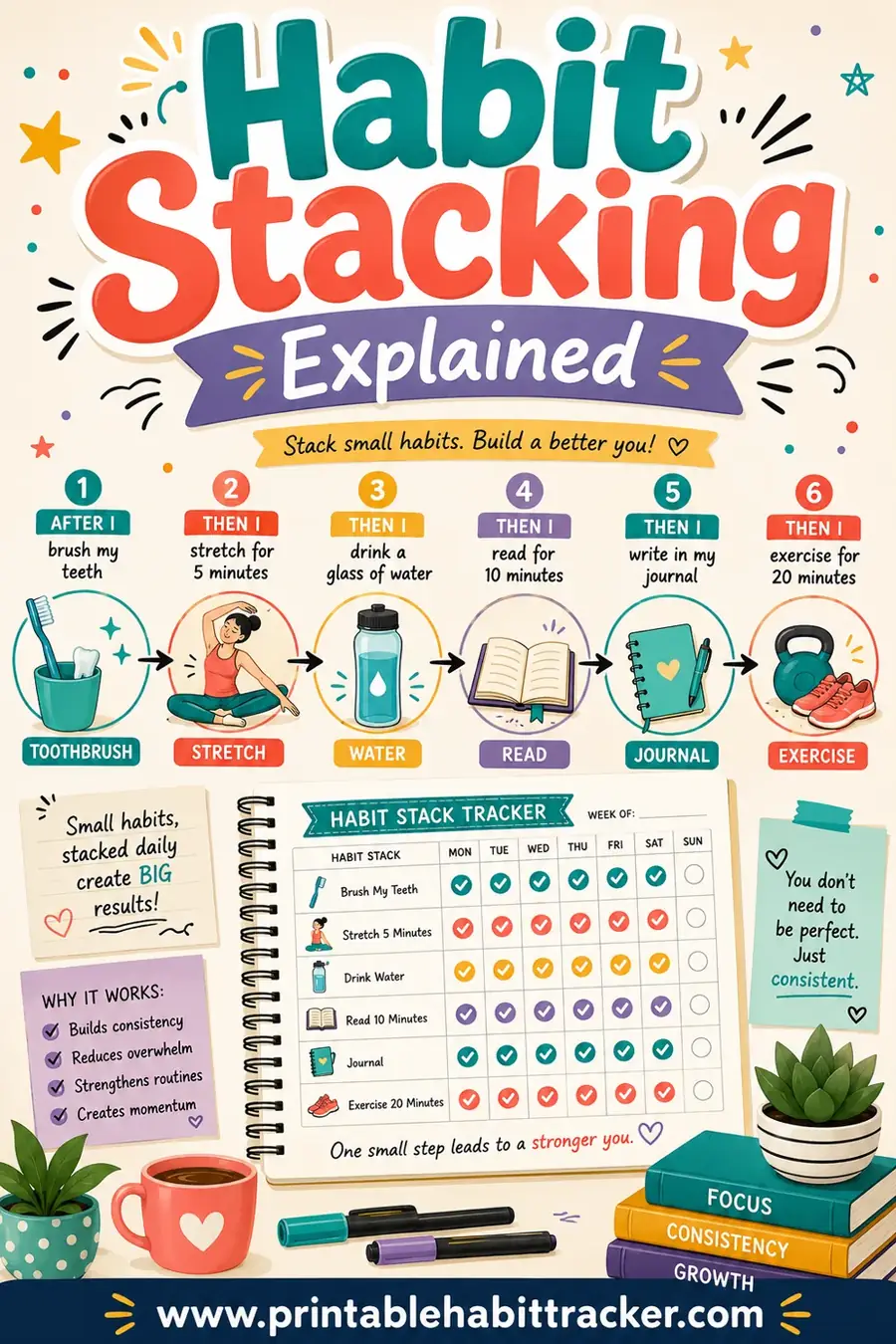
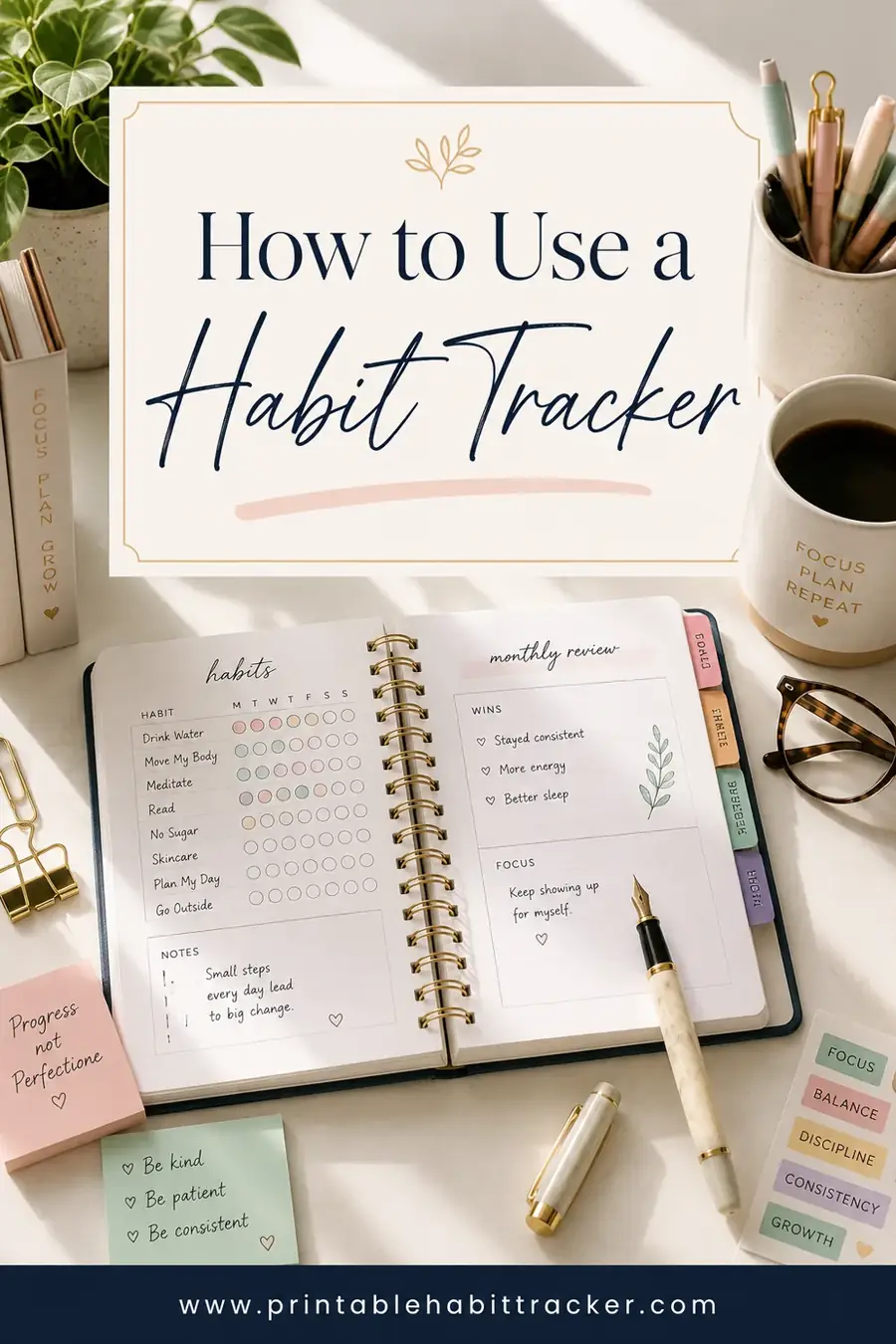
Want a simple way to stay on track? Open the free printable habit tracker, add a row for the habit you're quitting, and check off every day you avoid it. No app, no sign-up, no fee. Watching a clean streak grow is one of the strongest motivators there is.
Why Bad Habits Are So Hard to Break
Bad habits feel impossible to quit because they're not random. They run on a loop, and that loop is wired into your brain to save effort. Once you understand the loop, you stop fighting yourself blindly and start pulling the right lever.
Every habit, good or bad, has three parts:
- The cue. A trigger that kicks off the behavior, like stress, boredom, a certain time of day, or walking into the kitchen.
- The routine. The behavior itself, like reaching for your phone, a snack, or a cigarette.
- The reward. The payoff your brain is chasing, like relief, distraction, comfort, or a hit of pleasure.
The reason willpower alone rarely works is that it only attacks the routine. The cue still fires and the craving for the reward still builds, so the moment you're tired or stressed, the old behavior comes roaring back. The smarter move is to keep the reward but change the routine and remove the cue. That's what the steps below do.
Step 1: Identify the Trigger
You can't break a habit you don't understand. Before you change anything, spend a few days as a detective, just watching when the habit shows up. Every time the urge hits, note four things: what time it is, where you are, how you feel, and what just happened.
Most triggers fall into a handful of buckets:
- Time. The 3 p.m. snack, the after-work drink, the late-night scroll.
- Place. The couch, the break room, the bed.
- Emotion. Stress, boredom, loneliness, anxiety.
- People. Certain friends or coworkers tied to the habit.
- A preceding action. Finishing dinner, sitting down at your desk, getting in the car.
After a few days a pattern usually jumps out. Maybe you reach for your phone every time you feel a flicker of boredom. Maybe the snacking only happens at your desk. Once you know the trigger, you've found the thread to pull.
Step 2: Replace the Routine, Don't Just Remove It
Here's the part most people get wrong: they try to delete a habit and leave a hole. Your brain hates a hole. The craving doesn't vanish just because you've decided to stop, so it pushes you straight back to the old behavior.
The fix is to keep the cue and the reward but swap in a new routine that delivers something similar. This is sometimes called habit replacement, and it works far better than cold-turkey removal.
| Bad habit | Same reward you wanted | Better routine to swap in |
|---|---|---|
| Scrolling your phone when bored | Stimulation, distraction | Read one page, do a quick stretch |
| Snacking when stressed | Comfort, a break | Make tea, step outside for two minutes |
| Late-night TV instead of sleep | Wind-down, relaxation | Read in bed, do slow breathing |
| Skipping workouts | Avoiding effort, comfort | A two-minute "minimum" workout |
| Hitting snooze repeatedly | A few more minutes of rest | Phone across the room, water by the bed |
The new routine should be easy and fit the same moment the old one used to. Then, crucially, you track it, so the win is visible and your brain gets a new reward: the satisfaction of the checkmark.
Step 3: Make the Bad Habit Harder and the Good One Easier
Willpower is unreliable, but friction is dependable. Small changes to your environment can do the work your motivation can't. The rule is simple: add steps between you and the bad habit, and remove steps in front of the good one.
To make a bad habit harder:
- Charge your phone in another room overnight so the late-night scroll takes effort.
- Don't keep the junk food in the house; you can't snack on what isn't there.
- Log out of the apps that eat your time so you have to type the password every time.
- Put the TV remote in a drawer so the default isn't "just one more episode."
To make a good habit easier:
- Lay out your workout clothes the night before.
- Keep a water bottle on your desk so the better choice is the closest one.
- Put the book on your pillow so reading is the obvious move at bedtime.
You're not relying on being strong in the moment. You're designing the moment so the right choice is the easy one. Pair that with a printable tracker and you've got a system instead of a string of willpower battles.
Step 4: Track Your Streak of Good Days
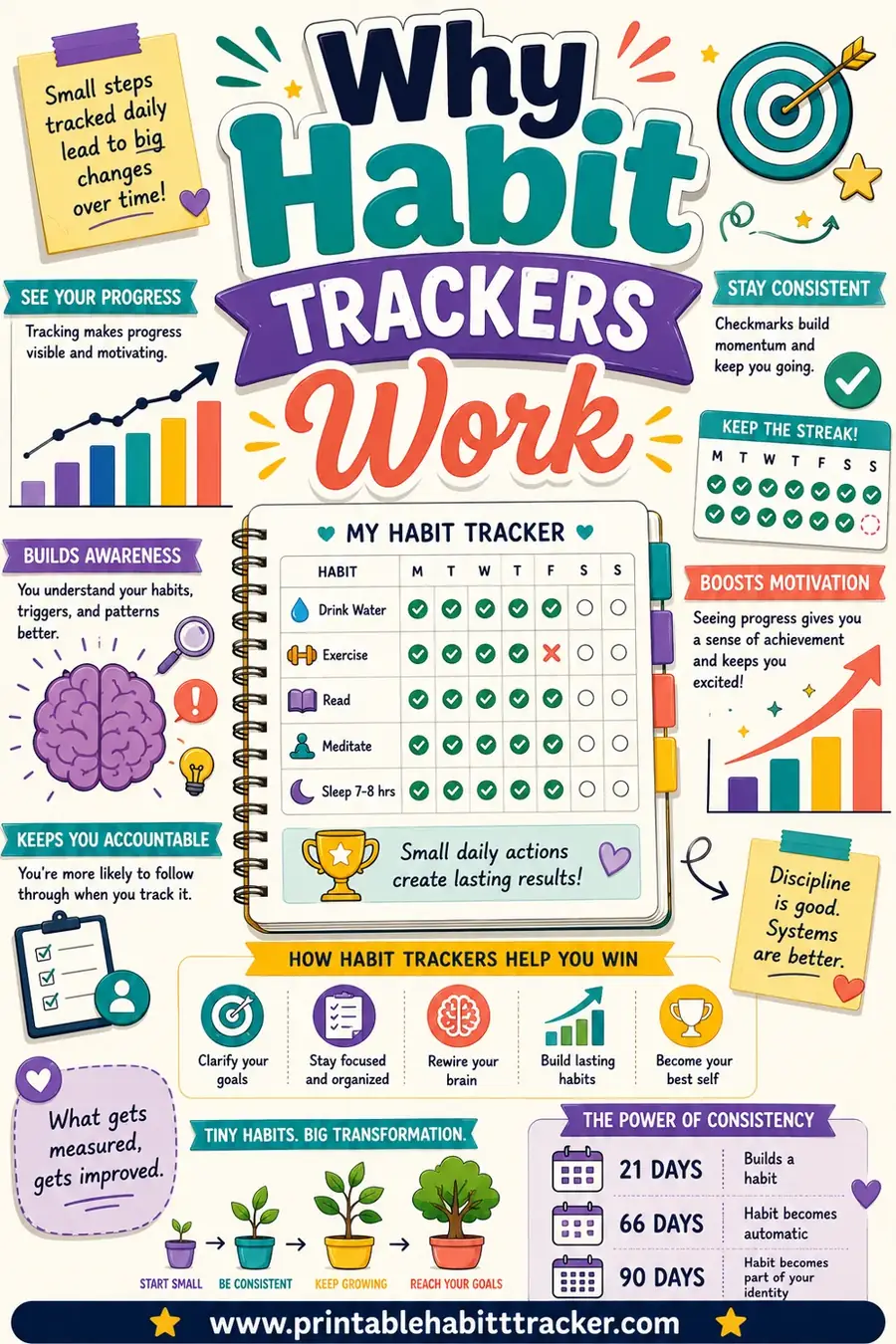
This is the step that keeps you going when motivation dips. A habit tracker turns an invisible effort into a visible win. Every day you avoid the bad habit, you check the box, and the streak of checkmarks becomes its own reward.
Tracking a habit you're breaking works a little differently from building one. Set it up like this:
- Label the row by the win, not the habit. "No late-night phone" or "Days alcohol-free" reads as a positive streak.
- Check the box on days you succeed. A row of green is satisfying and you won't want to break it.
- Use it to spot patterns. If you keep slipping on Fridays, the tracker shows you, and you can plan for it.
- Keep it visible. Hang it where the trigger lives so it doubles as a reminder.
There's real power in not wanting to break a chain. After ten clean days, the thought of resetting to zero stings enough to keep you honest on a tough night. To understand why this pull is so strong, see why habit trackers work.
Step 5: Plan for Slip-Ups Before They Happen
You will slip. Everyone does. The difference between people who break a habit and people who don't isn't a perfect record; it's how they handle the bad day. One slip is a blip. Two in a row is the start of a new old habit.
So make a rule for yourself: never miss twice. If you fall back into the habit once, that's fine, just don't let it become tomorrow's default too. Get straight back on the next day and the streak survives in spirit.
A few more ways to soften slip-ups:
- Forgive fast. Guilt makes you feel bad, and feeling bad is itself a trigger for many habits. Skip the spiral.
- Learn from it. Ask what the trigger was and tweak your plan so it's less likely next time.
- Have a replacement ready. When the urge hits, you want the better routine to be obvious, not something you have to invent on the spot.
A missed box on your tracker isn't a failure. It's data. It tells you exactly where your plan needs a small fix.
How Long Does It Take to Break a Bad Habit?
You've probably heard "21 days," but the honest answer is that it varies a lot. Research on habit formation found it can take anywhere from a few weeks to a few months for a new behavior to feel automatic, depending on the habit and the person. Deeply ingrained habits take longer than light ones.
What matters more than the number is consistency. A few things to expect along the way:
- The first week is hardest. The cue still fires strongly and the new routine isn't automatic yet.
- It gets easier in waves. Some days feel effortless, others feel like day one. That's normal.
- Tracking smooths the dip. When motivation fades, the visible streak carries you until the habit catches.
Don't fixate on hitting a magic day count. Focus on keeping the streak alive and stacking good days. The automatic feeling shows up on its own.
Frequently Asked Questions
What's the fastest way to break a bad habit?
The fastest reliable way is to identify the trigger, replace the bad routine with a better one that meets the same need, and add friction so the bad habit is harder to do. Tracking your streak of good days keeps you motivated. There's no instant fix, but this approach works far faster than willpower alone.
Why is it so hard to break bad habits?
Bad habits run on a loop of cue, routine, and reward that's wired into your brain to save effort. Willpower only attacks the routine, so the trigger and craving keep returning. Breaking the habit requires changing the routine and removing the cue, not just resisting in the moment.
Should I quit a bad habit cold turkey or gradually?
For most habits, replacing the routine works better than cold-turkey removal because it doesn't leave a craving with nowhere to go. Keep the reward you were chasing but swap in a healthier behavior. For some habits, like certain addictions, professional guidance is the safer route.
How does a habit tracker help break a bad habit?
A tracker makes your progress visible. Each clean day earns a checkmark, the streak becomes a reward you don't want to break, and the record reveals patterns, like which days you tend to slip. That visibility turns a vague effort into a concrete, motivating system.
What if I slip up and break my streak?
Slipping is normal and not a failure. Follow one rule: never miss twice. Get back on track the very next day so a single slip doesn't snowball. Use the missed box as information about what triggered you, then adjust your plan.
How long does it take to break a bad habit?
It varies from a few weeks to a few months depending on the habit and how ingrained it is. Consistency matters more than any specific day count. Tracking your streak keeps you going through the early weeks until the new behavior starts to feel automatic.
Start Breaking That Habit Today
Breaking a bad habit isn't about white-knuckling your way through cravings. It's about understanding the loop: spot the trigger, swap the routine for something better, add friction so the bad choice takes effort, and track your streak so every clean day counts. Plan for the occasional slip and just never miss twice. Open the free printable habit tracker, add a row for the habit you're quitting, and start your streak today. One checked box at a time, that old habit loses its grip.