How to Review Your Habits Monthly (And Why It Matters)
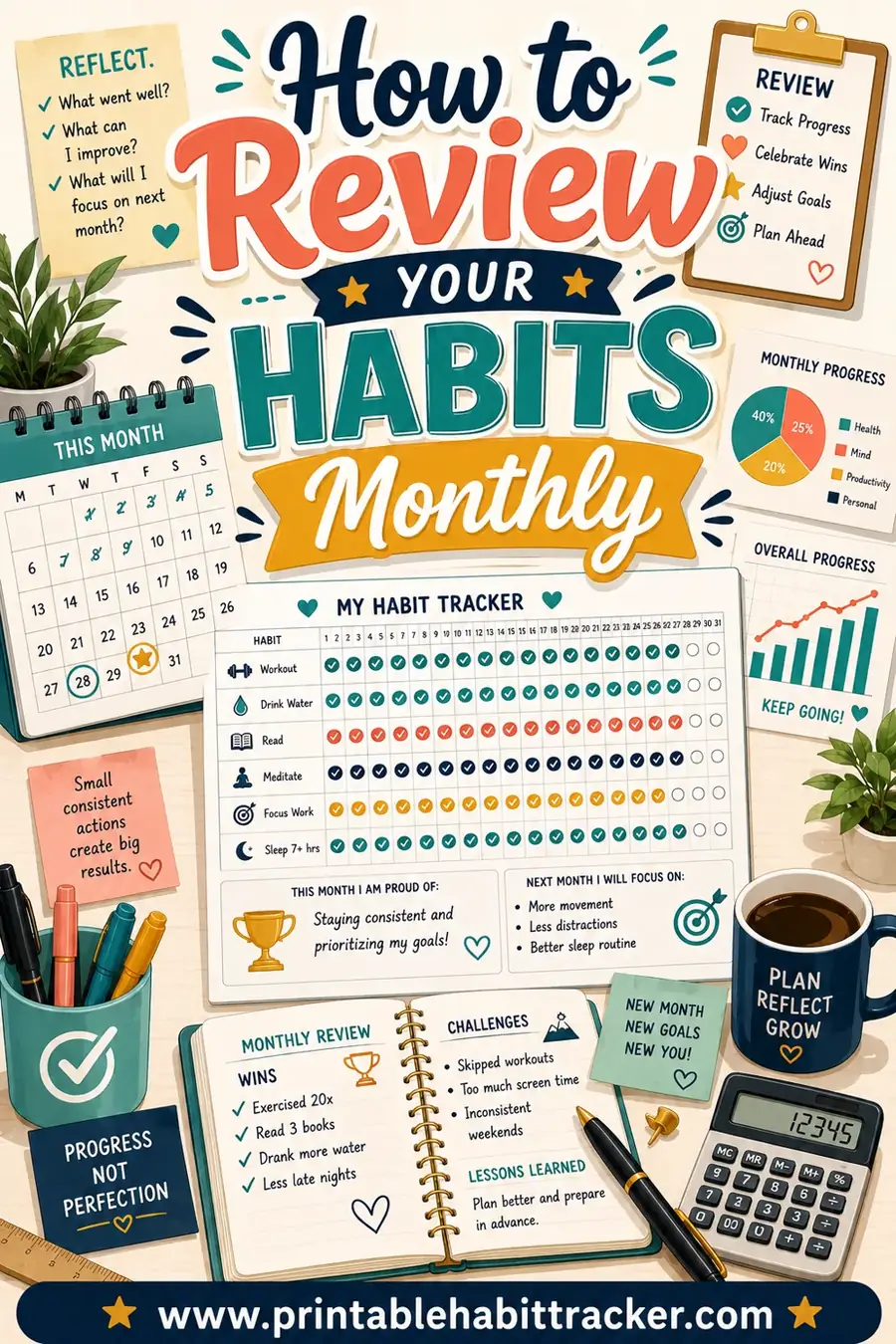
A monthly habit review is a quick, 20-minute check-in at the end of each month where you look back at your tracker, count how often you actually did each habit, keep what's working, and fix or drop what isn't. It's the step that turns a habit tracker from a checklist into a system that actually improves over time. The easiest way to do it is with a free printable habit tracker — your filled-in sheets become the data you review, and a fresh blank one becomes next month's clean start.
Want a head start? Open the free habit tracker and print a fresh sheet for next month while this one's review is still in your head. Below is the exact 5-step review I use, plus a scorecard you can copy.
Why a Monthly Review Is the Step Most People Skip
Plenty of people start a habit tracker. Almost nobody reviews it. They check boxes for a few weeks, the sheet gets messy, and they quietly stop.
That's a shame, because the review is where the real progress happens. Checking a box keeps you consistent day to day. Reviewing the month tells you whether your habits are the right ones, whether they're set up to succeed, and what to change so next month goes better.
Without a review, you're flying blind. You might keep grinding at a habit that isn't working, or never notice that one habit quietly fell off three weeks ago. Twenty minutes once a month turns guesswork into a clear plan.
When to Do Your Review
The natural time is the last day of the month or the first day of the next one. It lines up neatly with printing a fresh tracker sheet, so the review and the reset happen in one sitting.
Pick a quiet moment — Sunday evening, a coffee break, whenever you can think. Put it on your calendar so it actually happens. Some people even add "monthly review" as a habit on the tracker itself, so the system reminds you to maintain the system. (Meta, but it works.)
The 5-Step Monthly Habit Review
Here's the whole process. It takes about twenty minutes with your filled-in tracker in front of you.
Step 1: Count your completions
For each habit, count how many days you actually did it out of the days you aimed for. Twenty-two reading days out of thirty? Write it down. This single number tells you more than any feeling. We tend to misremember our months as better or worse than they really were — the count is the truth.
Step 2: Sort habits into keep, fix, or drop
Look at each habit's number and put it in one of three buckets:
- Keep — you hit it most days (roughly 80%+). It's working. Leave it alone or consider raising the bar.
- Fix — you did it sometimes (around 40–70%). The habit's worth keeping but the setup needs work. We'll troubleshoot these next.
- Drop — you barely touched it, or it no longer matters. Be honest. A habit you ignore all month is just clutter on the sheet.
Step 3: Troubleshoot the "fix" habits
For every habit in the fix bucket, ask why it slipped. Usually it's one of a few culprits:
- The goal was too big. Shrink it. "Run 5k" becomes "10-minute walk."
- No fixed time. Anchor it to something you already do daily.
- Bad location. Move the cue. Put the book on your pillow, the shoes by the door.
- The wrong time of day. A habit fighting your energy levels will always lose.
Step 4: Celebrate the wins
Don't skip this. Find your strongest streak and actually acknowledge it. A 28-day water streak is a real accomplishment. Reviews shouldn't feel like a performance audit — recognizing progress is what keeps you motivated to keep going. Notice how far you've come, not just what's missing.
Step 5: Set up next month's sheet
Now act on what you learned. Print a fresh tracker, carry over the keepers, adjust the fixers (with their new smaller goals or new times), drop the dead weight, and maybe add one new habit. One new habit at a time — adding five at once is how people overwhelm themselves and quit.
A Sample Monthly Scorecard
Here's what your review might look like written out. Copy this format on the back of your tracker or in a notebook.
| Habit | Days done | / Goal | Verdict | Next month |
|---|---|---|---|---|
| Drink water | 28 | 30 | Keep | Same |
| Read 10 pages | 22 | 30 | Keep | Bump to 15 pages |
| Morning run | 9 | 30 | Fix | Shrink to 10-min walk |
| Journal | 14 | 30 | Fix | Move to mornings |
| Meditate | 3 | 30 | Drop | Remove for now |
| — | — | — | New | Add: stretch before bed |
In two minutes of looking at this, you can see exactly what to do next month. That clarity is the entire point of the review.
Read Your Streaks, Not Just Your Misses
When you scan the month, your eye jumps to the blank boxes. Resist that. The patterns matter more than any single miss.
- Long unbroken streaks mean the habit is well-designed. Protect those and maybe raise the difficulty.
- Clusters of misses point to a trigger. Did you skip every weekend? Every Friday? That tells you where the habit's setup is weak.
- A slow fade — strong at the start, fading by month's end — usually means the goal was too ambitious to sustain. Shrink it.
- One isolated miss in an otherwise solid row means nothing. Ignore it.
You're looking for the story the month is telling you, not policing every empty square.
Use Numbers, Not Feelings
The biggest gift of a review is that it replaces vague feelings with real data. "I've been slacking" might actually be "I did the habit 24 out of 30 days" — which is excellent. Or "I've been crushing it" might really be 11 out of 30.
Memory is unreliable and mood-dependent. The tracker isn't. When you make decisions from the actual counts instead of how the month felt, you keep the right habits, drop the right ones, and stop quitting things that were secretly working fine.
Don't Overhaul Everything at Once
A common trap: the review reveals problems, you get fired up, and you rewrite your entire system. New habits, new goals, new times, all at once. By the second week of the new month, it's chaos and you've quit.
Change one or two things per review. Keep what works untouched. Adjust the worst-performing habit, maybe add a single new one, and leave the rest alone. Small, steady tweaks compound month after month. Dramatic overhauls collapse.
Ask the Right Questions Each Month
Beyond counting boxes, a handful of reflection questions turn a review from a tally into real insight. Jot quick answers on the back of your tracker — a sentence each is plenty.
- Which habit am I proudest of this month? Naming the win cements it and tells you what good design looks like for you.
- Which habit fought me the hardest? That's your prime candidate to shrink or redesign next month.
- Did anything change in my life that the chart didn't keep up with? New job, new schedule, new season — your habits should match your real week.
- Is there a habit I keep ignoring that I should just drop? Permission to quit a dead habit is freeing, and it clears space for one that fits.
- What single change would make next month easier? Force yourself to name one. Small, specific tweaks compound; vague resolutions don't.
You don't need to answer all five every time. Even one honest answer can reshape your next month for the better.
Watch the Trend Across Months
A single month tells you a lot, but the real gold is in the trend across several months. Keep your filled-in sheets in a folder or a drawer. Over time, they become a record of your progress that's far more honest than memory.
Flipping back through three or four months reveals things a single review can't. Maybe your reading habit climbed from 14 days to 22 to 28 — proof that your tweaks are working, even if any one month felt unremarkable. Maybe a habit has hovered at exactly 50% for three straight months, which is a loud signal that the setup is broken and patience won't fix it. Maybe you notice every December falls apart, so you can plan a lighter, more forgiving chart for the holidays next year.
This long view is the quiet superpower of reviewing monthly instead of just tracking daily. Daily checks keep you consistent. Monthly reviews keep you consistent and improving. The trend line across the months is the proof that the whole system is moving you forward.
Connect Your Review to Specific Habits
Your monthly review works best when you pair it with focused habit-building. If reading kept slipping, our guide on how to build a reading habit has fixes for the exact problems your review surfaced. If exercise was your weak spot, how to build an exercise habit shows you how to shrink the goal so it sticks. And if you're reviewing a whole household's chart, how to track family habits walks through running the review for everyone at once.
Frequently Asked Questions
How often should I review my habits?
Once a month is the sweet spot. It's long enough to see real patterns and streaks, but frequent enough to course-correct before a slipping habit disappears entirely. The end or start of the month is the natural time, since it lines up with resetting your tracker.
How long does a monthly habit review take?
About twenty minutes. You count completions for each habit, sort them into keep, fix, or drop, troubleshoot the ones that slipped, celebrate a win, and set up next month's sheet. With your filled-in tracker in front of you, it goes quickly.
What should I do with a habit I keep failing?
First decide if it still matters. If it does, troubleshoot the setup rather than the willpower: shrink the goal, anchor it to an existing routine, move the cue somewhere you'll see it, or switch the time of day. If it genuinely no longer matters, drop it without guilt and free up the space.
Should I add new habits during my review?
Yes, but only one at a time. The review is a great moment to add a new habit since you're already resetting the sheet, but adding several at once overwhelms you and risks the whole system. Keep what works, fix one weak spot, and add a single new habit.
How does a printable tracker make reviews easier?
Your filled-in tracker sheets are the data — each row shows exactly how many days you did the habit, and the streaks reveal the patterns. At review time you read the month off the page, then print a clean sheet to start fresh. Build yours free in the printable habit tracker.
Ready to Run Your First Monthly Review?
Grab last month's tracker, spend twenty minutes counting your completions and sorting your habits, then open the free printable habit tracker and print a clean sheet for the month ahead. Carry over what's working, shrink what's not, and add one new habit. It's free, there's no sign-up, and this one small ritual is what turns a habit tracker into real, lasting change.