How to Track Family Habits (Without the Nagging)
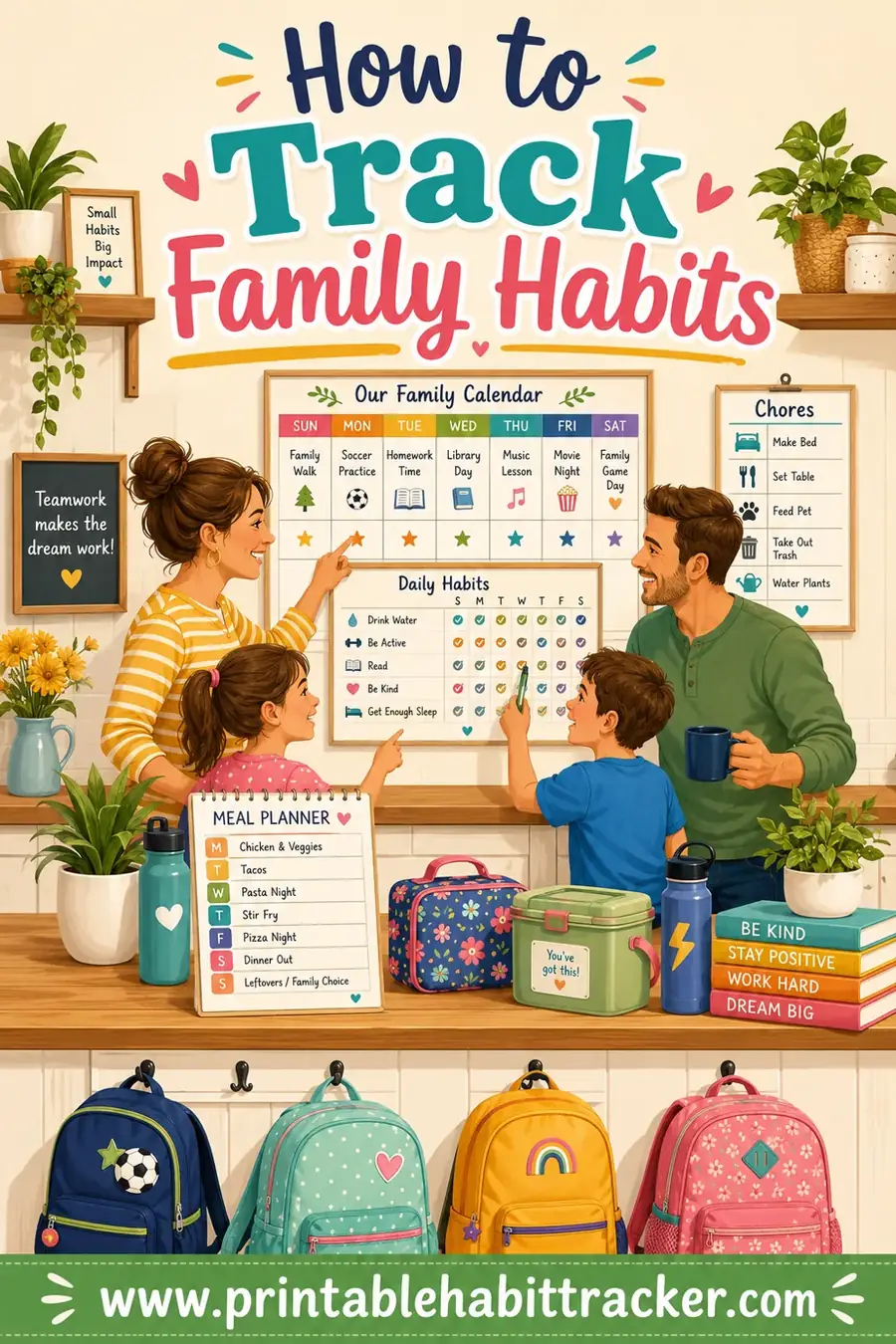
The easiest way to track family habits is to put one shared chart where everyone can see it, give each person a few simple habits, and check off a box every time someone does theirs. A printable chart on the fridge beats an app here, because little kids can mark it too and nobody needs a phone. The fastest way to set one up is a free printable habit tracker that lets you list each family member, add their habits, and print a fresh sheet for the week.
Want to skip ahead and just build it? Open the free habit tracker, add a row for each person, type in the habits you care about, and print. No sign-up, no app, no cost. There's a ready-to-copy habit list further down if you need ideas.
Why Track Family Habits at All?
Habits run a household. Brushing teeth, packing a bag, feeding the dog, putting laundry in the basket — when these happen on autopilot, the whole week feels lighter. The trouble is that "just remember to do it" rarely works, especially with kids.
A shared tracker fixes that in a quiet way. Instead of you reminding everyone five times, the chart does the reminding. Your child glances at the fridge, sees an empty box next to "brush teeth," and fills it in. The check mark becomes the reward.
It also turns chores into something a little more fun. Kids love marking boxes. Streaks become a small game. And because everyone's habits sit side by side, the responsibility feels shared instead of dumped on one parent.
Step 1: Pick a Few Habits Per Person (Not Twenty)
The biggest mistake families make is loading the chart with everything. Ten habits per kid looks ambitious, but by Wednesday nobody's filling it in. Start with three to five habits per person. You can always add more once the routine sticks.
Aim for habits that are:
- Easy to picture. "Be kind" is vague. "Say one nice thing at dinner" is clear.
- Done at a regular time. Morning and bedtime habits are easiest to track because they're tied to an existing routine.
- Mostly within their control. A toddler can put toys away. A toddler can't "sleep through the night" on command.
Mix a few responsibility habits (chores) with a couple of growth habits (reading, water, movement) so the chart isn't all about work.
Step 2: Choose Habits by Age
Habits should match what each person can actually handle. A four-year-old and a fourteen-year-old need very different rows. Here's a starting menu you can copy straight into the tracker.
| Age group | Good starter habits |
|---|---|
| Toddlers (2–4) | Put toys away, brush teeth, get dressed, no hitting, use the potty |
| Kids (5–9) | Make the bed, pack the school bag, 15 min reading, feed the pet, set the table |
| Tweens (10–12) | Homework before screens, tidy room, water plants, help with dishes, 30 min outside |
| Teens (13+) | Wake by alarm, daily exercise, limit phone before bed, do own laundry, study block |
| Parents | Drink water, daily walk, no phone at dinner, plan tomorrow, 10 min reading |
Notice the parents' row. When kids see grown-ups tracking habits too, the chart stops feeling like a punishment and starts feeling like something the whole family does together.
Step 3: Build One Shared Chart
You've got two layouts to choose from, and both work. Pick the one that fits your family.
Layout A: One person per row
The whole family fits on a single page. Names go down the left, days go across the top, and each box is a check. This is great for younger families and for chores, because everyone sees everyone else's progress at a glance.
Layout B: One sheet per person
Each family member gets their own page with their own habits listed down the side. This suits older kids and teens who have more habits and want a little privacy. It also makes monthly reviews easier, since each person's history lives on one sheet.
| Feature | One shared sheet | One sheet per person |
|---|---|---|
| Best for | Young kids, chores | Teens, lots of habits |
| Visibility | Everyone sees everyone | More private |
| Wall space | One page | Several pages |
| Friendly competition | High | Low |
You can build either one in the free printable habit tracker in a couple of minutes. Print a shared sheet for the little ones and individual sheets for the teens if your family is mixed.
Step 4: Put It Somewhere You Can't Miss
A tracker hidden in a drawer is a tracker nobody fills in. The spot matters as much as the chart.
The fridge is the classic winner because the whole family passes it a dozen times a day. Other good spots:
- The back of the bathroom door (perfect for brush-teeth and shower habits)
- The kitchen wall by the breakfast table
- A bedroom door for personal teen charts
- The inside of the front door for pack-your-bag and shoes-away habits
Keep a marker on a string or a few pens nearby. If finding a pen takes effort, the boxes stay empty.
Step 5: Make Checking Off the Habit Fun
The check mark itself can be the reward, but a few small touches keep the energy up, especially with kids.
- Use stickers. Younger kids will brush their teeth for a chance to slap a star sticker on the chart.
- Celebrate streaks. Seven days in a row? Call it out. Streaks are weirdly motivating.
- Tie a small reward to a full week. A movie night, a later bedtime on Friday, first pick of the weekend activity.
- Don't punish blanks. An empty box is just information, not a failure. Talk about what got in the way, then move on.
The goal is a family that wants to fill in the chart, not one that dreads it. Keep it light.
A Sample Family Week
Here's what a filled-in shared chart might look like by Sunday. Use it as a model for your own.
| Habit | Mon | Tue | Wed | Thu | Fri | Sat | Sun |
|---|---|---|---|---|---|---|---|
| Mia — brush teeth (AM/PM) | ✅ | ✅ | ✅ | ✅ | ✅ | ✅ | ✅ |
| Mia — 15 min reading | ✅ | ✅ | ✅ | ✅ | ✅ | ||
| Leo — make the bed | ✅ | ✅ | ✅ | ✅ | ✅ | ✅ | |
| Leo — feed the dog | ✅ | ✅ | ✅ | ✅ | ✅ | ✅ | ✅ |
| Mom — daily walk | ✅ | ✅ | ✅ | ✅ | ✅ | ✅ | |
| Dad — no phone at dinner | ✅ | ✅ | ✅ | ✅ | ✅ | ✅ | ✅ |
Notice the gaps. Nobody's perfect, and that's fine. The point isn't a wall of green check marks — it's that the habits happen most days, and everyone can see the progress.
Common Mistakes to Avoid
A few traps trip up families who start strong and fizzle out.
- Too many habits. Three to five per person is plenty. More than that and the chart becomes a chore in itself.
- No clear time. "Exercise" is fuzzy. "Bike after school" is trackable.
- Forgetting the parents' row. If only the kids are tracked, it feels like surveillance. Join in.
- Skipping the weekly reset. Print a fresh sheet every week. A clean page feels like a fresh start; a messy, crossed-out one feels like a guilt trip.
- Going all-or-nothing. A missed day isn't a broken habit. Just fill in the next box.
Turn It Into a Family Ritual, Not a Chore
The families who stick with a habit tracker treat checking it off as a tiny shared moment, not a task. Build a quick rhythm around it and the chart becomes something everyone looks forward to instead of something a parent has to enforce.
A few rituals that work well:
- Breakfast check-in. Over breakfast, each person says one habit they're going to nail today and marks anything they already did. It takes thirty seconds and sets the tone.
- Bedtime tally. Right before lights-out, the kids fill in their boxes for the day. It becomes part of the wind-down, like brushing teeth.
- Sunday reset together. When you print the new sheet for the week, do it as a family. Let the kids pick one new habit each. Ownership makes them care.
- The streak shout-out. When someone hits a full week, everyone gives a quick cheer. Silly, but kids remember it and chase the next one.
The deeper goal here isn't a perfectly filled chart. It's teaching your kids that good routines are normal, that progress is worth tracking, and that a missed day is no big deal as long as you start again. Those lessons outlast any single habit on the sheet.
What to Do When the Chart Stops Working
Even a great family tracker hits a slump. Suddenly the boxes are half-empty and nobody seems to care. Don't scrap it — diagnose it. Usually one of three things is going on.
First, the list got too long. As the weeks go by, it's tempting to keep adding habits until the chart is overwhelming. Trim it back to the few that matter most. Second, the rewards went stale. If the same small treat has been on offer for two months, kids tune it out. Refresh it. Third, life changed — a new school term, a sports season, a move — and the old habits no longer fit the new schedule. Rebuild the chart around the family's actual week, not last season's.
A quick monthly reset solves most of this. Sit down, see what's working, drop what isn't, and print a fresh sheet shaped around real life right now.
Keep the Momentum Going
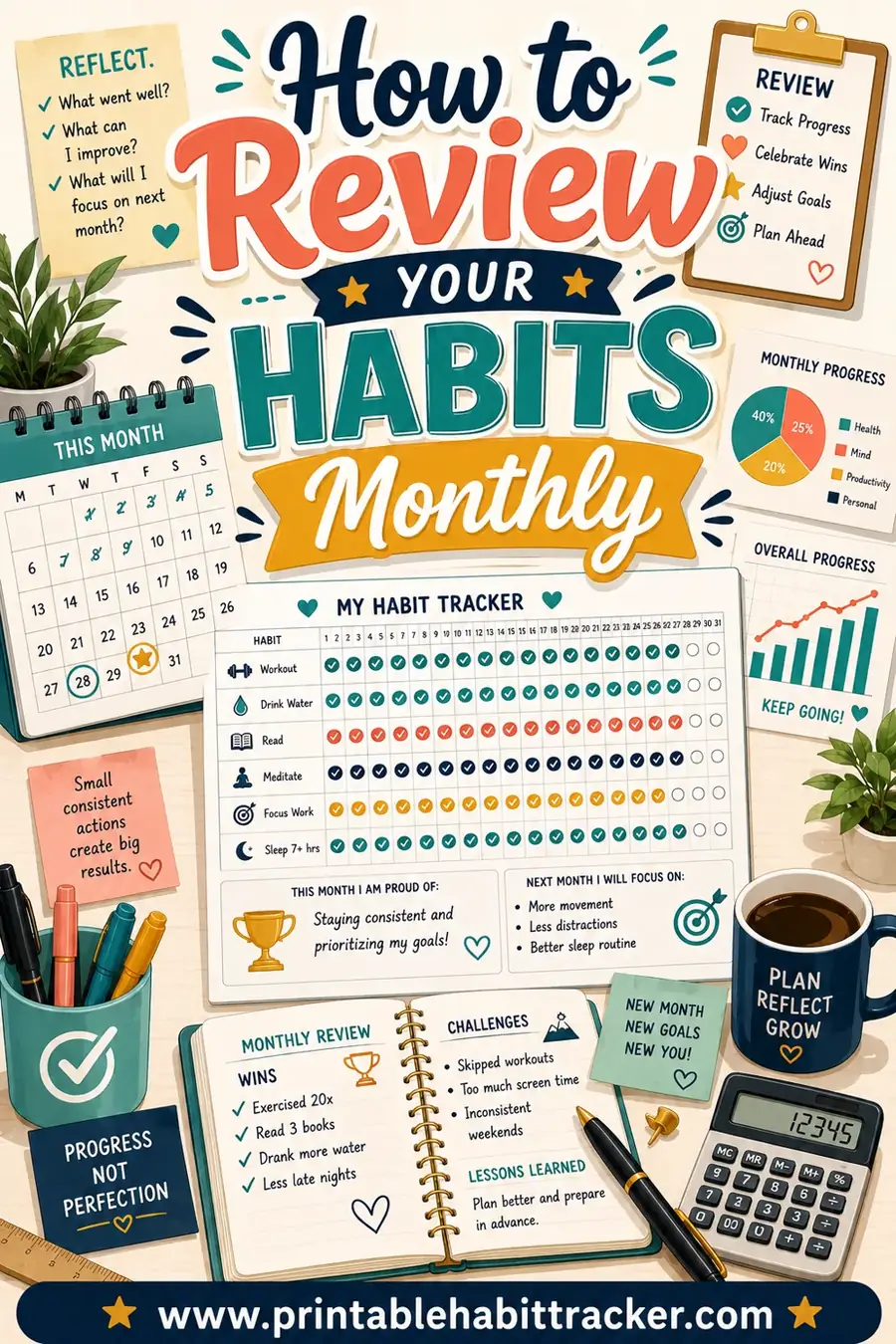
Once your family chart is humming, you can branch into more focused habits. If your kids are building a reading routine, our guide on how to build a reading habit has tricks that work for the whole family. To get everyone moving, how to build an exercise habit breaks it down step by step. And at the end of each month, how to review your habits monthly shows you how to spot what's working and adjust the chart.
Frequently Asked Questions
What's the best way to track habits for a whole family?
Use one shared printable chart in a high-traffic spot like the fridge. List each family member with three to five simple habits, and check off a box whenever someone does theirs. A free printable habit tracker lets you build and print this in minutes, and kids can mark it without needing a phone or app.
How many habits should each family member track?
Start with three to five per person. Loading the chart with ten or more habits almost always backfires — people stop filling it in by mid-week. Get a few habits sticking first, then add more once they're automatic.
Should parents track habits too?
Yes. When kids see grown-ups checking off their own habits, the chart feels like a shared family activity instead of a way to police the children. It also models the behavior you want them to learn.
What age can kids start using a habit tracker?
As young as two or three, with picture-based habits and lots of stickers. Toddlers can't read, but they understand "put a star on the chart when you put your toys away." The reward of marking the box does the motivating.
How do I keep my family from giving up after a week?
Print a fresh sheet every week so each one feels like a clean start, keep the habit list short, tie a small reward to a full week, and never punish an empty box. Treat blanks as information, not failure, and the chart stays a positive part of the routine.
Ready to Build Your Family Habit Tracker?
Grab a few habits for each person, open the free printable habit tracker, and print a sheet for the week. Stick it on the fridge, hand out the markers, and let the check marks do the nagging for you. It's free, there's no sign-up, and you can print a fresh one every Sunday for as long as you like.