Morning vs Evening Habits: Which Wins?
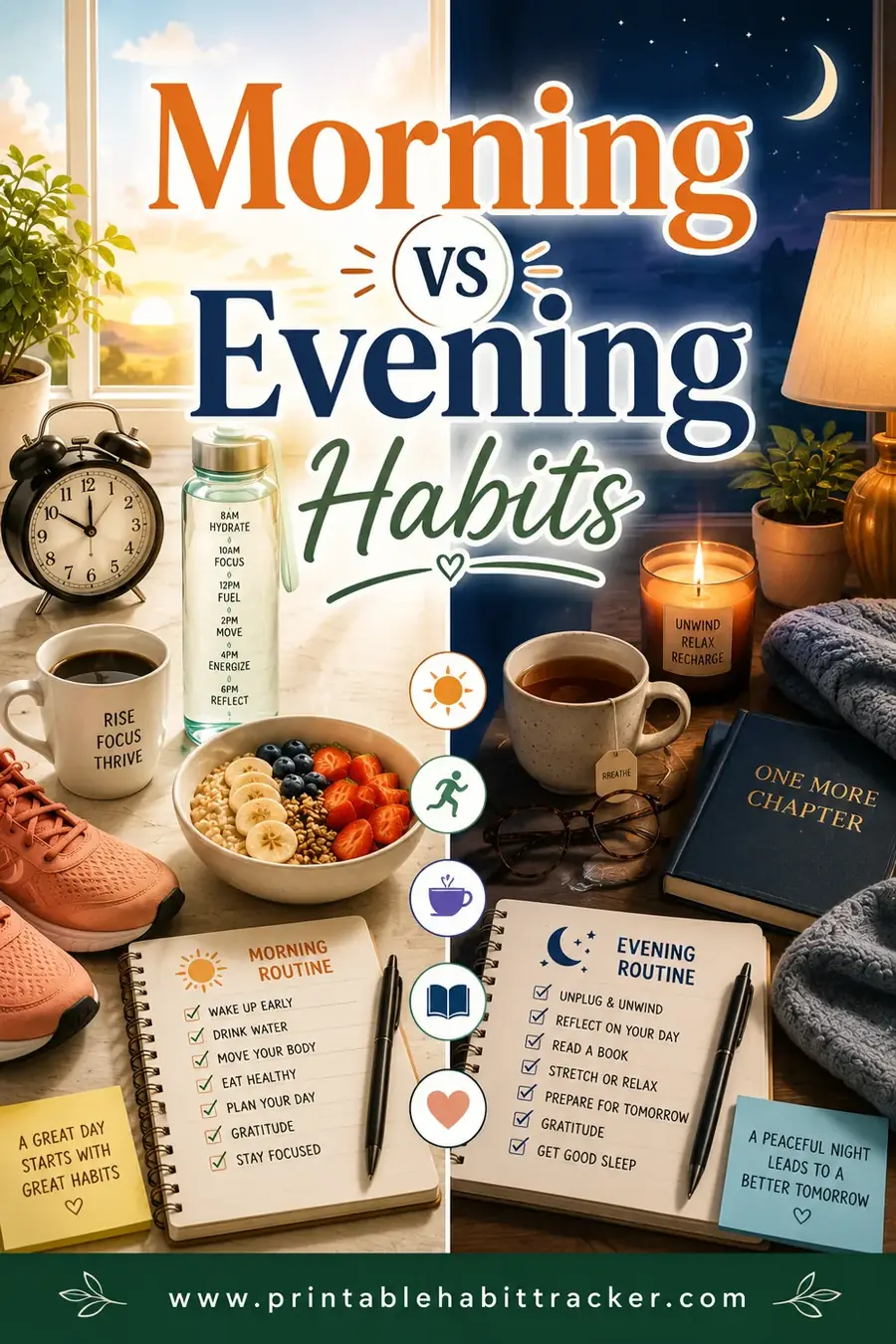
Morning habits tend to stick better because willpower and energy are highest right after you wake up, and nothing has come along yet to derail your day. Evening habits still work well, but only for routines that genuinely fit the end of the day — winding down, prepping for tomorrow, reflecting. The smart move isn't picking one camp; it's matching each habit to the time of day where it has the best shot. A free printable habit tracker makes this easy by letting you split your sheet into a morning block and an evening block.
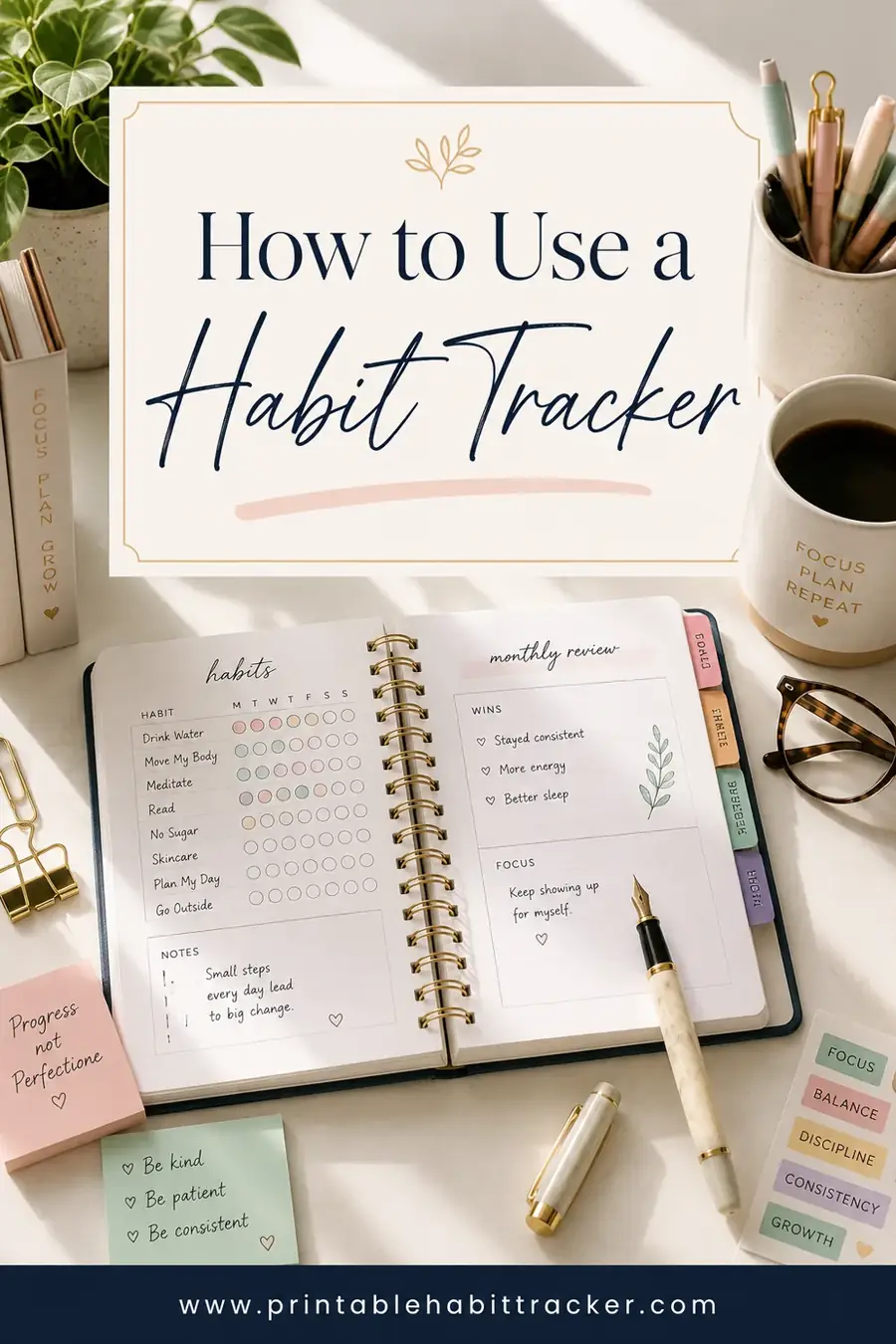
Want to set yours up right now? Open the free habit tracker, list your morning habits at the top and your evening ones at the bottom, and print. There's a ready-made list of which habits belong where further down.
The Short Answer: It Depends on the Habit
There's no single winner. A 6 a.m. workout is gold for one person and torture for another. What actually matters is whether the time of day supports the habit.
Morning wins when a habit needs focus, energy, or protection from a busy schedule. Once the day gets going, meetings, messages, and other people start eating your time. Anything that happens before all that has a much higher chance of getting done.
Evening wins when a habit is naturally a wind-down or a prep task — laying out clothes, reading in bed, planning tomorrow. Forcing those into the morning makes no sense, and forcing high-energy habits into a tired evening usually fails.
Why Morning Habits Tend to Stick
There's a reason "morning routine" gets so much hype. A few real advantages stack up early in the day.
- Willpower is fresh. Self-control works like a muscle that tires through the day. In the morning, it's fully rested.
- Fewer interruptions. At 6:30 a.m., nobody's texting you and no meetings are running. You control the time.
- Momentum carries forward. Knock out a good habit early and you start the day with a small win, which makes the next good choice easier.
- It's harder to "run out of day." Evening habits get bumped when you're exhausted or running late. Morning habits happen before life interferes.
This is why habits like exercise, journaling, focused work, and reading often do better when you anchor them to the start of the day.
Why Evening Habits Still Matter
Don't write off the evening. Some habits genuinely belong there, and forcing them earlier backfires.
- Wind-down habits. Reading, stretching, a warm shower, putting the phone away — these prepare you for sleep and feel natural at night.
- Prep habits. Laying out tomorrow's clothes, packing your bag, writing tomorrow's to-do list. Doing these at night makes your morning smoother.
- Reflection habits. Jotting three good things from the day or a quick journal entry fits the quiet of the evening.
The catch is the phone and the screen. Evening habits compete with Netflix and scrolling, both of which are designed to keep you hooked. That's exactly why writing the habit down and checking it off helps — the chart pulls you back to the routine.
Morning vs Evening: A Side-by-Side Look
Here's the trade-off at a glance.
| Factor | Morning habits | Evening habits |
|---|---|---|
| Willpower available | High | Lower (decision fatigue) |
| Interruptions | Few | Many (family, screens) |
| Best for | Exercise, focus work, journaling | Wind-down, prep, reflection |
| Main risk | Hitting snooze | Getting too tired or distracted |
| Consistency over time | Usually higher | Solid for the right habits |
| Energy required | You bring it | Habit should be low-energy |
Neither column is "better." A strong routine usually pulls from both.
Which Habits Go Where
Use this as a cheat sheet when you set up your tracker. You can copy these straight into the free habit tracker.
| Morning slot | Evening slot |
|---|---|
| Drink a glass of water | Lay out tomorrow's clothes |
| Exercise or stretch | Read 10 pages |
| Make the bed | Plan tomorrow's top 3 tasks |
| Eat a real breakfast | Tidy the kitchen |
| 10 minutes of journaling | Phone on charger, out of bedroom |
| Review the day's plan | Reflect on three good things |
| Take vitamins | Skincare / brush and floss |
A few habits could live in either slot. Meditation, for example, calms a hectic morning or winds you down at night. Pick the time you're most likely to actually do it, then stick with it — consistency beats the "perfect" time every day of the week.
How to Decide for Your Own Habits
Not sure where a habit belongs? Run it through three quick questions.
- Does it need energy or focus? If yes, lean morning, before the day drains you.
- Is it a wind-down or a prep task? If yes, evening is its natural home.
- When will I realistically do it? Be honest. A morning run you'll never wake up for is worse than an evening walk you'll actually take.
That third question is the most important. The best time of day for a habit is the time you'll genuinely follow through, not the time a productivity guru recommends.
Build a Split Morning/Evening Tracker
Here's the practical part. One sheet, two sections, and your day is covered.
- Open the printable habit tracker. Start a fresh sheet.
- Create a morning block. List the habits you want to anchor to the start of your day.
- Create an evening block. List your wind-down and prep habits underneath.
- Add the days across the top. Seven boxes per habit, one for each day of the week.
- Print it and put it where it counts. Morning habits near the coffee maker, evening habits on the nightstand or bathroom mirror.
Some people even print two small sheets — one for the kitchen, one for the bedroom — so the right habits are in front of them at the right time. Whatever keeps the boxes getting checked.
A Sample Day, Tracked
Here's what a full morning-and-evening sheet might look like after one week.
| Habit | Mon | Tue | Wed | Thu | Fri |
|---|---|---|---|---|---|
| AM — water | ✅ | ✅ | ✅ | ✅ | ✅ |
| AM — stretch | ✅ | ✅ | ✅ | ✅ | |
| AM — make the bed | ✅ | ✅ | ✅ | ✅ | ✅ |
| PM — read 10 pages | ✅ | ✅ | ✅ | ✅ | |
| PM — plan tomorrow | ✅ | ✅ | ✅ | ✅ | |
| PM — phone out of room | ✅ | ✅ | ✅ | ✅ | ✅ |
See how the morning row is nearly perfect while the evening row has a couple of gaps? That's normal. Mornings are easier to control. If your evening habits are slipping a lot, that's a signal to make them smaller or move the easiest one to the morning.
Bookend Your Day for the Best of Both
The most powerful approach isn't choosing morning or evening — it's bookending your day with both. A short morning routine launches your day with momentum, and a short evening routine sets up tomorrow and helps you sleep. Together they form a frame that holds the messy middle of the day in place.
Think of it this way. Your morning block answers "how do I start strong?" Your evening block answers "how do I finish well and prepare to start strong again?" When the two connect, they reinforce each other. Laying out your gym clothes at night (evening prep) makes the morning workout far more likely. Planning tomorrow's tasks at night means you wake up knowing exactly what to do.
You don't need a long routine on either end. Three solid morning habits and three solid evening habits is plenty. A bloated ten-step morning routine looks impressive on paper but collapses the first time you oversleep. Keep each block short enough that you can finish it even on a rough day, and the whole frame stays standing.
A Word on the Weekend
Weekends quietly wreck a lot of habits. The fixed structure of weekdays — alarms, commutes, school runs — disappears, and with it go the natural cues that triggered your habits. Suddenly the morning habit you nailed Monday through Friday vanishes on Saturday.
The fix is to keep the cue even when the schedule loosens. If your weekday trigger was "after my morning coffee," keep that trigger on weekends too, even if the coffee happens at 9 a.m. instead of 6. The clock can shift; the sequence shouldn't. Tracking the weekend on the same sheet helps here, because the empty Saturday box reminds you the habit still applies. Many people find their clusters of misses land squarely on weekends — if that's you, protecting the weekend cue is the single biggest upgrade you can make.
Keep Building Once the Routine Sticks
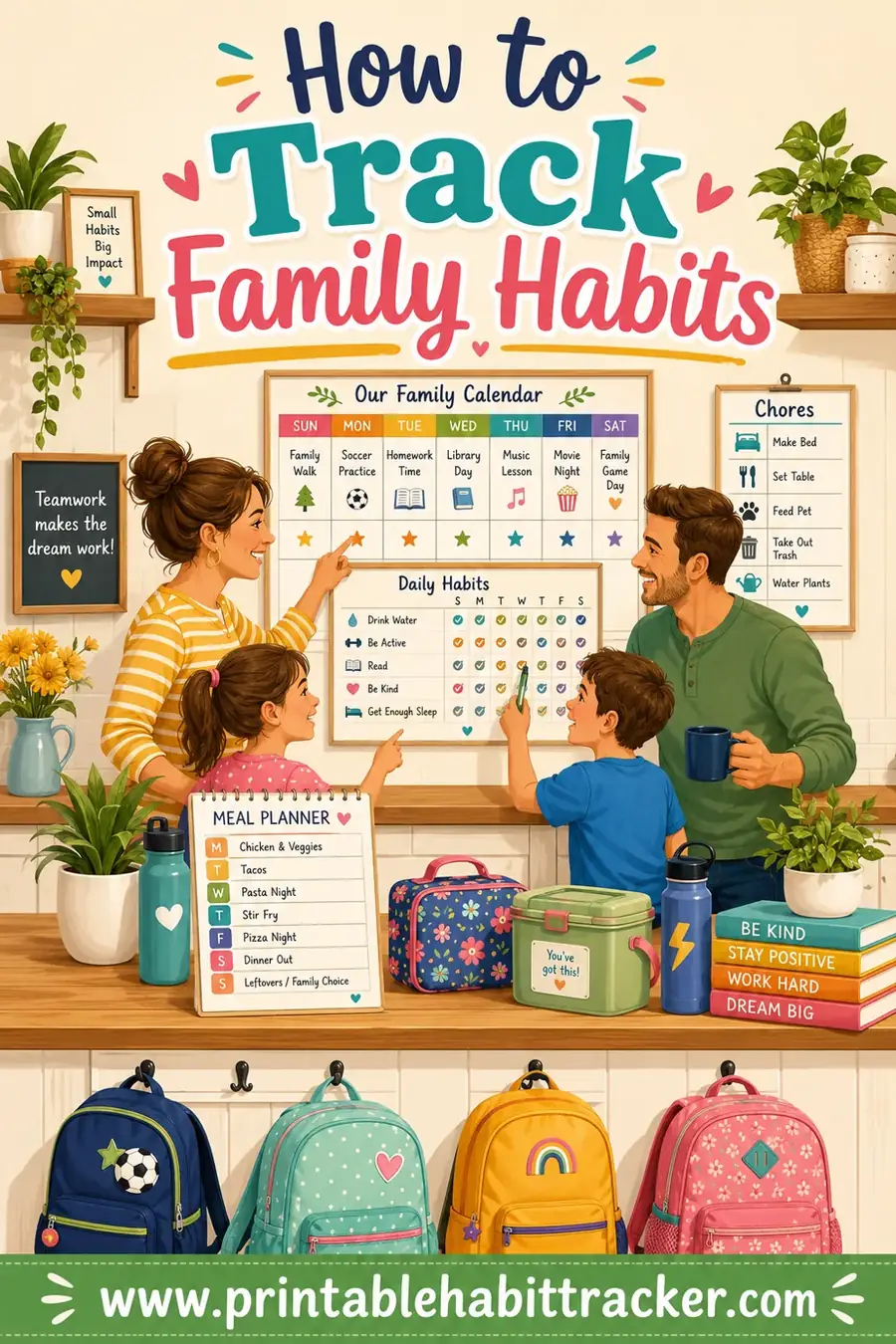
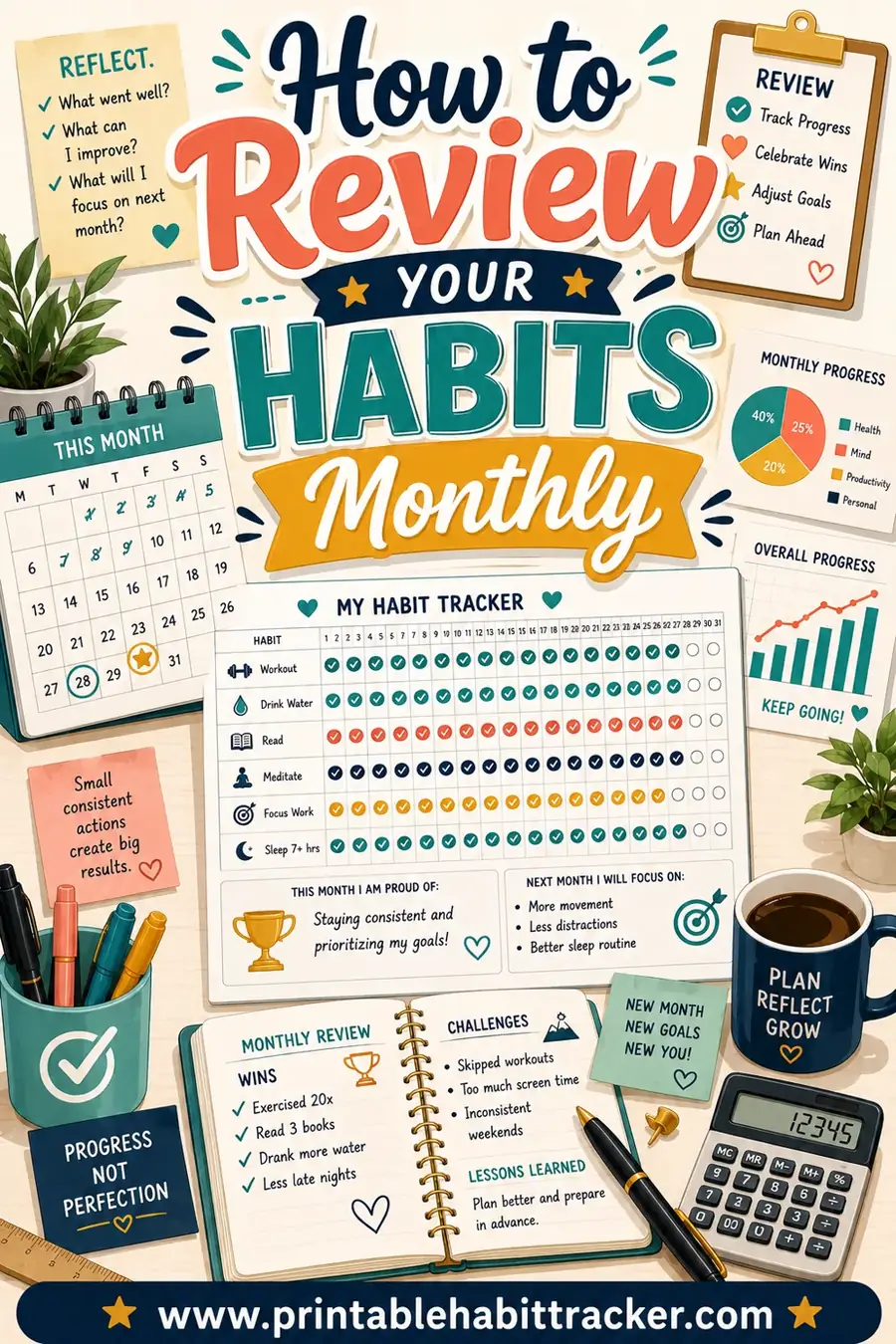
Once your morning and evening blocks are humming, you can go deeper on specific habits. If reading is one of your evening anchors, our guide on how to build a reading habit helps you make it stick. Got a household to wrangle? How to track family habits shows you how to run morning and evening routines for everyone at once. And every few weeks, how to review your habits monthly helps you see whether your timing is actually working.
Frequently Asked Questions
Are morning or evening habits better?
Morning habits tend to stick more reliably because your willpower is fresh and fewer things interrupt you early in the day. But evening habits are best for wind-down and prep tasks like reading, planning, and laying out clothes. The real answer is to match each habit to the time of day that suits it.
Why do my evening habits keep failing?
Evening habits compete with tiredness, screens, and the pull of relaxing on the couch. If yours keep slipping, make them smaller, put a printed tracker on your nightstand so it's the last thing you see, or move the most important one to the morning where willpower is higher.
What habits should I do in the morning?
Anything that needs energy, focus, or protection from a busy schedule: exercise, journaling, focused work, drinking water, and a healthy breakfast. Doing these before the day fills up gives them the best chance of getting done.
Can the same habit work in either morning or evening?
Yes. Habits like meditation, reading, and stretching fit either slot. Pick the time you're most likely to actually follow through, then keep it consistent — doing it at the same time daily matters more than the "perfect" hour.
How do I track both morning and evening habits?
Use one sheet split into a morning block and an evening block, or print two small sheets and place them where each routine happens. A free printable habit tracker lets you build the split layout in a minute and reprint a fresh copy each week.
Ready to Lock In Your Morning and Evening Habits?
Decide which habits belong to your morning and which fit your night, then open the free printable habit tracker and build a split sheet in minutes. Print it, place it where each routine happens, and start checking boxes. It's free, there's no sign-up, and you can reprint a clean copy every week as your routine grows.