Winter Break Screen Time Chart: Earn Screen Minutes Over the Holidays
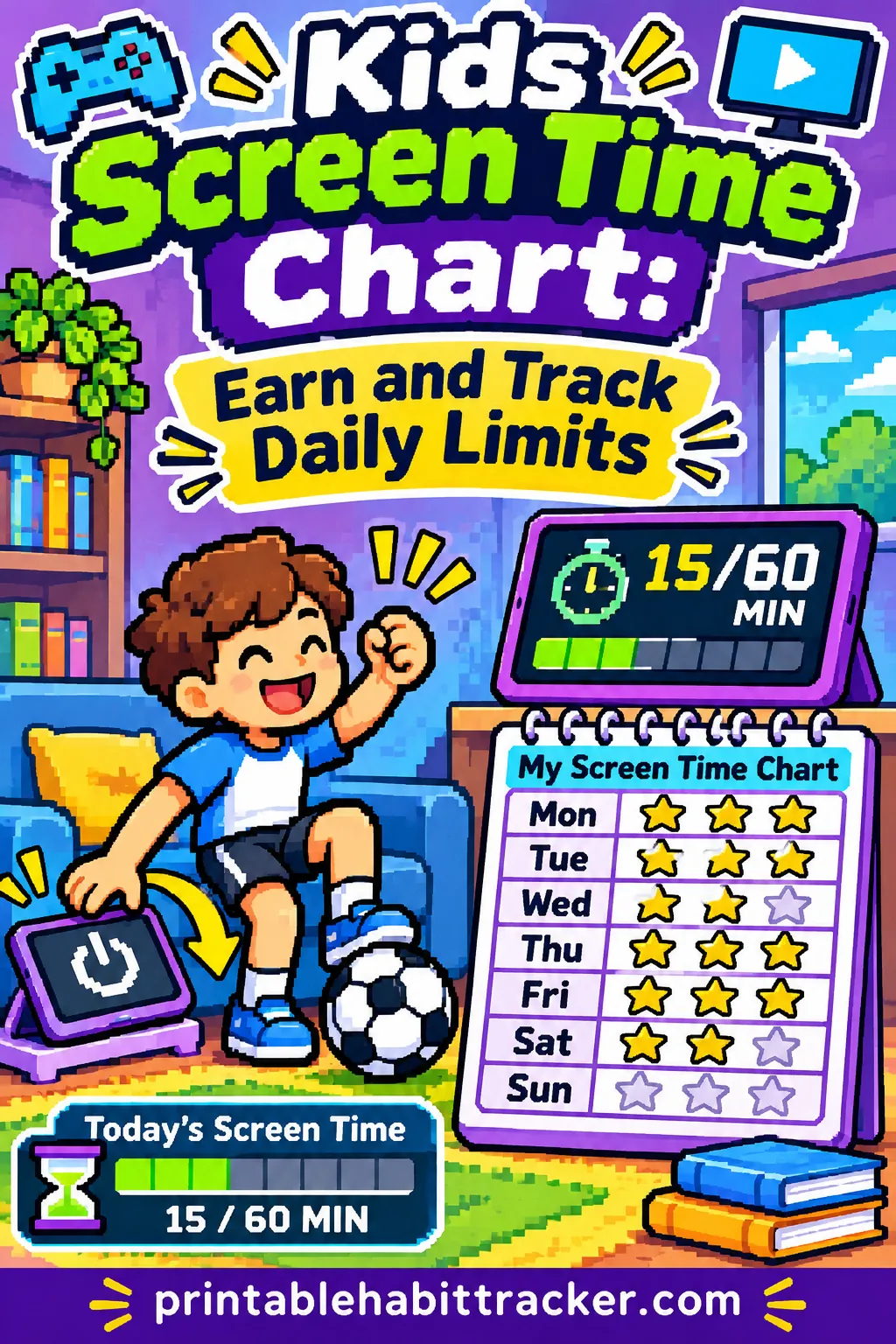
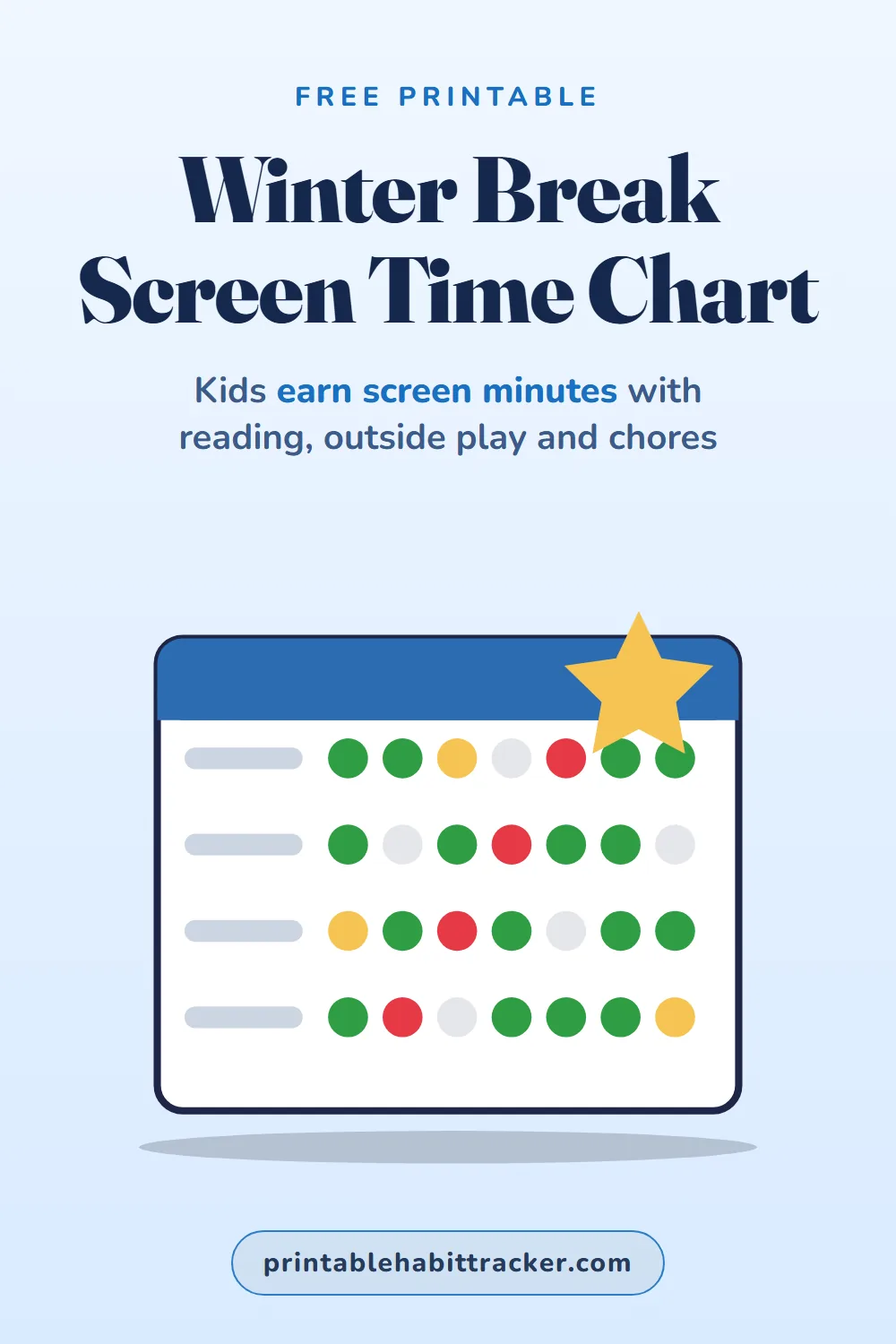
A winter break screen time chart lets kids earn their screen minutes instead of begging for them. Reading 20 minutes earns 20 minutes of screen time, playing outside earns 20, a chore earns 15, and the device goes in the basket at bedtime. It's a simple way to handle two weeks at home and brand-new Christmas devices without daily arguments, because the rules are on the fridge instead of up for debate.
Try it here: tap what's done today. Then open it in the maker, change the minutes to fit your family and print one for each week of break:
✅ Try this tracker for one week
Tap a box each day you do the habit. Your ticks stay on this device.
How an earn-it screen time chart works
Every activity on the chart has a screen-time value. Kids do the activity, check the box, and "bank" the minutes. When they want screen time, they spend what they've earned.
| Activity | Earns |
|---|---|
| Read for 20 minutes | 20 minutes |
| Play outside for 30 minutes | 20 minutes |
| Do one chore (unload the dishwasher, fold laundry, feed the pet) | 15 minutes |
| Build, draw, craft or play a board game | 15 minutes |
| Write a thank-you note (our thank-you note tracker keeps the list) | 10 minutes |
| Help cook or bake | 15 minutes |
Set a daily cap so the bank doesn't get out of hand. For example: "You can earn up to 90 minutes a day, and it doesn't roll over to tomorrow." Adjust the numbers to your family. There's no magic formula.
How much screen time is okay over winter break?
There isn't one right answer, and it's fine to loosen up a little on break. The American Academy of Pediatrics suggests about 1 hour a day of high-quality shows for kids ages 2 to 5, watched together when you can. For older kids and teens, it recommends a family media plan with consistent limits, so screens don't crowd out sleep, activity and time together.
A practical way to think about it on break: sleep, outside time, reading and family time come first. Screens fill in around them. The chart makes that order automatic.
Rules for a new device at Christmas
A new tablet, game console or first phone is exciting, and the first few days set the tone. Agree on these before the box is opened (or at least before the first night):
- Where it sleeps. Devices charge overnight in the kitchen or a family basket, not in bedrooms.
- When it's off. Meals, car rides under 30 minutes, and the last hour before bed are good screen-free times.
- What's okay. Which apps and games are allowed, and who they can chat with.
- Safety basics. Use the device's built-in parental controls, keep accounts private, and never share their real name, school or address in a game.
- The honeymoon. Many families allow extra time on Christmas Day itself, then start the chart on December 26.
A sample winter break day
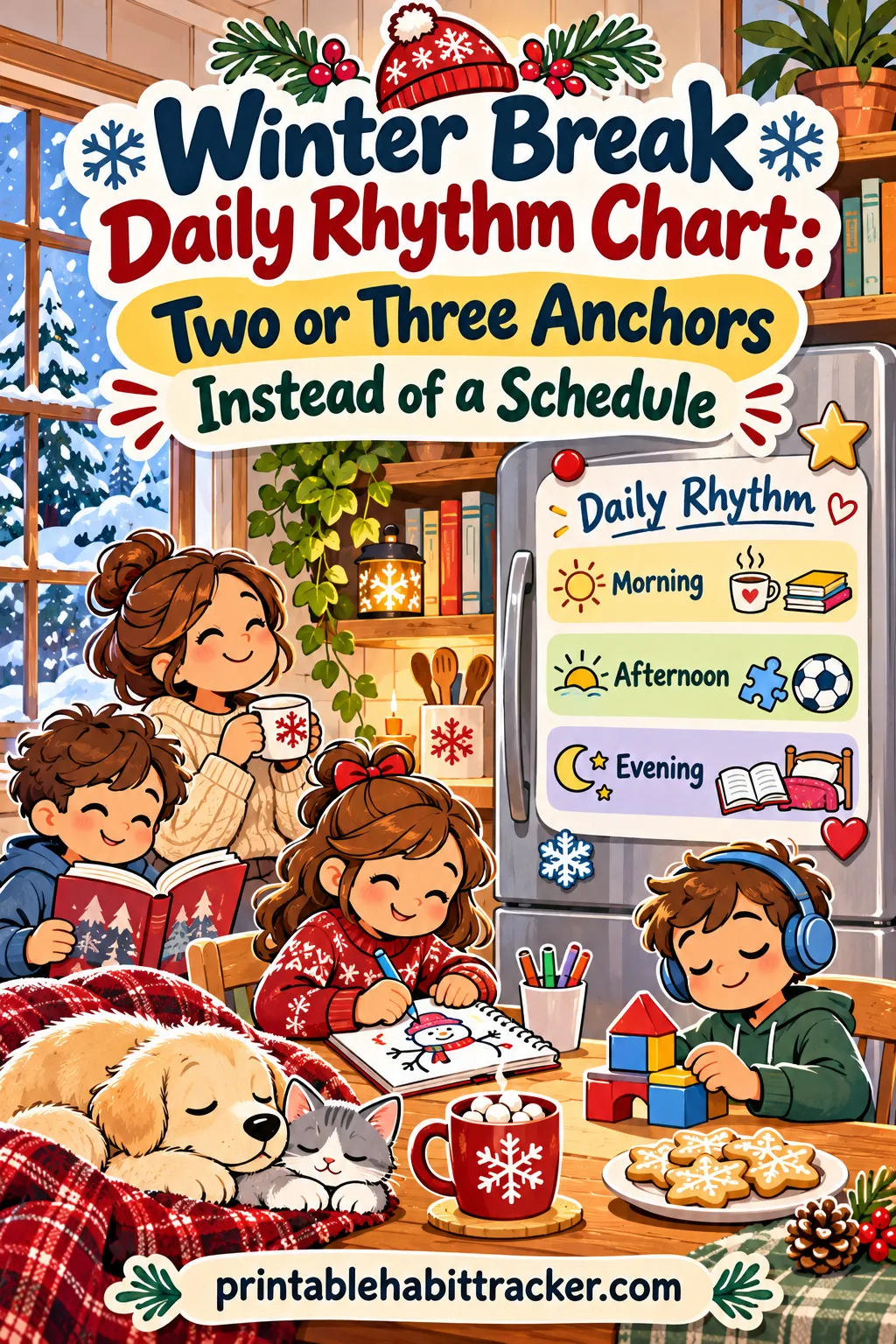
Most winter breaks run about two weeks. A loose rhythm keeps days from turning into one long screen marathon:
| Time | What happens | Screens? |
|---|---|---|
| Morning | Breakfast, get dressed, one chore | No |
| Late morning | Outside play, a walk or sledding if there's snow | No |
| Lunch | Family lunch | No |
| Early afternoon | Quiet reading or puzzle time | No |
| Mid afternoon | Earned screen time | Yes |
| Evening | Dinner, family game or movie together | Family movie is free |
| Bedtime | Device in the basket | No |
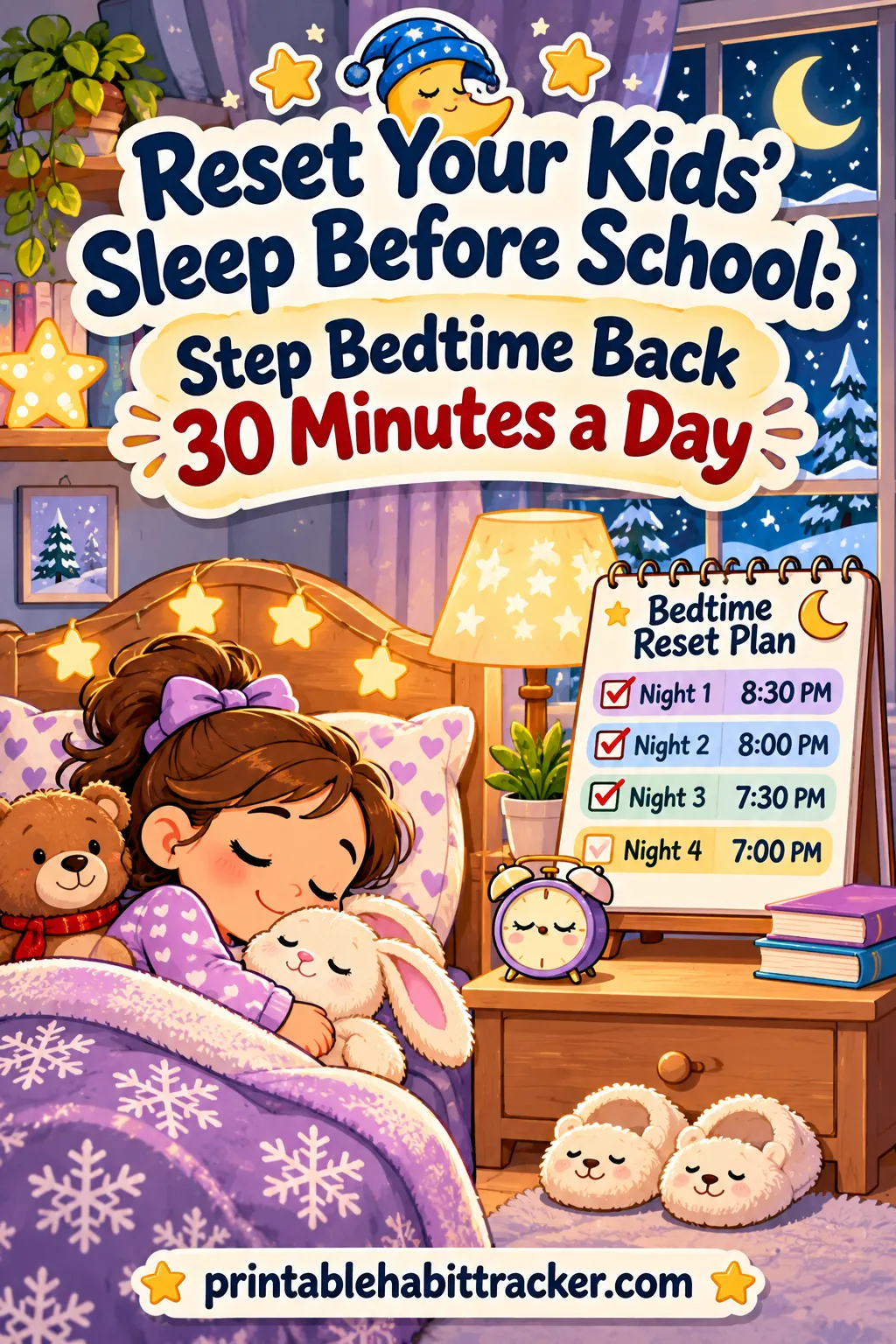
Our winter break daily rhythm chart builds this kind of loose schedule into a printable, and the kids' winter break sleep schedule helps keep bedtimes from drifting too late.
What should be free (not earned)?
Some screen time shouldn't depend on the chart at all. Keep these off the earning system:
- Video calls with grandparents and relatives. Those are about family, not entertainment.
- Family movie night. Watching together is quality time.
- Schoolwork, if there's any over break.
- Music or audiobooks while drawing or building.
Screen time charts by age
| Age | What works |
|---|---|
| 3 to 5 | No earning system. Just a simple picture routine and screen time at the same time each day, about an hour of quality shows. |
| 6 to 9 | Earn-it chart with 3 to 5 activities and a visual timer. Check boxes together at dinner. |
| 10 to 12 | Earn-it chart they track themselves, plus clear rules for any new device or game. |
| Teens | A short written agreement: phone off at night, screen-free meals, and their own plan for the rest. Ask what limits they think are fair. They often surprise you. |
How to stop screen time fights over the holidays
- Use a timer kids can see. A kitchen timer or visual timer ends the "five more minutes" debate.
- Give a 5-minute warning. It's much easier to stop at the end of a level or episode.
- Keep the rules the same every day. Consistency matters more than the exact number.
- Model it. If grown-up phones go in the basket at dinner too, kids complain a lot less.
- Don't take away earned time as a punishment for something unrelated. It makes the chart feel unfair.
Common mistakes
- Making it too complicated. Four or five activities is plenty.
- Forgetting the daily cap. Without one, a busy kid can bank three hours by noon.
- Starting on Christmas morning. Let the first day be fun. Start the chart on December 26.
- Keeping it going forever. When school starts again on a weekday schedule, switch back to your usual school-night rules.
Want a version for school weeks too? Our kids' screen time chart works all year. For break, open the free habit tracker maker, set the minutes that fit your family, and print a fresh chart for each week of winter break.
Frequently Asked Questions
How much screen time should kids have over winter break?
There's no single right number. The American Academy of Pediatrics suggests about 1 hour a day of quality shows for ages 2 to 5, and a family media plan with consistent limits for older kids. Many families allow a bit more on break, then make sure sleep, outside time and reading still happen first.
How does an earn screen time chart work?
Kids check off non-screen tasks like reading, outside play and chores, and each one earns a set number of screen minutes. For example, 20 minutes of reading earns 20 minutes of screen time.
What rules should we set for a new device at Christmas?
Before the box is opened, agree on where it charges at night (outside the bedroom), when it's off (meals and an hour before bed), and which apps are okay. Write the rules on the chart so nobody has to argue later.
Should screen time be a reward for chores?
It can work well over a long break, as long as the basics stay free: kids still get family movie night and video calls with relatives no matter what's on the chart.
How do I stop screen time fights over the holidays?
Use a visible timer, give a 5-minute warning, and keep the rules the same every day. A chart on the fridge settles most arguments before they start, because the rules aren't up to your mood.