Classroom Behavior Chart: A Kind, Simple Printable for Teachers
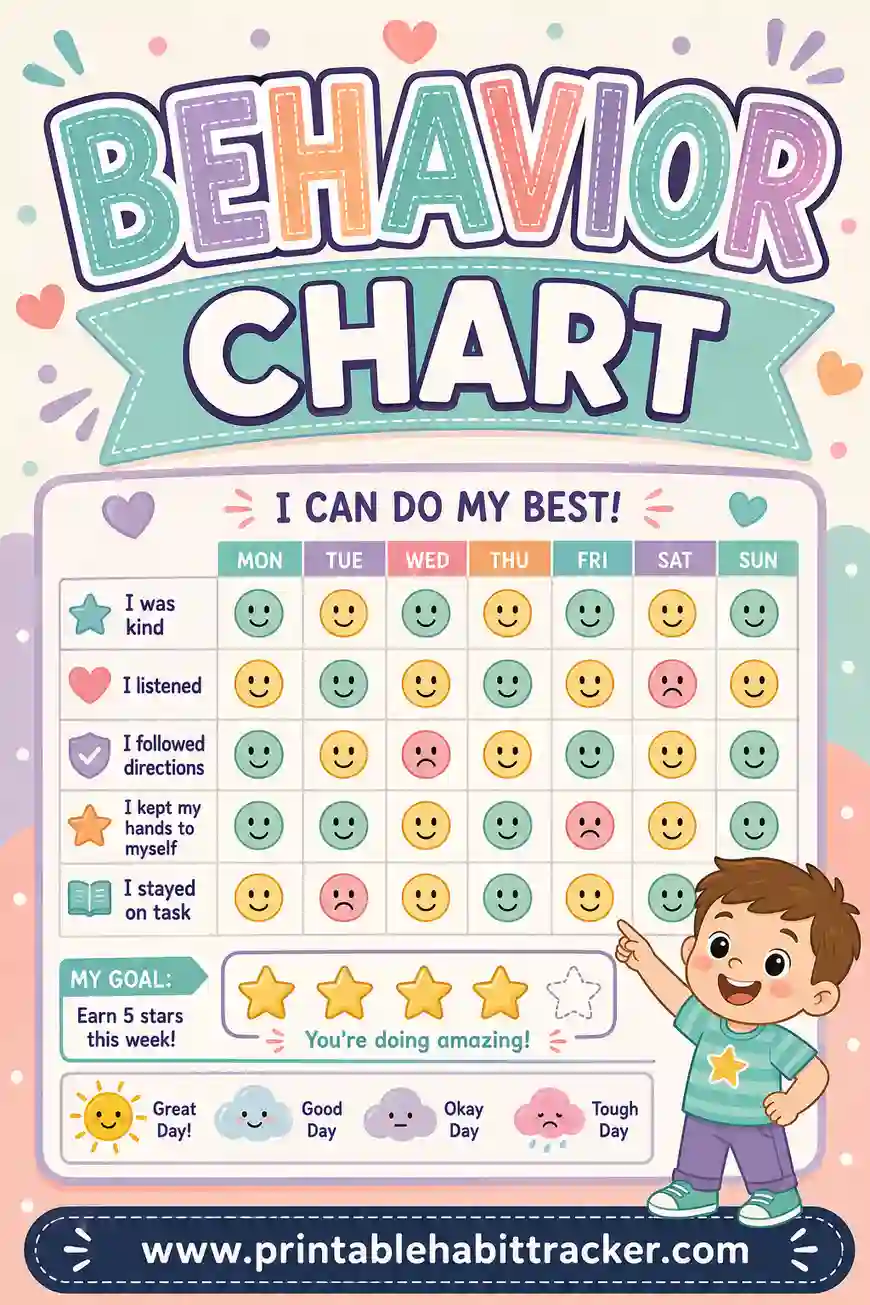
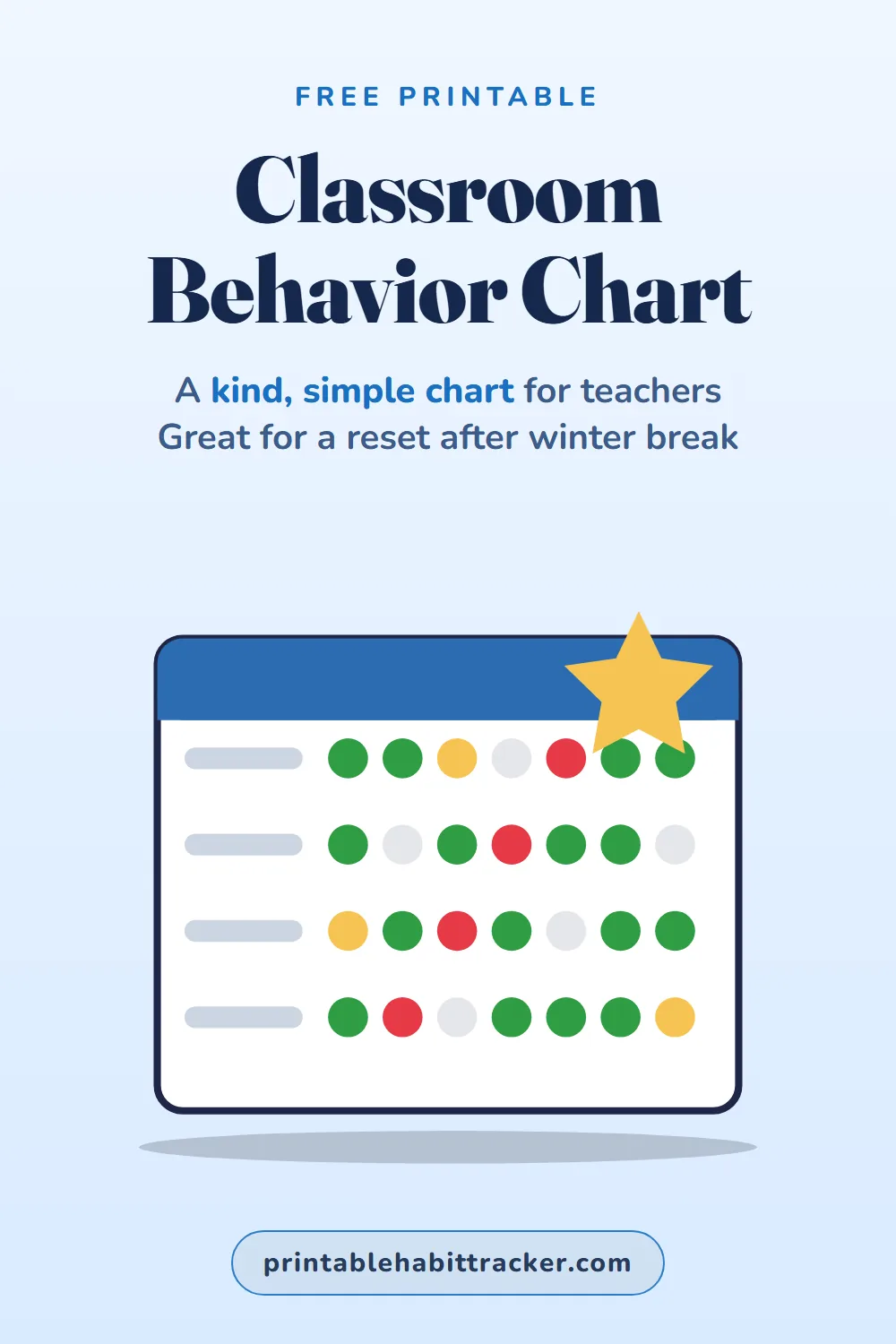
The classroom behavior charts that work best are positive, simple and mostly private: a few clear expectations, student names down the side, the days of the week across the top, and a check for each day a student meets the goal. Add a whole-class goal everyone works toward together, and you've got a system that builds good habits without putting anyone on the spot.
Coming back from winter break is the perfect time to reset. Build a quick chart below, then print it for your clipboard or binder:
✅ Try this tracker for one week
Tap a box each day you do the habit. Your ticks stay on this device.
What kind of classroom behavior chart should you use?
There isn't one right chart. Most teachers mix two or three of these:
| Chart type | How it works | Best for |
|---|---|---|
| Teacher tracking sheet | Student names down the side, days across the top. You check off who met the goal each day. | Keeping records, parent conferences, spotting patterns |
| Whole-class goal chart | The class earns points or fills a jar together toward a shared reward. | Building teamwork, quick wins in the first weeks |
| Individual student tracker | One student, a few goals, kept on their desk or in a folder. | Students who need extra support or a fresh start |
| Self-monitoring tracker | Students rate or check their own behavior, then compare with you. | Older students building self-control and ownership |
| Table or team points | Groups earn points for working well together. | Group work, transitions, cleanup |
How to set up a behavior chart for students
- Pick three to five expectations. Write them as what students should do: "Raise a hand to speak," "Keep hands and feet to yourself," "Walk in the hallway," "Try your best," "Use kind words."
- Teach and practice them. Model what each one looks like, especially after a long break. Kids need to see it, not just hear it.
- List students down the side. First names, initials or student numbers all work. Initials are handy if the chart might be seen by others.
- Check off the good stuff. Mark each day a student meets the goal. Focus your energy on catching students doing things right.
- Review on Friday. Look for patterns, celebrate progress and decide who might need a quiet check-in or an individual plan.
Keep it kind: public charts vs private tracking
Honestly, a lot of teachers have moved away from public clip charts and color charts where everyone can see who's "on red." The worry is simple: the same few students end up at the bottom in front of their friends, and that can feel embarrassing instead of motivating.
A gentler approach that still keeps you organized:
- Track individuals privately on your clipboard or in a binder.
- Make the public chart a team effort, like a whole-class goal where everyone wins together.
- If you use a public chart, let students only move up. Recognize good choices without broadcasting the tough days.
- Talk privately about problems. A quiet word at the student's desk works better than a name called out.
Classroom reward ideas that don't cost a thing
Whole-class and individual rewards can be simple. Some favorites:
- Five extra minutes of recess
- Choose the class read-aloud book
- Sit anywhere for the day
- Line leader or teacher's helper
- Lunch with the teacher in the classroom
- A two-minute dance party
- Pajama day or stuffed-animal day (check your school's rules)
- Show-and-tell spot
- Bring a book from home for silent reading
- Use the special pens or markers for the day
- A positive note or phone call home
- Extra drawing or free-choice time
Food rewards are best skipped in the classroom. Allergies and school wellness rules make them tricky, and kids love these just as much.
Behavior tracker for students who need extra support
For a student who needs more help, a personal tracker often works better than any class chart. Keep it small and specific:
- One to three goals written in the student's words.
- Short check-in times, like before recess, after lunch and end of day, instead of one judgment for the whole day.
- A goal they can reach, like 8 of 15 checks to start, then raise it slowly.
- Daily take-home copy if families want to stay in the loop.
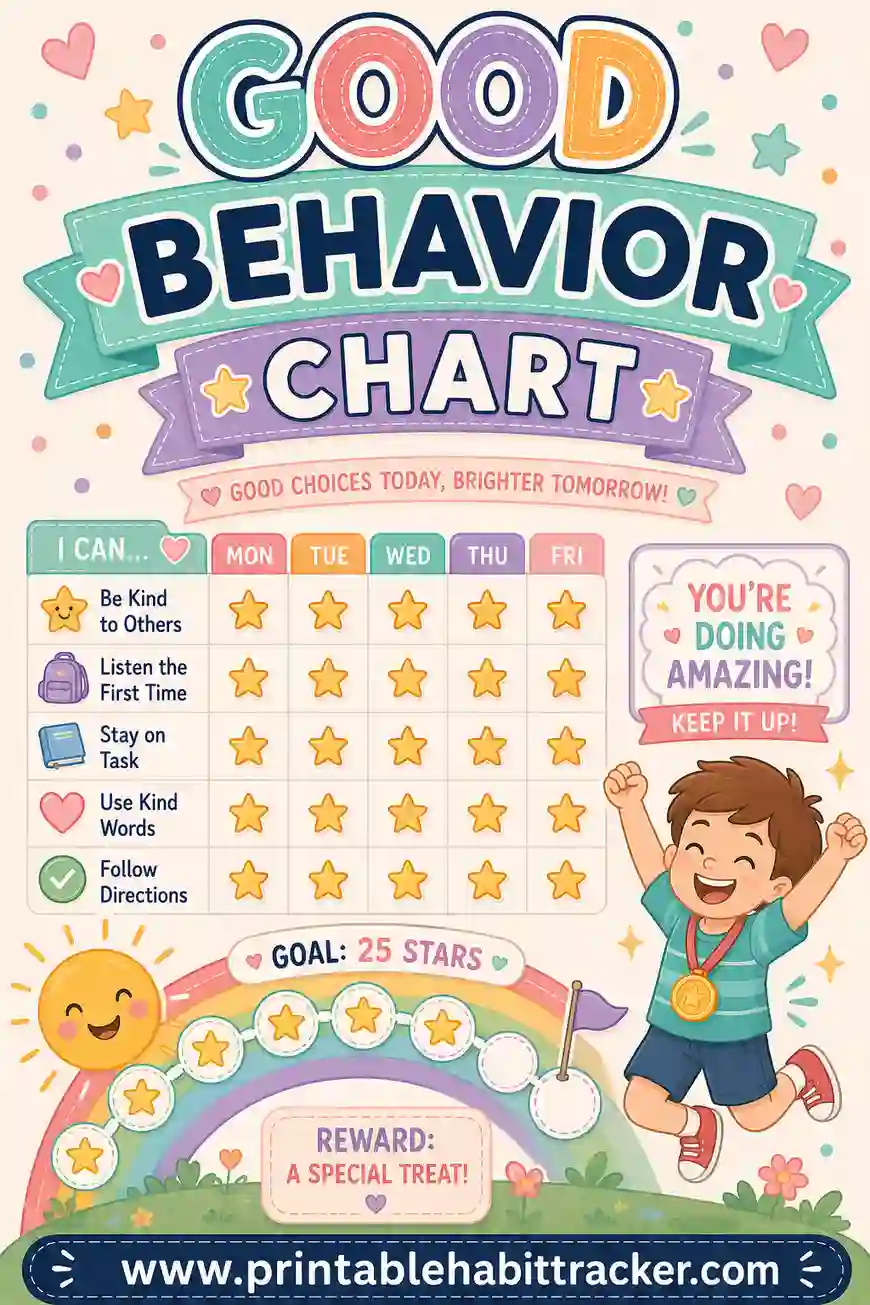
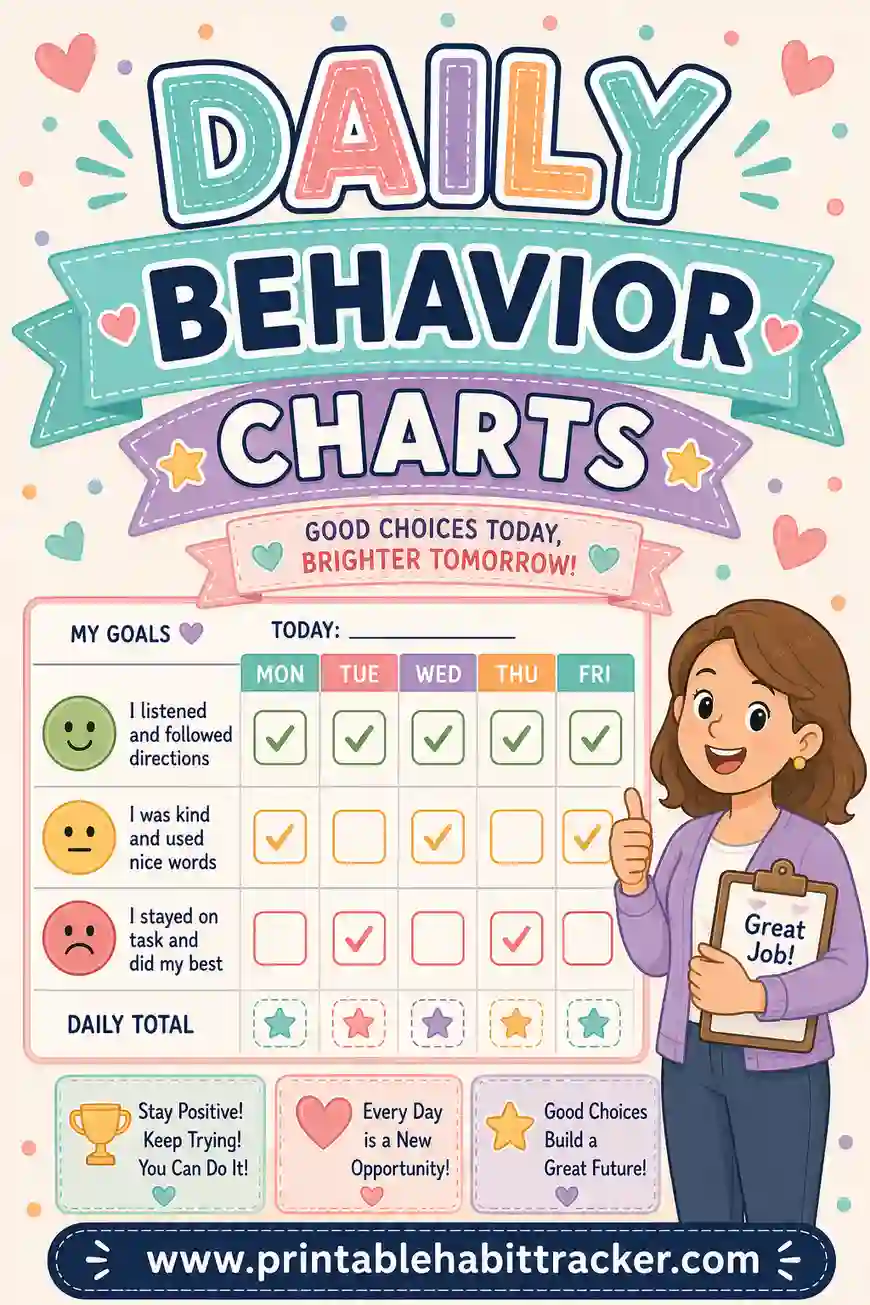
For ready-made layouts by the day, see our daily behavior charts. For younger kids at home, a good behavior chart or a reward chart uses the same ideas.
How to print your classroom behavior chart
- Open the habit tracker maker or start from the chart above.
- Name it something like "Room 12 Behavior Chart" or "Week of January 4."
- Type student names (or initials), one per line, in the habits box. Each name gets its own row.
- Choose Weekly and the Checkbox style.
- Write your class expectations in the Notes / goals box so they print at the bottom.
- Print a stack, so every Monday is ready.
The maker takes up to 30 rows, so a whole class fits on one sheet. If you'd like bigger boxes that are easier to mark, print one sheet per table group and keep them together on a clipboard.
Common classroom behavior chart mistakes
- Too many rules. Ten expectations is a lot to remember. Three to five, posted and practiced, works better.
- Only noticing the bad. If the chart is mostly for tracking problems, students learn that's what gets attention.
- Same consequences for every student. Some kids need extra support, not a bigger penalty.
- Dropping it by February. A quick Friday review keeps the system alive. Reset it after every long break.
- Not telling families. A short note about how the chart works makes conferences much easier.
Want something just for you, too? Our habit tracker for teachers helps with your own routines, like prepping tomorrow's materials and actually taking a lunch break. For your students, make your chart in the free maker and you're ready for Monday.
Frequently Asked Questions
What should be on a classroom behavior chart?
Student names or initials down the side, the days of the week across the top, and three to five clear expectations written as what students should do.
Are clip charts bad for students?
Many teachers have moved away from public clip charts because the same students can end up at the bottom in front of classmates. Private tracking plus a whole-class goal is a gentler option.
What are good classroom rewards for behavior?
Free ideas work well: extra recess minutes, choosing the read-aloud, sitting anywhere for the day, line leader, lunch with the teacher or a positive note home.
How do I make a behavior tracker for one student?
Pick one to three goals in the student's words, check in at a few set times each day, and start with a target they can reach, then raise it slowly.
How many students fit on one printable behavior chart?
The maker takes up to 30 rows, so most classes fit on one sheet. For bigger boxes, print one sheet per table group and keep them on a clipboard.
Is this classroom behavior chart free?
Yes. Type your student names into our habit tracker maker, choose a weekly layout and print as many copies as you need. No sign-up needed.