Identity Based Habits: How They Work, 50 Examples and a Printable Tracker
Identity based habits are habits built around who you want to become, not what you want to get. Instead of "I want to read 20 books this year," you decide "I'm a reader," and then you prove it to yourself with a small action, like reading 10 pages a day. The idea was made popular by James Clear in Atomic Habits, and it works because each small action becomes evidence for the person you're becoming. Below is how it works, 50 "I am a person who..." examples, and a free printable tracker.
Here's an identity habit tracker with five examples. Color a box each day you act like the person you're becoming, change the rows to your own, then print it free:
✅ Try this tracker for one week
Tap a box each day you do the habit. Your ticks stay on this device.
Outcome, process, identity: the three layers
Clear describes three layers of change. Most people start at the outside. Identity habits start at the center.
| Layer | What it's about | Example |
|---|---|---|
| Outcome | What you get | "Run a 5K" |
| Process | What you do | "Run three times a week" |
| Identity | Who you are | "I'm a runner" |
Outcome goals end. Once you run the 5K, the reason to keep going is gone. An identity doesn't end. A runner runs, whether there's a race or not.
How to build an identity based habit in 4 steps
- Pick the identity. Finish the sentence: "I want to be the kind of person who..."
- Ask what that person would do. What would a reader do in the next hour? Read a page. What would a healthy person do at lunch? Add a vegetable.
- Make it tiny. Choose an action small enough to do on your worst day. Ten pages, not a chapter.
- Collect proof. Color a box each time. Every box is a small vote for the new you.
The "vote" idea is the heart of it. You don't need to be perfect. You just need more votes for the new identity than for the old one.
50 identity based habits examples
Health and movement
| I am a person who... | Tiny daily proof |
|---|---|
| moves every day | A 10-minute walk |
| is a runner | Put on running shoes and go out the door |
| takes care of my body | A glass of water with breakfast |
| sleeps well | Screens off 30 minutes before bed |
| eats real food | One vegetable with lunch |
| stretches | Two minutes of stretching after waking |
| gets outside | Five minutes of fresh air |
| is strong | Ten squats while the kettle boils |
Learning and creativity
| I am a person who... | Tiny daily proof |
|---|---|
| is a reader | 10 pages a day |
| is a writer | One page, or 100 words |
| learns languages | Five new words |
| is a musician | Ten minutes of practice |
| is an artist | One small sketch |
| is curious | Look up one thing I wondered about |
| finishes what I start | One step on a project |
Home and money
| I am a person who... | Tiny daily proof |
|---|---|
| keeps a tidy home | A 10-minute evening reset |
| cooks at home | Plan one dinner |
| saves money | Move a small amount to savings |
| knows where my money goes | Write down every purchase |
| is organized | Clear my desk before I log off |
| is on time | Lay out tomorrow's things at night |
Relationships and kindness
| I am a person who... | Tiny daily proof |
|---|---|
| is a good friend | One check-in text |
| is a present parent | Ten phone-free minutes with my kids |
| is grateful | Write one thing I'm thankful for |
| is kind | One kind act or compliment |
| listens | Ask one follow-up question |
| stays in touch with family | A weekly call |
Calm and focus
| I am a person who... | Tiny daily proof |
|---|---|
| is calm | Five slow breaths before checking my phone |
| focuses deeply | One 25-minute block with no notifications |
| plans my day | Write my top three tasks |
| reflects | Two lines in a journal at night |
| keeps my promises to myself | Do the one thing I said I'd do |
That's 32 in the tables. Here are 18 more short ones for your own list: a morning person, a walker, a gardener, a baker, a volunteer, a learner, a planner, a tidy cook, a patient driver, a good neighbor, a letter writer, a hiker, a swimmer, an early sleeper, a budgeter, a note taker, a crafter and a person who makes the bed.
How to write your identity statement
- Use the present tense. "I am a reader," not "I will become a reader."
- Keep it believable. "I move every day" feels true sooner than "I'm an athlete."
- Make it about you, not a number. Numbers go in the tiny action, not the identity.
- Pick one to three. Too many identities at once spreads you thin.
Identity habits for the New Year
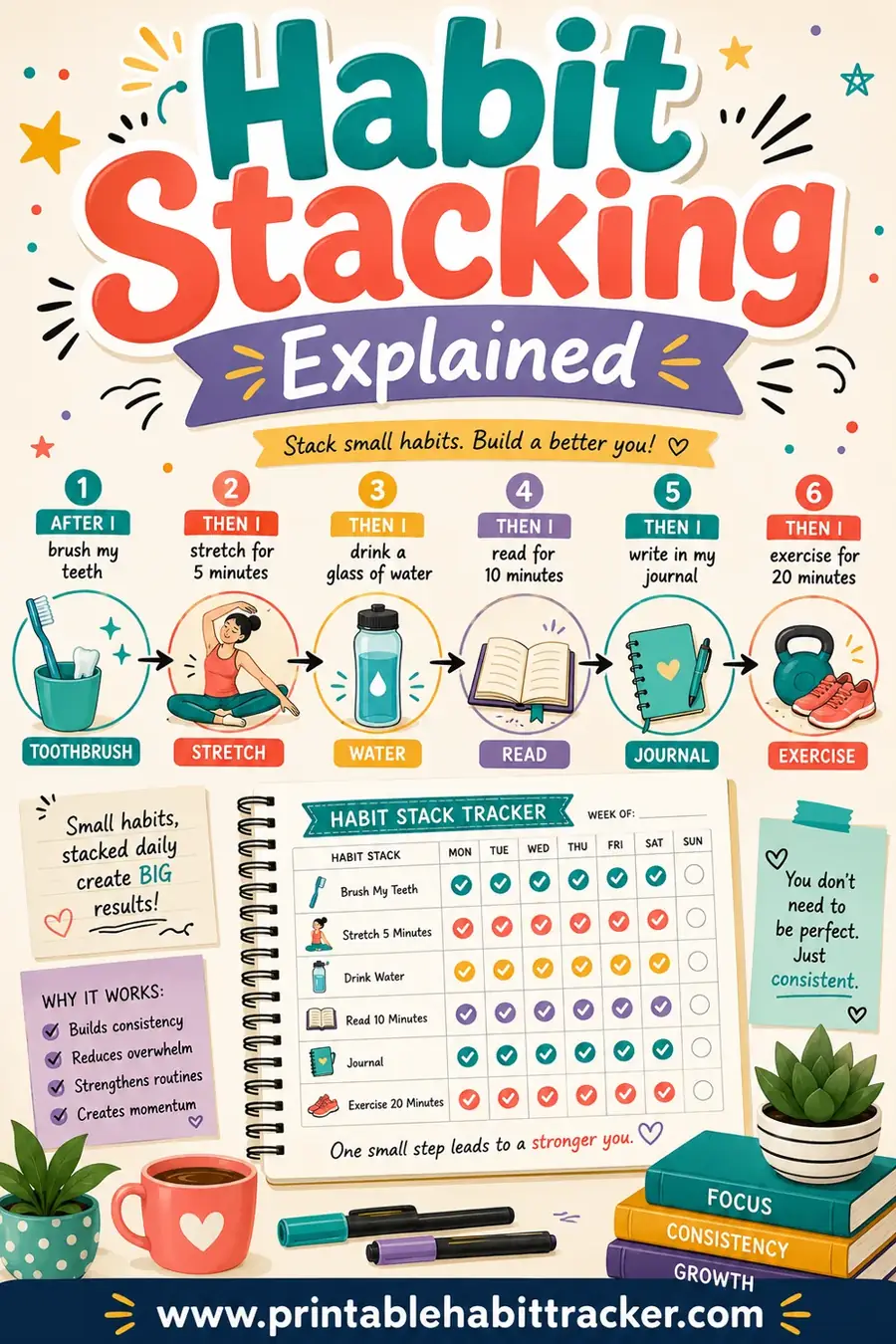
Resolutions are usually outcomes: lose weight, read more, save money. Try turning yours into identities before Friday, January 1, 2027. "Read more" becomes "I'm a reader: 10 pages before bed." It gives you something to do on day one, not just something to hope for in December. Pair it with habit stacking to tie the new habit to something you already do.
Common mistakes
- Picking a huge first action. If it takes willpower every day, shrink it.
- Waiting to "feel like" the new person. The feeling comes after the evidence, not before.
- Quitting after a miss. One missed day is one vote. Don't miss twice in a row.
- Too many identities. Start with one, add another when the first feels normal.
Want more habit ideas?
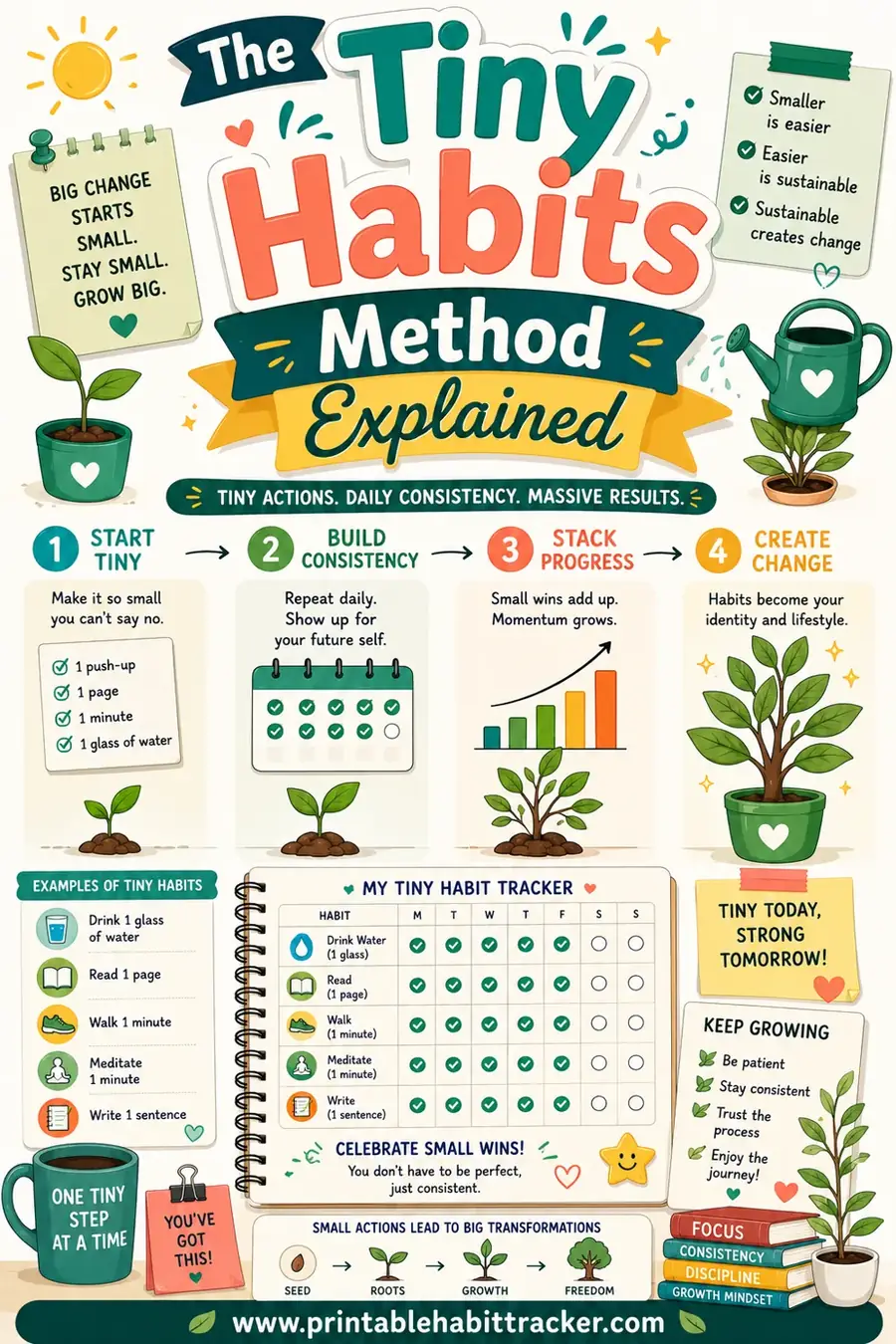
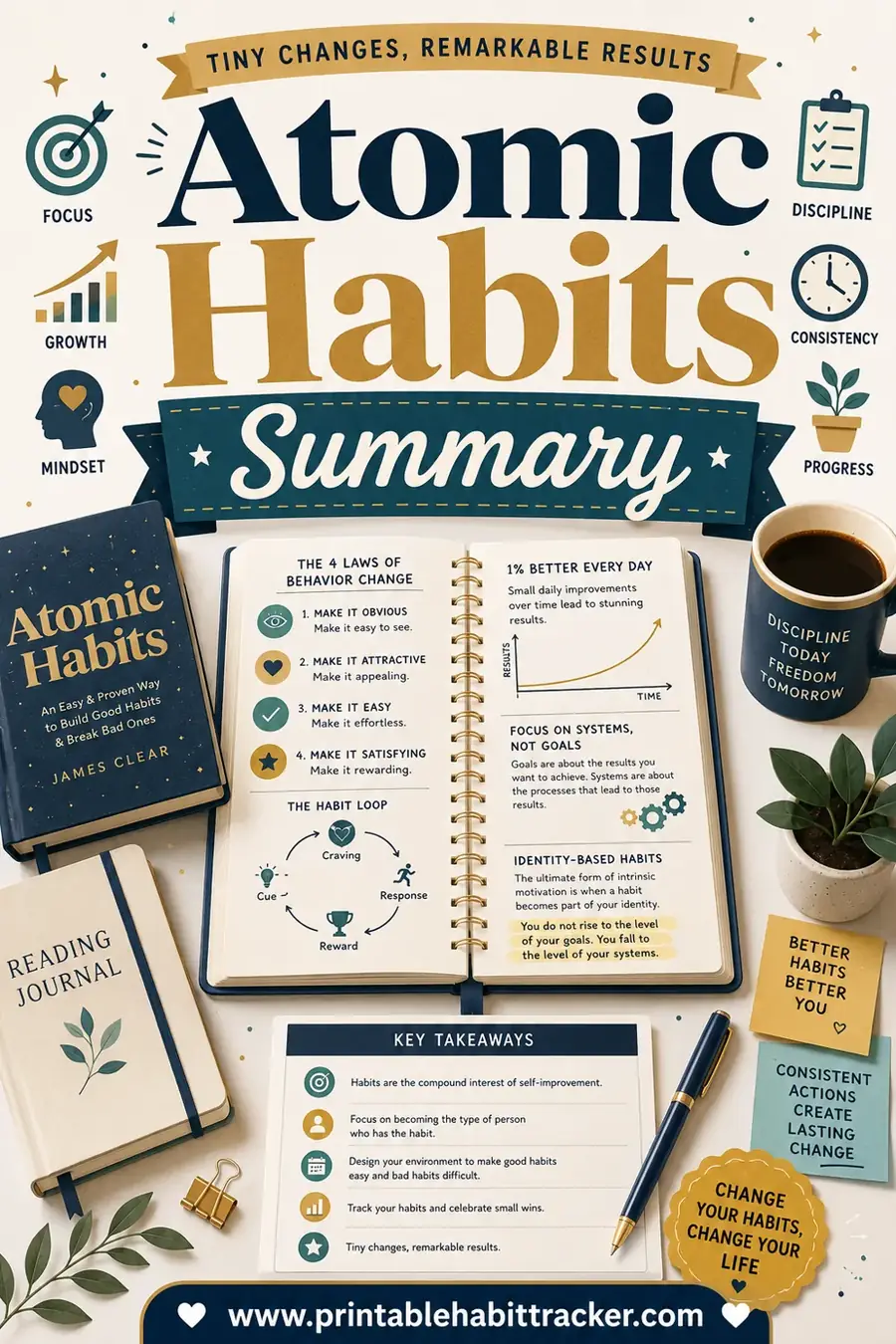
Our Atomic Habits summary covers the rest of the book's ideas in plain words. For tiny starting steps, see the Tiny Habits method. You can also browse our list of good habits, the habits of happy people, and our guide to creating a daily routine.
How to print your identity habit tracker
- Open the free habit tracker maker with the button above. It opens in the monthly color-in layout.
- Write each row as "I am a ___: tiny action," like "I am a reader: 10 pages."
- Keep it to five rows or fewer.
- Print it and color a box every time you cast a vote.
When you're ready, open the free maker and start your tracker.
Frequently Asked Questions
What are identity based habits?
They're habits built around the kind of person you want to be, instead of a result you want. Instead of 'I want to read 20 books,' you decide 'I'm a reader' and prove it with small daily actions, like reading 10 pages.
Who came up with identity based habits?
The idea was made popular by James Clear in his book Atomic Habits. He describes three layers of change: outcomes, processes and identity, and suggests starting with identity.
What are examples of identity based habits?
'I'm a reader' becomes 10 pages a day. 'I'm a runner' becomes putting on running shoes every morning. 'I'm someone who keeps a tidy home' becomes a 10-minute evening reset. 'I'm a good friend' becomes one check-in text a day.
How do I start an identity based habit?
Decide who you want to become, write it as 'I am a person who...', then pick an action so small you can do it on your worst day. Track it, and let each check mark be proof.
Why do identity based habits work?
When a habit fits how you see yourself, you don't have to argue with yourself every day. Each small action is evidence, and the more evidence you collect, the more natural the habit feels.