Incentive Chart: A Free Printable Points Chart for Kids
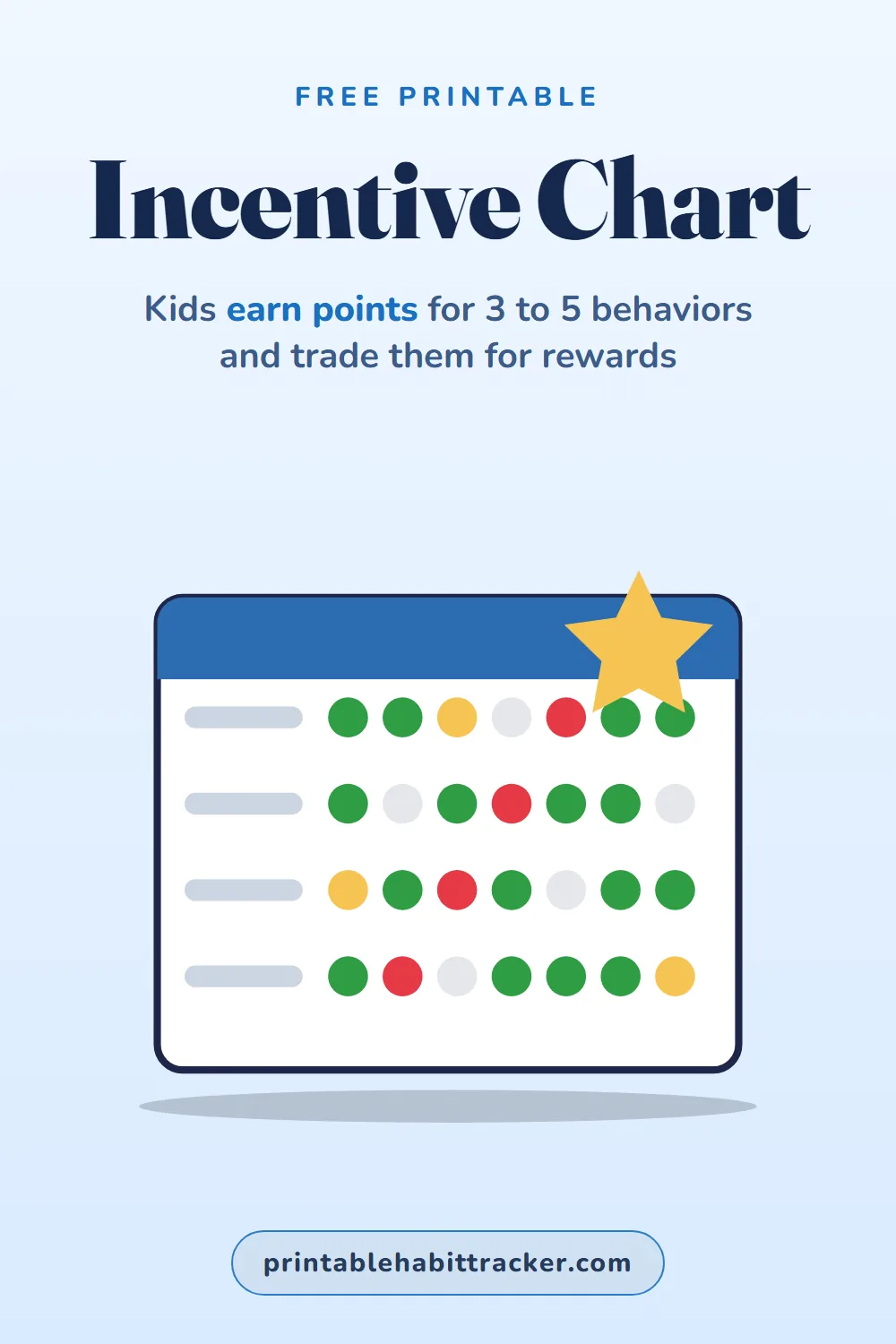
An incentive chart is a simple points system: list three to five behaviors you want to see, give your child a point every time they do one, and let them trade points for rewards from a menu they helped make. It's a little more grown-up than a sticker chart, because kids can cash in a small reward now or save up for a big one. For most families, a weekly chart with four behaviors and a reward menu of small, medium and big prizes is the sweet spot.
Try it here: check a box for each point earned this week. Change the behaviors to your own, then print the chart free:
✅ Try this tracker for one week
Tap a box each day you do the habit. Your ticks stay on this device.
How an incentive chart works
- Pick 3 to 5 target behaviors. Make each one clear enough that you and your child would agree whether it happened. "Ready for school by 7:45" beats "be responsible."
- Give each one a point value. One point each is simplest. If one behavior is much harder for your child, make it worth two.
- Make a reward menu together. Small, medium and big rewards, each with a price in points.
- Check boxes as points are earned. At the same time every day, like right after dinner.
- Total up once a week. Sunday works well. Your child can spend points or save them.
That last part is what makes it an incentive chart instead of a reward chart. Kids get to make a real choice: spend 5 points on dessert tonight, or save for something bigger. That choice is part of the motivation.
Incentive chart vs. reward chart vs. behavior chart
| Chart | How it works | Best for |
|---|---|---|
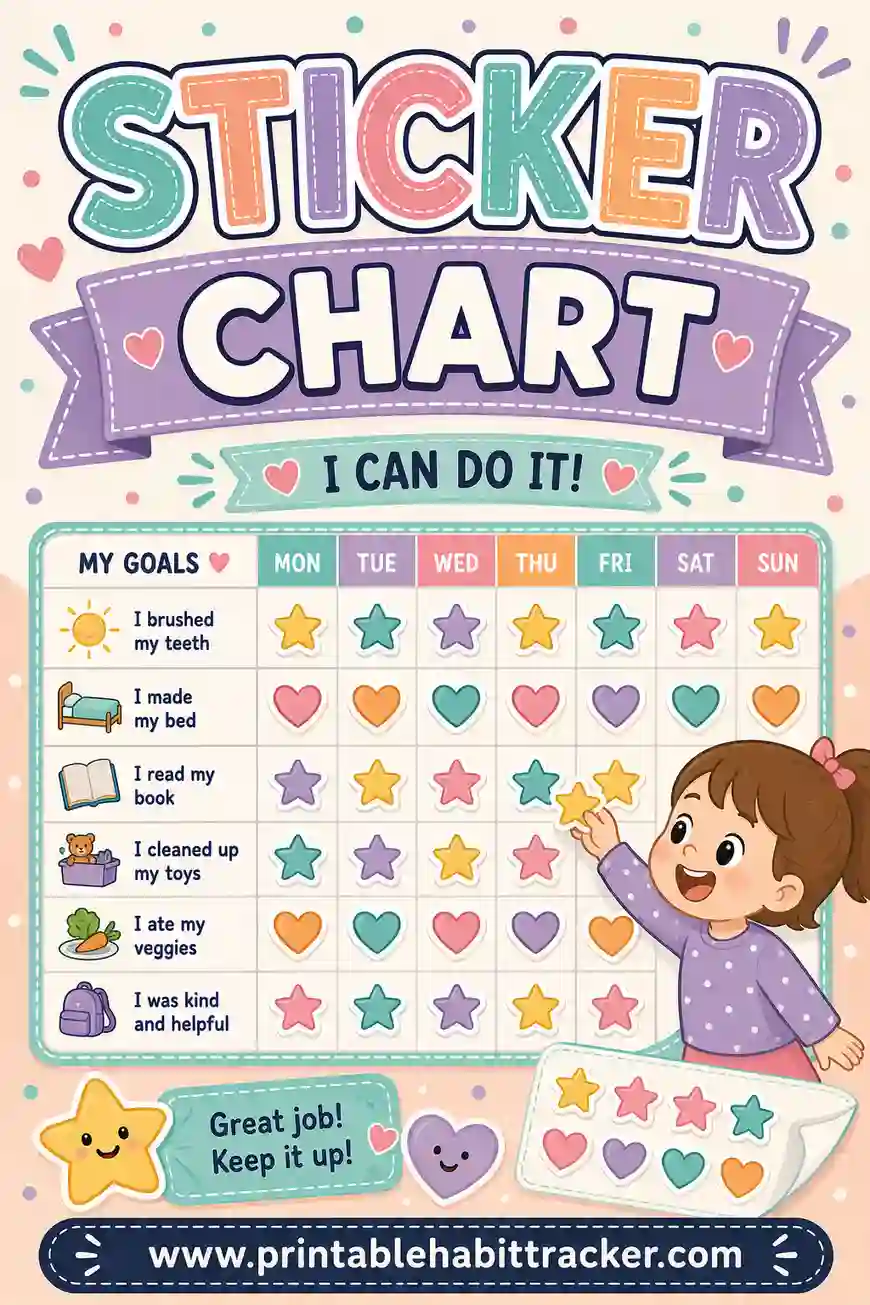
| Sticker chart | A sticker for each success; fill the row, get one reward | Ages 2 to 5, one simple goal |
| Reward chart | Stars or stickers toward one set reward | Ages 3 to 8, one or two goals |
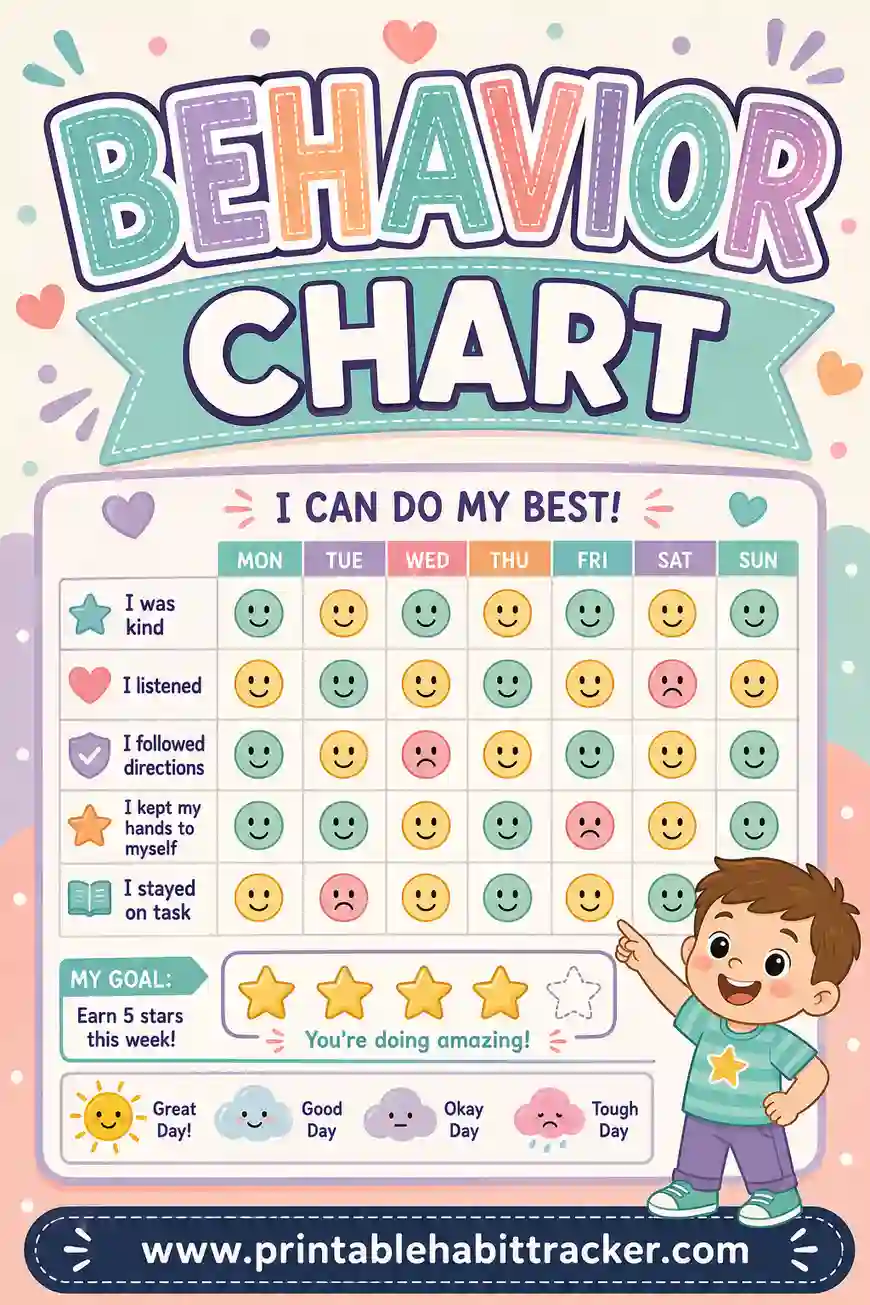
| Behavior chart | Tracks daily behavior, often with a smiley or color for the day | Seeing patterns, home and school |
| Incentive chart | Points for several behaviors, spent on a menu of rewards | Ages 5 to 12, several goals at once |
If your child is younger or just starting out, a sticker chart is usually the better first step. Our behavior chart page covers the daily-tracking style.
Example: a week on an incentive chart
Here's a real-numbers example for an 8-year-old. Four behaviors, one point each, seven days.
| Behavior | Points this week |
|---|---|
| Ready for school on time (5 school days) | 4 |
| Homework done without a reminder (5 school days) | 3 |
| Chore done (7 days) | 6 |
| Kind to family (7 days) | 5 |
| Total | 18 of 24 possible |
With the reward menu below, she could spend 15 points to pick Friday's movie and save 3, or save all 18 toward the 40-point park trip, which she'd reach in about two more weeks. Either choice is a win.
How to price rewards (so the chart actually works)
This is where most incentive charts go wrong. If rewards are too expensive, kids give up. If they're too cheap, points stop meaning anything. A simple rule:
- Small reward: about 2 to 3 days of points. Your child should hit one in the first week, ideally in the first few days.
- Medium reward: about a week of points.
- Big reward: two to four weeks of points.
Count how many points your child could earn in a perfect week, then assume they'll earn about two-thirds of that. In the example above, 24 possible points means about 16 in a typical week, so small rewards cost about 5, medium about 15, and big about 40.
Reward menu ideas (most of them free)
| Small (about 5 points) | Medium (about 15 points) | Big (about 40 points) |
|---|---|---|
| Pick dessert | Pick the family movie | Park or playground trip with a friend |
| An extra bedtime story | Stay up 20 minutes later on Friday | A small toy or book they've been wanting |
| Choose the music in the car | Choose dinner and help cook it | A one-on-one outing with a parent |
| Skip one small chore | Build a blanket fort in the living room | A sleepover or friend over for the afternoon |
| Sit in the "special seat" at dinner | Breakfast for dinner night | A baking project of their choice |
| Pick a sticker or small treat | Plan a family game night | A trip to the library and a picnic |
Let your child add a few of their own. Kids often pick rewards that cost you nothing at all, like "Dad does a silly dance" or "I get to wear pajamas to the store."
Target behaviors by age
Ages 5 to 7
- Get dressed by myself
- Brush teeth morning and night
- Put toys away before bed
- Use a calm voice when upset
- Listen the first time
Ages 8 to 10
- Ready for school on time
- Homework done without a reminder
- One chore a day (feed the pet, empty the dishwasher)
- Screens off at the agreed time
- Kind words to brothers and sisters
Ages 11 to 12
- Pack my own lunch
- Practice an instrument or sport for 20 minutes
- Keep my room tidy
- Read for 20 minutes
- Help with dinner once a week (worth 2 points)
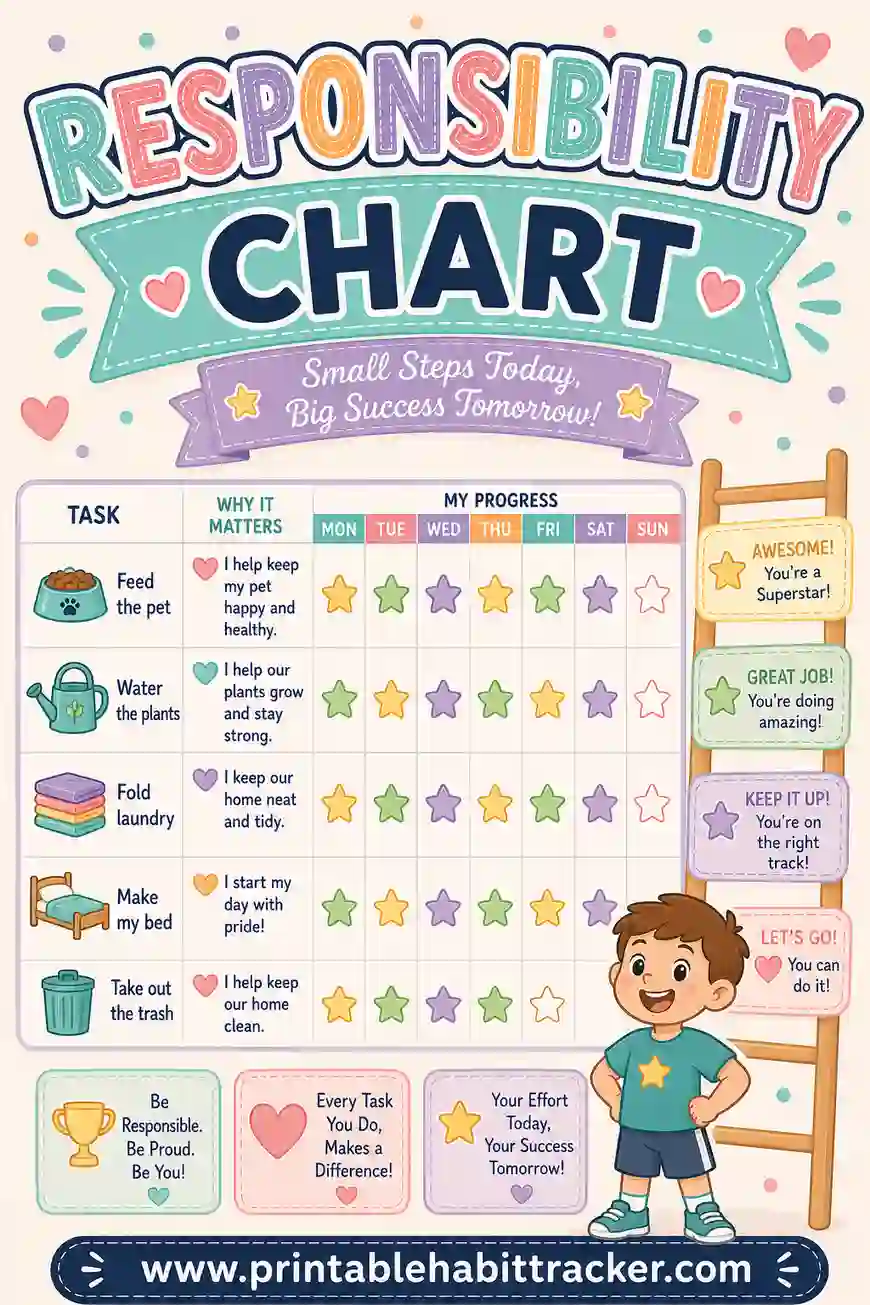
Need more ideas for chores in particular? A responsibility chart lists age-appropriate jobs that fit nicely onto an incentive chart.
Using an incentive chart in the classroom
Teachers use points charts all the time, and the same rules apply. A few setups that work:
- Whole-class chart. The class earns points together for things like a quiet hallway line or everyone turning in homework. At 50 points, the class gets extra recess or a pajama day.
- Table points. Each table group earns points for teamwork and cleanup. Great for building cooperation.
- Private individual charts. For a student who needs extra support, keep the chart on their desk or in a folder rather than on the wall.
Our classroom behavior chart page has more ideas for school, including how to keep public charts kind.
Common incentive chart mistakes
- Taking points away. It's tempting, but losing points earned on a good day often makes kids give up on the whole chart. Keep the chart for earning only.
- Too many behaviors. More than five gets confusing and hard to track. Start with three or four.
- Vague behaviors. If you'd argue about whether "be good" happened, rewrite it.
- Forgetting to pay out. If your child earns a reward, give it soon. A delayed reward teaches that points don't really matter.
- Never changing it. Once a behavior is easy, swap it for a new one. That's the chart doing its job.
How to phase out an incentive chart
An incentive chart is a tool to build a habit, not something to keep forever. Once a behavior happens on its own most days for two or three weeks, drop it from the chart and celebrate: "You don't even need points for that anymore!" Over a few months, you can shrink the chart down to one tricky behavior, then retire it. Many kids are proud to "graduate."
If you're working with a child who has ADHD or other extra needs, points systems can be especially helpful, and your child's doctor or school team can help you fine-tune one. Then open the free habit tracker maker, type in your child's behaviors and point values, and print a chart for this week.
Frequently Asked Questions
What is an incentive chart?
An incentive chart lists a few target behaviors, gives points each time a child does them, and lets the child trade points for a reward from a menu. It's different from a sticker chart because points add up and kids get to choose when and how to spend them.
What's the difference between an incentive chart and a reward chart?
A reward chart usually works toward one reward, like 10 stickers for a trip to the park. An incentive chart uses points and a reward menu with small, medium and big rewards, so kids can cash in early or save up.
How many points should a reward cost?
Price the first small reward so your child can earn it in two or three days. Medium rewards can take about a week, and a big reward two to four weeks. If your child never reaches a reward, the prices are too high.
Should I take points away for bad behavior?
Most parents and teachers find it works better not to. Taking points away can make kids give up on the chart. Keep the chart for earning, and handle misbehavior separately.
What age is an incentive chart for?
Points work best from about age 5 to 12. Younger kids usually do better with a simple sticker chart, and teens often prefer a privilege-based agreement.
Can I use an incentive chart in the classroom?
Yes. Use one chart for the whole class (points toward a class reward like extra recess) or small group charts by table. Keep individual charts private for kids who need extra support.