Monthly Behavior Chart: A Free Printable Behavior Calendar
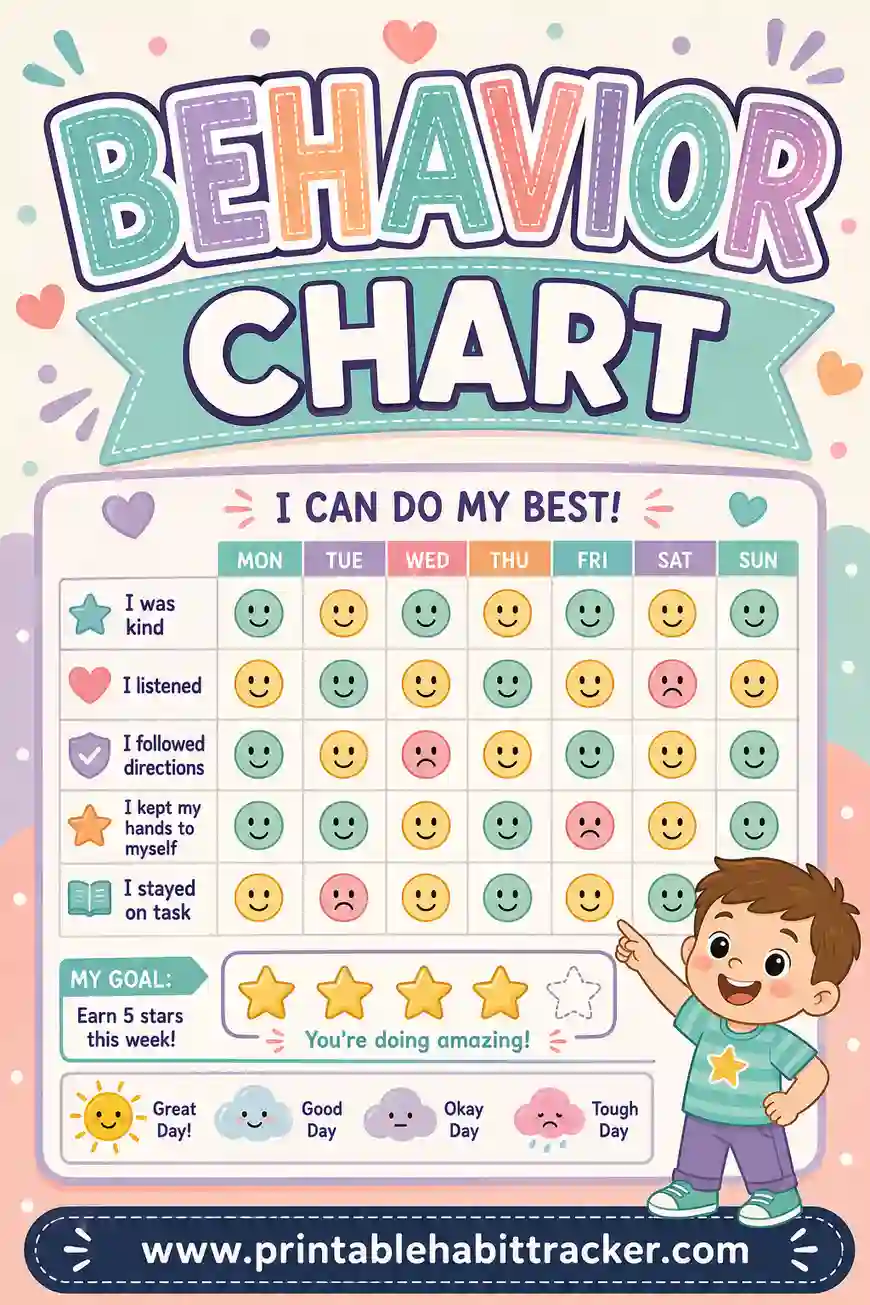
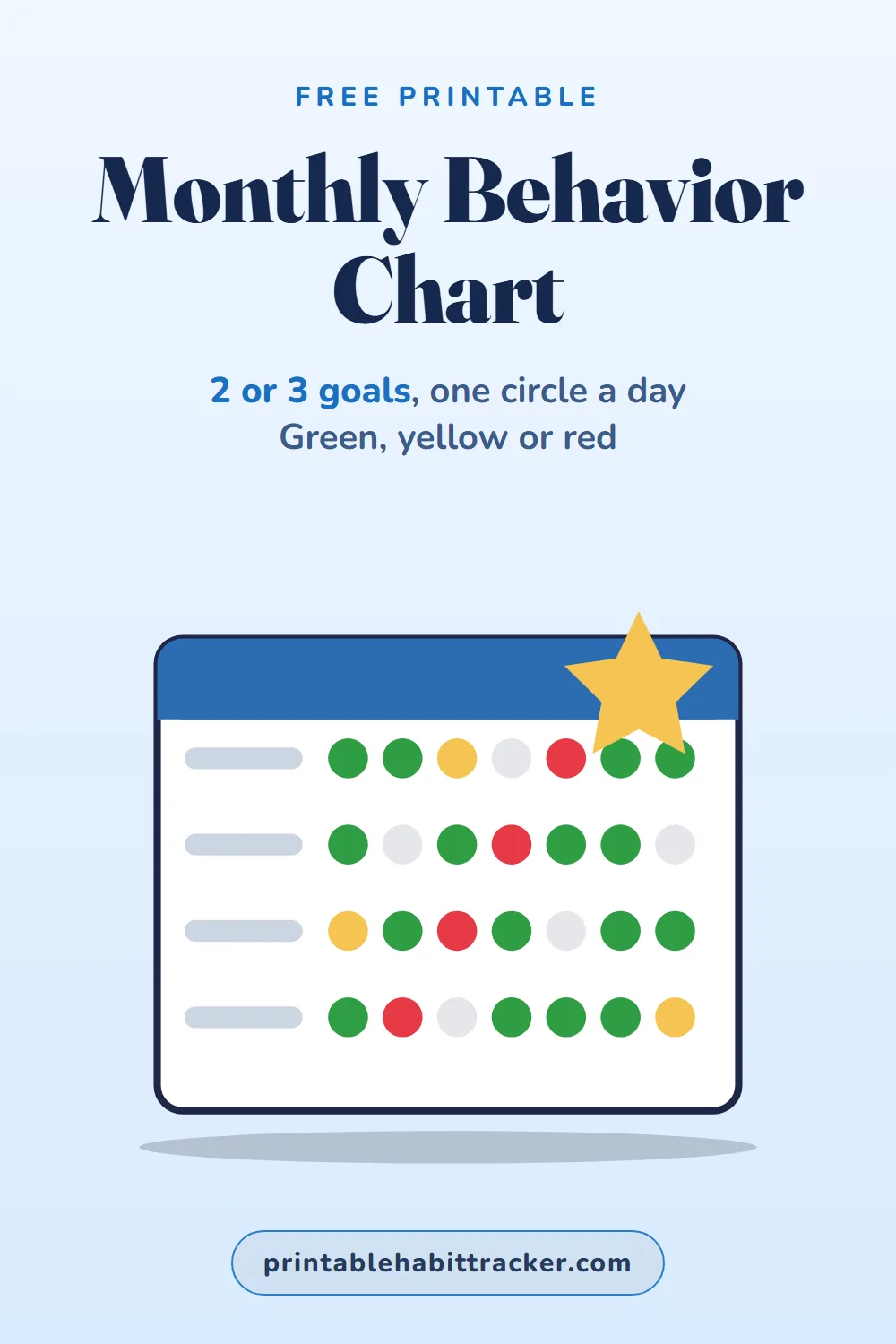
A monthly behavior chart puts your child's 2 or 3 behavior goals down the side and every day of the month across the top. Each day, you color a circle green (great day), yellow (needed reminders) or red (a hard day). It's simple to keep up, and after a few weeks you'll see patterns a daily chart would miss, like rough Mondays or tough days after a late bedtime.
Try it here with one week, tapping each circle to go green, yellow or red. Then open the full month in the maker and print it free:
✅ Try this tracker for one week
Tap a box each day you do the habit. Your ticks stay on this device.
Monthly vs. weekly vs. daily behavior charts
All three work. They just fit different kids and different goals.
| Chart | Best for | Why |
|---|---|---|
| Daily | Ages 3 to 5, or a brand-new goal | Feedback several times a day, rewards the same day |
| Weekly | Ages 4 to 8 | A short, reachable finish line every Friday or Sunday |
| Monthly | Ages 6 and up, or goals already going well | Shows patterns and progress over time on one page |
For little ones, start with a daily behavior chart and move to monthly once the routine clicks. Many families keep a weekly sticker chart for rewards and a monthly behavior calendar on the fridge for the big picture.
How to set up a monthly behavior chart
- Pick 2 or 3 goals. Say them as what to do, not what to stop: "Listen the first time," not "Don't ignore Mom."
- Agree on what each color means. Green: kept the goal all day. Yellow: needed a reminder or two. Red: a hard day, and we'll try again tomorrow.
- Choose a time to fill it in. Right after dinner or at bedtime works well. It takes 30 seconds.
- Let your child color the circle. Kids care more about a chart they mark themselves.
- Set a small reward and a month reward. Write the month goal on the chart so it's always in view.
- Look back together every Sunday. Count the greens and talk about one thing that went well.
Good goals for a monthly behavior chart, by age
| Age | Goal ideas |
|---|---|
| 4 to 6 | Listen the first time, gentle hands, use my words when I'm mad, stay in bed after lights out |
| 6 to 9 | Finish my morning routine, homework without arguing, kind words with my sibling, put screens away when the timer rings |
| 9 to 12 | Be ready for the bus on time, respectful voice, do my chores without reminders, keep my room picked up |
| Teens | Home by curfew, phone on the charger at night, help with one family job a day |
Need more ideas for the wording? The good behavior chart page has a long list of positive goals.
A month of colors: what the patterns tell you
This is the real superpower of a monthly chart. After two or three weeks, look at the colors and ask:
- Are the red days on the same weekday? Mondays after a busy weekend, or the day of a long after-school activity, often run rough.
- Is one goal always yellow? It might be too big. Split it into a smaller step.
- Did a stretch of green follow a change? An earlier bedtime, a snack after school, or a new morning checklist? Keep it.
- Is the whole month green? Great. Swap in a new goal and keep one old one to maintain.
Rewards that work for a whole month
A month is a long time for a kid to wait. Use small, quick wins along the way and one bigger finish:
| Milestone | Reward idea |
|---|---|
| Each green day | A high five and a sticker in the circle |
| 5 greens in a row | Pick tonight's dinner or 15 extra minutes of play |
| Each full green week | Family game night or a trip to the library |
| A mostly green month | A family outing they choose: the park, a hike, a picnic |
Not sure how big rewards should be? How to reward streaks has ideas that don't cost much.
Using a monthly behavior chart at school
Teachers often send a monthly behavior calendar home in a take-home folder. The teacher colors the day, and parents initial it each night. It keeps home and school on the same page without long emails.
- Keep it private. It goes in the folder, not on the wall.
- Use the same colors at home. A "yellow day" should mean the same thing in both places.
- Celebrate at home. A note like "3 greens this week!" from the teacher means a lot when a parent cheers for it too.
Common mistakes
- Too many goals. Three goals times 31 days is 93 circles. That's plenty.
- Using red as a punishment. Red is information, not a consequence. Tomorrow is a fresh circle.
- Only noticing the hard days. Point at the greens first, every time.
- Giving up mid-month. Missed a few days of filling it in? Leave them blank and start again today. What to do when you miss a day is just as true for kids' charts.
Prefer a daily or weekly version? The behavior chart page has more layouts. When you're ready, open the free habit tracker maker, choose the monthly layout, add your goals and print a fresh chart on the first of every month.
Frequently Asked Questions
What is a monthly behavior chart?
It's a one-page chart with a child's 2 or 3 behavior goals down the side and the days of the month across the top. Each day gets a check, sticker or color, so you can see the whole month at once.
Is a monthly or weekly behavior chart better?
Weekly charts work better for young kids who need quick rewards. A monthly behavior calendar suits kids around 6 and up, and it's great for spotting patterns, like hard Mondays or rough days after late nights.
How many goals should a monthly behavior chart have?
Two or three. More than that and a month of boxes gets overwhelming for kids and for you.
What rewards work for a monthly behavior chart?
Use small rewards along the way and one bigger one at the end, like a sticker each green day, a special treat after 5 greens in a row, and a family outing for a mostly green month.
Can teachers use a monthly behavior chart?
Yes. Many teachers send one home in a folder so parents can see each day's color. Keep it private between the child, teacher and family.
What if my child has more red days than green?
Make the goals smaller so green is reachable, and look for patterns like hunger, tiredness or a tough part of the day. If it keeps happening, talk with the teacher or your pediatrician.