Picky Eater Chart: A Gentle Try-New-Foods Chart for Kids
A picky eater chart is a simple, low-pressure way to help kids try new foods: each time your child looks at, touches, smells, licks or tastes a new food, they color in a box. Every small step counts, so trying gets rewarded, not just eating. Many kids need to meet a food 10 or more times before they like it, so a chart that celebrates each try makes the long road a lot more fun. If you're worried about your child's eating or growth, talk to your pediatrician.
Here's a try-new-foods chart with gentle steps. Your child colors a box for each step they try, and you can change the rows before you print it free:
✅ Try this tracker for one week
Tap a box each day you do the habit. Your ticks stay on this device.
Why a "small steps" chart works better than "clean your plate"
For a picky eater, a new food can feel scary. Asking for a whole serving is a big leap. Breaking it into tiny steps (look, touch, smell, lick, taste) lets your child get closer to the food without being forced. Each colored box is a small win, and wins build confidence. Over time, "I licked it" turns into "I tasted it," and one day, "Can I have more?"
The 6 steps on the chart
| Step | What it looks like | What you can say |
|---|---|---|
| Look | The food sits on their plate or a "trying plate" nearby | "What color is it? What shape?" |
| Touch | They poke it, pick it up or squish it | "Is it bumpy or smooth? Cold or warm?" |
| Smell | They sniff it | "What does it smell like?" |
| Lick | A tiny lick | "Salty, sweet or sour?" |
| Taste | A small bite; spitting into a napkin is allowed | "Thanks for trying. Crunchy or soft?" |
| Try again | They agree to meet the food again another day | "We'll try it a different way next time." |
The "spit it out is okay" rule matters. Kids are much more willing to taste when they know they won't be stuck with a bite they don't like.
40 foods to try (from easy to adventurous)
Easier first tries
- Apple slices, pear slices, banana coins, grapes cut in quarters for little ones
- Cucumber rounds, baby carrots, snap peas, sweet bell pepper strips
- Corn, peas, sweet potato fries
- Plain pasta shapes, rice, crackers, tortilla strips
- Cheese cubes, yogurt, scrambled eggs
Next steps
- Broccoli "trees," cauliflower, green beans, zucchini
- Mango, kiwi, blueberries, raspberries, melon
- Chicken strips, turkey slices, meatballs, beans
- Hummus, guacamole, a new dip
- Whole grain bread, oatmeal, a new cereal
Adventure foods
- Spinach in a smoothie, then spinach on its own
- Mushrooms, tomatoes, roasted Brussels sprouts
- Fish sticks, then baked fish
- Lentil soup, a new curry or a mild stir-fry
- A fruit or vegetable from the store you've never bought before
Only offer foods your child has safely eaten before or that your pediatrician says are okay, especially if your family has food allergies. Cut foods into safe sizes for young children.
Tips that make new foods less scary
- Serve a "safe" food too. Always include one food your child likes, so they won't leave hungry.
- Tiny portions. One pea, one noodle, one small piece is plenty for a first try.
- Same food, new way. Raw carrot, roasted carrot, carrot in soup, carrot muffins.
- Let them help. Kids who wash, stir or pick the vegetable are more likely to taste it.
- Eat together. Seeing you enjoy the food helps more than any speech.
- Keep it calm. No bribes, no begging, no battles. Talk about other things at the table.
What not to do with a picky eater
- Don't force bites. Pressure usually backfires.
- Don't use dessert as a prize. It turns vegetables into a chore and sweets into a trophy.
- Don't make a separate dinner every night. Serve family meals with at least one safe food.
- Don't call your child "picky" in front of them. Kids live up to labels. Try "still learning to like new foods."
Picky eating at holiday meals
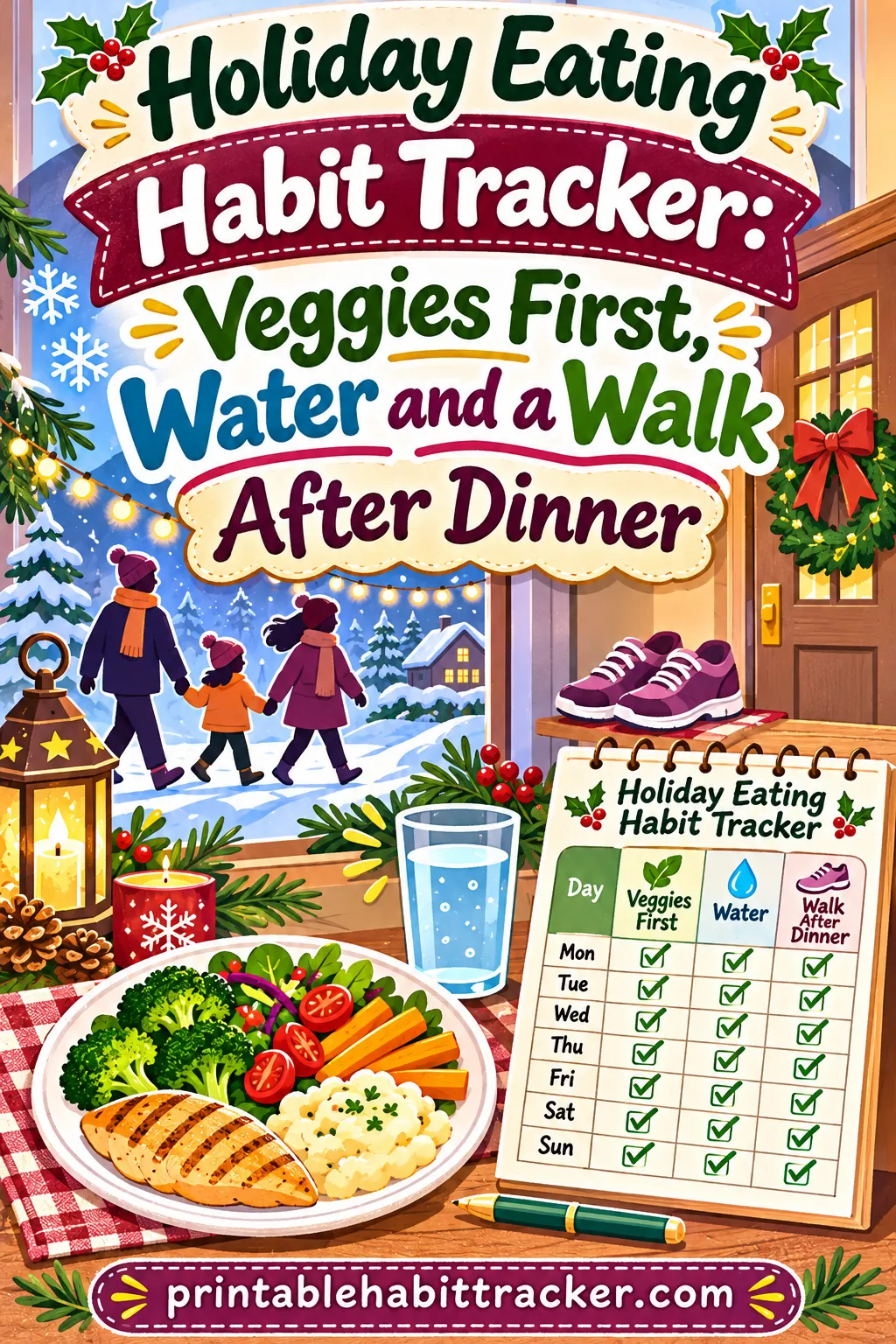
Holiday dinners are full of new foods, new people and new routines, which can be a lot for a picky eater. Let your child pick one or two "safe" foods to load up on, offer a "trying plate" with one bite of a new dish, and skip the pressure in front of relatives. Holidays are about being together. One small taste is a win.
When to talk to your pediatrician
Most picky eating is a normal stage. Still, check in with your child's doctor if your child:
- Is losing weight or isn't growing as expected
- Gags, chokes or coughs often while eating
- Eats only a very short list of foods
- Has meals that often end in tears, or seems afraid of food
- Has belly pain, rashes or other changes after eating
Your pediatrician can check growth and, if needed, suggest a feeding specialist.
How to print your picky eater chart
- Open the free habit tracker maker with the button above. It opens in the weekly color-in layout.
- Change the title, like "Max Tries New Foods!"
- Keep the six steps, or write the foods themselves as rows: "Broccoli," "Mango," "Fish."
- Print it and keep it on the fridge near the table.
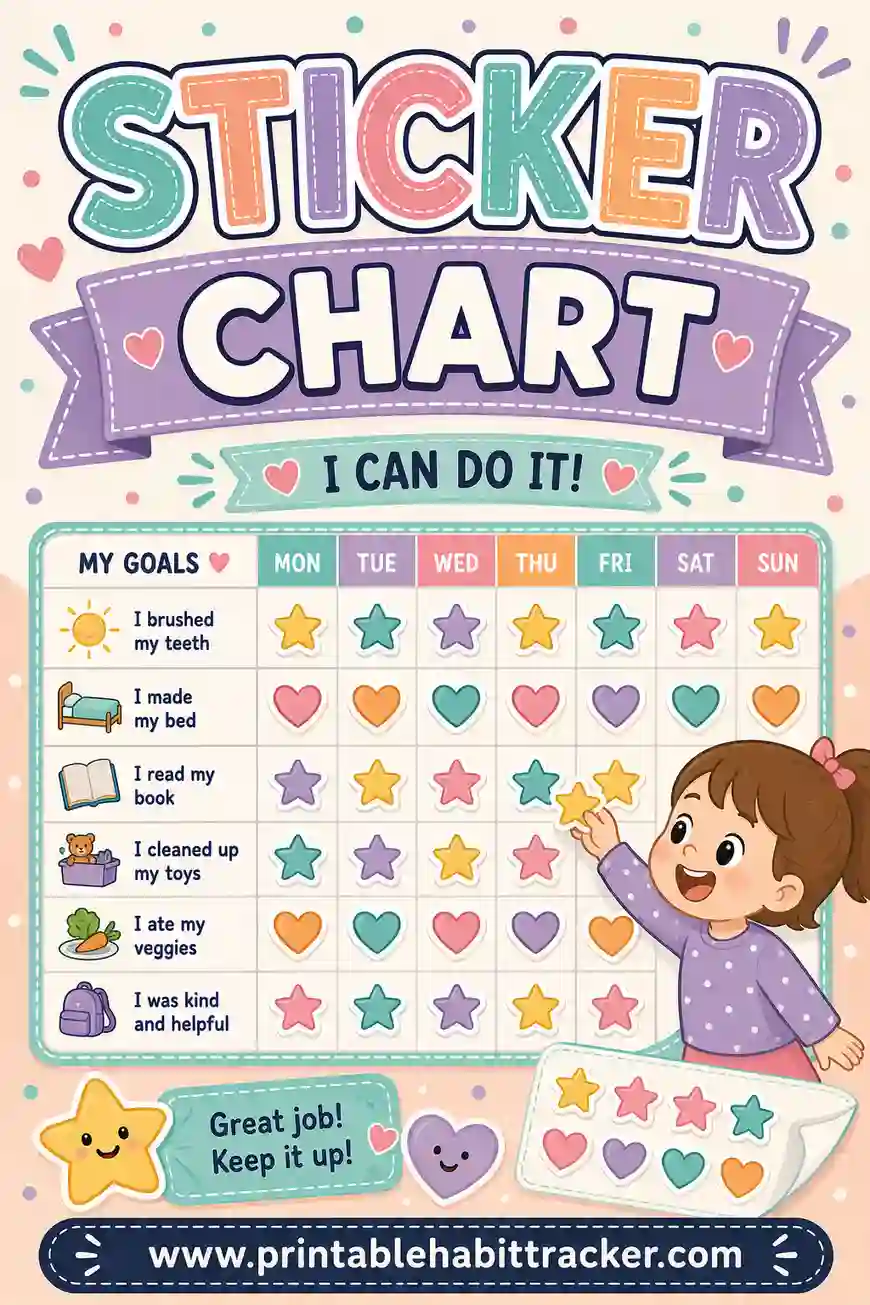
Want a reward for a full chart? Our sticker chart and reward chart show simple ideas that aren't food. To see what everyone's eating over the week, try the meal tracker, and for holiday weeks, the holiday eating habit tracker keeps it relaxed. When you're ready, open the free maker and print your chart.
Frequently Asked Questions
Do picky eater charts work?
They can, when they're about exploring and not about forcing. A chart where kids color a box for looking at, touching, smelling or tasting a new food takes the pressure off and celebrates small steps.
What is a one bite chart?
It's a chart where a child earns a mark for trying one small bite of a new or not-yet-liked food. Keep it gentle: a lick or a tiny taste counts, and spitting it into a napkin is allowed.
How many times does a child need to try a new food?
Many kids need to see and taste a food a lot of times, often 10 or more, before they like it. That's why repeated, relaxed tries matter more than one big success.
When should I worry about a picky eater?
Talk to your pediatrician if your child is losing weight or not growing as expected, gags or chokes often, eats only a very short list of foods, or if mealtimes cause a lot of stress or tears.
Should I reward kids with dessert for eating vegetables?
Many experts suggest not using dessert as a prize, because it can make vegetables seem like a chore and sweets seem extra special. A sticker, a high five or picking the next food to try works better.