Preschool Behavior Chart: A Simple Picture Chart That Works
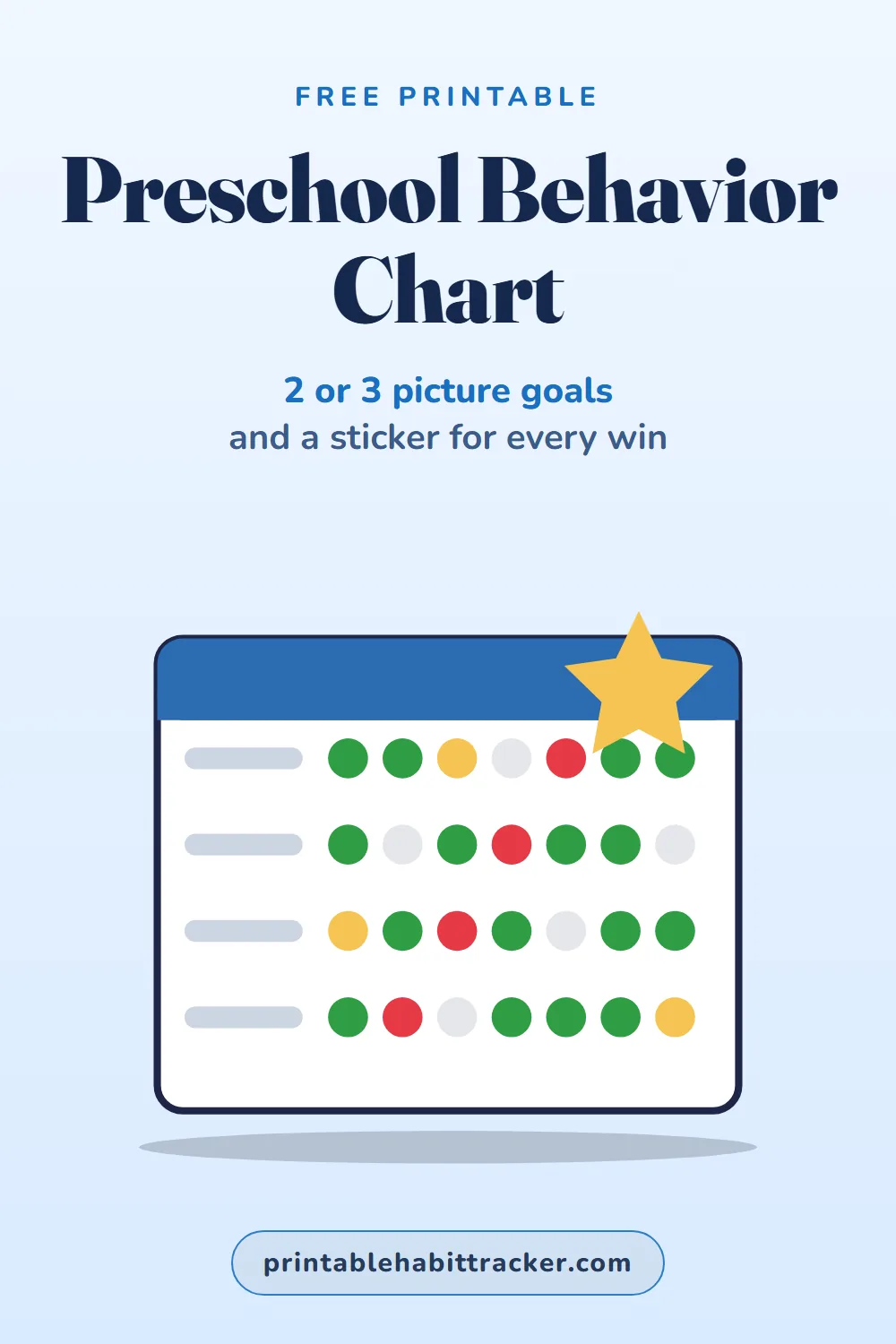
The best preschool behavior chart is tiny: 2 or 3 goals with a picture for each one, the days of the week across the top, and a sticker or smiley every time your child does it. Preschoolers can't read "follow directions," but they can look at a picture of ears and know it means listening. Keep it positive, keep it short, and give the reward fast.
After winter break is a perfect time to start fresh. Here's a simple one you can try right now and print free:
✅ Try this tracker for one week
Tap a box each day you do the habit. Your ticks stay on this device.
What should go on a preschool behavior chart?
Pick behaviors you want to see more of, said the positive way. "Gentle hands" works better than "no hitting," because it tells a 3-year-old exactly what to do instead. Here are the goals that work best at this age, with a picture idea for each.
| Goal | Picture idea | What it looks like |
|---|---|---|
| Gentle hands | 🙌 two open hands | Soft touches, no hitting or grabbing |
| Listening ears | 👂 an ear | Stops and listens when a grown-up talks |
| Clean up toys | 🧸 a teddy in a bin | Helps put toys away when asked |
| Use kind words | 💬 a speech bubble | "Please," "thank you," no name-calling |
| Share and take turns | 🤝 a handshake | Lets a friend have a turn |
| Walking feet | 👣 footprints | Walks inside, runs outside |
| Inside voice | 🤫 a quiet face | Uses a calm voice indoors |
| Get dressed | 👕 a shirt | Puts on clothes with a little help |
| Brush teeth | 🪥 a toothbrush | Brushes morning and night |
| Calm body | 🌈 a rainbow | Takes deep breaths when upset |
| Try a new food | 🥦 broccoli | Takes one "no thank you" bite |
| Stay in bed | 🛏 a bed | Stays in bed after lights out |
Choose 2 or 3. That's the hardest part, honestly. A chart with eight goals feels like a to-do list to a preschooler, and they tune out by Wednesday.
How to use a preschool behavior chart (so it actually works)
- Explain it with the chart in your hands. Point to each picture and act it out together. "This is gentle hands. Show me gentle hands!"
- Mark it right away. Three-year-olds can't connect a sticker at bedtime to something they did at breakfast. Mark the box as soon as it happens, or at least at the next meal.
- Let them do the sticker. Putting the sticker on is half the reward.
- Praise the action, not the kid. "You put all the blocks away by yourself!" teaches more than "good girl."
- Skip the empty-box drama. No mark? Just say "Let's try again after lunch." No frowny faces, no taking stickers off.
- Celebrate small wins. At this age, a reward after 3 or 5 stickers works much better than waiting for a full week.
Preschool sticker chart rewards that don't cost much
The sticker itself is often enough for 2- and 3-year-olds. For 4- and 5-year-olds, a small reward at the end of a row helps. Keep it simple, and lean on time together more than toys.
- Pick the bedtime story
- An extra song before lights out
- A dance party in the kitchen
- Choose the family movie or dinner side dish
- A trip to the park or library
- Bake cookies together
- A special job, like "line leader" or "pet feeder" for the day
- Bubbles or chalk outside
More ideas, and how to phase stickers out over time, are in our sticker chart guide.
Preschool vs. kindergarten behavior charts
Kindergartners can handle a bit more. Here's how the chart grows with your child:
| Preschool (ages 3 to 4) | Kindergarten (ages 5 to 6) | |
|---|---|---|
| Number of goals | 2 or 3 | 3 to 5 |
| Labels | Pictures only | Pictures plus a word or two |
| How often to mark | Right away, or after each part of the day | Once or twice a day |
| Reward | After 3 to 5 stickers | End of the day or week |
| Who marks it | Child adds the sticker with you | Child can color in or check the box |
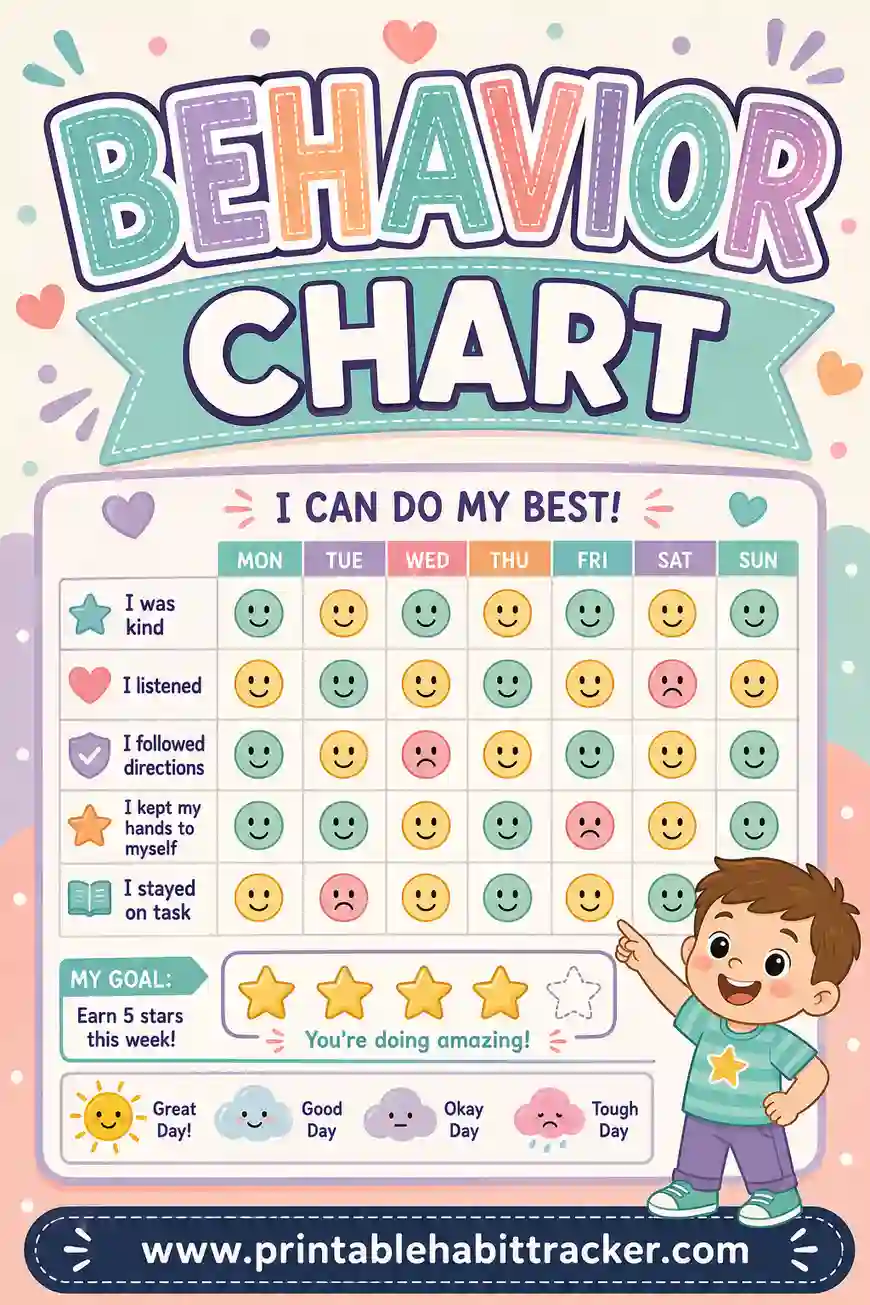
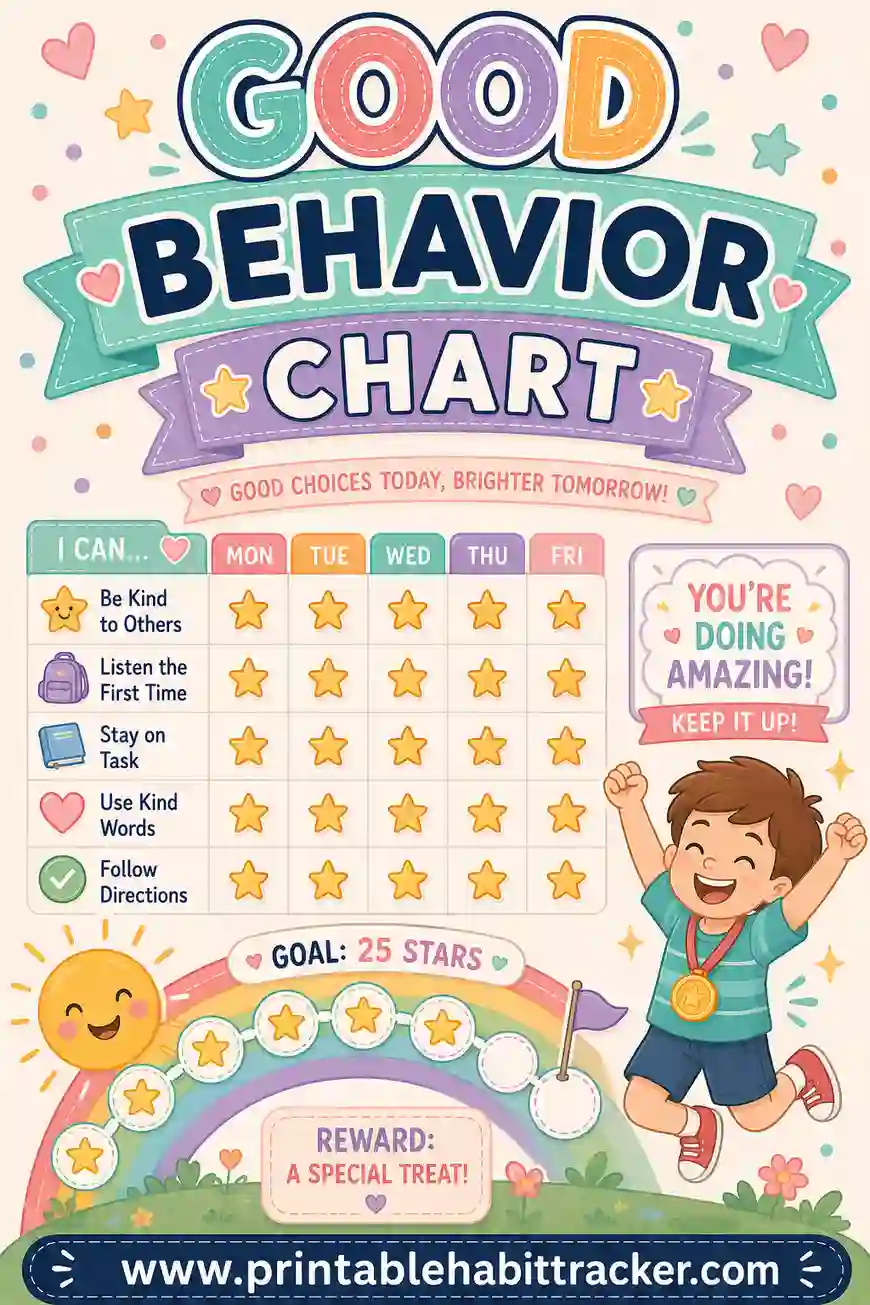
A kindergarten behavior chart can add school-ready goals like "followed directions the first time" or "packed my backpack." The good behavior chart page has a ready-made list for that age.
Using a behavior chart in a preschool classroom
Teachers, the same rules apply, just bigger. A few tips that keep it kind:
- Use a whole-class chart for most goals. The class earns a sticker together for a clean-up song done well. Nobody gets singled out.
- Keep individual charts private. A child who needs extra support gets a small chart in their cubby or folder, not on the wall.
- Share it with home. Send a copy home on Friday. Parents love seeing the stickers, and using the same goals at home helps a lot.
- Change goals every few weeks. Once "walking feet" is easy, swap it for something new.
Common mistakes with preschool behavior charts
- Too many goals. Three is the limit for preschool. Two is even better to start.
- Negative wording. "No yelling" tells them what not to do. "Inside voice" tells them what to do.
- Waiting too long for the reward. A week is forever when you're 3.
- Taking stickers away. Once earned, it stays. Taking it back turns the chart into a punishment.
- Using it forever. Charts are training wheels. When a goal becomes a habit, celebrate and move on.
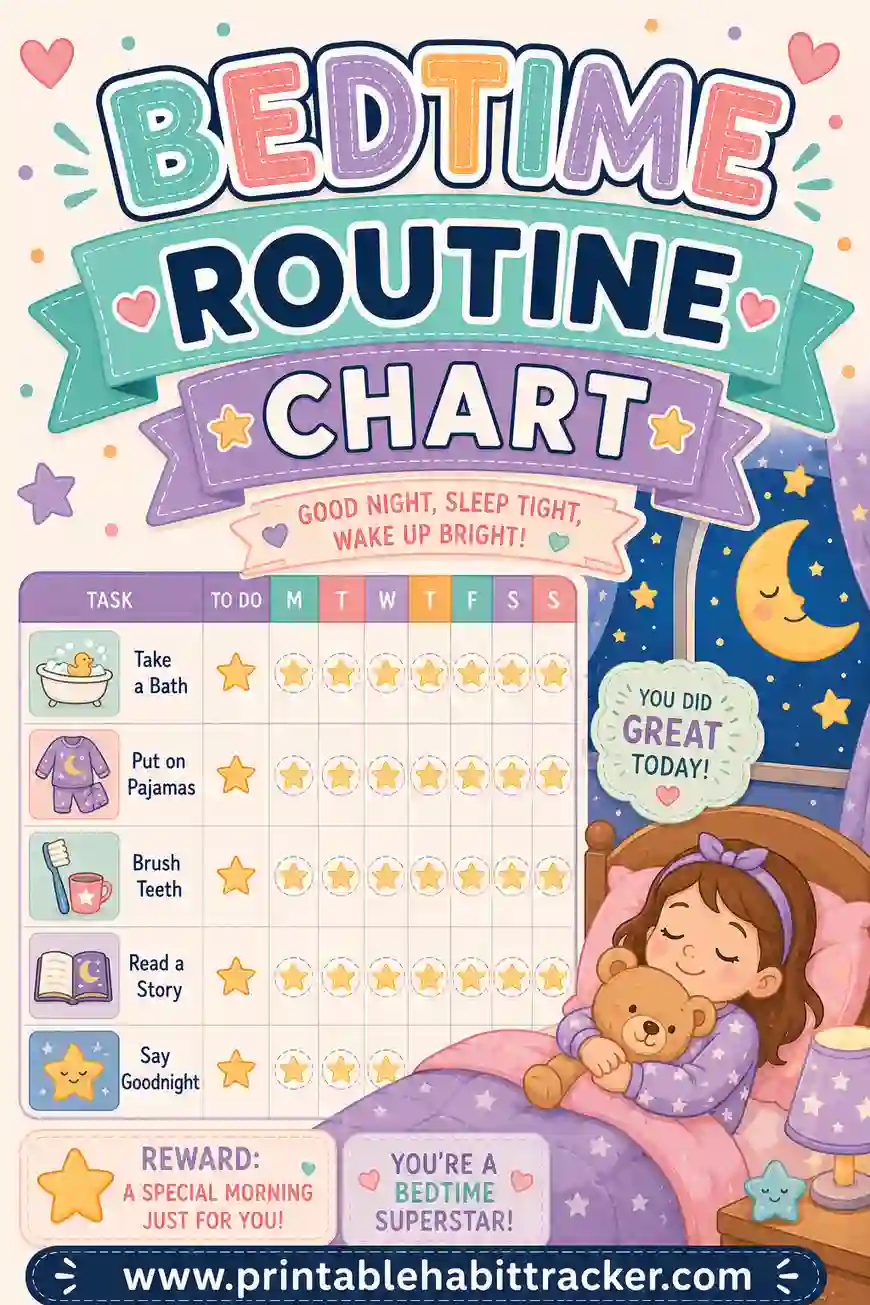
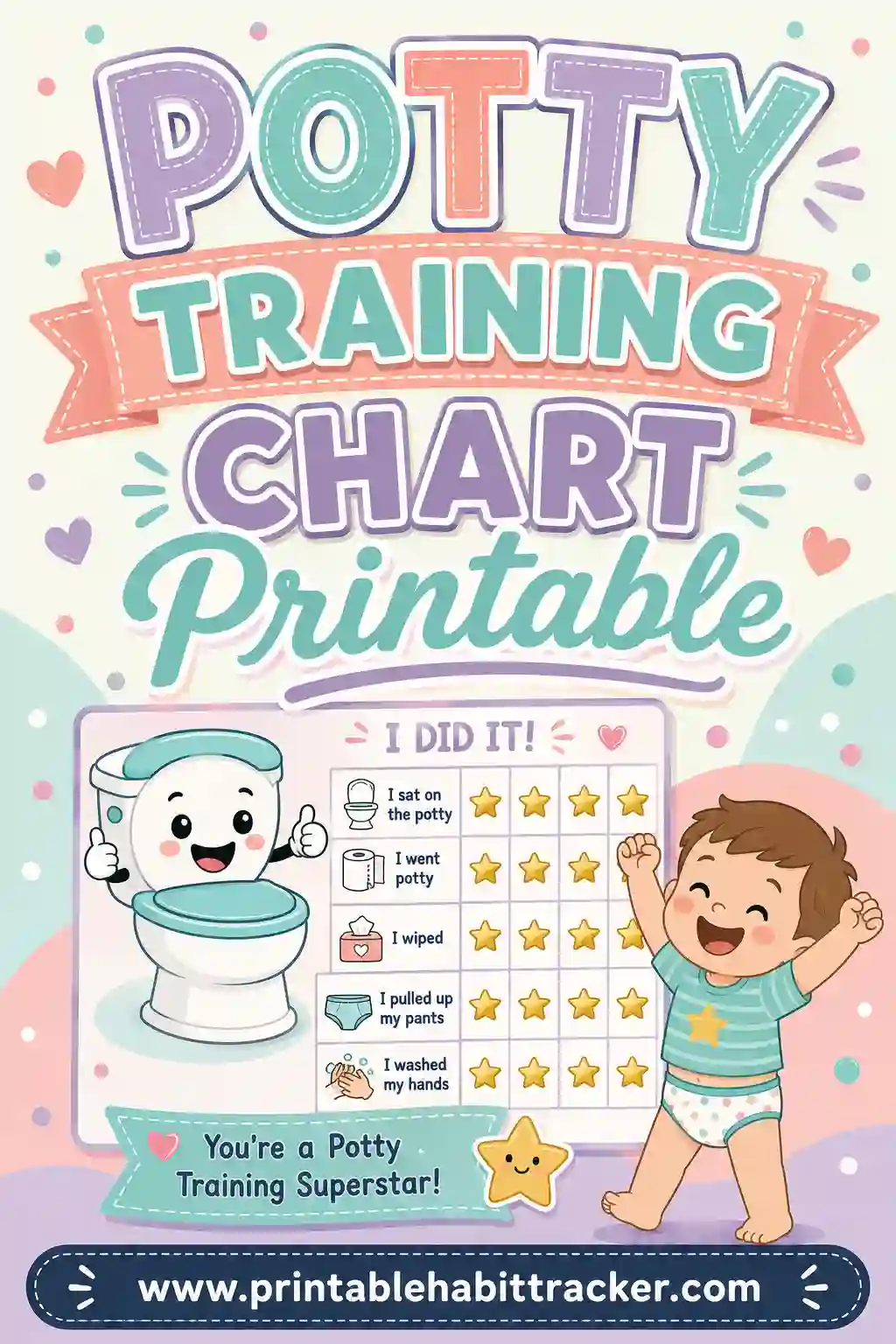
Working on bigger milestones too? Our potty training chart and bedtime routine chart use the same picture-first idea. For older kids, the general behavior chart has more goals. When you're ready, open the free habit tracker maker, add your two or three picture goals, and print a fresh chart for the week.
Frequently Asked Questions
How many goals should a preschool behavior chart have?
Two or three. Preschoolers lose track of anything longer, and a short chart is easier to win, which keeps them excited about it.
Do behavior charts work for 3-year-olds?
They can, if the chart uses pictures, the goals are positive, and you mark the box right away. A reward after 3 to 5 stickers works better than waiting a full week.
What's a good preschool sticker chart reward?
Often the sticker is enough. For older preschoolers, try picking the bedtime story, a kitchen dance party, a park trip or a special helper job.
How is a kindergarten behavior chart different?
Kindergartners can handle 3 to 5 goals, pictures with a word or two, and a reward at the end of the day or week. They can also check or color the boxes themselves.
Should I take stickers away for bad behavior?
No. Once a sticker is earned, it stays. Taking it away turns the chart into a punishment and kids lose interest fast.
How long should we use a behavior chart?
Usually a few weeks per goal. When a behavior becomes a habit, celebrate it and swap in a new goal or retire the chart.