Rewards and Consequences Chart: A Free, Positive-First Printable
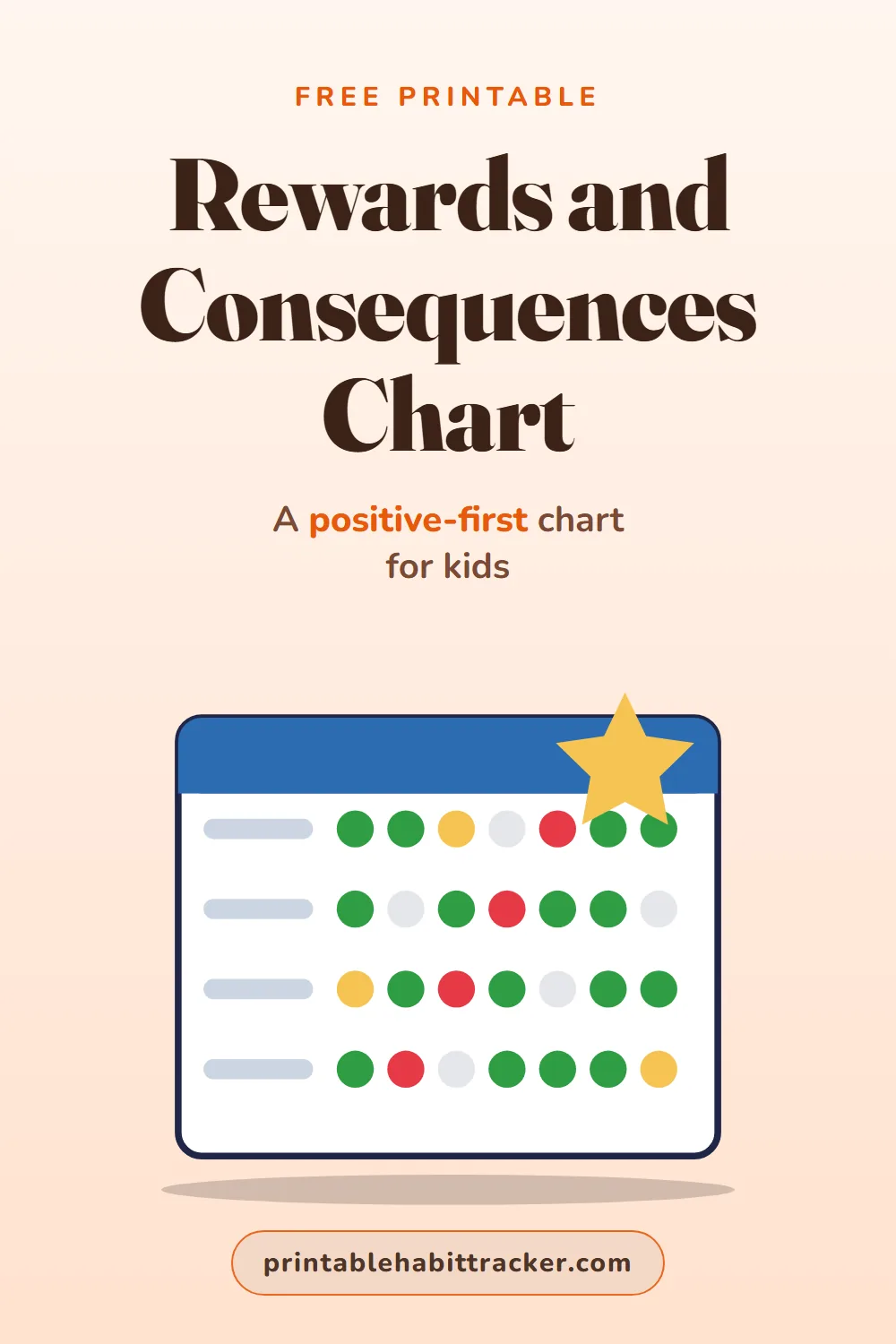
A rewards and consequences chart lists 3 to 5 behaviors you want to see, the reward your child earns for doing them, and a calm, logical consequence if they don't. The key is balance: rewards come first and happen often, and consequences are small, related to the behavior and never shaming. For example, "Shoes and coat put away" earns a sticker toward Friday's family movie pick, and if they're left on the floor, they go on the "pick it up first" shelf before playtime.
Try it here: tick each goal your child meets this week. Change the goals to your own, then print the chart free:
✅ Try this tracker for one week
Tap a box each day you do the habit. Your ticks stay on this device.
What a rewards and consequences chart looks like
Here's a sample for a 7-year-old. Read it across: the behavior, what happens when they do it, and what happens when they don't.
| Behavior (our goal) | Reward | Logical consequence |
|---|---|---|
| Screens off when the timer rings | A check, and 5 bonus minutes on Saturday for every 3 checks | Screen time starts 10 minutes later tomorrow |
| Toys picked up before dinner | A check toward Friday's movie pick | Toys left out rest on a high shelf until the next day |
| Ready for bed by 7:45 | An extra story at bedtime | Lights out with one story instead of two |
| Gentle hands with siblings | A check and a high five | A short break in a calm spot, then try again |
| Homework started before play | A check toward the weekend reward | Playtime waits until homework is done |
Weekly reward line: 10 checks = pick Friday's movie. 15 checks = pancake breakfast on Sunday.
Rewards first: why the balance matters
Kids learn more from noticing what they did right than from losing things. A good rule of thumb is to catch your child doing the right thing several times for every one consequence. If the chart is mostly consequences, it starts to feel like a list of punishments, and kids tune it out.
A few ways to keep it positive:
- Make the first reward easy to reach. Your child should earn something in the first two or three days.
- Praise out loud when you tick a box. "You turned off the screen right away. That was really grown-up."
- Mix in free rewards. Extra story, picking dinner, a dance party, staying up 10 minutes later on Friday.
Our reward chart and incentive chart pages have big lists of rewards that cost little or nothing.
What makes a good logical consequence?
A logical consequence is connected to the behavior, so it teaches something. Many parenting educators describe a good one as related, respectful and reasonable:
- Related: it fits the behavior. Toys left out go on a shelf. Screen time that ran over comes off tomorrow's time.
- Respectful: it's said calmly, without yelling, shaming or comparing to siblings.
- Reasonable: it's small and short. One evening, not one month.
| Instead of this | Try this logical consequence |
|---|---|
| "No dessert" for leaving toys out | Toys left out go on a shelf until tomorrow |
| "No TV for a week" for one argument | A short break, then talk it over and try again |
| Yelling about a spilled drink | "Spills happen. Grab a towel and let's clean it up." |
| Taking away a birthday party for slow mornings | Going to bed 15 minutes earlier so mornings feel easier |
| A big lecture about homework | Play starts after homework, every day, no debate |
Rewards and consequences chart by age
| Age | How many goals | Rewards | Consequences |
|---|---|---|---|
| 3 to 5 | 2 or 3, with pictures | Stickers right away, a small treat when the row fills | Very simple and immediate, like a toy taking a short rest |
| 6 to 8 | 3 or 4 | Checks that add up to a weekly reward | Related and short, usually the same day |
| 9 to 12 | 3 to 5 | Points toward privileges they help choose | Agreed on ahead of time, so there are no surprises |
| Teens | 2 or 3 big ones | More independence and trust | Talked through together, written as an agreement |
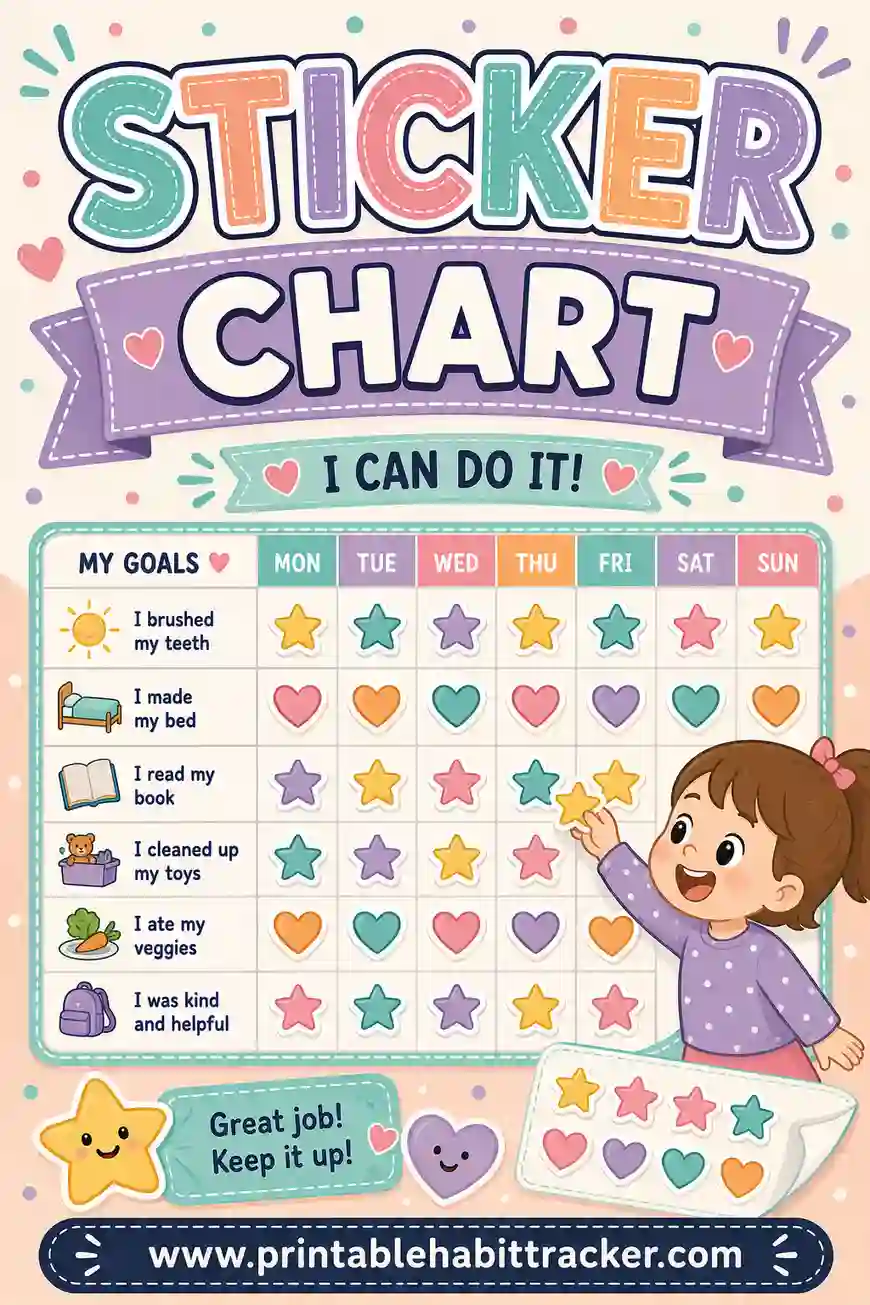
For little ones, a sticker chart with no consequence row at all is often the best first step.
How to set up your chart (and make it stick)
- Pick 3 to 5 behaviors and write them as what you want to see. "Gentle hands," not "no hitting."
- Agree on rewards together. Kids work harder for rewards they helped choose.
- Decide the consequences ahead of time, while everyone is calm, and write them on the chart.
- Go over it at a calm moment. Not right after a meltdown.
- Tick boxes at the same time each day, like after dinner.
- Follow through, kindly and every time. A consequence that only happens sometimes doesn't teach much.
- Check in after two weeks. Swap out goals your child has mastered for new ones.
Common mistakes with a behavior and consequence chart
- Too many rules. Ten goals is overwhelming. Stick to five or fewer.
- Consequences that are too big. If a consequence lasts a week, there's nothing left to lose on day two. Keep them small.
- Taking away rewards already earned. Once a check is earned, it stays. Losing earned checks makes kids give up on the chart.
- Using it as a threat. "Do you want a consequence?" turns the chart into a weapon. Just follow the plan calmly.
- Forgetting to celebrate. The reward moment is the best part, so make a little fuss about it.
If a behavior keeps coming up no matter what you try, or you're worried about your child's behavior, talk with your pediatrician or your child's teacher. They can help you find what's behind it.
Track the whole month
Once your weekly chart is running smoothly, a monthly behavior chart helps you spot patterns, like tougher Mondays or easier weekends. For a quick green, yellow and red check-in, the traffic light behavior chart works well too.
Print your rewards and consequences chart
- Open the free habit tracker maker.
- Title it, like "Our Family Goals."
- Type your 3 to 5 behaviors, one per line.
- Choose the weekly layout with checkboxes, then print.
- Write your rewards and consequences along the bottom, or tape this page's table beside it.
Then open the free habit tracker maker, print your chart, and go over it together at a calm moment this week.
Frequently Asked Questions
What is a rewards and consequences chart?
A chart that lists 3 to 5 behaviors you want to see, the reward your child earns for each, and a small, logical consequence if it doesn't happen. Rewards should come first and happen much more often than consequences.
What are examples of logical consequences for kids?
Toys left out go on a shelf until tomorrow, screen time that runs over comes off tomorrow's time, and play waits until homework is done. Each one is related to the behavior, calm and short.
What age is a consequences chart for?
Simple versions work from about age 3 with pictures and stickers. Ages 6 to 12 do well with checks that add up to a weekly reward. For toddlers and preschoolers, a sticker chart with no consequence row is often best.
Should I take away rewards a child already earned?
No. Once a check or sticker is earned, it stays. Taking earned rewards away makes kids give up on the chart.
What's the difference between a behavior chart and a behavior and consequence chart?
A behavior chart tracks how each day went. A behavior and consequence chart adds what happens next: a reward when the goal is met and a logical consequence when it isn't, agreed on ahead of time.
Is the rewards and consequences chart free to print?
Yes. Open it in our free habit tracker maker, change the goals, and print. No sign-up needed.