Traffic Light Behavior Chart: A Kind Green, Yellow and Red Chart
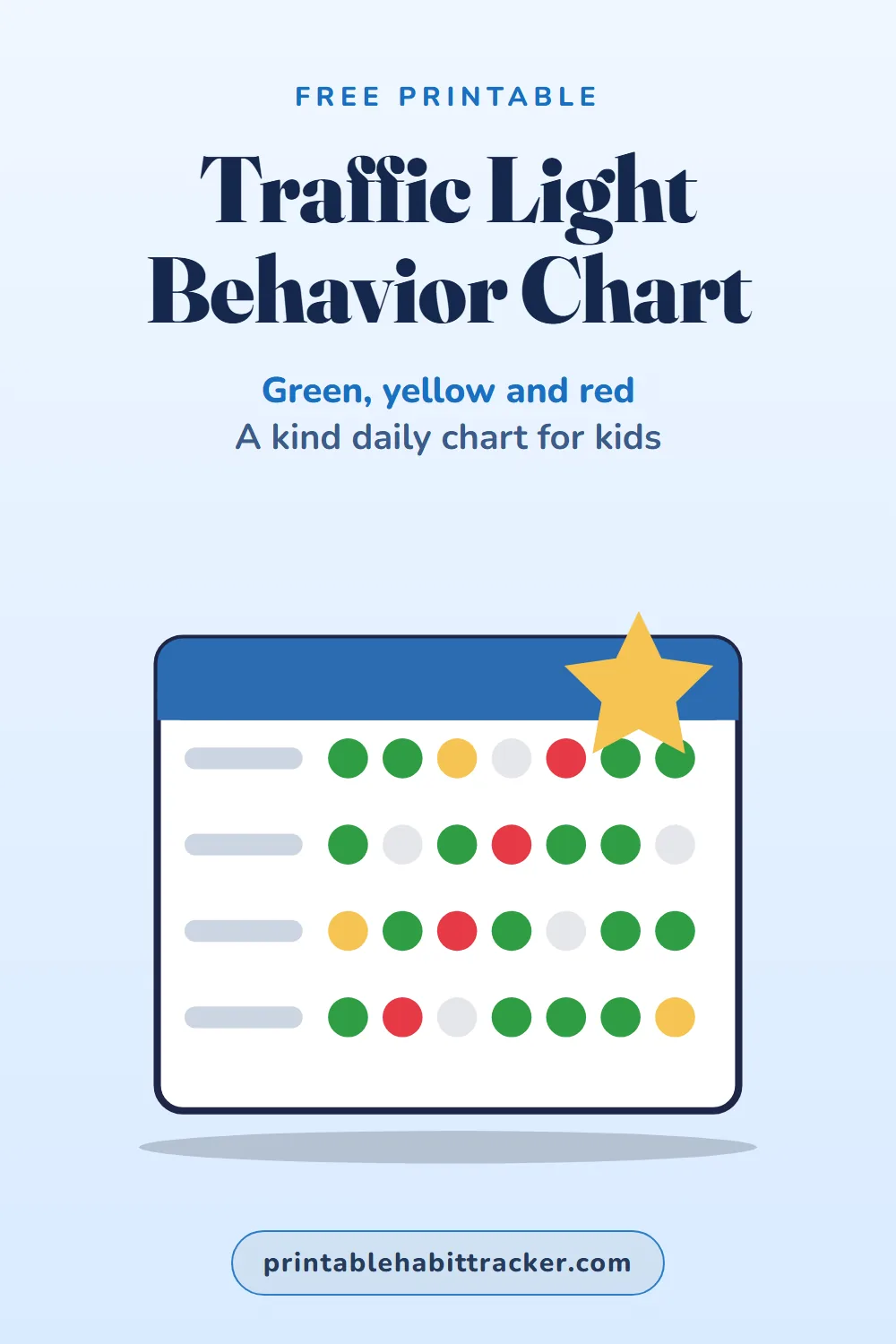
A traffic light behavior chart is a green, yellow and red chart for behavior: green means "great choices," yellow means "slow down, here's a reminder," and red means "stop, let's take a break and reset." The version that works best is a private daily chart where your child colors one circle per part of the day, not a public chart on the classroom wall. Kids get quick, clear feedback, and nobody gets embarrassed.
Want to try it? Here's a one-week chart with a circle for each part of the day. Color it green, yellow or red, then print it free:
✅ Try this tracker for one week
Tap a box each day you do the habit. Your ticks stay on this device.
What do the colors mean?
Keep the meanings simple and say them the same way every time. Most families and teachers use something like this:
| Color | Smiley version | What it means | What you say |
|---|---|---|---|
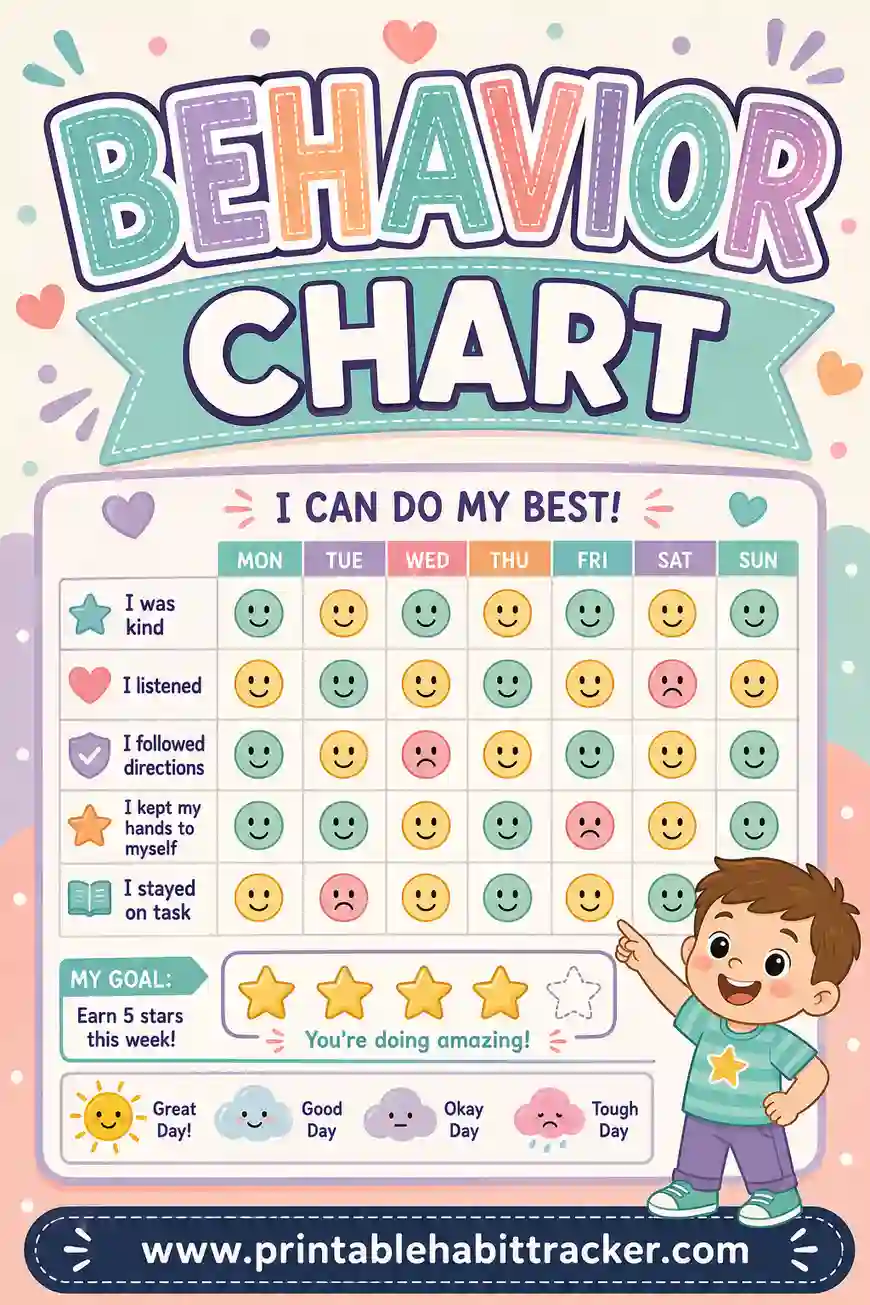
| Green | 😀 big smile | Great choices, kept the goals | "You were ready to learn all morning!" |
| Yellow | 😐 straight face | Needed a reminder or two | "Tricky start, but you turned it around." |
| Red | 😟 sad face | Needed a break to reset | "That was hard. Let's talk about what to try next time." |
Here's the trick that makes the whole chart work: yellow is a reminder, not a punishment. Most of the learning happens when a child hits yellow and climbs back to green. Make a big deal of that comeback.
Traffic light vs. smiley face behavior charts
They're the same idea in two costumes. Pick the one your child connects with.
- Traffic light works great for kids 5 and up who already know "green means go, red means stop." Kids color a circle in the right color.
- Smiley faces are easier for preschoolers and kids who are still learning colors. They draw or stamp a happy, okay or sad face.
- Mix them. Green circle with a smile, yellow with a straight face, red with a frown. Colorblind kids especially benefit, since they may have trouble telling red from green.
How to set up a green, yellow, red chart
- Split the day into 3 or 4 parts. For school: morning, lunch and recess, afternoon. For home: morning routine, after school, bedtime. One circle per part gives kids several fresh starts a day.
- Pick 2 or 3 clear goals. "Kind words, listening ears, safe body." Write them at the top of the chart so everyone knows what green looks like.
- Agree on a reminder plan. One quiet reminder before yellow. A calm break before red. No surprises.
- Color it together. At the end of each part of the day, ask your child what color they think it was. You'll be surprised how honest kids are.
- Look at the week, not one day. Count the greens on Friday. "You had 11 greens this week, that's 3 more than last week!"
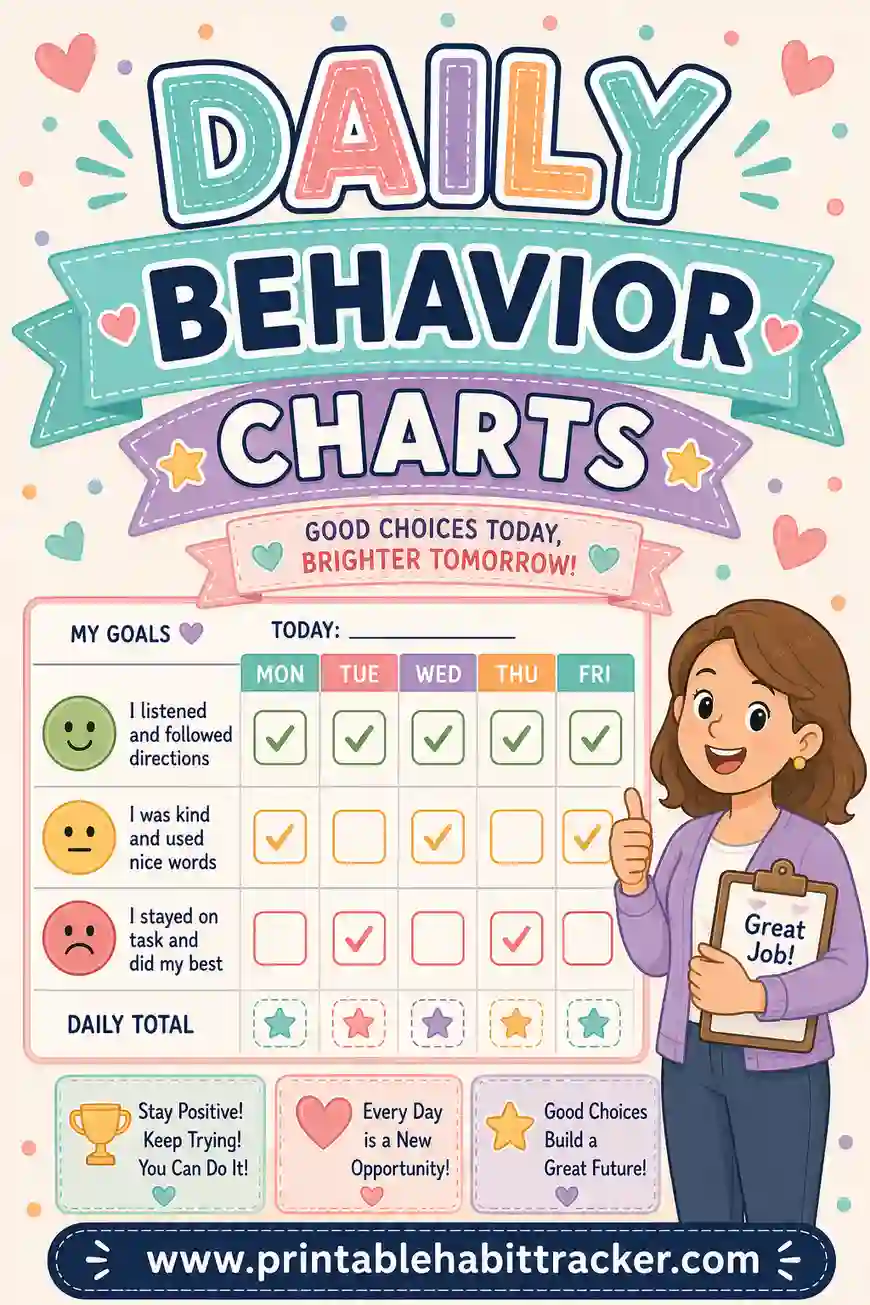
The maker lets you rename the rows, so use whatever parts of the day fit your schedule. For a simple daily layout, the daily behavior charts page has more examples.
Sample goals for each color chart
| Age | Goals that define green |
|---|---|
| Preschool (3 to 4) | Gentle hands, listening ears, clean up toys |
| Kindergarten to 1st grade | Follow directions, raise my hand, kind words |
| 2nd to 3rd grade | Stay on task, use a calm voice, be a good friend |
| 4th to 5th grade | Finish my work, respect others, solve problems calmly |
| At home | Morning routine done, kind to siblings, bedtime on time |
Younger kids do best with picture goals. Our preschool behavior chart walks through that version.
Is a traffic light chart a good idea?
Honest answer: it depends on how you use it. Many teachers have moved away from big public clip charts, where every student's name sits on a color for the whole class to see. Kids who land on red in front of everyone can feel ashamed, and the same few kids tend to end up there every day.
A private traffic light chart avoids most of that. It works well when:
- It's kept in a folder, on a desk or on the fridge, not on a wall for the class to see.
- Every part of the day is a fresh start.
- Green gets noticed and praised far more often than red.
- Red leads to a calm conversation, not a lost recess.
If red shows up most days, the chart isn't the problem to fix. Look for what's behind it: hunger, tiredness, a hard transition, or a skill your child hasn't learned yet. A talk with the teacher or your pediatrician can help if it keeps happening.
Rewards for green days
Small and quick beats big and far away. A few ideas that don't cost a thing:
- 5 greens in a week: choose dinner one night
- All green afternoon: 10 extra minutes of play before bed
- A comeback from yellow to green: a high five and a "tell Dad what you did" moment
- A full green week: a trip to the park, library or a family game night
For more ways to set up rewards without bribing, see our sticker chart guide.
Common mistakes with color behavior charts
- One color for the whole day. A rough morning shouldn't wipe out the afternoon. Split the day up.
- Skipping yellow. Going straight from green to red leaves no room to turn things around.
- Making it public. Keep the chart between you and your child.
- Only talking about red. Spend most of your words on greens and comebacks.
- Never changing the goals. Once a goal is easy, swap it for the next one.
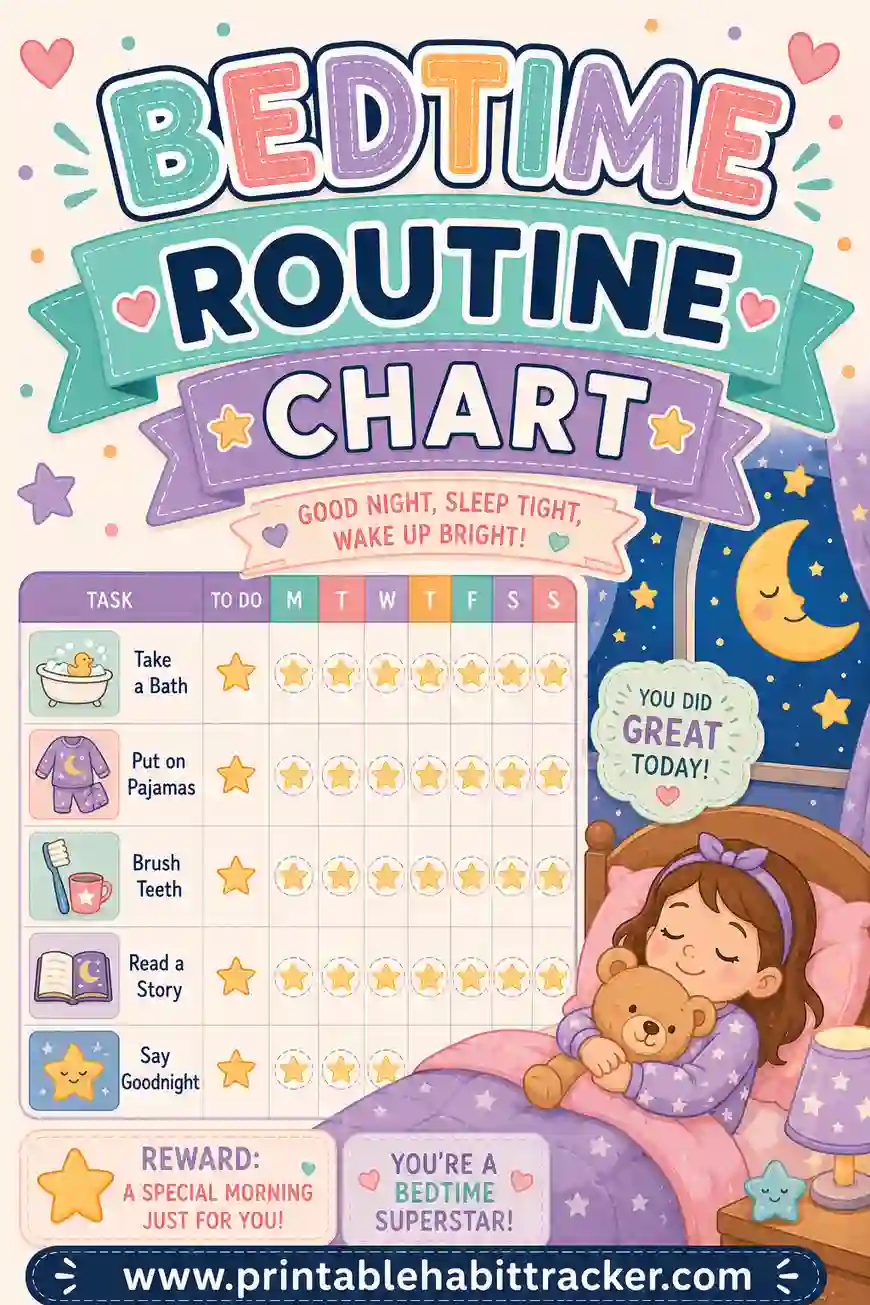
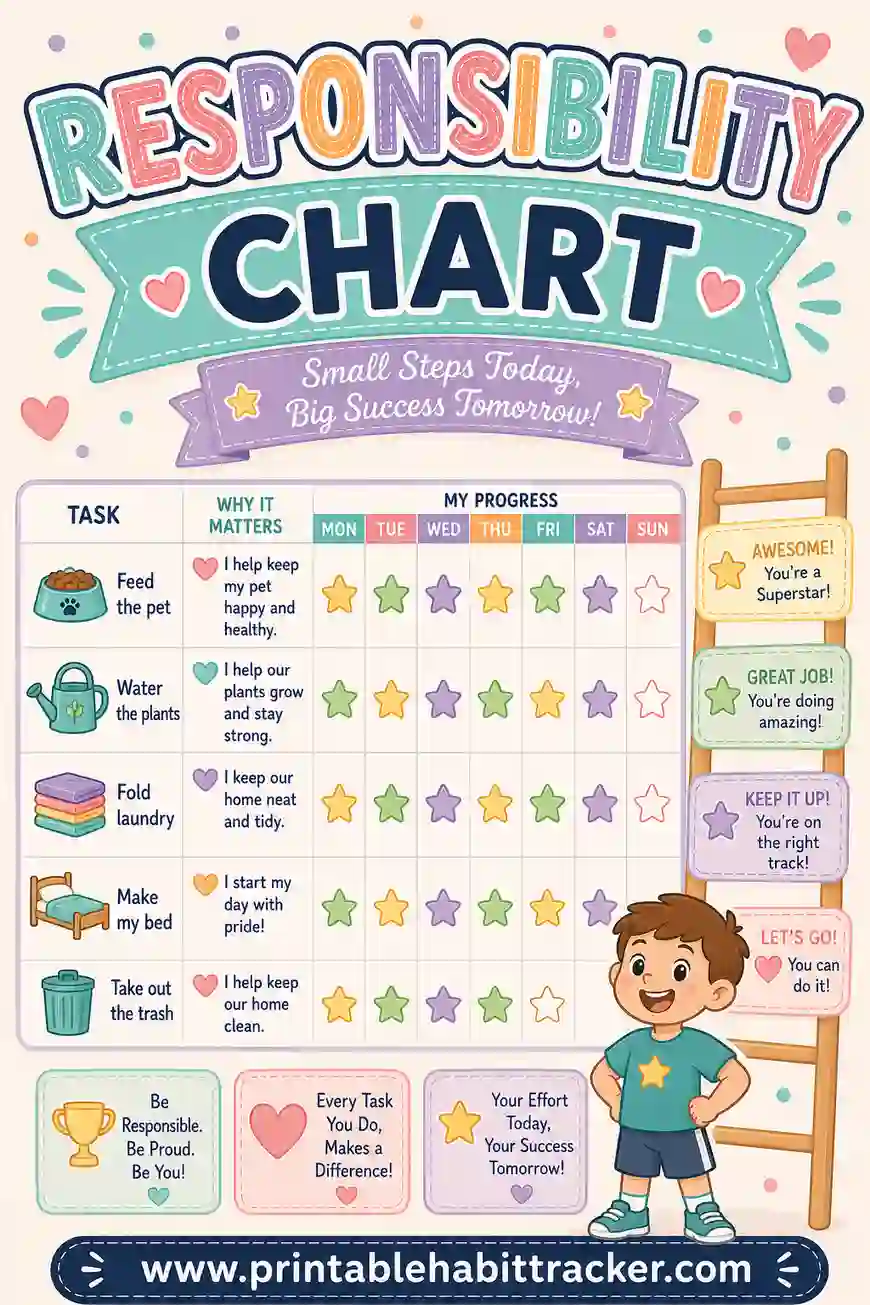
Pair the chart with a responsibility chart for chores, or a bedtime routine chart if evenings are the hard part. Then open the free habit tracker maker, rename the rows for your day, and print a fresh green-yellow-red chart every Monday.
Frequently Asked Questions
What do green, yellow and red mean on a behavior chart?
Green means great choices, yellow means a reminder was needed, and red means a break to reset. Yellow is a warning, not a punishment, so kids can climb back to green.
What is a smiley face behavior chart?
It's the same idea with faces instead of colors: a big smile for a great day, a straight face for an okay one, and a sad face for a hard one. It's easier for preschoolers and colorblind kids.
Are traffic light behavior charts bad for kids?
Public charts where the whole class sees a child on red can feel shaming. A private chart, split into parts of the day with lots of praise for green, avoids most of those problems.
How many parts of the day should the chart have?
Three or four, like morning, lunch and recess, and afternoon. That gives kids several fresh starts instead of one color for the whole day.
What rewards work with a green, yellow, red chart?
Small, quick ones: choosing dinner after 5 greens, 10 extra minutes of play for a green afternoon, or a family game night for a full green week.
What if my child gets red every day?
Look for what's behind it, like hunger, tiredness or a hard transition, and adjust the goals so green is reachable. Talk with the teacher or your pediatrician if it keeps happening.