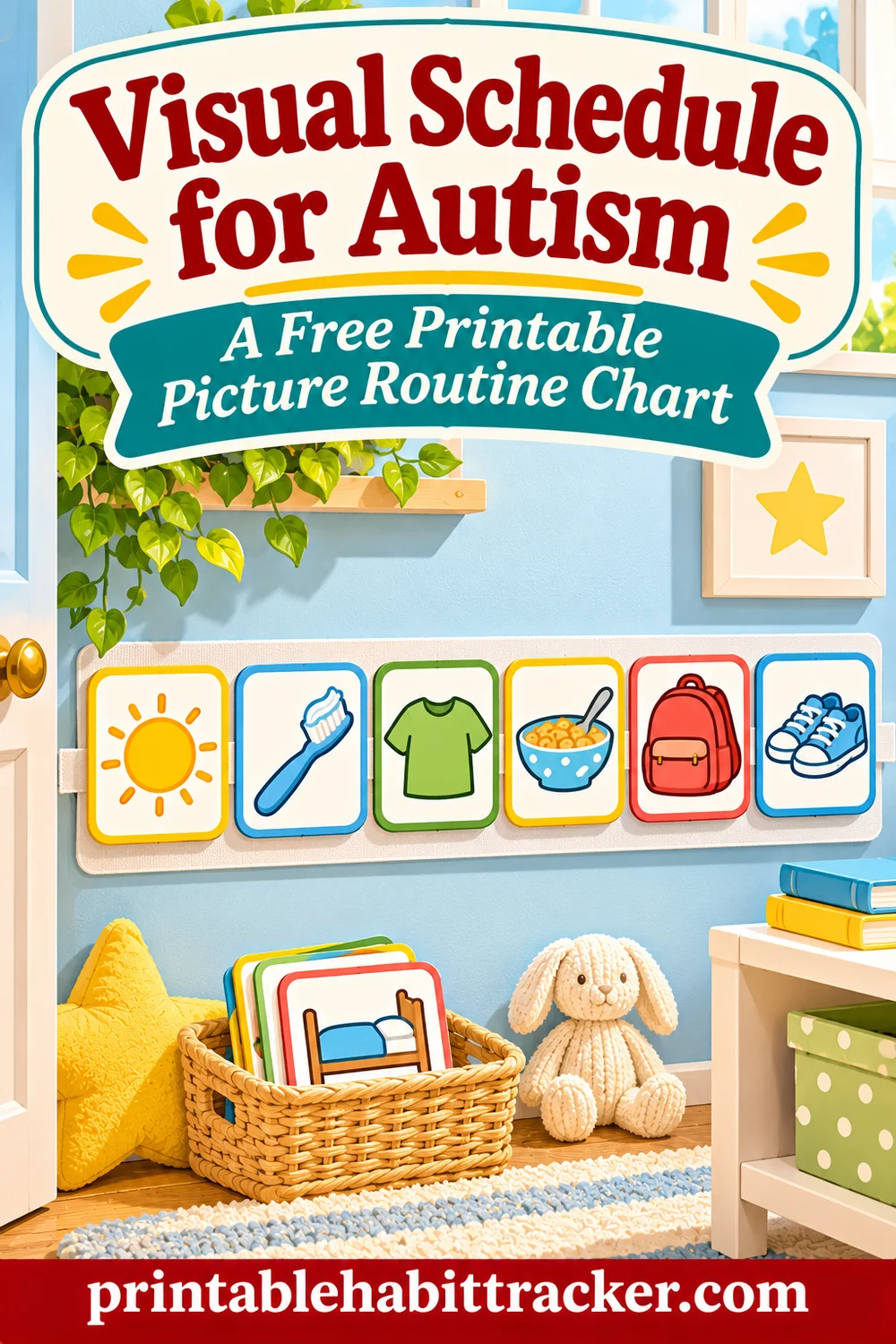
Visual Schedule for Autism: A Free Printable Picture Routine Chart
A visual schedule is a simple chart that shows the steps of a routine in order, using pictures, words or both, so a child can see what comes next. Many families, preschools and classrooms use one to make mornings, bedtimes and busy days feel calmer and more predictable. This page gives you a free visual schedule to print, plus a way to build one that fits your child.
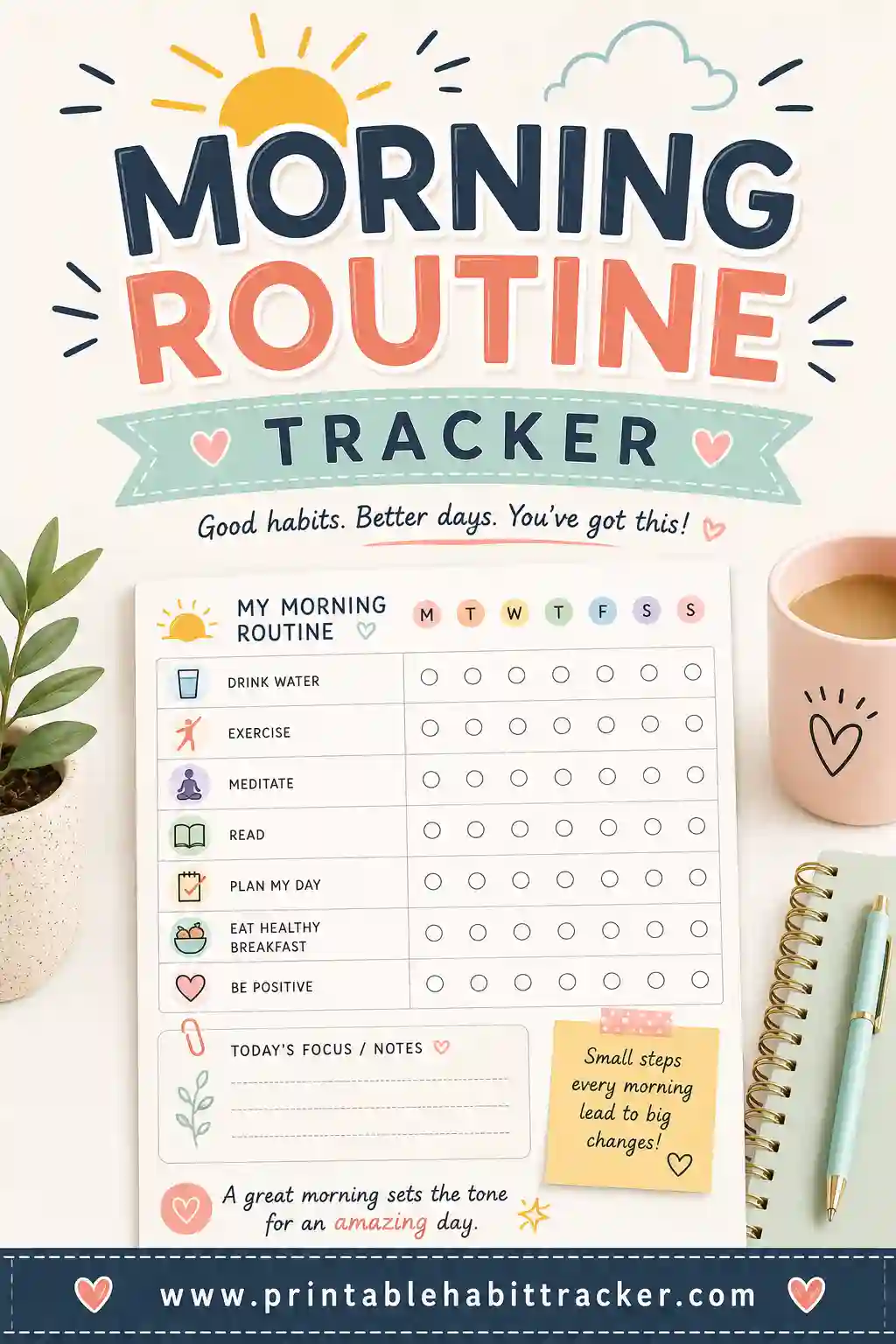
Here's a morning routine grid with seven steps. Change any step, then print it free:
✅ Try this tracker for one week
Tap a box each day you do the habit. Your ticks stay on this device.
Why visual schedules help
Spoken instructions disappear as soon as they're said. A chart stays put. When a child can look at the next step, there are fewer reminders, fewer surprises and less to hold in mind. Many autistic children find routines and pictures reassuring, and plenty of other kids like them too, including toddlers, preschoolers and children who find transitions hard.
A visual schedule is a helper, not a cure or a treatment. If you have questions about your child's needs, talk with your child's doctor, teacher or therapist.
How to build a visual schedule
- Pick one routine to start, like mornings or bedtime.
- List the steps in the order they really happen at your house.
- Keep it short. Three to five steps is plenty for a first chart.
- Choose how it looks. Photos, simple drawings, emoji, words or a mix.
- Put it where the routine happens, at your child's eye level.
- Show it together. Walk through the steps once, then let your child tick or move each one.
Picture, word or object?
| Type | Good for | Example |
|---|---|---|
| Real photos | Kids who like to see their own things | A photo of your own toothbrush |
| Simple drawings or emoji | Most young children | A drawing of a bowl of cereal |
| Words | Early readers and older kids | "Get dressed" |
| Words with pictures | Kids learning to read | A shirt picture with the word shirt |
| Small objects | Kids who like to hold things | A toy toothbrush for the bathroom step |
A sample daily visual schedule
| Time of day | Steps |
|---|---|
| Morning | Wake up, brush teeth, get dressed, breakfast, shoes on |
| After school or play | Snack, quiet time, play, tidy up |
| Evening | Dinner, bath, pajamas, story, lights out |
Tips for starting
- Start on a calm day, not a rushed one.
- Use the same words every time, like "check your chart."
- Give a warning before a change, and show the change on the chart.
- Add a "surprise" or "something different" card for days that change.
- Celebrate steps with a quiet, happy word, not a big fuss.
- If a step is too hard, split it into two smaller ones.
When it isn't working yet
It can take a few weeks for a chart to feel normal. If your child ignores it, try fewer steps, bigger pictures, or a different spot on the wall. Let your child help pick the pictures, since a chart they chose often gets used more. And remember: some days will go off the chart, and that's okay.
More routine charts
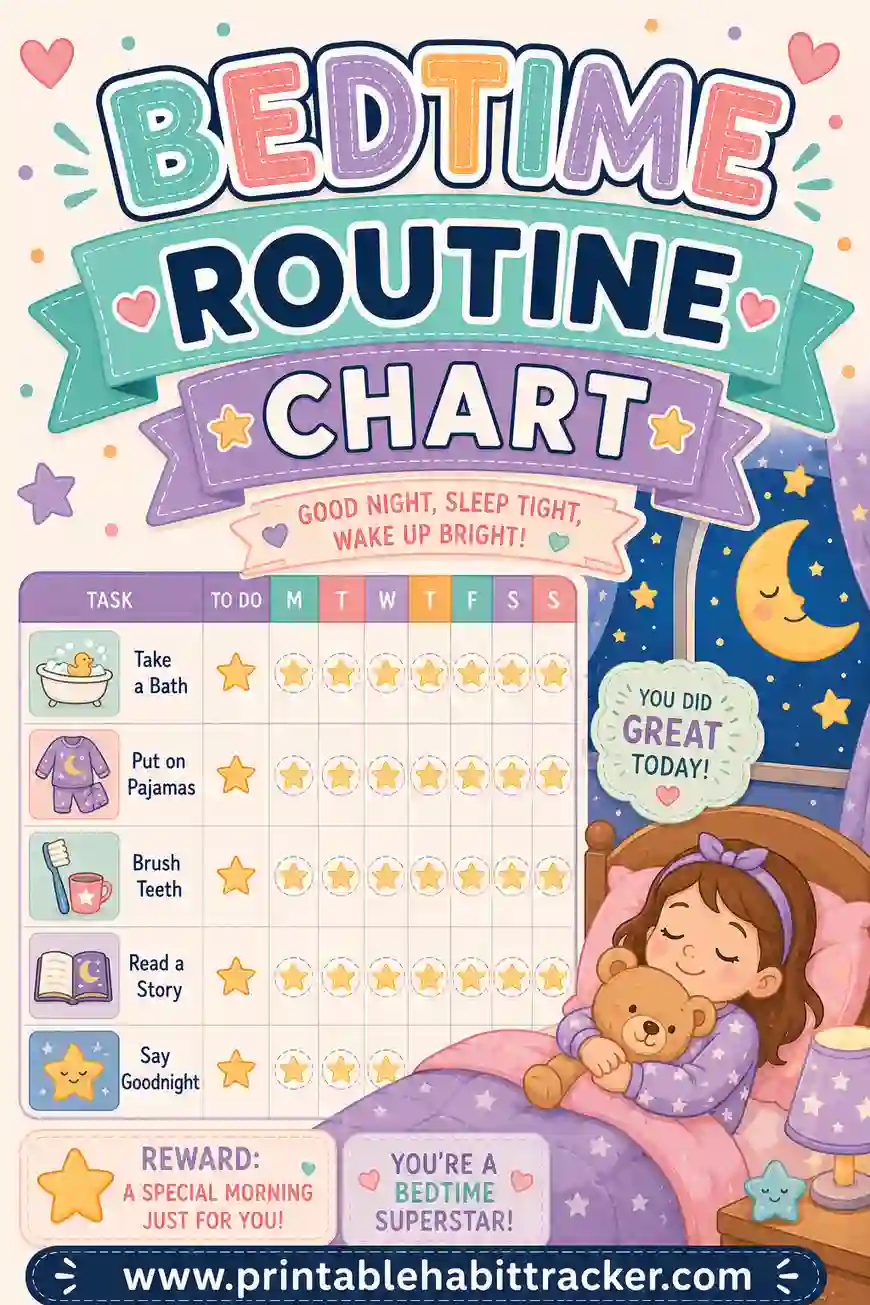
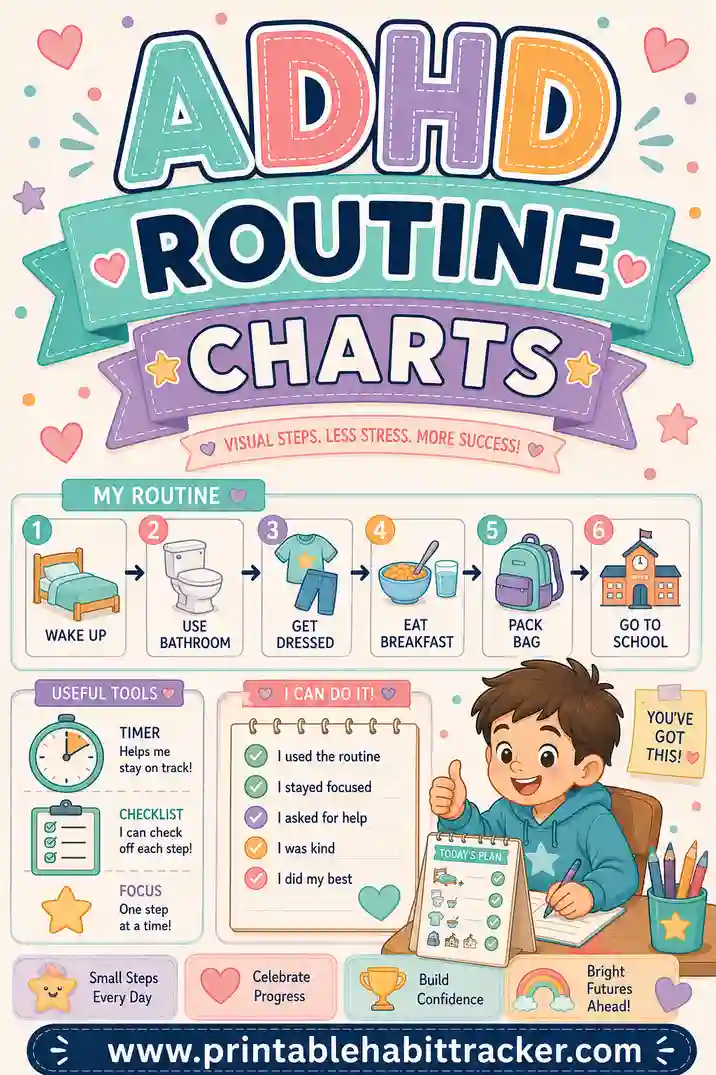
For a full morning, try the morning routine tracker. For the end of the day, use the bedtime routine chart. Some families also like the ADHD routine charts, and small jobs fit on the kids chore chart. A kind reward can go on the reward chart.
How to print your visual schedule
- Open the free habit tracker maker with the button above. It opens in the weekly layout.
- Rename it and swap in your own steps, in your own words.
- Print it and put it at your child's eye level, then laminate it or slip it into a sleeve if you like.
- Tick each step together, and start a fresh page each week.
When you're ready, open the free maker and print your schedule.
Frequently Asked Questions
What is a visual schedule?
It's a picture or word chart that shows the steps of a routine in order, like wake up, brush teeth, breakfast and get dressed. Many children find it easier to follow than spoken reminders.
Who can use a visual schedule?
Anyone who likes to see what comes next. Families of autistic children often use them, and so do preschools, classrooms, and parents of toddlers and kids with big feelings about change.
How many steps should a visual schedule have?
Start small, with about three to five steps, and add more as your child gets comfortable. A short chart that works is better than a long chart that overwhelms.
Do I need pictures or are words enough?
Use what works for your child. Some kids like photos of their own things, some like simple drawings, and some prefer written words. You can also mix them.
Is a visual schedule a medical tool?
No. It's a simple routine helper. For questions about your child's needs or support, talk with your child's doctor, teacher or therapist.
Can I make a visual schedule for free?
Yes. Open the free maker, list your routine steps as rows, rename the page and print it.