Dry January Tracker: Day-by-Day Sober Month Printable
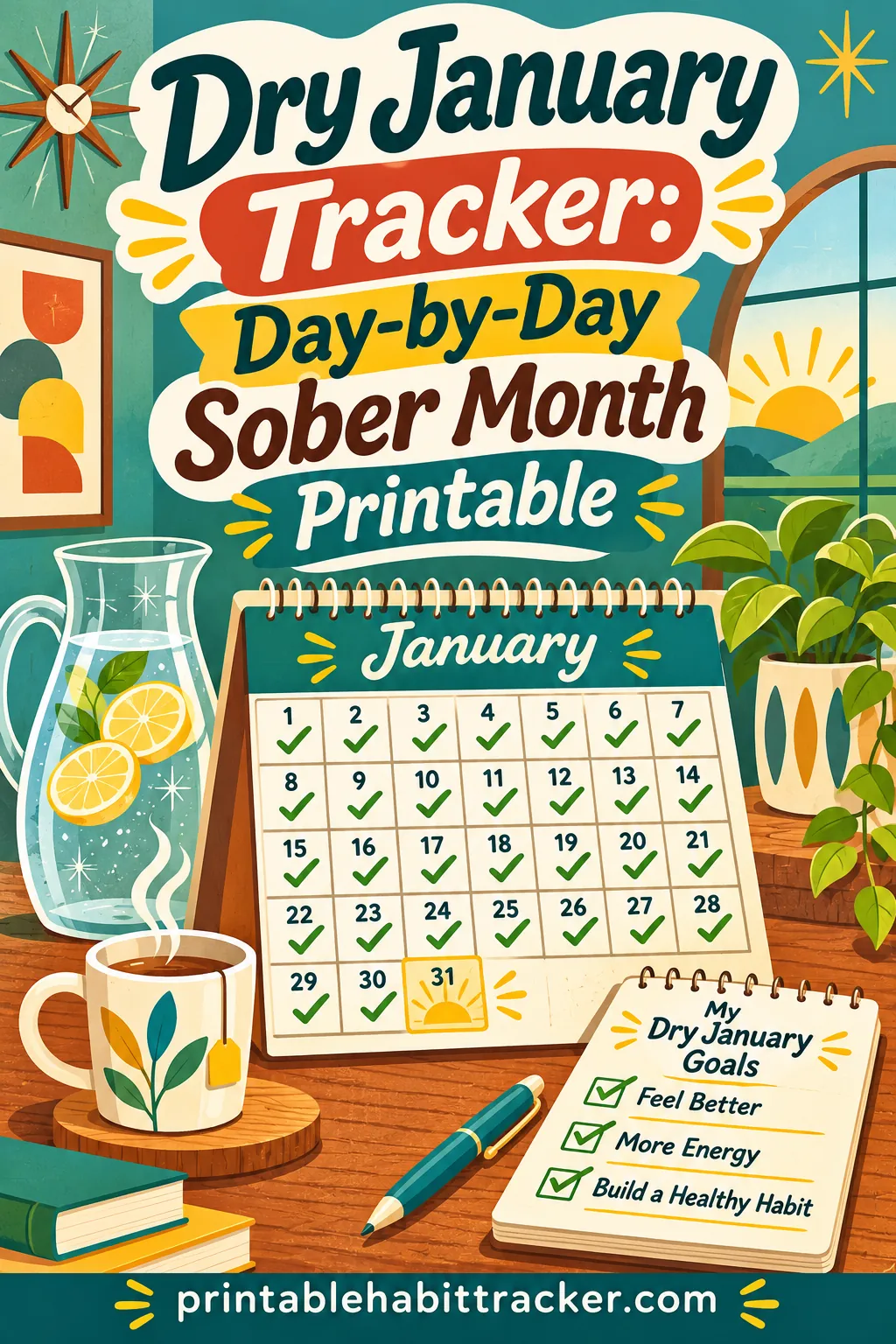
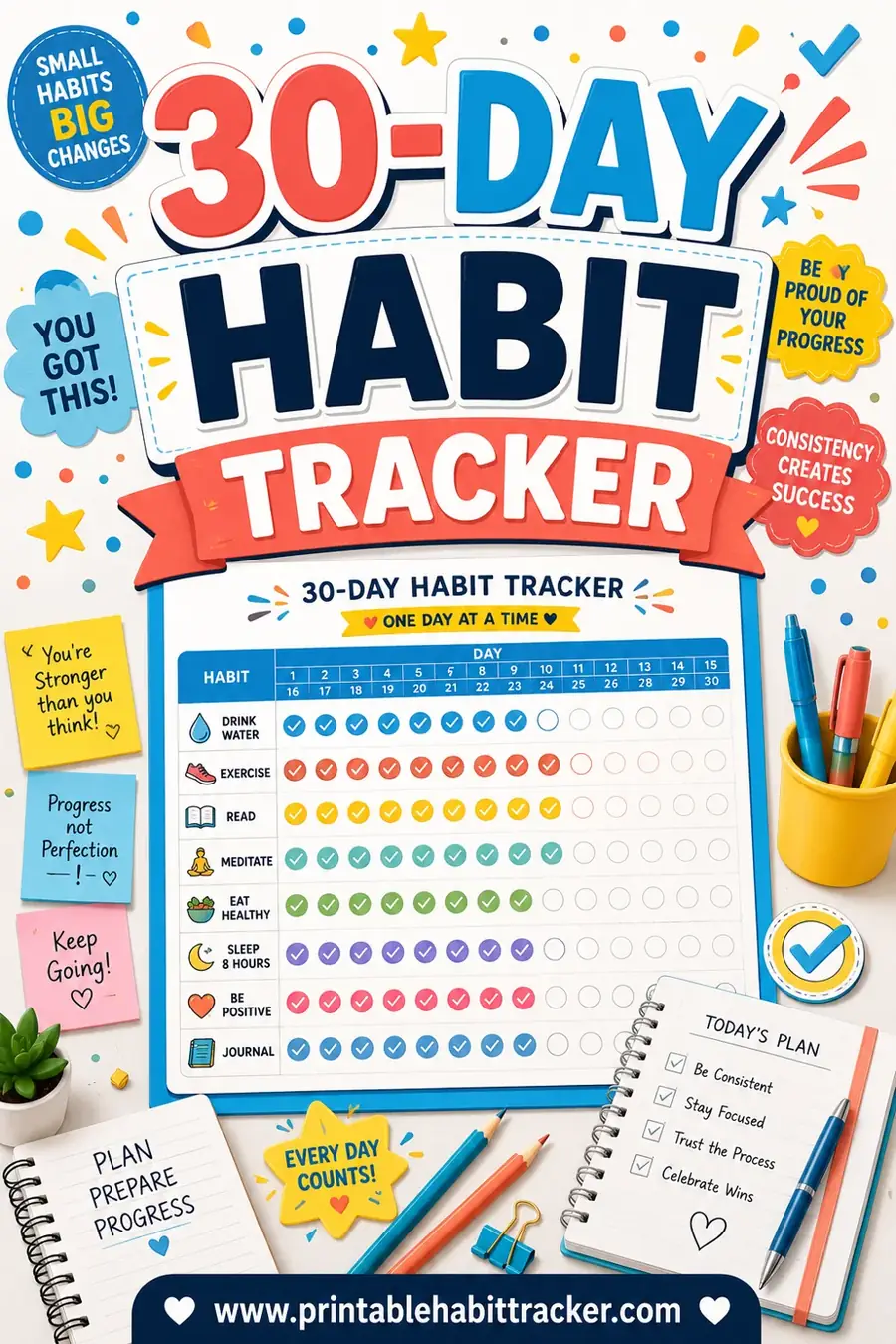
A Dry January tracker is a one-page, 31-day grid where you color in one box for every alcohol-free day, jot down cravings in a small notes column and keep a running "money saved" line at the bottom, so you can watch the month fill up without an app. You can build this exact tracker in the free printable habit tracker maker in about two minutes, then print it and stick it on the fridge.
This guide walks you through what to put on the page, how to set it up in the tool, how to handle a slip without wiping out your progress, and how to keep the habit going once February arrives. It's written for adults taking a month off as a personal wellness challenge.
A quick, important note first: if you drink heavily or every day, talk to your doctor before you stop. Stopping suddenly isn't safe for everyone, and a doctor can help you plan the month in a way that works for your body.
✅ Try this tracker for one week
Tap a box each day you do the habit. Your ticks stay on this device.
Why a Paper Dry January Tracker Works
There are plenty of apps for an alcohol-free month. So why bother with paper?
Because a printed page does something a phone screen doesn't: it stays in front of you. A sheet taped to the fridge or the inside of a kitchen cabinet is right where evening habits tend to happen. You see the row of colored boxes every time you open the door, and that quiet visual reminder can carry you through a tough moment better than a notification you swipe away.
Paper also turns progress into something physical. Coloring in a square is a tiny ritual that marks the end of another alcohol-free day. By the third week, you're looking at a solid band of color, and most people really don't want to put a gap in it.
A few more reasons paper suits this challenge:
- No log-in, no ads, no data. Your Dry January is private. The only record lives on your fridge.
- It's off your phone. Evenings are often when people scroll and get restless. Keeping the tracker on paper means checking in doesn't drag you into another screen.
- It holds the messy stuff. A notes column can capture "rough day at work, had a fizzy water instead" in a way a single tap can't.
- Anyone in the house can see it. If your partner or roommate is joining you, a shared page on the fridge becomes a friendly team scoreboard.
If you're curious about the general case for paper, there's more in our guide to how to track habits without an app.
What to Put on Your Dry January Tracker
A good Dry January tracker has one main habit, a few supporting habits and a little space for reflection. Here's a layout that works for most people.
| Section | What goes there | Why it helps |
|---|---|---|
| Main row: Alcohol-free today | One box per day, 1 to 31 | Your core count; the row you'll watch fill up |
| Support habits | 3 to 5 rows like water, movement, sleep | Fills the gap that drinking used to fill |
| Craving notes | A word or two on hard moments | Shows you your patterns and triggers |
| Money saved | A running total, updated weekly | A concrete reward you can see grow |
| Weekly check-in | Four short lines, one per week | A moment to notice how you feel |
| Reward box | What you'll do with the money or time | Gives the month a finish line |
You don't need every section. If you want the simplest version possible, one row of 31 boxes and a pen is enough. But most people find that one or two support habits make the main habit easier, because they give your evenings something to do.
The main row: one box per day
This is the heart of the tracker. Every evening, or first thing the next morning, you color in the box for that day if it was alcohol-free.
Keep it a simple yes. Don't add rules like "only counts if I also went to the gym." The point of this row is to count alcohol-free days, nothing else.
Support habits
These are the habits that help the main one along. When you take something out of your routine, it helps to put something back in. Pick three to five from this list:
- Alcohol-free drink swap: have a go-to replacement ready, like sparkling water with citrus, iced tea or a warm mug of something before bed.
- Water with every meal: easy to track and helps you feel good.
- Moved my body: a walk, a stretch, a class, anything counts.
- In bed by a set time: many people notice their sleep changes during the month, so tracking bedtime makes that easy to see.
- Ate a proper dinner: skipping meals can make evening cravings harder.
- Called or texted a friend: connection helps on social nights.
- Did my wind-down routine: a shower, a book, a few pages of journaling.
- Craving noted and handled: a box you color in whenever you rode out a craving. More on this below.
Craving notes
A narrow notes column next to each day lets you jot down a word or two when a craving hits. "Friday, 6 pm, after work." "Dinner out." "Stressed, Sunday night." After a couple of weeks, you'll see patterns you might never have noticed otherwise.
Money saved
This is the part a lot of people love most. Before January starts, think about roughly how much you'd usually spend on drinks in a typical week, at home and out. Write that number at the top of the page. Each Sunday, add it to your running total.
You don't need to be exact. A rough weekly figure is fine, and the growing total at the bottom of the page is a satisfying thing to look at by the last week.
How to Make It in the Free Tool (Exact Settings)
Open the free habit tracker maker and follow these steps. It takes a couple of minutes, and you can print as many copies as you like.
- Title: type
Dry January Tracker, or make it personal, likeMy Alcohol-Free Januaryor31 Days, One at a Time. - Template chips: skip them for this one, or tap Goal Tracker as a starting point and then replace the habits.
- Your habits (one per line): type your main habit on the first line and your support habits underneath. A good starter list:
- Alcohol-free today
- Craving noted and handled
- Alcohol-free drink swap
- Water with every meal
- Moved my body
- In bed by 10:30
- Layout: choose Monthly. This gives you a full grid with a column for every day of the month.
- Month: pick January and the right year, so the dates line up with the real calendar.
- Style: choose Color-in. Coloring a box feels more like a small celebration than a tick does, and a solid row of color is easy to see from across the kitchen. If you prefer a quick mark, Checkbox works too.
- Color theme: Sage or Ocean feel calm and fresh, which suits a reset month. Bold is great if you want the page to grab your attention every time you walk past.
- Options: turn on
- Streak boxes so you can write your current run of days,
- Reward box for the thing you'll do with the money saved,
- Reflection for your weekly check-in lines,
- Notes/goals for your craving notes and the money-saved total. Turn on Mood row too if you'd like to see how your mood shifts across the month.
- Paper: choose Letter or A4 to match your printer, and Landscape so all 31 days fit comfortably across the page.
- Tap 🖨️ Print / Save PDF.
If you'd rather skip the typing, you can build this exact tracker with the title, habits, layout and style already filled in. Then just pick January, your theme and your options.
A circle or chain version
Some people prefer a more visual layout for a single-goal month. In the tool's Layout setting, try Circle for a round 31-segment design you color in like a pie, or Chain for a linked row of days that looks like a paper chain. Both work well when you're tracking just one habit, "Alcohol-free today," and want something you'd happily frame on the fridge.
If you'd like a general 31-day grid you can reuse for any challenge after this one, the 30-day habit tracker page shows a few more layouts.
How to Fill It In Day by Day
Pick one moment each day to update the page and stick with it. The two that work best:
- Right before bed. You know the day is done, so you can color in the box with confidence and write a quick note.
- First thing in the morning. You color in yesterday's box with your coffee or breakfast. This turns the tracker into a little morning win that sets the tone for the day ahead.
Either way, it takes under a minute. Here's the routine:
- Color in the "Alcohol-free today" box if the day was alcohol-free.
- Color in any support habits you did.
- If you had a craving, write one or two words in the notes column: the time, the place or the feeling.
- If you turned on streak boxes, update your current run.
- On Sundays, add your weekly amount to the money-saved line and write one sentence in the reflection space.
That's it. Keep a pen or colored pencil clipped to the page or tucked in a magnet cup right next to it. If the pen is in a drawer across the room, you'll skip the update on a tired night.
What If You Slip? (Don't Reset the Count)
This is the most important part of the whole tracker, so it gets its own section.
Many people start Dry January with an all-or-nothing mindset: if they have one drink on day 12, the whole month is ruined, so why keep going? That thinking ends more alcohol-free months than any party ever does.
A slip doesn't erase the days you've already done. If you had 11 alcohol-free days, then one day that wasn't, you still had 11 alcohol-free days. Those count. Your routine still got the benefit of them.
Here's how to handle a slip on paper:
- Leave that day's box blank, or mark it with a small dot or a different color. Don't scribble over it or cross out the whole row.
- Write a short note in the notes column about what happened: "Work dinner, felt pressure," or "Rough news, reached for it." No judgment, just facts.
- Color in the next day's box as soon as you've had an alcohol-free day again. The goal is to get straight back to the row.
- Count total days, not just streaks. At the end of the month, add up every colored box. "27 out of 31 alcohol-free days" is a real achievement.
If you turned on streak boxes, you can track both numbers: your current streak and your total days. The streak is motivating, and the total keeps one slip from feeling like a disaster.
This is the same approach many Dry January programs and apps suggest: keep going, keep counting and learn from the hard days. Our guide on what to do when you miss a day goes deeper into getting back on track with any habit.
Learning from a slip
A slip is information. Look at the note you wrote and ask:
- What time of day was it?
- Where was I, and who was I with?
- How was I feeling just before?
- What would have helped?
Then make one small change for next time. If it was a work dinner, plan your alcohol-free order before you arrive. If it was a stressful Sunday night, put a different wind-down habit on the tracker for Sundays. One clear fix is better than a long list of resolutions.
Using the Craving Notes to Spot Your Triggers
The craving notes are where a Dry January tracker becomes more than a countdown. After a week or two, read down the column and look for repeats.
Common triggers people notice include:
| Trigger | What it often looks like | A swap to try |
|---|---|---|
| End of the workday | Wanting something to mark "done for the day" | A new ritual: change clothes, short walk, special alcohol-free drink in a nice glass |
| Stress | Reaching for a drink to take the edge off | Five slow breaths, a shower, a quick call to a friend, stepping outside |
| Social plans | Dinners, parties, nights out | Plan your order in advance, arrive with a friend who knows your goal, set an exit time |
| Boredom | Quiet weekend evenings with nothing planned | Schedule something: a movie, a recipe, a puzzle, a class |
| Cooking dinner | A habit of sipping while you cook | Keep a sparkling water or iced tea on the counter instead |
| Celebrating | Good news, a win at work | Pick a non-drink treat: a favorite meal, a new book, an early night |
| Pure routine | Same chair, same time, same show | Change the setup: sit somewhere else, try a different evening routine |
Once you see your top two or three triggers, add a support habit that targets them directly. If evenings after work are the hardest, "New end-of-day ritual" could become one of your rows. If weekends are tough, "Planned a Saturday activity" could be another.
The "craving handled" box
One support habit worth adding is a box you color in every time you notice a craving and ride it out. This flips the craving from something to dread into a small win. On a hard day, you might color in "Alcohol-free today" and "Craving handled," and both boxes feel earned.
Cravings tend to ease if you wait them out and do something else for a little while. Having a box for that moment gives you something to aim for when it happens.
A Week-by-Week Plan for the Month
Dry January has a shape. The first few days feel new and exciting, the middle can drag and the end often brings a real sense of pride. Knowing what's coming helps you plan for it.
| Week | Days | What it often feels like | Focus for the week |
|---|---|---|---|
| Week 1 | 1 to 7 | Fresh-start energy; old habits still on autopilot | Set up your swaps, tell a few people, decide what stays in the house |
| Week 2 | 8 to 14 | Novelty fades; first weekend social plans | Lean on craving notes; plan social nights in advance |
| Week 3 | 15 to 21 | Often the hardest stretch; "is this worth it?" | Look at your money total; reread your reasons; add a reward |
| Week 4 | 22 to 28 | Momentum builds; the end is in sight | Notice what feels different; start thinking about February |
| Final days | 29 to 31 | Pride, and sometimes nerves about what comes next | Finish strong, do your month review, plan your next step |
Week 1: set yourself up
Before day one, or in the first couple of days:
- Write your reason for doing this at the top of the tracker. Keep it to one line, like "Better sleep and a clear head" or "Saving for a weekend away."
- Stock up on your alcohol-free drink swaps so they're easy to reach for.
- Decide whether to keep alcohol in the house. Some people clear it out; others just move it out of sight.
- Tell one or two people who'll be supportive.
Week 2: the first real test
The first weekend with plans is often where people feel the challenge for real. Use your craving notes, plan your order before you go out and give yourself permission to leave early if you want.
Week 3: the middle stretch
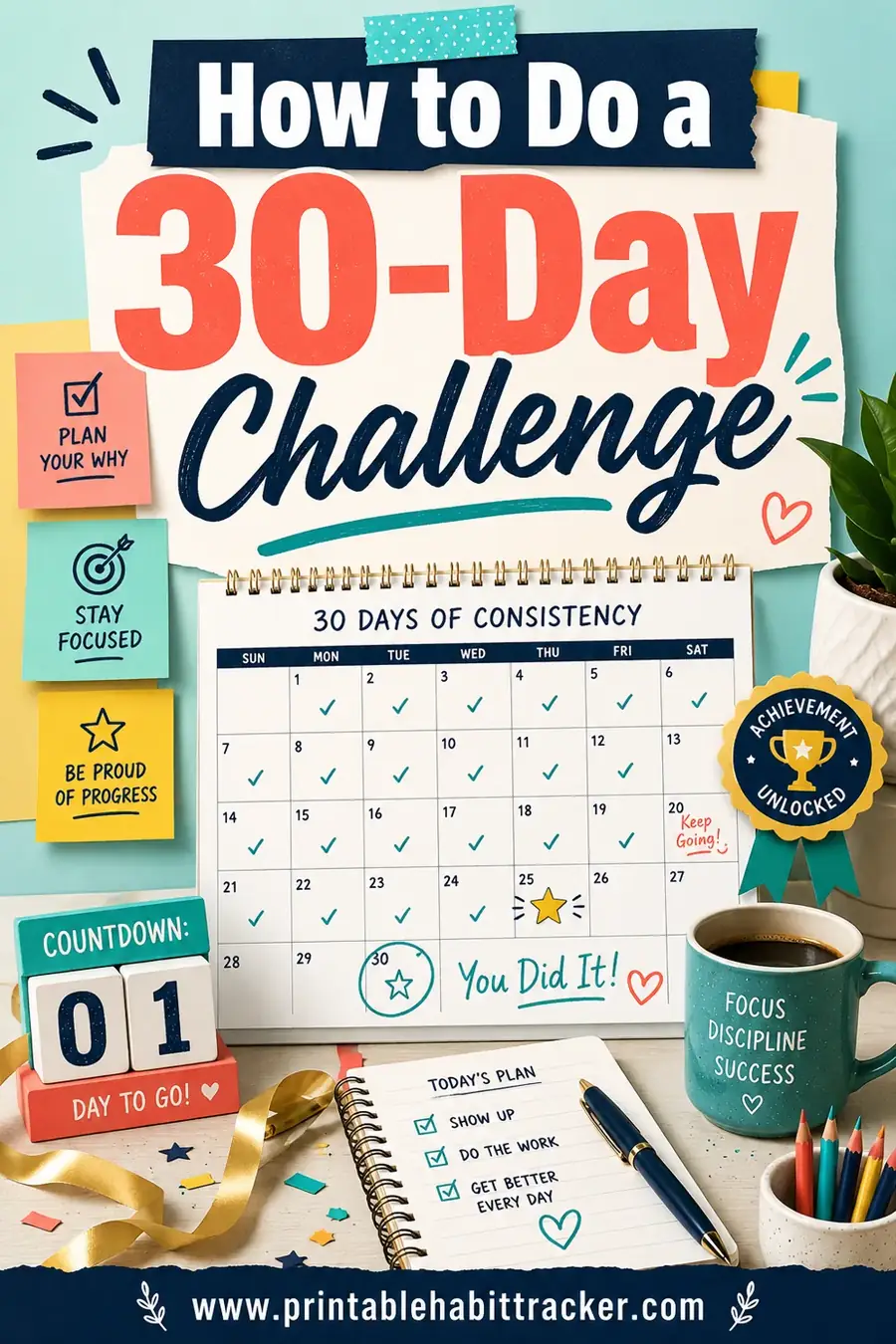
This is where a visual tracker earns its spot on the fridge. You're looking at two full weeks of colored boxes. Check your money-saved line. Reread your reason at the top of the page. If motivation is dipping, add a small reward for reaching day 21.
Week 4 and the finish
By now, a lot of people notice changes in their evenings, their mornings and their sleep. Write those down in the reflection space while you remember them. They'll be useful when you decide what to do in February.
Handling Social Situations
Social plans are one of the hardest parts of an alcohol-free month for many people. A little preparation goes a long way. Here are some simple, friendly lines you can use, so you're never stuck for words:
- "I'm doing Dry January this year, so I'll have a sparkling water."
- "I'm taking a month off, just to see how I feel."
- "I'm good with this, thanks!" (holding a glass of something non-alcoholic)
- "I'm driving tonight."
- "I've got an early start tomorrow."
- "Not tonight, but I'd love a soda with lime."
You don't owe anyone a long explanation. A short, cheerful answer usually ends the conversation, and most people won't push.
A few tips for nights out:
- Order first. If you order your alcohol-free drink before anyone else, you're not waiting to be asked.
- Keep a glass in hand. People are less likely to offer you a drink if you already have one.
- Bring a buddy. If a friend knows your goal, they can help steer the conversation.
- Plan your exit. Decide what time you'll leave before you arrive. It's fine to head home early.
- Suggest other plans. A breakfast, a walk, a movie, a game night or a cooking evening are easy ways to see friends without the focus on drinks.
Add "Planned my social night" as a support habit if you have lots of plans in January. Coloring it in reminds you that you went in with a plan and stuck to it.
Tracking the Money You Save
Watching a savings number grow is one of the most motivating parts of the month. Here's a simple way to set it up without any math headaches.
Step 1: Estimate your usual week. Think about a normal week before January. Add up roughly what you'd spend on drinks at home, plus any rounds, bar tabs or bottles brought to dinners. Write that figure at the top of your tracker as "My usual week."
Step 2: Add it every Sunday. Each Sunday, add your usual weekly amount to the running total in your notes space. Four Sundays plus the last few days of the month gets you to a full January total.
Step 3: Adjust if you slipped. If you had a slip and spent something that week, subtract it. Keep it honest but don't fuss over small amounts.
Step 4: Give the money a job. A number on paper feels nice, but a goal feels better. Write in the reward box what the savings will go toward.
Here's a sample of how the money-saved line might look across the month:
| Check-in | What you write | Running total |
|---|---|---|
| Sunday, end of week 1 | My usual week, added once | 1 week saved |
| Sunday, end of week 2 | Added again | 2 weeks saved |
| Sunday, end of week 3 | Added again, minus a small slip | Just under 3 weeks saved |
| Sunday, end of week 4 | Added again | Almost 4 weeks saved |
| January 31 | Add the last few days | Your full January total |
Ideas for the reward box:
- Move the money into a savings account the day the month ends.
- Put it toward a weekend away, a concert or a class.
- Buy something you've wanted for a while, like new running shoes or a nice journal.
- Split it: half saved, half spent on a treat.
- Start a "February fund" and keep adding to it if you continue cutting back.
If saving money is a big part of your why, you might like pairing this page with a savings habit tracker so the habit carries on after January.
Ready-to-Use Habit Lists for Different Goals
Not everyone does Dry January for the same reason. Pick the list that matches yours and paste it straight into the "Your habits" box in the tool. Each list stays short enough to fit neatly on one landscape page.
For better sleep and energy - Alcohol-free today - Screens off by 10 - In bed by 10:30 - Morning light walk - Wind-down routine done
For saving money - Alcohol-free today - No takeout tonight - Cooked at home - Added to savings jar - Checked my spending
For fitness - Alcohol-free today - Moved 30 minutes - Stretched 10 minutes - Protein with breakfast - Water bottle refilled twice
For calm and mental health - Alcohol-free today - Five minutes of quiet - Journaled one line - Went outside - Talked to someone I like
For couples or roommates doing it together - Alcohol-free today (me) - Alcohol-free today (them) - Cooked dinner together - Alcohol-free drink night - Did something fun at home
For a minimal, one-goal month - Alcohol-free today
That last one isn't a joke. If you already have a lot going on, one row of 31 boxes in a big Circle or Chain layout might be all you need. You can always add support habits in February.
If sleep is your main reason, a separate sleep tracker page can sit next to your Dry January page so you can compare how you slept on alcohol-free nights through the month.
Common Mistakes (and Easy Fixes)
| Mistake | Why it happens | The fix |
|---|---|---|
| Starting the tracker on January 5 | Holiday leftovers, travel, busy week | Start whenever you start. Color in from that day and leave earlier boxes blank. |
| Tracking too many habits | Excitement about a fresh start | Keep it to the main habit plus three to five supports. |
| Erasing the month after a slip | All-or-nothing thinking | Leave one blank box, note what happened and color in the next day. |
| Hiding the tracker in a drawer | Feeling shy about it | Put it where evening habits happen: the fridge, a cabinet door, by the kettle. |
| No plan for social nights | Thinking you'll "just say no" | Write your go-to line and your alcohol-free order on the page. |
| Forgetting the money line | Easy to skip | Set Sunday as your money day and add a small reminder in the notes space. |
| Stopping cold on February 1 | No plan for after | Do a month review in the last week and decide your next step. |
Your End-of-Month Review
On January 31 or February 1, take ten minutes with your finished tracker and a pen. Answer these questions in the reflection space or on the back of the page:
- How many alcohol-free days did I have out of 31?
- What was my longest streak?
- Which week was hardest, and why?
- What were my top two triggers?
- Which swap or support habit helped most?
- How much money did I save?
- What did I notice about my sleep, mood or mornings?
- What do I want February to look like?
There's no right answer to the last question. Some people keep going for another month. Some decide to drink less often and track that. Others just enjoy the experience and move on with a few new routines. The point of the review is to decide on purpose, not by default. There's a longer version of this process in how to review your habits monthly.
What to Track After January
If you'd like to keep some of what you built, here are a few ways to carry the tracker into February:
- Keep the same page. Print a fresh copy with the tool set to February and keep counting alcohol-free days.
- Switch to a weekly goal. Instead of every day, set a target like "five alcohol-free days a week" and use the Weekly layout so any five days count.
- Keep the support habits. You may find the walks, the earlier bedtime or the evening ritual are worth keeping on their own.
- Try a yearly view. The Yearly layout gives you one small square per day for the whole year. It's a striking way to see alcohol-free days across all twelve months.
- Pick a new challenge. Use the momentum for a different 30-day goal, like a daily walk or a reading habit.
If you want to change a drinking pattern for good, talking with your doctor is a smart step. They can help you make a plan that's right for you, and they're a good person to tell if you found the month harder than you expected.
When you're ready, build this exact tracker, set the month to January, choose your colors and print it. Then grab a pen and color in day one.
Frequently Asked Questions
What is a Dry January tracker?
A Dry January tracker is a printable page with a box for each day of January that you color in when the day is alcohol-free. Most also include a few support habits, a notes column for cravings and a line for tracking money saved. It gives you a visual way to see your alcohol-free month add up.
Can I start Dry January after January 1?
Yes. Start on whatever day you're ready and color in from there. Leave the earlier boxes blank or use them to write your reason for starting. You can also run a full 31 days that ends in early February if you'd like a complete month.
What should I do if I have a drink during Dry January?
Leave that day's box blank, write a short note about what happened and get back to coloring in boxes the next day. A slip doesn't undo the alcohol-free days you've already had. At the end of the month, count your total alcohol-free days, not just your longest streak.
How do I calculate the money I save during Dry January?
Estimate what you'd usually spend on drinks in a normal week, both at home and out. Add that amount to a running total every Sunday. It doesn't need to be exact; a rough figure is enough to see your savings grow through the month.
Is a printable tracker better than a Dry January app?
It depends on you. A printable tracker stays visible on your fridge, keeps your progress private and doesn't pull you into your phone in the evening. An app can send reminders. Some people use both, with the app for reminders and paper for the satisfying visual record.
What habits should I track alongside Dry January?
Pick three to five habits that fill the time or feeling drinking used to fill. Popular choices are an alcohol-free drink swap, water with meals, movement, a set bedtime and a short wind-down routine. A "craving handled" box is also helpful because it turns hard moments into small wins.
Should I talk to a doctor before Dry January?
If you drink heavily or every day, yes, please talk to your doctor before stopping. Stopping suddenly isn't safe for everyone, and a doctor can help you plan. It's also a good idea to check in with a doctor if you have health conditions or take medications.
Can I do Dry January with a partner using one tracker?
Yes. Add two main rows, one for each person, like "Alcohol-free today (me)" and "Alcohol-free today (them)," plus a few shared habits like cooking dinner together. A shared page on the fridge makes it a friendly team effort and helps you support each other on hard nights.