Gratitude Journal Habit: A 21-Day Tracker That Keeps You Writing
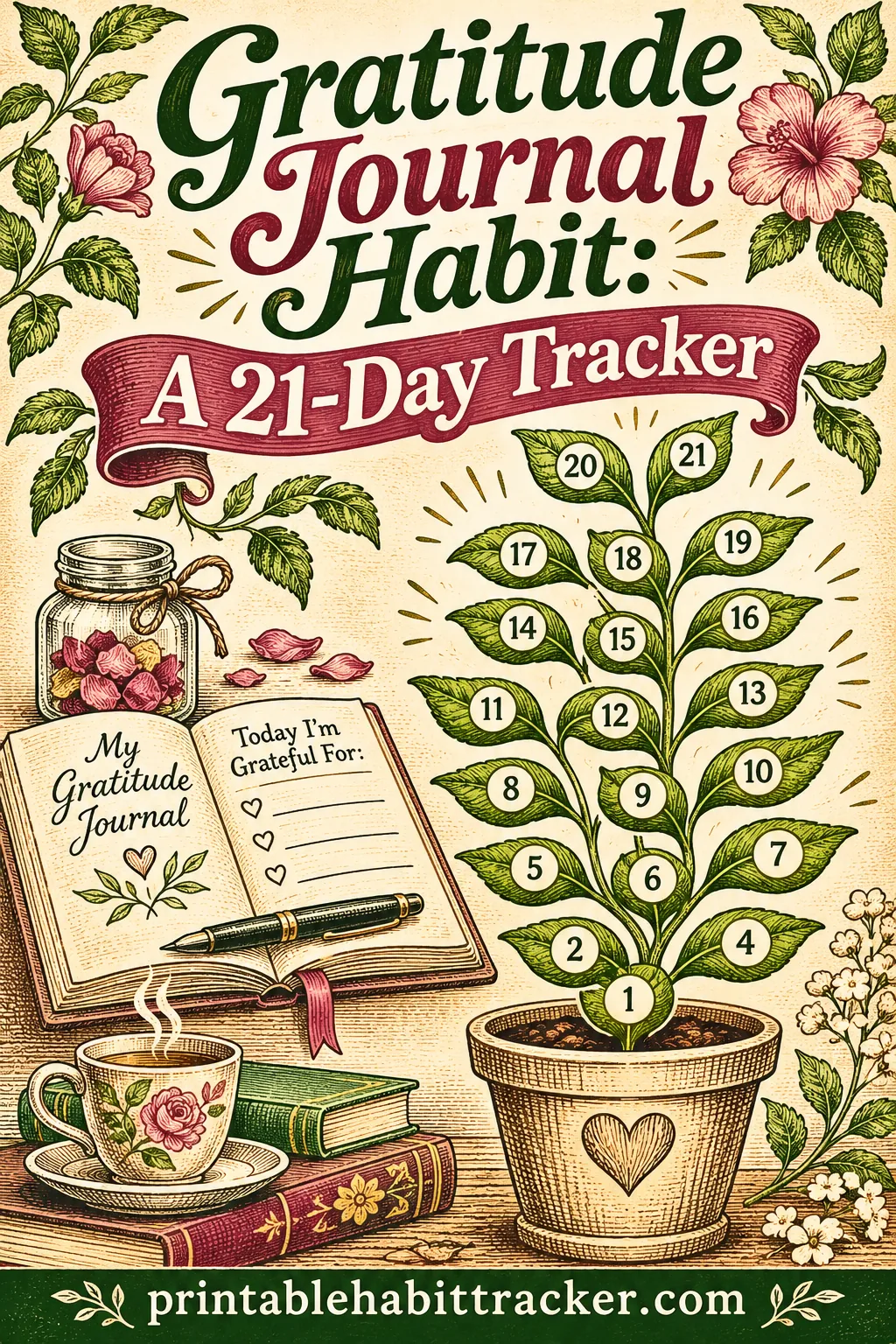
To stop dropping your gratitude journal after a week, shrink the habit to one line a day, pair it with a fixed cue, and tick a box on a 21-day gratitude habit tracker every time you write. The tracker does the remembering for you, and the one-line rule makes the habit small enough to survive busy nights, bad moods and sick days.
You can make that tracker in a couple of minutes with the free printable habit tracker maker, then print it and keep it inside the cover of your journal. This guide gives you the full 21-day plan, three weeks of daily gratitude prompts, the exact tool settings, and a rescue plan for the night you inevitably forget.
Why Gratitude Journals Fade After a Week
Most people don't quit a gratitude journal on purpose. It just slips. The first few days feel lovely. You write half a page, you notice nice things, you feel calmer. Then a busy Thursday comes along, you skip it, and the blank page the next night feels like a small reminder that you already broke it. By the following week the notebook is under a pile of mail.
That pattern has a few common causes, and each one has a simple fix.
| Why it fades | What it feels like | The fix in this plan |
|---|---|---|
| The entry is too big | "I don't have time for a whole page tonight." | One line counts as a full entry |
| No fixed time | You remember at random, or not at all | Attach it to something you already do every day |
| Entries feel repetitive | "Family, coffee, my bed... again." | A new prompt for each of the 21 days |
| No visible progress | Pages pile up but nothing shows the streak | A tracker with one box per day |
| One miss feels like failure | You skip once and stop entirely | A "never miss twice" rule and a restart plan |
| The notebook is out of sight | It lives in a drawer | Keep the journal and tracker where you'll see them |
Notice that none of those fixes require more willpower. They make the habit smaller, easier to find and easier to restart. That's the whole idea behind using a tracker for a habit like this.
The difference between a journal and a tracker
Your journal holds the words. Your tracker holds the streak. Keeping them separate sounds like extra work, but it's actually what makes the habit stick.
When the only record is the journal itself, you have to flip back through pages to see how you're doing. A tracker shows all 21 days at a glance. One look tells you you've written 14 of the last 15 nights, and that little row of ticks pulls you back to the pen on a tired evening. If you've never kept a tracker before, that visible streak is the main reason it helps.
The 21-Day Gratitude Habit Tracker Plan
The plan has three weeks, and each week has one job. You don't need to read ahead or prepare anything. Just follow the week you're in.
| Week | Days | Daily goal | The job of this week |
|---|---|---|---|
| Week 1: Show up | 1 to 7 | One line, any length | Prove to yourself you can do it daily |
| Week 2: Get specific | 8 to 14 | One line with a detail (who, where, when) | Make entries feel fresh, not repetitive |
| Week 3: Look closer | 15 to 21 | One line, plus optional second line | Notice small things and people more often |
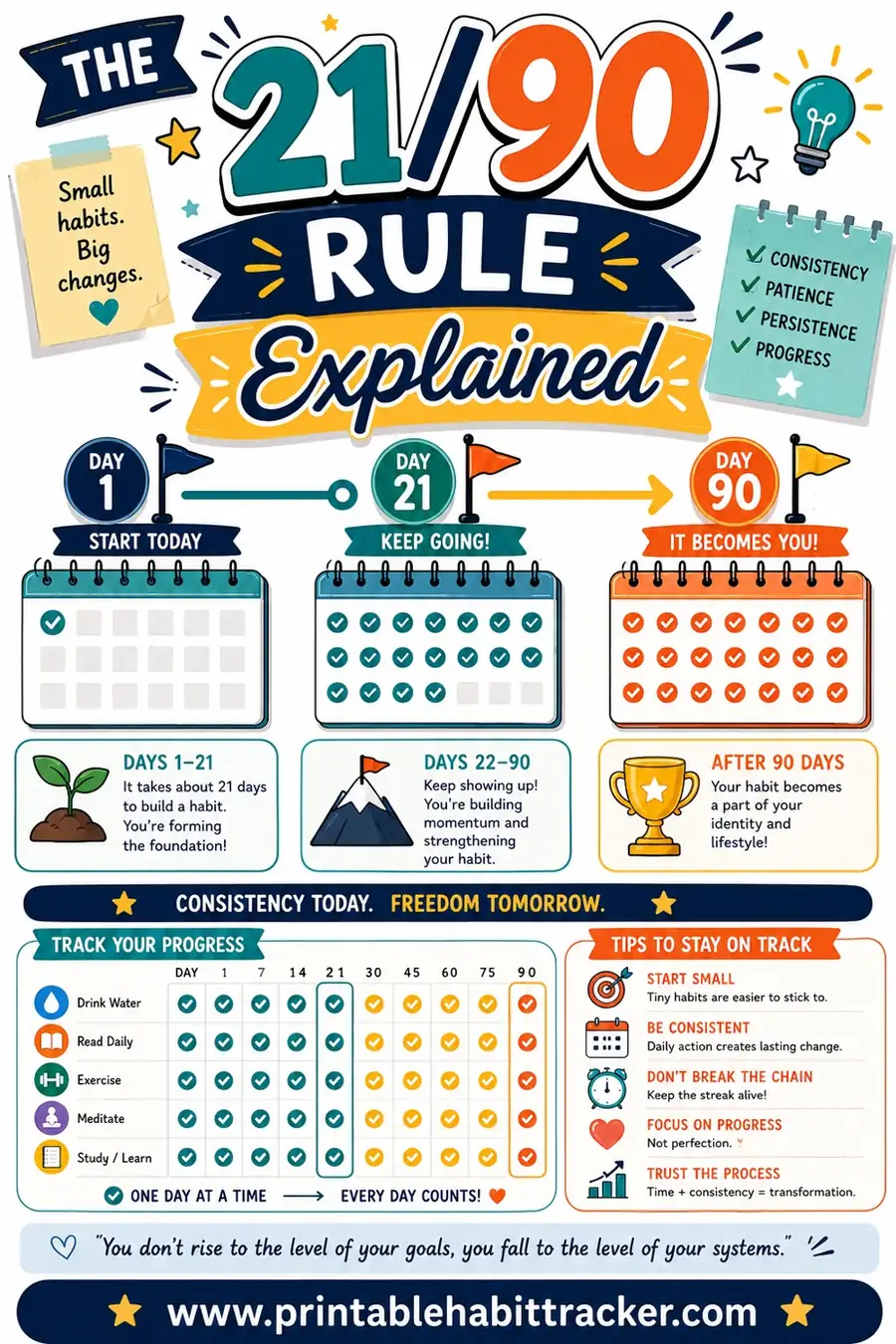
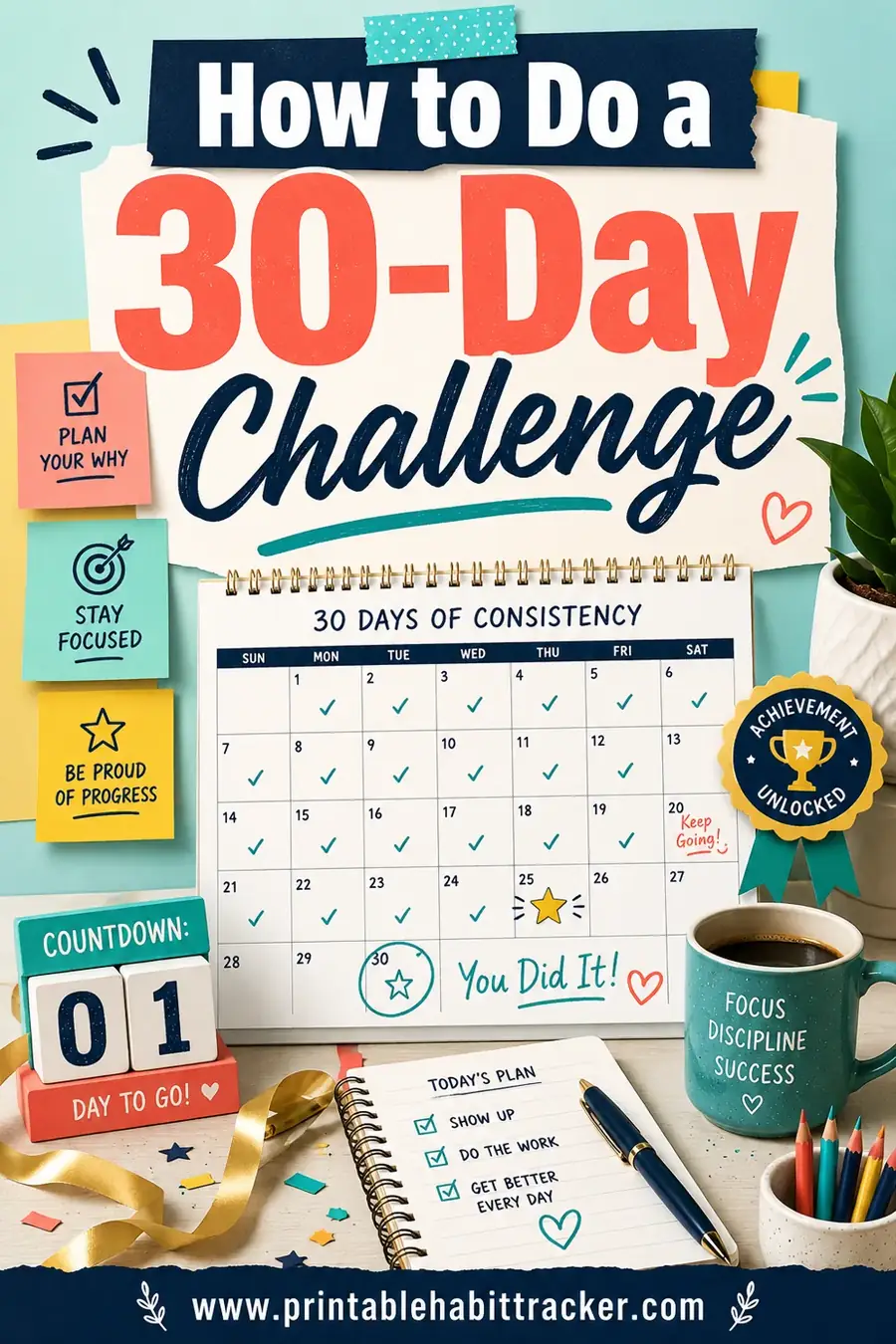
A 21-day challenge is a handy length. It's long enough to get past the "this is new and exciting" stage and short enough that the finish line feels close from day one. If you're curious where numbers like 21 come from, and why the real time it takes to build a habit varies a lot from person to person, the article on the 21/90 rule covers it honestly. Treat 21 days as a first lap, not a magic deadline.
The one-line rule
Here's the rule that does most of the heavy lifting: a single sentence is a complete entry. Not a warm-up, not a "lazy day" entry. A full entry that earns a tick.
Some nights you'll want to write more, and that's great. But the habit is defined by the smallest version you'll still do when you're exhausted. If your minimum is a full page, you'll skip on hard nights. If your minimum is one line, you'll almost never skip.
Examples of complete one-line entries:
- "The bus driver waited for me when I was running."
- "My sister texted a photo of her dog and it made me laugh."
- "Warm socks straight out of the dryer."
- "I finished the report and my manager said thanks."
- "Quiet ten minutes on the porch before anyone woke up."
Each one takes less than a minute to write. That's the point.
Pick your cue before day one
A cue is the thing that tells you it's time to write. Without one, you're relying on remembering, and remembering is unreliable. Choose one moment that already happens every day and attach your gratitude line to it.
Good cues for a gratitude journal:
- Right after brushing your teeth at night. Keep the journal on your nightstand and write before you turn off the lamp.
- With your first coffee or tea. Write while the kettle boils or while the cup cools.
- Right after dinner. Some families do this at the table, each person saying one thing.
- When you plug in your phone to charge. Put the journal next to the charger.
- On the train or bus home. Use a pocket notebook and a tracker card tucked inside.
This "attach it to something you already do" approach is called habit stacking, and habit stacking explained has more examples if none of these fit your day. Write your cue at the top of your tracker so you see it every time.
Morning or night?
Either works. The best time is the one you'll actually keep.
Night entries tend to be about what happened: a kind word, a good meal, a small win. They also give your day a gentle full stop before sleep. Morning entries tend to be about what you have: a warm bed, a quiet house, a day ahead. They can set a calmer tone for the hours that follow.
If you can't decide, try nights for week one. Most people have a more predictable bedtime than a predictable morning, and the nightstand is a natural home for a notebook.
How to Make It in the Free Tool
You can build this exact tracker with one click, and it opens with the title, habits, layout and style already filled in. If you'd rather set it up yourself, or you want to change the details, here are the exact settings to use in the free maker.
- Title. Type something you'll enjoy seeing every day, like "21-Day Gratitude Journal" or "One Good Thing a Day."
- Template chip. Tap Gratitude to load a starting set of habits, then edit them in the next step.
- Your habits (one per line). Replace the list with the habits you want to tick. For a classic setup, use these four lines:
- Write one grateful line
- Name one person
- Notice one small thing
- Reread yesterday's line
- Layout. Choose Monthly. You'll only use 21 of the boxes, and the leftover days give you room to keep going if you want. If you prefer a page for each week, choose Weekly and print three copies.
- Month. Pick the month you're starting in, so the dates line up.
- Style. Choose Checkbox if you like a quick tick, or Color-in if you enjoy shading each box with a colored pencil. Color-in feels a bit more rewarding and slows you down for a calm moment at the end of the day.
- Color theme. Sage or Blush both look soft and calm. Classic B&W saves ink and works well with colored pencils.
- Options. Turn on Streak boxes so you can write your running count. Turn on Reflection to get a small space for a weekly note. Reward box is a nice touch if you want to plan a treat for day 21. Mood row is optional, but some people like to see how their mood lines up with their entries.
- Paper. Pick Letter or A4 to match your printer. Portrait fits inside most journal covers once folded; Landscape gives wider boxes.
- Print. Tap 🖨️ Print / Save PDF. Save a PDF copy too, so you can print a fresh one when you start your next round.
Fold the printed sheet in half and tuck it inside the front cover of your journal. Every time you open the notebook, the tracker is the first thing you see.
Which habit rows to use
The four rows above are a starting point. You don't have to tick all four every day for the day to count. The only row that decides whether you kept your streak is the first one: write one grateful line. The other rows are bonuses that make your entries richer over time.
If four rows feel like too much, cut it down to one. A single row with 21 boxes is a perfectly good gratitude habit tracker. Fewer rows usually work better while a habit is brand new, because there's less to think about at the end of a long day.
21 Days of Daily Gratitude Prompts
Prompts solve the "I wrote the same three things again" problem. Copy this list into the back of your journal, or write each day's prompt in pencil above that night's line. If a prompt doesn't fit your day, skip it and write whatever comes to mind. The prompt is a nudge, not an assignment.
Week 1: Show up
The goal this week is simply to write every day. These prompts are easy on purpose.
| Day | Prompt | Example one-liner |
|---|---|---|
| 1 | What's one thing that went right today? | "The printer worked on the first try." |
| 2 | What did you eat or drink today that you enjoyed? | "Tomato soup on a cold afternoon." |
| 3 | Who made today a little easier? | "My neighbor brought in my packages." |
| 4 | What's something in your home you're glad to have? | "A lamp that makes the living room feel warm." |
| 5 | What made you smile or laugh today? | "My kid's knock-knock joke that made no sense." |
| 6 | What's one thing your body did for you today? | "My legs carried me up three flights of stairs." |
| 7 | Look back at days 1 to 6. Which line do you like most, and why? | "Day 3. I forget how often people help me." |
Week 2: Get specific
This week, add one detail to each line: a name, a place, a time or a sound. Specific entries are much more fun to reread, and they stop the journal from turning into a list of the same general words.
| Day | Prompt | Example one-liner |
|---|---|---|
| 8 | Name one person by name and one thing they did. | "Maria covered my shift so I could see the doctor." |
| 9 | What sound did you enjoy today? | "Rain on the car roof in the parking lot at lunch." |
| 10 | What's a skill you have that helped you today? | "I can cook rice without measuring, so dinner was fast." |
| 11 | What's something you learned today, big or small? | "The library lets you renew books by text." |
| 12 | What's a place you were glad to be in today? | "The quiet corner booth at the diner." |
| 13 | What's a problem that turned out smaller than you feared? | "The car noise was just a loose cover." |
| 14 | Look back at week 2. Which detail surprised you? | "How many of my good moments were at lunch." |
Week 3: Look closer
Now the habit is familiar, so you can stretch it a little. Write your one line, and if you have energy, add a second line explaining why it mattered. The second line is always optional.
| Day | Prompt | Example one-liner |
|---|---|---|
| 15 | What's something ordinary you'd miss if it vanished? | "Hot water in the shower." |
| 16 | Who taught you something you still use? | "Grandpa, who showed me how to fix a bike chain." |
| 17 | What's a hard thing that taught you something? | "The move last year showed me I can start over." |
| 18 | What did you notice outside today? | "A crow carrying a whole slice of bread." |
| 19 | What's something you did for someone else today? | "Walked my coworker through the new software." |
| 20 | What's one thing about yourself you appreciate? | "I keep showing up, even on the tired days." |
| 21 | Read all 20 lines. What do you want to keep doing? | "Writing at night. It makes bedtime calmer." |
Days 7, 14 and 21 are review days. They take a couple of extra minutes, but they're the days that make the habit feel worth it, because you get to see a week of good moments in one place.
Backup prompts for stuck nights
Some nights your mind goes blank. Keep these on a sticky note inside the cover:
- Something soft, warm or comfortable
- Something that worked the way it should
- A message, call or text you got
- A meal or snack
- A song, show, book or podcast
- A place in your home
- Something you didn't have a year ago
- Something you're looking forward to tomorrow
- Someone who'd help you if you asked
- A moment of quiet
- Something that made today easier than yesterday
- A small mistake that didn't matter in the end
Ready-to-Use Habit Rows for Different People
The basic four-row setup works for most people, but you can swap in rows that fit your life. Copy any of these sets straight into the "Your habits (one per line)" box in the tool. Each set keeps the core row first so your streak is always clear.
| Who it's for | Habit rows to paste |
|---|---|
| Absolute beginner | Write one grateful line |
| Busy parent | Write one grateful line; One thing my kid did; Say thanks out loud |
| Student | Write one grateful line; One thing I learned; Thank a classmate or teacher |
| Night owl who journals in bed | Write one grateful line; Phone away first; Lights out after writing |
| Early riser | Write one grateful line; One thing I'm looking forward to; Glass of water |
| Couple doing it together | Write one grateful line; Share it with partner; Thank partner for one thing |
| Someone going through a hard season | Write one grateful line; One kind thing I did for me; Rest without guilt |
| Deeper journaler | Write one grateful line; Add the why; Name one person; Reread last week |
When you paste these into the tool, put each habit on its own line rather than using semicolons. The semicolons above are just there to keep the table readable.
A family version
Gratitude can be a household habit too. One printed tracker on the fridge with a row for each family member is a simple way to start. At dinner, each person says one thing they're grateful for, and someone ticks their box.
For younger kids, keep it very short: "One thing I liked today." Kids enjoy the ticking or coloring as much as the sharing. If you already use a chore or behavior chart, put the gratitude tracker next to it rather than mixing them, so gratitude doesn't start to feel like a chore. Let kids pick the color theme so the sheet feels like theirs.
A couples version
Some couples like to each write one line about something the other person did that day, then swap journals on Sundays. It's a gentle way to notice the small things a partner does that usually go unsaid. Keep it light. If one person misses a night, the other person's streak carries on, and nobody keeps score.
What to write when you only have one minute
On busy nights, the one-line rule is your safety net. But it helps to have a few go-to formats so you don't spend your minute staring at the page.
The "because" line. "I'm grateful for ___ because ___." Example: "I'm grateful for my old coat because it kept me dry at the bus stop."
The "today, someone" line. "Today, ___ did ___." Example: "Today, the pharmacist double-checked my order and caught a mix-up."
The "small thing" line. Just name it. "Fresh sheets." "A parking spot right by the door." "The dog's head on my knee."
The "better than yesterday" line. "Today was easier because ___." Example: "Today was easier because I packed lunch the night before."
The "future me" line. "Tomorrow I'm looking forward to ___." Example: "Tomorrow I'm looking forward to calling my brother."
All five count. Write it, tick the box, close the notebook. You're done.
Does gratitude journaling have to feel happy?
No. Some days are hard, and forcing cheerfulness can feel hollow. On those days, it's fine to write something small and true: "I got through today." "The tea was hot." "My friend texted to check on me." Gratitude on a hard day isn't about pretending things are fine. It's about noticing one thing that helped, even a little.
If you're going through a tough time with your mental health, a gratitude journal can be one gentle part of your routine, but it isn't a substitute for support from a doctor, counselor or therapist. The habit tracker for mental health page shows how some people combine gratitude with other small daily habits like sleep, movement and getting outside.
Choosing Your Journal Setup
The tracker and the journal work as a pair. You don't need anything fancy, but a few choices make the habit easier.
| Setup | How it works | Good when |
|---|---|---|
| Small notebook + folded tracker | Tracker tucked in the front cover | You write at your nightstand |
| One line a day on the tracker itself | Use the Notes/goals option and write directly on the sheet | You want everything on one page |
| Bullet journal page | Gratitude log on one page, tracker on the facing page | You already keep a bullet journal |
| Index cards | One card per day, clipped to the tracker | You like to shuffle and reread old entries |
| Pocket notebook | Tracker printed small and taped inside | You write on the commute |
| Shared family notebook | One notebook on the kitchen table | The whole household joins in |
The "one line a day" style
Some people skip a separate notebook entirely and write their gratitude line right on the tracker. Turn on Notes/goals in the tool, choose Landscape, and use the notes space as a tiny diary. At the end of 21 days, you have the streak and every entry on one sheet of paper. It's compact, it's easy to keep, and it's lovely to pin up when you're done.
If you keep a bullet journal, you can draw a gratitude log by hand that matches the rest of your pages. You can also print the tracker and paste it in, which saves drawing time.
When You Miss a Day: The Restart Plan
You'll probably miss a night somewhere in the 21 days. That's normal, and it isn't the end of the challenge. What matters is what you do the next day.
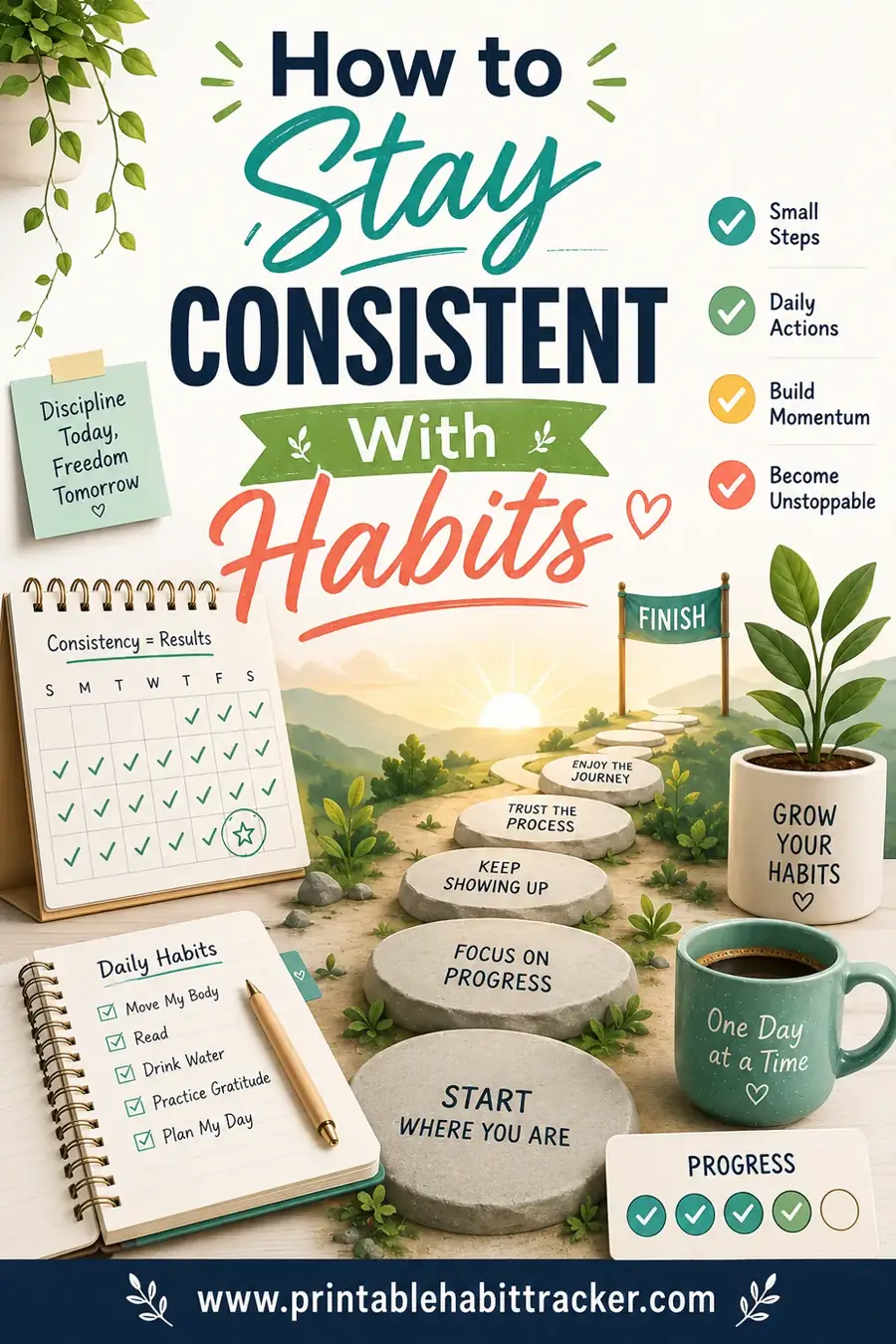
Use the "never miss twice" rule. One empty box is a blip. Two in a row is where habits start to slide. So if you miss tonight, tomorrow's line becomes the most important line of the whole challenge, even if it's four words long.
Don't backfill. It's tempting to write two entries the next night and tick yesterday's box. Leave the empty box empty. An honest tracker with one gap is more useful than a perfect-looking one, because it shows you exactly where your routine broke.
Write down what got in the way. In the margin next to the empty box, jot a short note: "Late dinner," "Fell asleep on the couch," "Journal was in the car." These notes are the most useful thing on the page when you plan your next round.
Don't restart from day 1. Keep counting. If you miss day 9, you go on to day 10 the next night. The goal is 21 days of practice, not 21 days of flawless practice. There's a fuller look at this in what to do when you miss a day.
Troubleshooting common problems
| Problem | Likely cause | Try this |
|---|---|---|
| You keep forgetting at night | Cue is too vague ("before bed") | Tie it to one exact action, like plugging in your phone |
| You fall asleep before writing | Writing is the last step of a long routine | Move it earlier, right after brushing your teeth |
| Entries feel fake or forced | Trying to sound grateful instead of noticing | Use the "small thing" line: just name one real object or moment |
| Every entry says the same thing | No prompts, no details | Use the prompt list and add a name, place or time |
| You skip on weekends | Weekend routine has no cue | Pick a weekend-only cue, like your Saturday morning coffee |
| The tracker gets lost | It's loose paper | Tape it inside the journal cover or on the nightstand |
| You feel guilty about gaps | All-or-nothing thinking | Count ticks, not streaks: "17 of 21" is a strong result |
| Writing takes too long | Entries growing longer each night | Go back to one line; save longer entries for review days |
After Day 21: Keep Going or Change It Up
When you tick box 21, take a moment. Read all your entries from start to finish. Most people find it's a much nicer read than they expected, full of small moments they'd already forgotten.
Then decide what's next. There's no wrong answer.
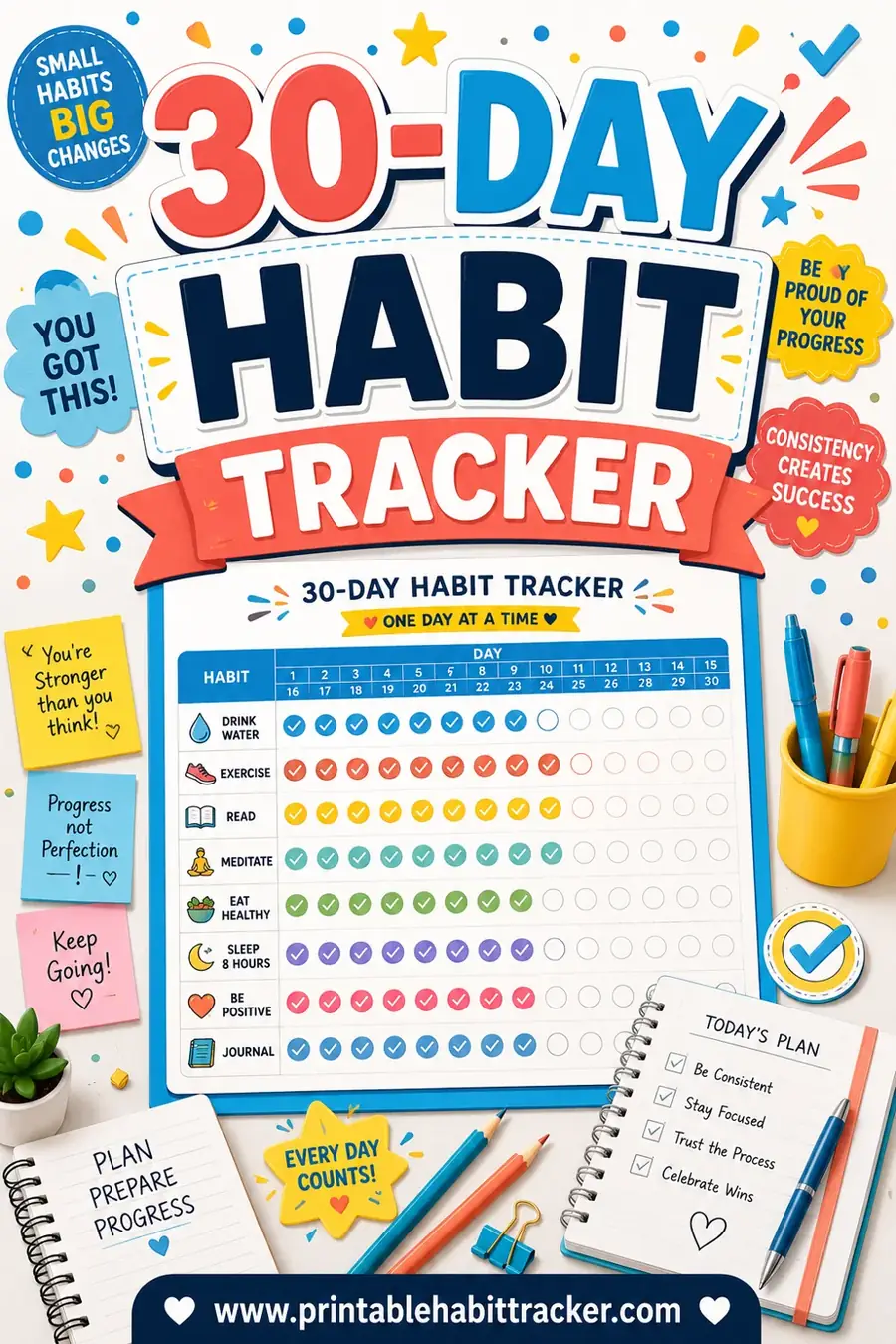
Keep going at the same size. If one line a day feels easy and good, just print a new sheet and keep the same habits. Many people stretch to a 30-day round next. The 30-day habit tracker is a handy format for that, and it lines up neatly with a calendar month.
Grow it a little. If you've been writing one line most nights and adding a second line on some, make two lines your new standard. Change the first habit row to "Write two grateful lines" and leave everything else alone.
Add a related habit. Gratitude pairs nicely with other calm evening habits. Some people add "Put phone away by 9:30" or "Read 10 pages" as a second row once gratitude feels automatic. Add only one new habit at a time, so you don't overload a routine that's working.
Run another 21-day round with new prompts. If you liked having a prompt each day, write your own list of 21 for the next round. Themes help: a "people" round where every entry names a person, a "senses" round about sounds, tastes and smells, or a "this year" round about things that are new in your life.
Switch to a lighter maintenance version. Some people move to three entries a week once the habit feels settled. If you do this, change your layout to Weekly in the free habit tracker maker and add three rows labeled with your chosen days. It's still a habit; it's just shaped to fit a different season of life.
Doing a quick review
Once your 21 days are done, answer these four questions on the back of your tracker:
- How many boxes did I tick out of 21?
- Which days or times did I miss most, and why?
- Which prompt or entry did I like most?
- What one change would make the next round easier?
That short review turns one challenge into a better second one. Keep the answers with your saved PDF so they're right there when you print your next sheet.
Ready to start tonight
Here's the whole plan in a few lines. Pick a cue. Print your tracker. Tuck it into your journal. Write one line tonight and tick the first box. That's day 1, and it's already done.
When you're ready, build this exact tracker in the free maker. It opens with the title, the four gratitude habit rows, the monthly layout and checkbox style filled in, so all you have to do is choose your month, pick a color theme and print. Twenty-one small lines from now, you'll have a notebook full of good moments and a habit that's easy to keep.
Frequently Asked Questions
What is a gratitude habit tracker?
A gratitude habit tracker is a simple chart with one box for each day, which you tick or color in every time you write in your gratitude journal. The journal holds your entries, and the tracker shows your streak at a glance. Seeing a row of ticked boxes makes it much easier to keep going on tired nights.
How long should a gratitude journal entry be?
One line is enough. A single honest sentence counts as a full entry, and keeping it that short is what makes the habit last past the first week. On nights when you feel like writing more, go for it, but don't make long entries your minimum.
Why 21 days?
Twenty-one days is a manageable first goal: long enough to get past the early excitement and short enough that the finish line always feels close. It isn't a magic number, and the real time it takes for a habit to feel automatic varies from person to person. Think of it as a first round you can repeat or extend.
Is it better to write gratitude in the morning or at night?
Either works, so pick the time you can attach to an existing routine. Night entries often focus on what happened that day, while morning entries often focus on what you have and what's ahead. If you're unsure, try nights first, since bedtime routines tend to be more predictable.
What if I can't think of anything to be grateful for?
Use one of the backup prompts, like something warm, something that worked, or a meal you enjoyed. Small, ordinary things count just as much as big ones. On a really hard day, "I got through today" is an honest and complete entry.
Should I restart the 21 days if I miss a day?
No. Leave the box empty, write a short note about what got in the way, and carry on with the next day's number. Try not to miss two days in a row. Finishing with 18 or 19 ticks out of 21 is a strong result.
Can I write my gratitude lines on the tracker instead of a journal?
Yes. Turn on the Notes/goals option in the tool and choose a landscape page, then write each day's line in that space. You'll end up with your streak and all 21 entries on a single sheet, which is easy to keep or pin up.
Can kids use a gratitude tracker?
Yes, and it works well as a family habit. Print one tracker with a row for each person, share one thing at dinner, and let kids tick or color their own box. Keep the prompt simple for younger children, such as "One thing I liked today."