Advent Kindness Calendar Tracker: 25 Days of Kind Acts
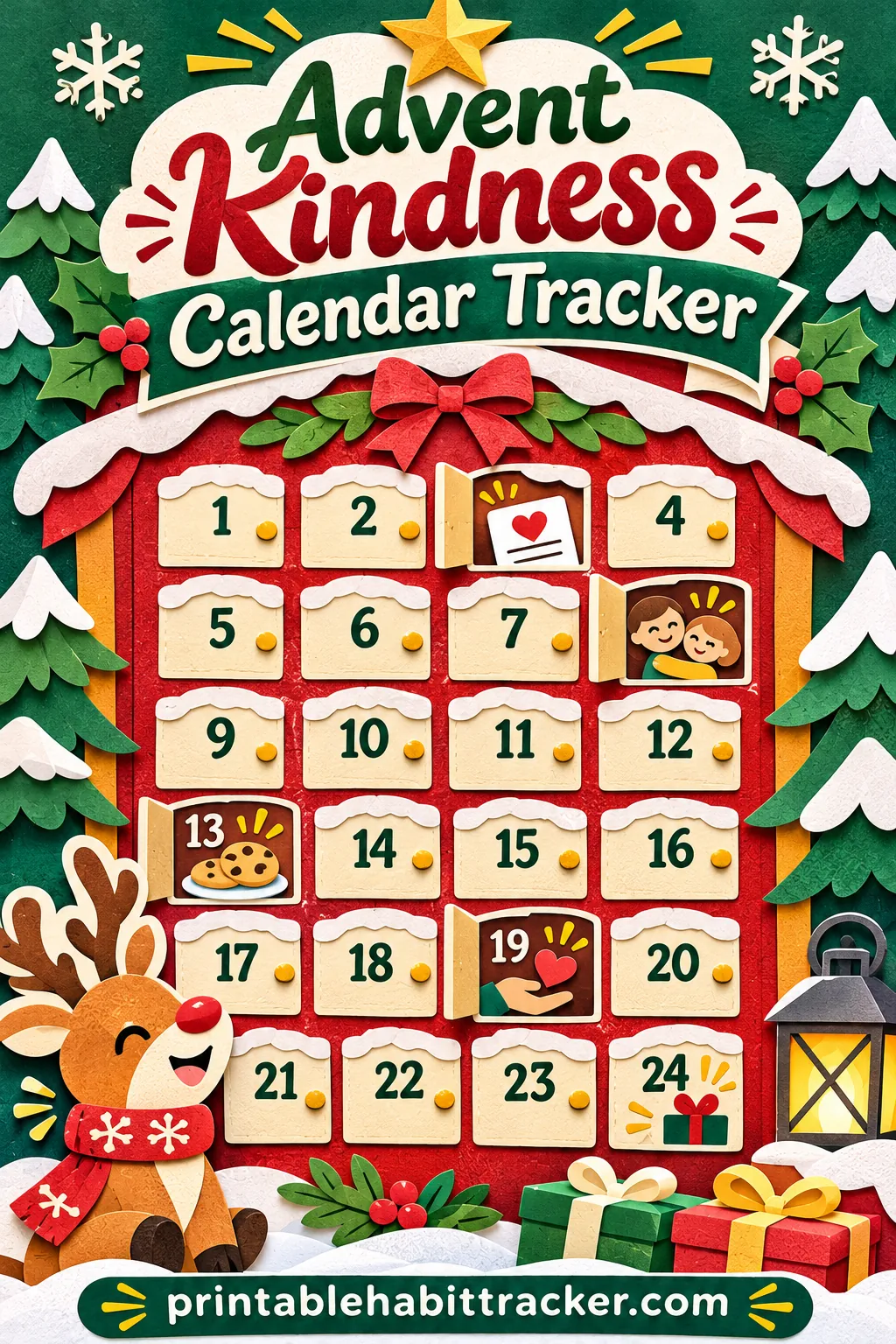
An advent kindness tracker is a December sheet with one box for each day from the 1st to the 25th, where your family colors in a box every time you finish that day's act of kindness. You plan the 25 kind acts ahead, write them on the page or on slips of paper, and the colored boxes become a countdown to Christmas that grows more meaningful each day instead of more sugary.
You can make one in a couple of minutes with the free habit tracker maker on this site. Pick a monthly layout, set the month to December, add a few kindness rows, choose the color-in style and print. If you want to skip the setup, you can build this exact tracker with the title, habits and layout already filled in.
This guide gives you a full list of 25 kind acts (plus extras for different ages), a ready-to-use weekly plan, the exact tool settings, ways to adapt it for toddlers, teens, classrooms and adults living alone, and fixes for the days when the plan falls apart.
Why Swap Candy for Kindness This December
Plenty of families love a chocolate advent calendar, and there's nothing wrong with that. But many parents notice the same thing by about December 6: the little door gets opened, the treat gets eaten in four seconds, and nobody thinks about it again until tomorrow.
A kindness countdown changes what the daily ritual is about. Instead of "What do I get today?" the question becomes "What are we doing for someone today?" That small shift tends to make the whole season feel calmer and more connected.
Here's what a kindness tracker adds that a candy calendar doesn't:
- A shared family moment. Someone reads the day's act aloud, everyone talks about how to do it, and later you color the box together.
- Something to look back on. By Christmas Eve, the sheet is a record of 24 or 25 small good things your family did. Kids often like to count them up.
- Practice, not a lecture. Children learn generosity by doing generous things, again and again, in small doses. Twenty-five days of practice is a lot of practice.
- Room for everyone. A toddler can hand a drawing to a neighbor. A teenager can shovel a walk. A grandparent can write a letter. The same sheet works across ages.
You don't have to drop the treats completely, either. Some families keep a tiny candy or sticker and attach it to the act ("Do today's kindness, then open the door"). Others keep the candy calendar and run the kindness tracker beside it. Do whatever fits your home.
What an Advent Kindness Tracker Looks Like
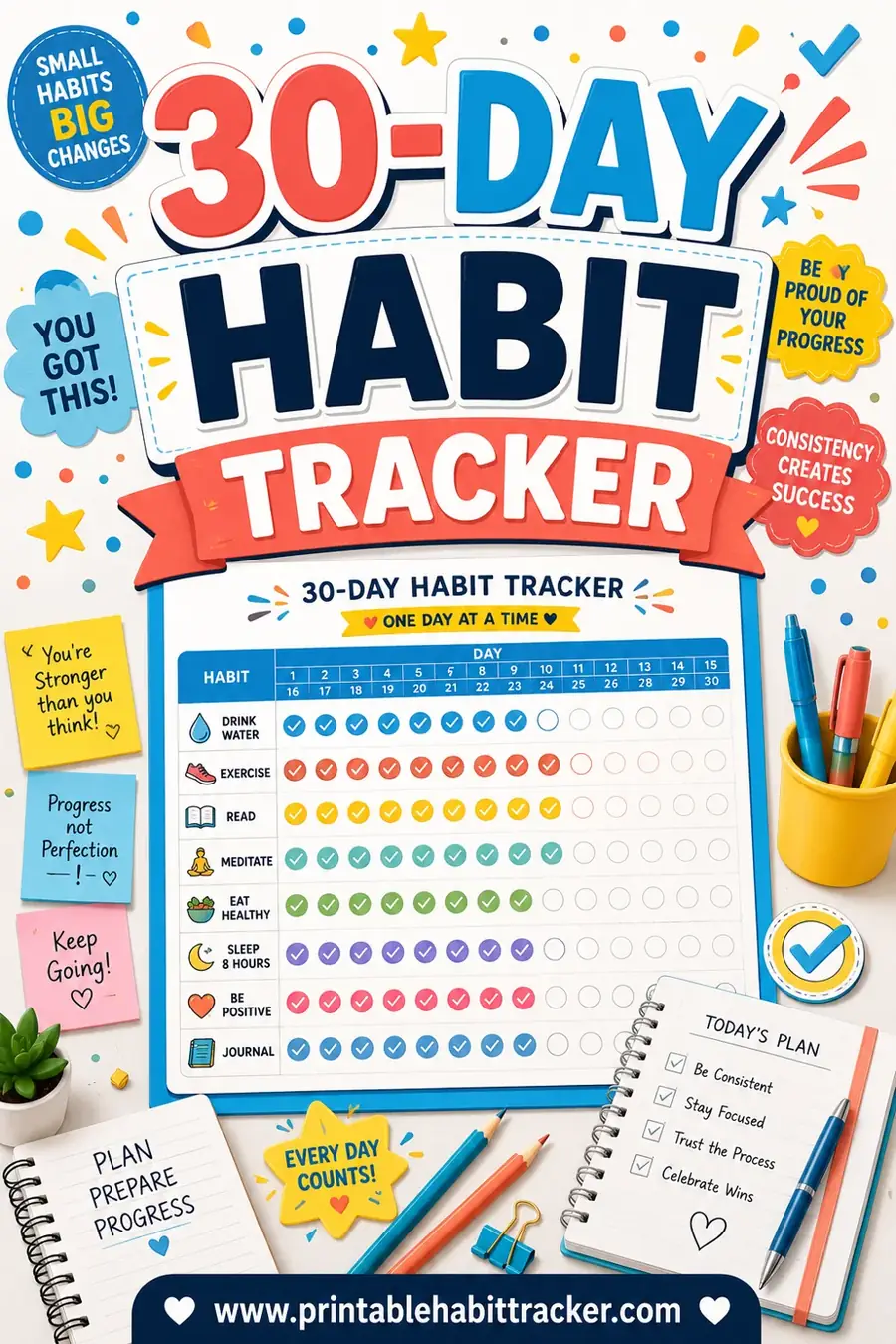
At its simplest, the tracker is a grid with the days of December across the top and one or more rows down the side. Each day, you color in a box when the kindness is done.
There are two common ways to set up the rows.
Option 1: One row, one act per day. A single row labeled "Today's kind act," with 25 boxes. You keep the list of daily acts separately (on a second sheet, in a jar or written on the back) and color one box per day. This is the cleanest version and the easiest for young kids to understand.
Option 2: Several rows of everyday kindness. Rows such as "Said thank you to someone," "Helped at home," "Shared or gave something" and "Kind words before bed." You color whichever boxes your family managed each day. This version turns kindness into a set of daily habits rather than one big task.
Many families combine both: one row for the planned "act of the day" and a few rows for the small daily habits. That's the setup in the preset tracker on this page.
| Setup | Rows | Best for | Downside |
|---|---|---|---|
| One act per day | 1 row: Today's kind act | Toddlers, preschoolers, busy weeks | Less room for everyday kindness |
| Daily kindness habits | 3 to 5 habit rows | Older kids, teens, adults | No special "event" each day |
| Combined | 1 act row plus 3 or 4 habit rows | Families with mixed ages | A little more to color each night |
| Two-person or sibling sheet | Same rows, one sheet per child | Siblings who like their own page | More printing |
| Classroom sheet | 1 act row for the class | Teachers, groups, clubs | Needs a shared spot on the wall |
Dates: December 1 to 24, or 1 to 25?
Traditional advent calendars often run from December 1 to December 24, so the last door is Christmas Eve. "25 days of kindness" usually includes Christmas Day itself. Either works.
A monthly layout in the tool prints all 31 days of December, so you get both options on the page. Just decide where your countdown ends and draw a star or a small tree in that day's box. The days after can stay blank, or you can keep going until New Year's for a "kindness week" after Christmas.
Color-in vs. checkbox
For an advent tracker, the color-in style usually wins. Kids love filling in a square with a red or green marker, and by the end of the month the row looks like a little string of lights. If you'd rather keep things tidy, the checkbox style works too. Adults tracking on their own often prefer checkboxes.
25 Days of Kindness: A Ready-to-Use List
Here's a full list you can use exactly as written. The acts are arranged so the easier, at-home ones come early in the month, the bigger outings fall on weekends in most years, and the warmest family moments land closest to Christmas. Move days around to match your calendar.
| Day | Act of kindness | Who it's for | Time needed |
|---|---|---|---|
| 1 | Make a list together of people you want to be kind to this month | Family | 10 minutes |
| 2 | Write a thank-you note to someone at school or work | Teacher, coworker | 10 minutes |
| 3 | Do one chore for a family member without being asked | Family | 10 minutes |
| 4 | Draw a picture or make a card for a grandparent or older relative | Relative | 20 minutes |
| 5 | Leave a kind note on the bathroom mirror for someone in the house | Family | 5 minutes |
| 6 | Sort toys or clothes and set aside things in good shape to donate | Your community | 30 minutes |
| 7 | Bake or make a simple treat to share with neighbors | Neighbors | 45 minutes |
| 8 | Call or video chat someone who lives far away | Friend, relative | 15 minutes |
| 9 | Pick up litter on your street or at a park (with gloves) | Your neighborhood | 20 minutes |
| 10 | Tell each person at dinner one thing you like about them | Family | 10 minutes |
| 11 | Make a bird feeder or put out seed for birds | Animals | 20 minutes |
| 12 | Write a thank-you card for a mail carrier, delivery driver or crossing guard | Community helpers | 15 minutes |
| 13 | Let someone else choose the movie, game or dinner tonight | Family | No extra time |
| 14 | Drop off donations or collect food for a local food pantry | Your community | 30 to 60 minutes |
| 15 | Make a holiday card for a care home or hospital (check their guidelines first) | Neighbors you haven't met | 30 minutes |
| 16 | Teach someone something you're good at | Sibling, friend | 20 minutes |
| 17 | Hold the door, smile and say hello to everyone you pass today | Strangers | All day |
| 18 | Clean up a shared space at home without being asked | Family | 15 minutes |
| 19 | Read a story to a younger child or a grandparent | Family | 15 minutes |
| 20 | Make a "kindness coupon" (one free hug, one dish washed) for someone | Family | 15 minutes |
| 21 | Help a neighbor: carry groceries, shovel snow, rake leaves | Neighbors | 30 minutes |
| 22 | Write a list of things you're grateful for and share it at dinner | Family | 15 minutes |
| 23 | Wrap a small gift or make a handmade one for someone who might not expect it | Friend, neighbor | 30 minutes |
| 24 | Sing a song, play music or share a family memory with someone | Family, relatives | 15 minutes |
| 25 | Say thank you to every person who made your Christmas special | Everyone | All day |
A few tips for using this list:
- Write the acts on slips of paper and put them in numbered envelopes or a jar. Opening the slip each morning gives you the "door opening" feeling of a classic advent calendar.
- Check the week ahead every Sunday. If Day 14 needs a trip to drop off food, make sure it lands on a day when you can actually go.
- Swap freely. If your family has a tradition that's already kind (caroling, a church service, visiting a relative), put it on the list and count it.
More Acts of Kindness, Sorted by Age and Type
The 25-day list above is a starting point. You'll probably want to swap a few days for ideas that suit your kids, your weather or your schedule. Here are extra acts, grouped so you can grab what fits.
For toddlers and preschoolers (ages 2 to 5)
Little kids need acts that are short, concrete and done with a grown-up. Keep the "kindness" visible: something they can hand over, say or make.
- Give a hug or a high five to everyone in the family
- Put a sticker on a card for a grandparent
- Help feed the pet
- Carry their own plate to the kitchen
- Pick a toy to share with a sibling for the whole day
- Say "thank you" to the person who makes lunch
- Help water a plant
- Make a handprint card for a neighbor
- Put shoes away for a family member
- Choose a book to give to a younger cousin or friend
For school-age kids (ages 6 to 11)
This age can plan a little more and handle simple projects. They also love the counting and coloring part of the tracker.
- Write a note to a classmate who seems lonely
- Make a bookmark for the school librarian
- Help a younger sibling get dressed or brush teeth
- Set the table for the whole family
- Leave a cheerful chalk message on the sidewalk
- Make a "you're awesome" sign for the mail carrier
- Donate a book they've outgrown
- Make paper snowflakes to decorate a neighbor's window
- Invite someone new to play at recess
- Help bake treats for a teacher or coach
For teens (ages 12 to 18)
Teens often roll their eyes at a kids' calendar, but many enjoy acts that feel grown-up and real. Let them pick from a list and track their own row.
- Shovel or sweep a neighbor's walk without being asked
- Babysit younger siblings so parents can go out
- Write an honest thank-you message to a teacher or coach
- Help a grandparent with their phone or computer
- Volunteer for a few hours with a group they choose
- Cook dinner for the family one night
- Leave a positive comment for a friend who's working hard on something
- Return a cart, hold a door or help someone carry bags at the store
- Organize a small clothing or coat drive with friends
- Put their own phone away for a whole family dinner
For adults and families together
These work well for weekends or evenings when everyone can join in.
- Pay a compliment to a store clerk and mean it
- Leave a thank-you note for sanitation workers on trash day
- Check on an older neighbor who lives alone
- Make a care bag with socks, hand warmers and snacks for a local shelter (call first to ask what they need)
- Write letters to relatives you haven't talked to in a while
- Give someone your full attention without looking at a phone
- Forgive a small annoyance and let it go
- Cook a meal for a new parent or someone recovering from illness
Kindness that costs nothing
Many families want to keep the season simple. Every one of these is free:
- Say thank you, out loud and specifically
- Write a note and hide it in a lunchbox, coat pocket or book
- Hold the door, smile and make eye contact
- Listen without interrupting
- Let someone go ahead of you in line
- Share a skill: teach someone to tie a knot, draw, cook or knit
- Tidy a space that isn't yours
- Tell someone what they did that helped you this year
Kindness for animals and the planet
Some kids light up when the act involves animals or the outdoors.
- Fill a bird feeder or hang a pinecone feeder
- Collect old towels or blankets for an animal shelter (ask first what they accept)
- Pick up litter at a park or beach
- Turn off lights and devices when leaving a room
- Plant a seed indoors to give away in spring
- Walk a neighbor's dog, with permission
How to Make Your Advent Kindness Tracker in the Free Tool
You can build this tracker in the free printable habit tracker maker in about two minutes. Here are the exact settings.
- Title. Type something like "Advent Kindness Tracker" or "The Garcia Family's 25 Days of Kindness." Kids like seeing their family name at the top.
- Template chips. You don't need one. If you want a starting point for younger children, the Kids Chores or Reward Chart chips give a kid-friendly feel, and then you can replace the habits.
- Your habits (one per line). Type your rows. For the combined setup, use:
- Today's kind act
- Said thank you to someone
- Helped at home
- Shared or gave something
- Kind words before bed
- Layout. Choose Monthly. This gives you a grid with every day of the month across the page.
- Month. Pick December and the current year.
- Style. Choose Color-in. Kids can fill the squares with markers or crayons.
- Color theme. Sunset or Bold feel festive. Classic B&W saves printer ink and lets kids add all the color themselves.
- Options. Turn on Color-code habits if you want each row in its own shade. Turn on Reward box if you plan a small family celebration at the end. Reflection or Notes/goals give you space to jot down your favorite kindness moment each week.
- Paper. Choose Letter (or A4 if that's your paper size) and Landscape, so all 31 days fit comfortably across the page.
- Click 🖨️ Print / Save PDF. Print one copy for the fridge, or one per child.
If you'd rather not type anything, the preset link near the top of this page loads these exact settings for you. Just open it, check the month and print.
A one-row version for little kids
For a preschooler, simplify. Use a single habit line, "Today's kind act," keep the Monthly layout and Color-in style, and turn off the extra options. One big row of boxes is easy to read and very satisfying to fill.
A chain version for older kids
The tool also has a Chain layout, where each day is a link in a chain. That can be a fun twist for kids who've already done a grid tracker. Every kind act adds a link, and the finished chain on Christmas Eve looks like a paper garland.
A 25-box version
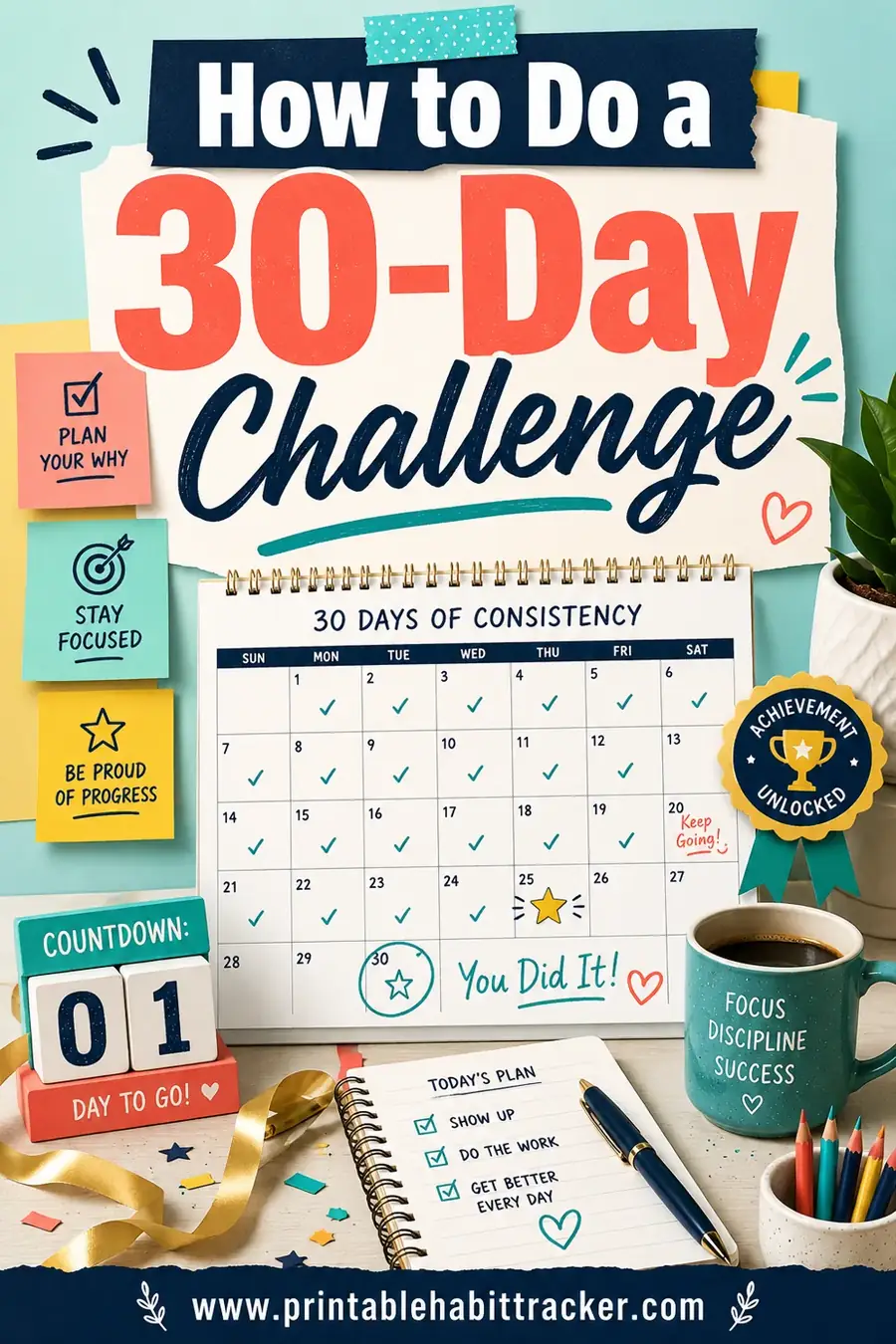
If you want exactly 25 boxes and nothing else, the 30-day habit tracker page shows how to set up a numbered challenge grid. Number your boxes 1 to 25 and leave the rest blank, or cross them out with a small star. This is handy when you start your kindness countdown on a day other than December 1, such as the first Sunday of Advent.
Setting Up Your Family's Kindness Routine
The tracker is the easy part. What makes it work is a tiny daily routine around it. Here's a simple one most families can keep going for 25 days.
Morning (2 minutes): Reveal the act. At breakfast, someone opens the envelope or reads the next line from the list. Talk for a moment about when and how you'll do it. "Day 12: thank-you card for the mail carrier. We'll make it after school and tape it to the mailbox."
During the day: Do it. Some acts happen on their own (holding doors, saying thank you). Others need a moment carved out. Put the bigger ones on the family calendar.
Evening (3 minutes): Color the box. After dinner or at bedtime, gather around the tracker. Let one person color the box for the day's act, and color any habit rows you managed. Ask a quick question: "How do you think they felt?" or "What was the best part?"
Sunday (10 minutes): Look ahead. Glance at the next seven days. Move any acts that won't fit, and gather supplies for crafts or bake days.
Who colors the box?
In families with more than one child, decide this early to avoid squabbles. A few approaches:
- Take turns. One child colors on odd days, another on even days.
- Each child gets their own row. Add a line for each child's name and let them color their own.
- Each child gets their own sheet. Print a copy per kid. Some kids love having a page that's entirely theirs.
Where to put it
Put the tracker somewhere you'll see it every day: the fridge, a door near the breakfast table, or inside a kitchen cabinet. Keep the markers or crayons right next to it, in a cup or a clip. If you have to hunt for a pen, the box often stays blank.
Pair it with an existing habit
Hang the kindness reveal on something you already do every day, like breakfast or the school drop-off. Tying a new routine to an old one is the idea behind habit stacking, and it's one of the simplest ways to keep a 25-day routine going through a busy month.
Variations for Different Households
The same tracker bends to fit almost any home. Here's how to adapt it.
Faith-centered Advent
If your family observes Advent as a season of preparation, you can line the kindness tracker up with the four Sundays of Advent instead of December 1. Start on the first Sunday, add one kind act per day, and use the Sundays for bigger family acts like serving together or visiting someone. Some families pair each week with a theme such as hope, peace, joy and love, and choose acts that fit the theme. Your church or faith community may also have a giving project you can fold into the list.
Classroom kindness countdown
Teachers can run one tracker for the whole class. Print it large (Landscape, one row: "Our class kind act") and post it by the door. Each morning, read the act; at the end of the day, a student colors the box. Keep acts school-friendly: thank-you notes for the custodian, cards for another class, a "compliment circle," cleaning up the classroom library. Because the school break usually starts before Christmas, plan for 12 to 15 school days and send a short at-home list for the rest. Check your school's guidelines before planning any collection or outside visit.
Adults living alone or couples
Grown-ups can absolutely do a kindness advent. It's a lovely antidote to a December that feels rushed or lonely. Try rows like "Reached out to someone," "Kind act for a stranger," "Something kind for myself" and "Gratitude note." Couples can share one sheet and take turns choosing the day's act. A small notes box at the bottom is handy for remembering who you called or wrote to.
Grandparents and long-distance family
If the kids live far from grandparents, make the tracker a joint project. Both homes print the same sheet, do the same acts on the same days and compare on a weekly video call. Kids love hearing that Grandma also left a note for her mail carrier.
Kids with big feelings or attention challenges
For kids who struggle with transitions or long lists, keep the tracker very simple: one row, one act, a picture on each envelope instead of words. Give them choices ("Do you want to make a card or help feed the dog?"). Celebrate effort over perfection. The habit tracker for kids page has more ideas for making a chart feel encouraging rather than like a test.
Busy weeks and shift-working parents
If evenings are packed, make every weekday act a "small" one (a note, a thank-you, a chore) and save the bigger outings for days off. It's fine for Day 7 and Day 14 to swap places. What matters is that the boxes get filled over the season, not that you follow a list to the letter.
When the Plan Falls Apart (and It Will a Little)
No family gets through December without a sick day, a late night or a forgotten envelope. Here's how to handle the common snags.
| Problem | What's happening | Try this |
|---|---|---|
| We forgot a day | Busy evening, no reveal in the morning | Do two small acts the next day, or simply leave the box blank and start fresh |
| Kids are bored by Day 10 | The acts feel repetitive | Add a surprise act, let a child invent the next one, or switch to a chain layout |
| Siblings fight over coloring | Everyone wants the marker | Take turns by date, or give each child a row or a sheet |
| The act needs supplies we don't have | Craft or baking day | Swap with an at-home act and move the bigger one to the weekend |
| Someone is sick | A kid or parent is home in bed | Do a cozy act: a card, a phone call, a thank-you note from the couch |
| Teen won't join in | Feels babyish | Give them their own adult-style row and let them pick acts |
| We're traveling | Away from the tracker | Snap a photo of the sheet, keep a list on paper, and color the boxes when you're home |
| The act feels forced | Kindness turns into a chore | Shorten the list to weekdays only, or pick a smaller act |
The most important rule: a blank box is not a failure. If you miss a day, the kind thing to do for yourself is to start again tomorrow. Our guide on what to do when you miss a day explains why getting back on track quickly matters more than an unbroken row.
Keeping kindness genuine
Sometimes kids start doing kind acts mainly to color the box. That's normal, and it isn't a problem; practice comes first and feelings often follow. You can gently steer things back by asking about the other person: "How did Mr. Lee look when he saw the card?" Over time, that question becomes the reward.
Try not to turn the tracker into a reward chart where each box earns a prize. If you want a celebration, keep it shared and simple (more on that below).
Wrapping Up Your Kindness Countdown
When Christmas arrives, take a few minutes to look back at the tracker together. It's a small ritual, but it's the part many families remember.
Count the boxes. Ask the kids to count how many kind acts the family did. Write the number big at the bottom of the sheet.
Pick favorites. Go around the table and let everyone name their favorite act and why. Write these in the Reflection or Notes box.
Celebrate together. If you turned on the Reward box, fill it in now. Ideas: a family movie night, a winter walk with cocoa, letting the kids choose a special breakfast, or a game night. Keep the celebration about doing something together, not about stuff.
Save the sheet. Tuck it into a holiday box with the ornaments. Next December, pull it out before you plan the new list. Kids love seeing what they did "when they were little," even if it was only last year.
Keep one habit going. Most families find one kindness habit they want to keep, such as a thank-you note each week or saying something kind at dinner. Move it to a regular tracker for January. The guide on how to track family habits shows simple ways to keep a shared habit going all year.
Planning next year's list
While it's fresh, jot down a few notes for next December:
- Which acts did the kids love?
- Which ones didn't fit your schedule?
- Who would you like to include next year?
- Did your countdown end on the 24th or 25th, and which felt better?
Keep the notes with the saved tracker. Next year, you'll have a head start.
Ready to print your kindness countdown?
A kindness tracker turns December into 25 small chances to make someone's day better, and it gives your family a calm daily ritual in the busiest month of the year. Plan your acts, put the sheet where everyone can see it and keep the markers close.
When you're ready, build this exact tracker with the title, kindness rows, monthly layout and color-in style already filled in. Change anything you like, set the month to December and print one for the fridge.
Frequently Asked Questions
What is an advent kindness tracker?
It's a December countdown sheet where your family colors in a box for each day you complete an act of kindness. Instead of opening a door for a treat, you do something kind for someone. By Christmas, the page shows every good thing you did together.
Should the countdown run to December 24 or 25?
Either works. Traditional advent calendars usually end on Christmas Eve, so 24 acts is a common choice. "25 days of kindness" includes Christmas Day, which is a nice day for a big family thank-you. A monthly tracker prints all of December, so you can pick either end point.
What age is a kindness advent calendar good for?
Kids as young as two can join in with simple acts like hugs, sharing and handing over a drawing. School-age kids enjoy the planning and coloring, and teens and adults can take on bigger acts like volunteering or helping neighbors. Adjust the list for each child's age.
Do we need to spend money on the acts of kindness?
No. Plenty of the best acts are free, like thank-you notes, helping at home, listening, holding doors and calling relatives. If your family wants to include donations, choose items you already have, such as outgrown clothes, books or toys in good shape.
How do I make the tracker with a different number of days?
Use the monthly layout and simply mark your start and end days, leaving the others blank. If you start on the first Sunday of Advent, color a star in that box and count from there. You can also number a 30-day style grid and use only the first 24 or 25 boxes.
What if my kids only want to do kind acts for the reward?
That's common at first and not something to worry about. Doing kind things repeatedly is how kids practice kindness. Keep the focus on the other person by asking how they felt, and keep any end-of-month celebration shared and simple instead of a prize per box.
Can a classroom use an advent kindness tracker?
Yes. Post one large sheet with a single "class kind act" row, read the act in the morning and let a student color the box at the end of the day. Plan for the school days before winter break and follow your school's guidelines for any collections or visits.
What should we do with the tracker after Christmas?
Count the colored boxes, share favorite moments and write them in the notes area. Then save the sheet with your holiday decorations so you can look back next year. Many families also pick one kindness habit to keep tracking in January.