Sunday Meal Prep Habit Tracker: Plan, Shop, Prep and Actually Cook
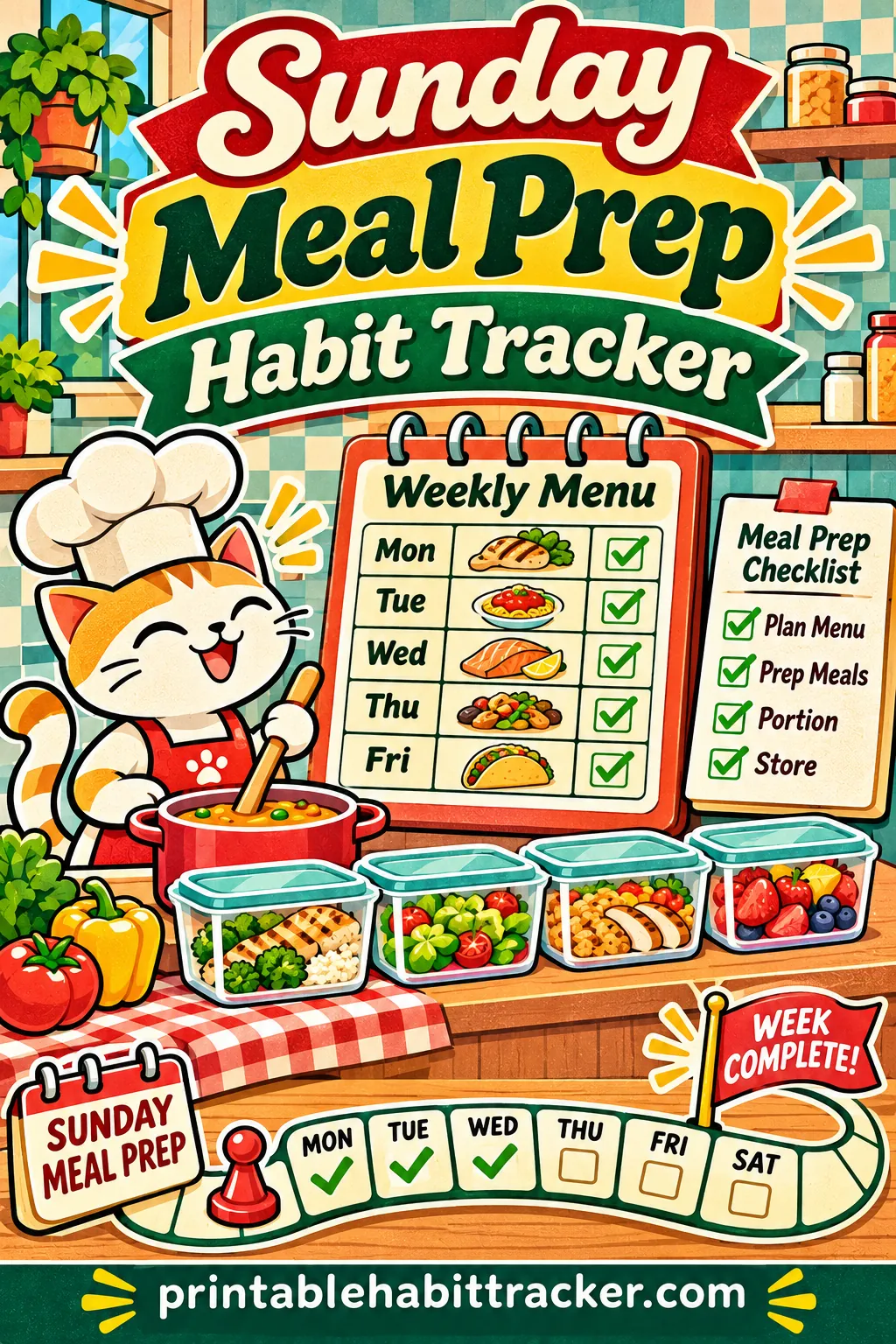
To build a meal prep habit that survives past Sunday, track the whole chain on one weekly page: plan, shop, prep, then a small daily cook-and-eat box for every weekday. Most people don't fail at Sunday. They fail on Wednesday, when the prepped chicken is still in the fridge and takeout sounds easier. A tracker that follows the food all the way to your plate fixes that gap.
You can make this exact sheet in a couple of minutes with the free habit tracker maker on our homepage. Pick a weekly layout, type your prep steps, and print. If you'd rather skip the setup, build this exact tracker and it opens with the habits below already filled in.
This guide walks you through why Sunday plans fall apart, what to put on the sheet, a full Sunday prep checklist, a weekday follow-through system, menu ideas that hold up for four or five days, and what to do when a week goes sideways.
Why Your Sunday Meal Plan Falls Apart by Wednesday
Sunday you is optimistic. Sunday you has time, energy and a clean fridge. Wednesday you is tired, hungry at 6:40 p.m. and staring at containers that suddenly look boring.
That's not a willpower problem. It's a design problem. Most meal prep systems only track the fun, organized part of the week: writing the plan and doing the big cook. Nothing tracks whether you actually ate what you made. So the habit quietly breaks in the middle, and you don't notice until you're scraping wilted greens into the trash on Saturday.
Here are the usual places the chain snaps:
- The plan was too ambitious. Seven new recipes, three of them complicated, and no room for a busy night.
- The shopping trip didn't match the plan. You forgot an ingredient, so one meal never happened.
- Prep ran long. You planned to prep four things and ran out of steam after two.
- No one decided when each meal gets eaten. The food exists, but there's no "Tuesday is the chili" decision.
- Leftovers piled up. The fridge got crowded, things got pushed to the back, and the back of the fridge is where food goes to be forgotten.
- One off night turned into an off week. You ordered out Monday and felt like the week was already "ruined."
A weekly habit tracker turns each of those into a small, visible box. When the box for "Pack tomorrow's lunch" is empty two nights in a row, you see it on Thursday instead of discovering it at the end of the week.
What a Meal Prep Habit Tracker Actually Tracks
Think of your week as four stages. Each stage gets its own row or set of boxes on the page.
| Stage | When it happens | What you check off | Why it matters |
|---|---|---|---|
| Plan | Saturday or Sunday morning | Dinners chosen, nights assigned, list written | A plan with nights attached is a plan you'll follow |
| Shop | Saturday or Sunday | Shopped from the list, nothing major missed | Missing one ingredient can sink a whole meal |
| Prep | Sunday afternoon | Proteins cooked, veggies washed and chopped, grains made | This is the work that makes weeknights easy |
| Cook and eat | Monday to Friday | Dinner made or reheated, lunch packed, leftovers used | The part most trackers skip, and the part that counts |
The first three stages each get one check per week. The fourth stage gets a check every weekday. That's what makes this different from a to-do list. A to-do list says "meal prep: done" on Sunday night. A habit tracker asks every single evening whether the prep paid off.
The core habits to list
Here's a starter list. Use it as is, or swap lines to match your household.
- Plan 5 dinners
- Shop from the list
- Prep 2 proteins
- Wash and chop veggies
- Pack tomorrow's lunch
- Cook or reheat dinner
- Use up leftovers
Seven lines fit comfortably on a weekly page with room to spare. If that feels like a lot, start with three: "Prep on Sunday," "Pack tomorrow's lunch," and "Eat a home dinner." You can always add lines next month. The guide on how many habits to track at once explains why starting small usually wins.
Optional lines worth adding
Once the basics feel normal, these lines tend to help:
- Check the fridge before planning. Cuts waste because you plan around what you already have.
- Thaw tomorrow's protein. A two-second evening task that saves dinner the next day.
- Run the dishwasher after prep. Clean containers on Wednesday mean the mid-week mini prep actually happens.
- Mid-week mini prep. Fifteen minutes on Wednesday to chop more veggies or cook a fresh batch of rice.
- Breakfast ready. For people who skip breakfast because there's nothing grab-and-go.
- Drink water with lunch. A good stacked habit if you're also working on hydration.
How to Make Your Meal Prep Tracker in the Free Tool
You don't need to draw a grid or hunt for a template. The habit tracker maker on the homepage builds and prints it for you. Here are the exact settings that work best for a meal prep habit.
Step 1: Title. Type "Sunday Meal Prep Tracker," or something personal like "Our Week of Home Dinners."
Step 2: Template chip (optional). Tap Meals & Nutrition if you want a starting point, then replace the sample lines with your prep steps. You can also skip the chip and type everything yourself.
Step 3: Your habits (one per line). Paste or type the seven core habits from the list above, one per line. Keep each one short so it fits the row.
Step 4: Layout. Choose Weekly. A weekly grid gives you seven columns, Monday through Sunday, which matches the natural rhythm of meal prep. Daily is too zoomed in, and monthly is too spread out to show the Sunday-to-Friday chain.
Step 5: Style. Checkbox is easiest to fill in with a pen while you're cooking. Pick Color-in if you like coloring a box with a marker as a small reward.
Step 6: Color theme. Sage feels kitchen-friendly and prints softly. Classic B&W saves ink.
Step 7: Options. Turn on Notes/goals so you can write the week's dinners at the bottom. Turn on Reflection if you want a line to note what worked. Streak boxes are a nice touch once you've done a few weeks in a row.
Step 8: Paper. Letter or A4, whichever your printer uses. Landscape gives longer rows, which helps if your habit names are wordy.
Step 9: Print. Hit 🖨️ Print / Save PDF. Print four or five copies so you have a month ready.
Want to skip steps 1 through 5? Build this exact tracker and it opens with the title, habits, weekly layout and checkbox style already set. You can still change anything before you print.
The Sunday Meal Prep Checklist, Start to Finish
A good Sunday prep has an order. Doing things in the right sequence saves you from standing around waiting for the oven, and it keeps the kitchen from turning into chaos. Here's a practical run of show you can follow, with rough times for a typical two-to-four-person household.
Before you shop (15 to 20 minutes)
- Look in the fridge, freezer and pantry. Write down anything that needs using this week.
- Pick five dinners. Leave the other two nights for leftovers, a simple fallback or eating out.
- Assign each dinner to a night. Put the quickest meal on your busiest night.
- Pick one or two lunches you'll repeat. Repeating lunch is normal, and it makes prep far easier.
- Decide on breakfast if you want to prep it: overnight oats, egg muffins, or just boiled eggs and fruit.
- Write the shopping list grouped by store section: produce, dairy, meat, pantry, frozen.
At the store (time varies)
- Stick to the list. Add an item only if it replaces something on the plan.
- Buy one backup meal: something shelf-stable or frozen you can make in ten minutes if a night falls apart.
- Check dates on anything you plan to eat late in the week.
Prep session (90 minutes to 2 hours)
Here's an order that keeps everything moving:
- Preheat the oven and start the grain. Rice, quinoa or pasta can cook while you do everything else.
- Get proteins in the oven. Sheet-pan chicken thighs, a tray of meatballs, baked tofu or roasted chickpeas. Two proteins give you enough variety for the week.
- Roast a big tray of vegetables on the other rack: broccoli, sweet potatoes, peppers, onions, whatever's in season.
- While things roast, wash and chop raw veggies for snacks, salads and quick sautés. Store them in containers lined with a paper towel.
- Make one sauce or dressing. A simple vinaigrette, a yogurt sauce or a peanut sauce makes the same base ingredients taste different on different days.
- Boil eggs if you eat them. They're the easiest grab-and-go protein there is.
- Cool, portion and label. Let hot food cool a bit before lidding it. Write the day or meal on each lid with tape and a marker.
- Wash up and run the dishwasher. Starting Monday with a clean kitchen is part of the habit.
When you finish, check off "Prep 2 proteins" and "Wash and chop veggies" on your tracker. That little moment of ticking the box is worth more than it looks. It marks the end of the session and makes it feel complete.
Food safety basics
Follow trusted food safety guidance for how long cooked food keeps in the fridge, and use your judgment. A common, cautious approach is to keep the first few days' meals in the fridge and freeze anything planned for Thursday or Friday, then move it to the fridge to thaw the night before. When in doubt, throw it out. Your tracker can include "Move Friday's meal to fridge" as a Thursday-night line if that's your system.
The Weekday Follow-Through System
This is the part that makes the difference. Sunday prep only counts if the food gets eaten. These small daily habits are what carry the plan from the fridge to the table.
The evening five-minute reset
Every weeknight, after dinner, spend five minutes on tomorrow:
- Pack tomorrow's lunch and put it front and center in the fridge.
- Check what tomorrow's dinner is and move anything frozen to the fridge.
- Put dirty containers in the dishwasher or sink, not on the counter.
- Check the boxes on your tracker.
That last step matters. Keep the tracker on the fridge door with a pen clipped to it. Checking the boxes right after the reset ties the two habits together. This is a simple form of habit stacking, where you link a new action to something you already do. If you want to go deeper on that idea, see habit stacking explained.
Give every container a night
One reason prepped food goes uneaten: it's just "food in the fridge," not "Tuesday's dinner." When each meal has a night, the decision is already made, and decision fatigue is what pushes you toward takeout at 6:40 p.m.
Write the week's dinners in the Notes/goals section at the bottom of your tracker. It might look like this:
- Mon: Sheet-pan chicken, roasted veggies, rice
- Tue: Chicken burrito bowls with the same base
- Wed: Pasta with meatballs and a side salad
- Thu: Leftover night
- Fri: Backup meal or eat out
- Sat: Cook something fresh and fun
- Sun: Simple dinner after prep
The "cook or reheat" box
The "Cook or reheat dinner" line counts any home dinner from your plan. Reheating counts. Assembling a bowl from prepped parts counts. A ten-minute backup meal counts. The point isn't to cook from scratch every night. It's to eat the food you already invested in.
The "use up leftovers" box
Check this one on any day you eat leftovers or turn them into something new. It's a quiet anti-waste habit. Over a few weeks, you'll notice whether leftovers are getting eaten or getting forgotten, and that tells you whether to prep less.
A Sample Week on the Tracker
Here's what a realistic, good-but-not-perfect week looks like on the page. A check means done, a dash means skipped or not needed.
| Habit | Mon | Tue | Wed | Thu | Fri | Sat | Sun |
|---|---|---|---|---|---|---|---|
| Plan 5 dinners | – | – | – | – | – | ✓ | – |
| Shop from the list | – | – | – | – | – | – | ✓ |
| Prep 2 proteins | – | – | – | – | – | – | ✓ |
| Wash and chop veggies | – | – | ✓ | – | – | – | ✓ |
| Pack tomorrow's lunch | ✓ | ✓ | – | ✓ | – | – | ✓ |
| Cook or reheat dinner | ✓ | ✓ | ✓ | ✓ | – | ✓ | ✓ |
| Use up leftovers | – | ✓ | – | ✓ | – | ✓ | – |
Notice what this week shows. Lunch was skipped Wednesday night, which probably means Thursday lunch was bought out. Friday was a takeout night, which was planned. Wednesday had a quick mid-week veggie top-up. That's a successful week. Six home dinners out of seven is a big win compared to a week with no plan at all.
When you look back on Sunday, ask one question: where did the chain break? If it's always the same box, that box needs a fix, not more effort.
Meal Prep Menus That Hold Up All Week
Some foods prep beautifully. Others turn sad by day three. Choosing the right recipes is half the habit, because food you look forward to eating is food you'll actually eat.
Proteins that reheat well
- Chicken thighs (they stay juicier than breasts when reheated)
- Meatballs, beef or turkey
- Shredded chicken or pork from a slow cooker
- Ground meat cooked with onions and spices for tacos or bowls
- Baked tofu or tempeh
- Lentils and beans, cooked from dry or rinsed from cans
- Hard-boiled eggs
- Roasted chickpeas for crunch
Bases that stretch into different meals
- Rice, brown or white
- Quinoa or farro
- Pasta, slightly undercooked so it doesn't go mushy on reheating
- Roasted potatoes or sweet potatoes
- Tortillas and wraps (no cooking needed)
Vegetables that last
- Roasted: broccoli, cauliflower, carrots, peppers, onions, squash, Brussels sprouts
- Raw and sturdy: carrots, cucumbers, celery, snap peas, cabbage, bell peppers
- Leafy greens: store washed and dried, add to meals the day you eat them
Sauces that change the flavor
- Lemon and olive oil vinaigrette
- Yogurt with garlic and herbs
- Peanut or sesame sauce
- Salsa or pico de gallo
- Simple tomato sauce
- Pesto
With two proteins, two bases, two trays of veggies and two sauces, you can build a different-tasting meal almost every night. Monday is chicken, rice and roasted veggies with lemon dressing. Tuesday is the same chicken in a tortilla with salsa. Wednesday is meatballs over pasta. Same prep, very different dinners.
If you want to track what you're eating, not just whether you cooked, our meal and nutrition tracker covers food logging, and you can run both sheets side by side.
Tracker Variations for Different Households
The seven-line tracker works for most people, but a few small tweaks make it fit your real life. Pick the version closest to your situation and adjust the habit lines in the tool.
Cooking for one
Prepping for one person often means too much food and too much repetition. Shrink the plan and lean on the freezer.
- Plan 3 dinners
- Prep 1 protein and 1 grain
- Freeze 2 portions
- Pack tomorrow's lunch
- Eat a home dinner
Freezing a couple of portions each week builds a small stash of ready meals, so by week three you have variety without extra cooking.
Couples
Split the work and track both names. Add a line like "Prep partner: switch weekly" to the notes, or give each person a habit: one plans and shops, the other preps. Keep it a shared plan, not a scorecard.
Families with kids
Kids are more likely to eat food they helped make. Give them a job and a box.
- Plan dinners together (kids pick one)
- Shop from the list
- Prep with a helper
- Pack school lunches the night before
- Family dinner at home
- Kitchen cleanup together
Younger kids can wash produce, tear lettuce, measure rice or stick labels on containers. Older kids can chop with supervision or pack their own lunches. A color-in style tracker works well here, since kids love coloring a box when their job is done.
Shift workers and irregular schedules
If your "Sunday" isn't a Sunday, that's fine. Pick your longest day off as prep day and relabel it. Change the habit to "Prep on my day off." Focus on grab-and-go meals that work at any hour, like wraps, grain bowls and soups you can heat in a work microwave.
Tight grocery budgets
Planning around what's already in your kitchen and what's on sale is one of the most reliable ways to stretch a grocery budget. Add these lines:
- Check pantry before planning
- Plan around sale items
- Stick to the list
- Zero food thrown out
Pair it with our budget tracker if you want to see your grocery spending come down over a few months. You don't need to log exact amounts on the meal prep sheet itself. The habit boxes do the work.
Total beginners
If you've never meal prepped, don't start with a full Sunday session. Start with one thing.
- Week 1: Cook a double batch of one dinner and eat it twice.
- Week 2: Add packed lunches for three days.
- Week 3: Prep one protein and one tray of veggies on Sunday.
- Week 4: Try the full seven-line tracker.
Each week, the tracker only has the lines you're working on. That way, a full page of checks feels possible, and a full page of checks feels good.
Busy weeks, holidays and travel
Some weeks a full Sunday session just isn't going to happen. Travel, a birthday, a work deadline or a holiday weekend can wipe out your usual prep time. Don't skip the tracker those weeks. Change it.
Swap the regular lines for a lighter "survival week" version:
- Plan 3 easy dinners
- Stock 2 backup meals
- Pack lunch 3 days
- Eat a home dinner
Three easy dinners might be a pot of soup, a sheet-pan meal and a frozen meal from your stash. Checking these smaller boxes keeps the habit alive, so you don't have to rebuild it from zero the following week. It's much easier to scale back up from a light week than from no week at all.
Troubleshooting: When the Habit Keeps Breaking
Look back at your tracker each Sunday before you plan the new week. Find the box that's empty most often, then use this table to fix it.
| What the tracker shows | Likely cause | Try this |
|---|---|---|
| Prep boxes empty most Sundays | Prep session feels too big | Cut to one protein and one veggie tray, or split prep into Saturday and Sunday |
| Prep done, but dinner boxes empty | Food has no assigned night or feels boring | Write a night on each container and add a new sauce |
| Lunch box empty on certain days | Evening reset gets skipped | Pack lunch while dinner reheats, not after |
| Leftovers box never checked | You're making too much | Prep one fewer portion or freeze half right away |
| Whole week falls apart after one takeout night | All-or-nothing thinking | Add a planned "flex night" so one off night is part of the plan |
| Shopping box checked, but meals missing ingredients | List was written from memory | Write the list while looking at each recipe |
| Food going bad by Thursday | Late-week meals stored in fridge too long | Freeze Thursday and Friday portions on Sunday |
| You dread Sunday | Prep took over your whole afternoon | Set a timer for 90 minutes and stop when it rings |
Missing a day or even a whole week isn't the end of the habit. It's just information. The guide on what to do when you miss a day walks through how to get back on track without starting over from scratch.
Your Monthly Meal Prep Review
At the end of each month, lay your four or five weekly sheets side by side. You'll see patterns that a single week can't show.
Ask yourself:
- How many home dinners did I eat each week? Write the number at the top of each sheet. Is it going up?
- Which meals did I actually enjoy? Circle them on the notes section. They go into next month's rotation.
- Which meals did I skip or throw out? Cross them off your list for good.
- Which box is weakest? That's next month's focus. Add one small fix, not five.
- Did prep take less time by the end of the month? It usually does as you learn the order.
Keep a running list of "keeper" meals on the back of your tracker or in a notebook. After two or three months, you'll have a rotation of ten to fifteen dinners that your household likes and that you can prep without thinking. That's when the meal prep habit stops feeling like a project and starts feeling like a normal part of your week.
Make It Stick: Small Tips That Help
- Keep the tracker where the food is. On the fridge, inside a cabinet door, or on a clipboard by the stove. Out of sight is out of mind.
- Put the pen on a string. If you have to look for a pen, you won't check the box.
- Celebrate a full week. Turn on the Reward box option in the tool and write a small, non-food treat for a week with five or more home dinners: a new podcast episode, a long bath, an early night.
- Plan on the same day every week. Saturday morning coffee plus planning is a lovely ritual.
- Use the same containers. Matching containers stack neatly and make portioning faster.
- Keep a backup meal in the pantry at all times. It's the safety net that keeps one busy night from becoming a takeout week.
- Don't aim for perfect. Five home dinners out of seven is a great week. So is four, if you were eating out every night before.
Print Your Meal Prep Tracker Today
You don't need a fancy planner or a new app to make meal prep stick. You need a page that follows your food from the Sunday plan all the way to Friday's dinner, and a pen to check the boxes. Start with the seven lines in this guide, or trim them to three if you're just getting going.
Ready? Build this exact tracker, print a month of weekly pages, and put the first one on your fridge before Sunday. Want to design your own version from scratch with different habits, colors or a color-in style? Head to the free habit tracker maker and make it yours.
Frequently Asked Questions
How do I start a meal prep habit if I've never done it?
Start with one small step, like cooking a double batch of one dinner and eating it twice. Track just that one habit for a week. Add packed lunches the next week, then a short Sunday prep session. Building up slowly makes it far more likely to stick.
How long should Sunday meal prep take?
For most households, 90 minutes to two hours is plenty once you know the order. Your first few sessions may take longer. Setting a timer helps keep prep from swallowing your whole afternoon.
Should I use a weekly or monthly layout for meal prep?
Weekly works best. Meal prep runs in a weekly cycle, from Sunday planning to Friday dinner, and a weekly grid shows that whole chain on one page. Monthly layouts make it hard to see where in the week things are breaking.
What should I do if I skip a prep day?
Do a mini prep instead. Cook one protein and one grain on Monday night, or lean on your backup meals for a few days. Check the boxes you did complete and start fresh next Sunday.
How do I stop wasting prepped food?
Assign every meal to a specific night, freeze late-week portions on Sunday, and track a "use up leftovers" habit. If leftovers keep piling up, prep a little less next week. Your tracker will show you the right amount within a few weeks.
Can I track meal prep for the whole family on one sheet?
Yes. List shared habits like "Family dinner at home" and add jobs for each person, such as "Kids pack lunches." A color-in style works well for kids. Keep the sheet on the fridge so everyone can see it.
Do I have to eat the same thing every day?
No. Prep a few building blocks, like two proteins, two bases, roasted veggies and a couple of sauces, then mix them into different meals. The same chicken can become a rice bowl, a wrap and a salad topper across three days.
What's the difference between a meal plan and a meal prep habit?
A meal plan is a list of what you'll eat. A meal prep habit is the repeated routine of planning, shopping, prepping and following through every week. The tracker turns the plan into a habit by giving you a box to check at every step.