Best Habit Tracking Methods Compared (2026)
The best habit tracking methods all share one idea: make your progress visible so you don't want to break the streak. A free printable tracker, a habit app, the "don't break the chain" calendar, habit stacking, and a simple journal each do this in their own way. For most people, a printable wins on simplicity and cost, and you can build one free with our printable habit tracker.
Short on time? Open the free tracker, add a few habits, and print. It's the easiest method to start today, no app, no account, no fee. Below, we compare every popular method so you can pick the one that fits your brain.
What Makes a Habit Tracking Method Work?
Before comparing methods, it helps to know what they're all trying to do. Every good method does three things:
- Makes progress visible. You can see, at a glance, whether you did the habit. That visibility is the engine.
- Builds a streak. A run of completed days creates momentum you don't want to ruin.
- Lowers friction. The easier it is to record a habit, the more likely you are to keep going.
A method "works" when it nails those three for you. Some people need a page on the wall; others need a buzz on their phone. There's no single best method, only the best one for your life.
The Best Habit Tracking Methods Compared
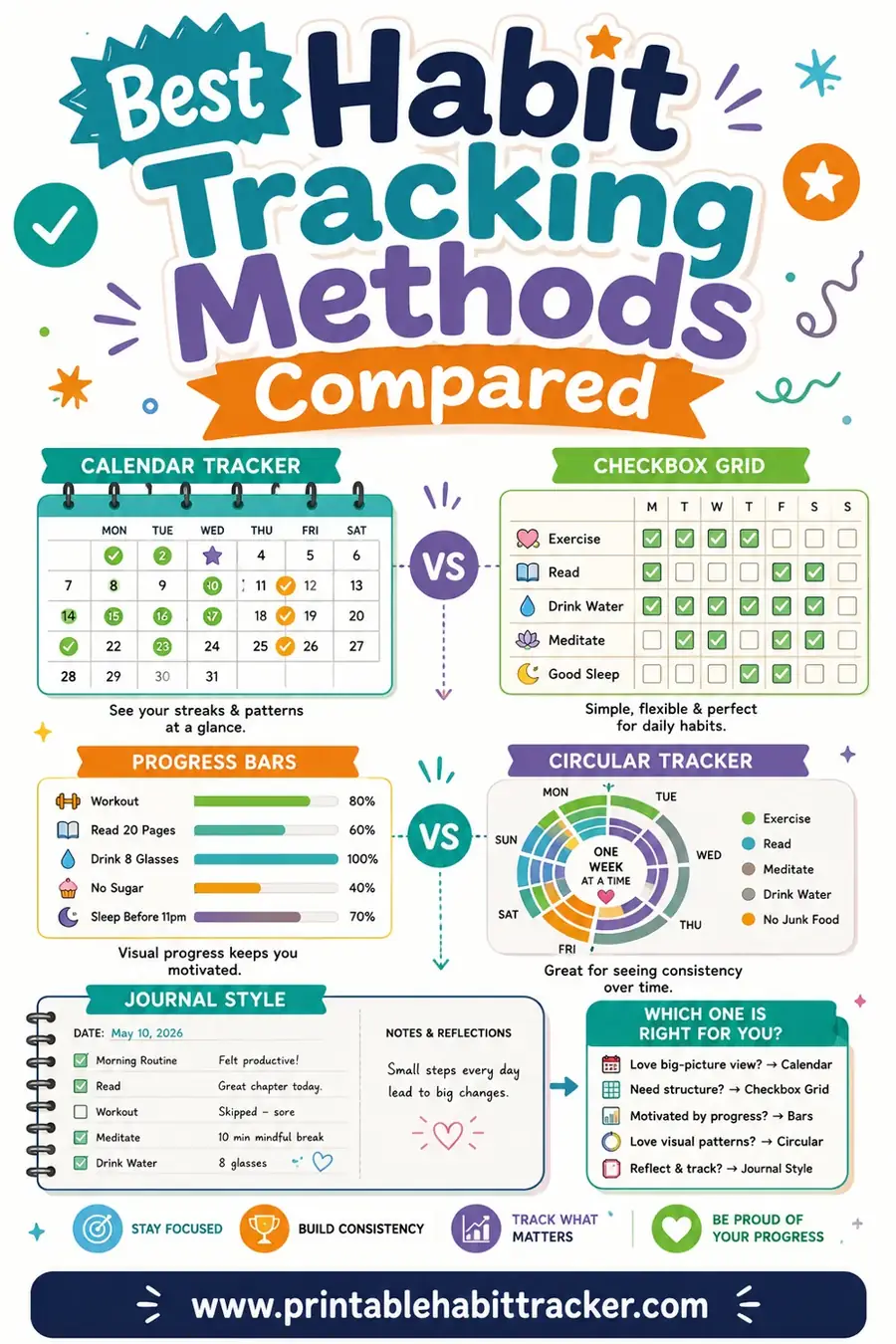
Here's a head-to-head of the most popular approaches. Our printable tracker leads the list for its mix of simplicity, cost, and flexibility, but each method has real strengths.
| Method | Cost | Best for | Main strength |
|---|---|---|---|
| Printable habit tracker (this site) | Free | Anyone who wants simple, visible tracking | A page on your desk reminds you all day |
| Habit app | Free or paid | Phone-first people who want reminders | Notifications and auto-counted streaks |
| Don't break the chain | Near-free | Single-habit focus | One big chain you refuse to break |
| Habit stacking | Free | Building habits onto existing routines | Anchors new habits to ones you already do |
| Bullet journal | Cost of a journal | Creative, hands-on planners | Fully custom and combines with notes |
| Simple journal checklist | Cost of a notebook | Reflective writers | Pairs habits with daily thoughts |
If you're starting from zero, the printable is the safest first pick, it costs nothing, takes seconds, and you can switch methods later without losing anything.
Why the printable method leads
A printable combines the best of the others. It's as visible as a wall calendar, as flexible as a bullet journal, and as free as it gets. You can track one habit or eight, mark by hand, and reprint a fresh page whenever you like.
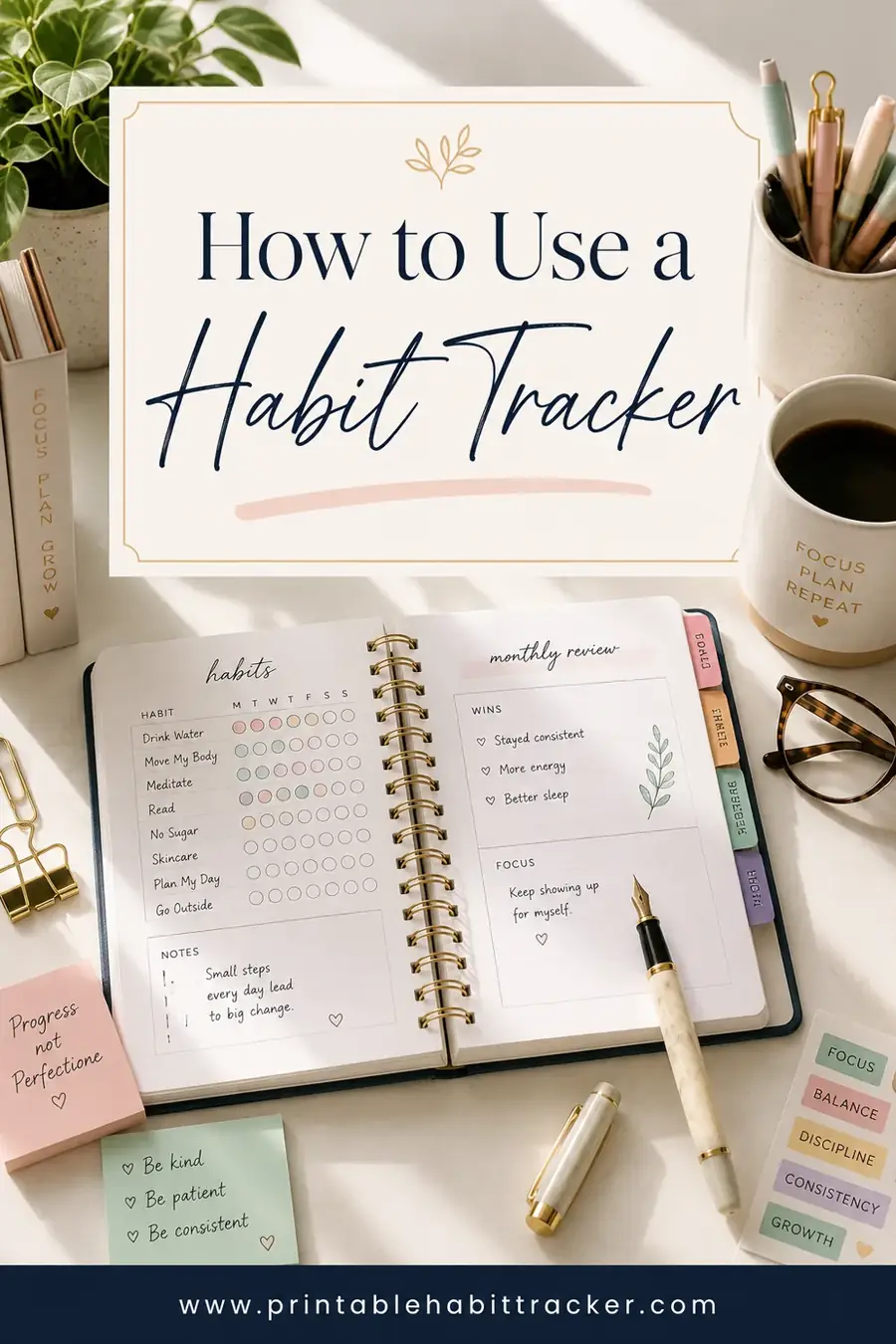
Most importantly, it lives in the physical world. Apps hide behind your home screen; a printed tracker stares back at you from your desk. That constant, gentle reminder is exactly what most habits need to stick. If you're new to all this, start with our how to use a habit tracker guide and a printed page.
Method 1: The Printable Tracker
This is the classic grid: habits down the side, days across the top, a box where they meet. You print it, stick it somewhere visible, and check a box each day.
Why it works: It's the lowest-friction method that's also highly visible. No login, no battery, no paywall. The act of physically marking a box is satisfying in a way tapping a screen often isn't.
Best for: Almost everyone, especially beginners and people who want fewer screens.
Method 2: Habit Apps
Apps put your tracker on your phone, with reminders, streak counts, and sometimes graphs.
Why it works: If your phone is always with you, an app meets you where you already are. The reminders can be genuinely helpful for habits you'd otherwise forget.
The trade-off: The same phone delivers a flood of other notifications, so the habit gets buried. Many apps also cap habits or hide features behind a subscription. Great if you can stay inside the free tier and ignore the noise.
Method 3: Don't Break the Chain
Made famous as the "Seinfeld method," this one is dead simple: mark a big X on a calendar every day you do the habit. Soon you have a chain of Xs, and your only job is not to break it.
Why it works: The growing chain becomes its own motivation. Breaking it feels like a real loss, which keeps you going on days you'd rather skip.
Best for: Focusing hard on a single habit. It's less ideal for tracking five or six at once, where a grid serves you better. You can run this method right on a printed tracker, just give one habit a full row.
A sample chain week
Here's how a single-habit chain looks across a week. Each ✓ is a day you didn't break the chain.
| Habit | Mon | Tue | Wed | Thu | Fri | Sat | Sun |
|---|---|---|---|---|---|---|---|
| Write 200 words | ✓ | ✓ | ✓ | ✓ | ✓ | ✓ | ✓ |
Seven for seven. The longer the chain, the harder it is to break, that's the whole trick.
Method 4: Habit Stacking
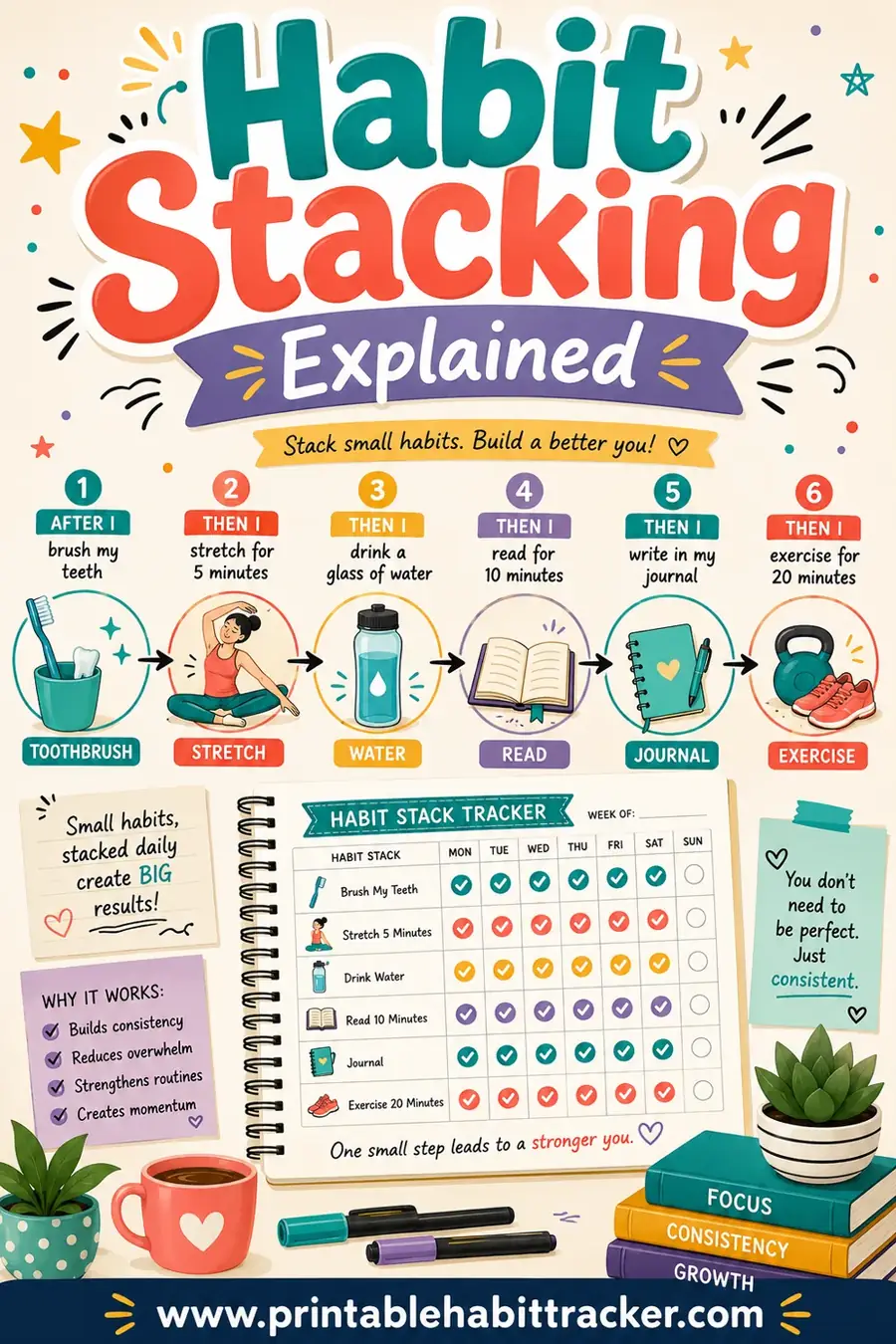
Habit stacking attaches a new habit to one you already do, like "after I pour my morning coffee, I'll write one journal line." Instead of relying on willpower, you piggyback on an existing routine.
Why it works: Your established habit becomes the trigger, so you don't have to remember the new one separately. It's one of the most reliable ways to make a habit automatic.
Best for: Adding small habits onto solid daily anchors. It pairs beautifully with a tracker, stack the habit, then check the box to confirm you did it. We break the whole technique down in habit stacking explained.
Method 5: Bullet Journals and Notebooks
A bullet journal lets you draw your own tracker spread by hand, often combined with notes, to-dos, and reflections.
Why it works: It's fully custom and creative. The act of drawing and decorating the spread builds investment, and having everything in one notebook keeps your habits next to your thoughts.
The trade-off: It takes more time and a little artistic effort. If drawing the tracker becomes a barrier, a printable removes that step while keeping the hands-on feel.
How to Choose the Right Method
With so many options, here's a quick way to decide.
- Want the simplest start? Use a printable. It costs nothing and takes seconds.
- Live on your phone and want reminders? Try a free app, but watch for feature caps.
- Focusing on one big habit? Use don't-break-the-chain.
- Building onto an existing routine? Use habit stacking.
- Love drawing and journaling? Use a bullet journal.
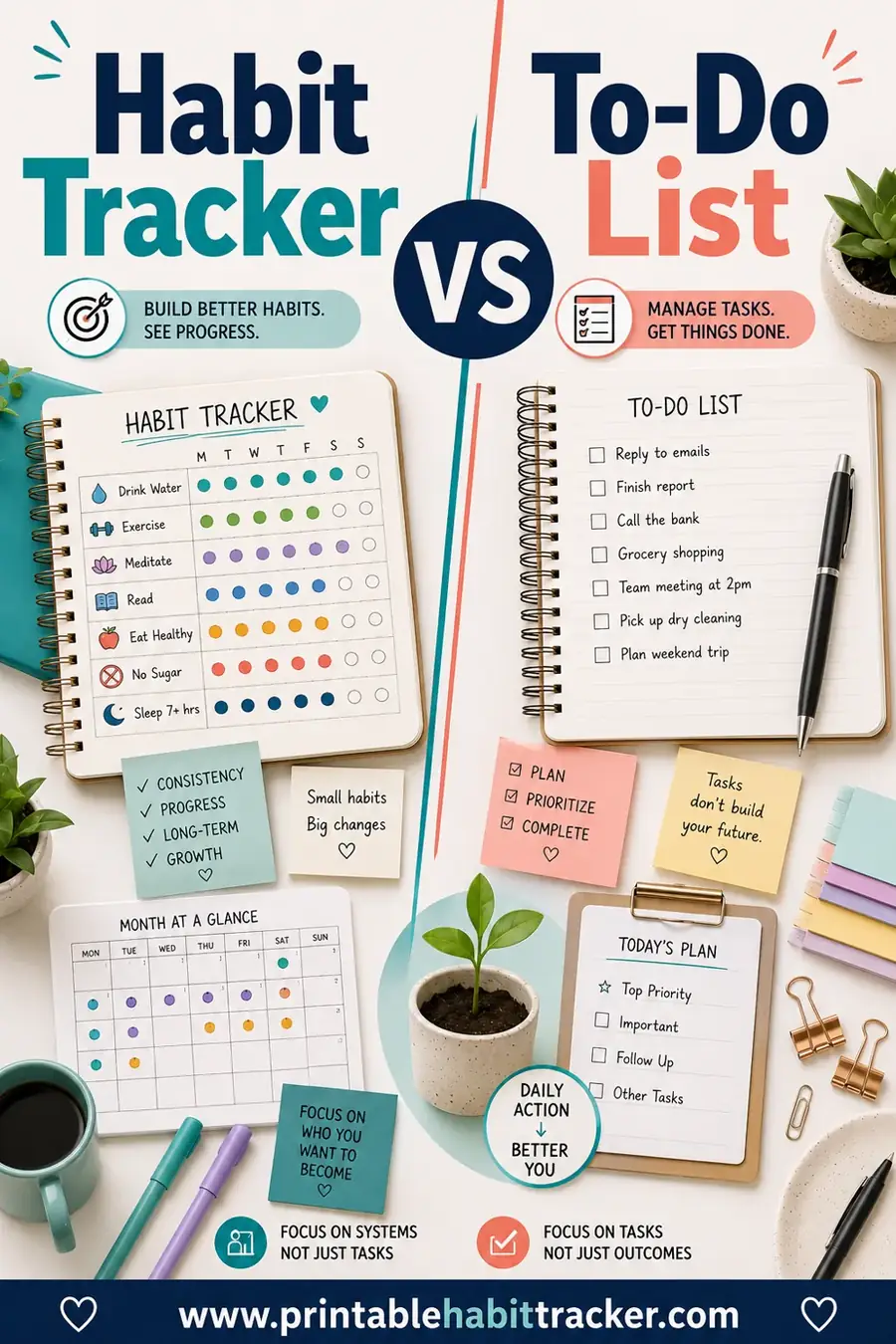
You're allowed to mix them. A common winning combo is a printable on the wall for daily marking, habit stacking to trigger the habits, and a monthly glance to review. If you've been using a habit tool as a task list, our habit tracker vs. to-do list guide helps you split the two cleanly.
Common Mistakes Across All Methods
No matter which method you pick, the same traps catch people:
- Tracking too many habits. Start with five or six. Twenty rows is a recipe for quitting.
- Choosing vague habits. "Be healthier" can't be checked off. "Walk 20 minutes" can.
- Hiding the tracker. Visibility is the whole point. Keep it where you'll see it.
- All-or-nothing thinking. Miss a day? Just mark the next one. One gap isn't failure.
- Switching methods too often. Give one a couple of weeks before deciding it doesn't work.
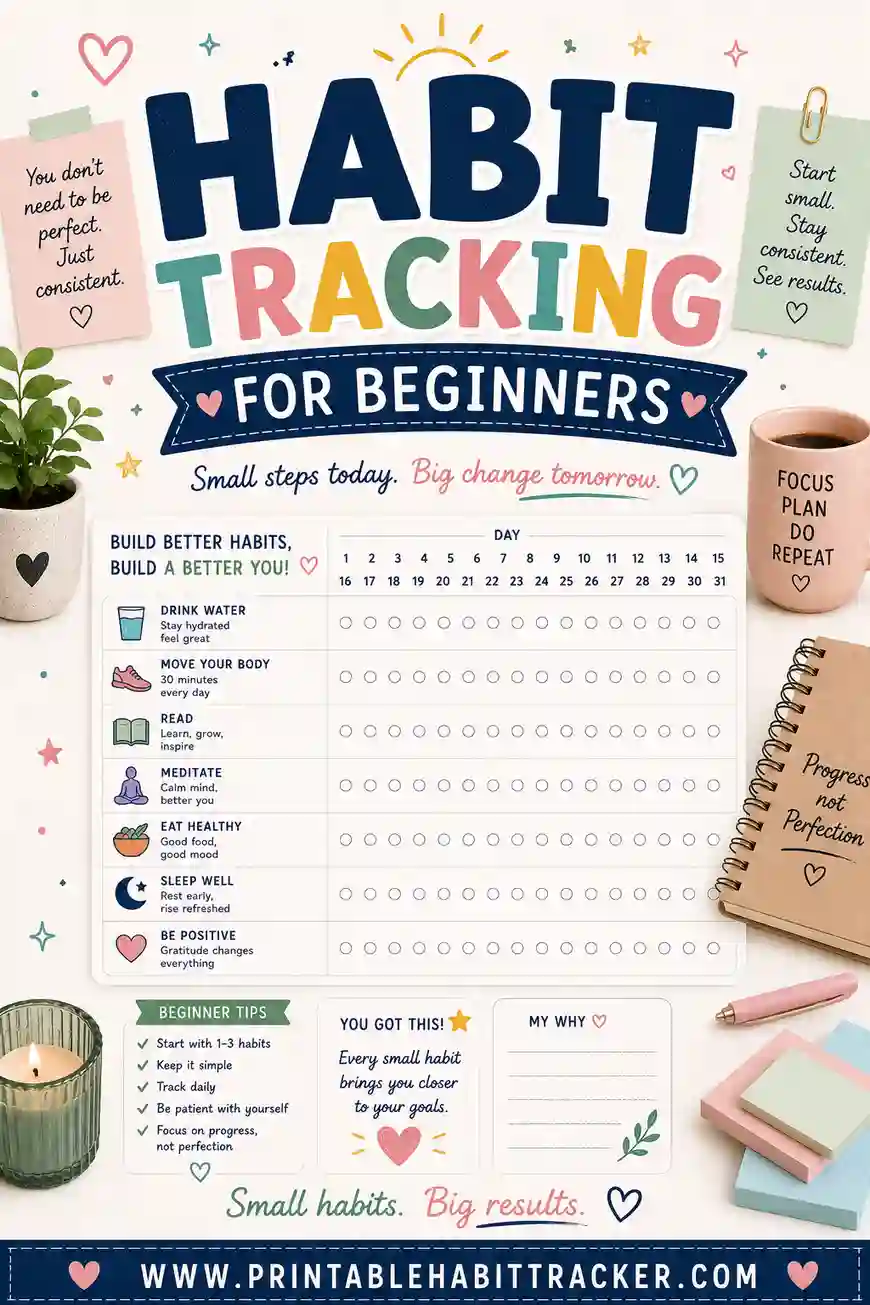
Sidestep these and almost any method will serve you. New to tracking entirely? Start with our habit tracking for beginners guide.
How to Combine Methods for the Best Results
Here's a secret the "which method is best" debates miss: the strongest systems borrow from several methods at once. You don't have to pick just one.
A combination that works for a huge number of people looks like this. Use a printable tracker as your home base, the visible page on your desk where you mark every habit. Layer habit stacking on top so each habit has a built-in trigger, you brush your teeth, then you mark your water habit. Add a touch of don't break the chain thinking for your single most important habit, treating its row as a streak you refuse to break. Then do a quick journal-style review once a week to reflect on what's working.
That stack gives you the visibility of a printable, the reliability of stacking, the motivation of an unbroken chain, and the insight of journaling, all without an app or a subscription.
Here's how those pieces fit together in practice:
| Layer | Method | What it does |
|---|---|---|
| Base | Printable tracker | Visible page you mark daily |
| Trigger | Habit stacking | Attaches habits to existing routines |
| Motivation | Don't break the chain | Protects your top habit's streak |
| Review | Weekly journal note | Spots patterns and adjusts |
You don't have to assemble all of this on day one. Start with just the printable base, get comfortable marking it daily, then add one layer at a time. Within a month you'll have a personal system that fits your brain better than any single off-the-shelf method ever could, and it'll have cost you nothing.
Frequently Asked Questions
What is the best habit tracking method?
For most people, a free printable tracker is the best method because it's simple, visible, and costs nothing. It keeps your progress in plain sight, which is what makes habits stick. Apps, the chain method, and habit stacking are all strong too, the best one is whichever you'll actually keep using.
Are habit apps better than printable trackers?
Not necessarily. Apps offer reminders and auto-counted streaks, which help phone-first people. Printables offer a screen-free, always-visible page with no feature caps. Many people find a printable on the desk beats an app buried behind a home screen.
What is the "don't break the chain" method?
It's marking an X on a calendar every day you complete a habit, building a chain you don't want to break. The growing streak becomes its own motivation. It works best for a single focus habit and runs perfectly on a printed tracker.
Can I combine different habit tracking methods?
Absolutely, and many people do. A common combo is a printable on the wall for daily marking, habit stacking to trigger the habits, and a monthly review to spot patterns. Use whatever mix keeps you consistent.
How do I start tracking habits today?
The fastest way is to print a free tracker. Open the free tool, add five or six habits, print it, and check your first box. No app, no account, no cost, you can start in the next two minutes.
Ready to Pick Your Method?
The best habit tracking method is the one you'll stick with, and for most people that's the simplest: a free printable you can see every day. Open the free printable habit tracker, add your habits, and print. No sign-up, no fee. Mark your first box today, and let the streak do the rest.